
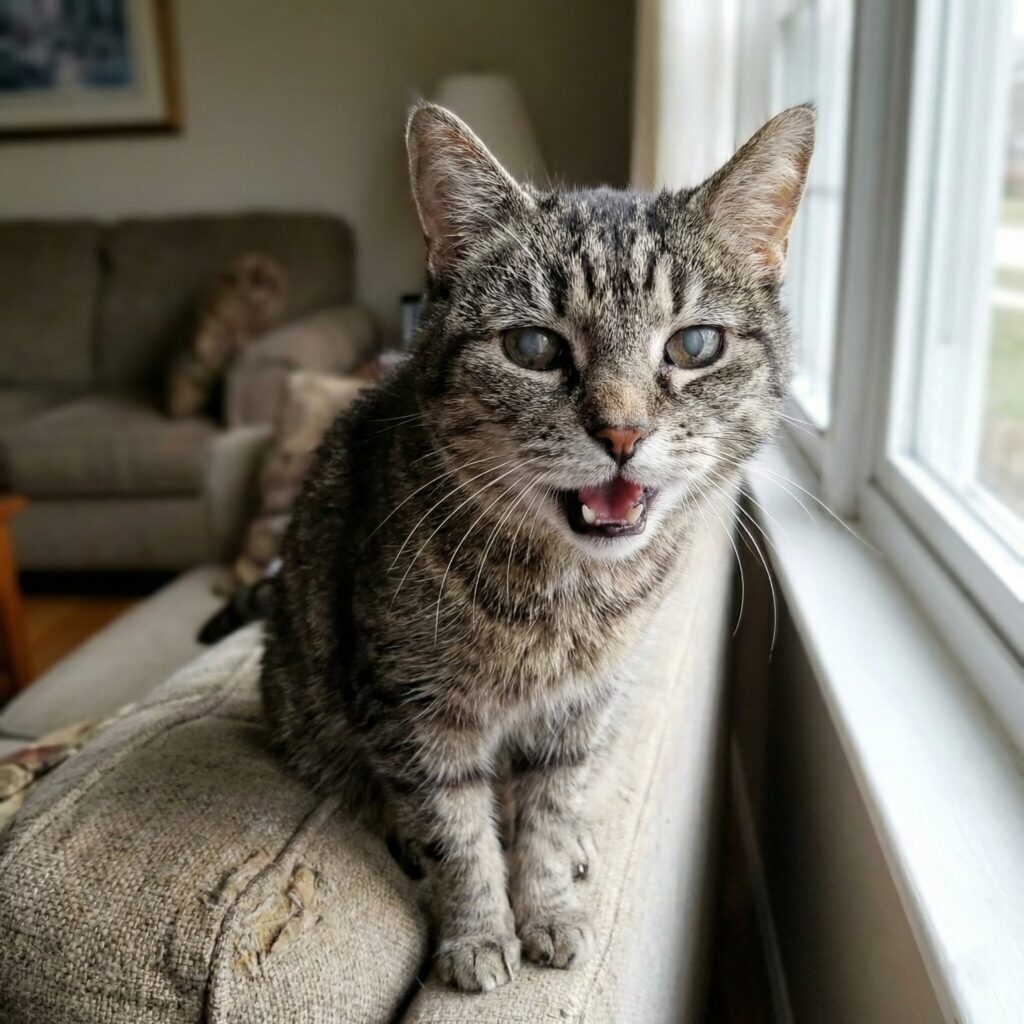
Older cats often meow more due to age-related health issues or cognitive changes. The most common medical causes include hyperthyroidism (overactive thyroid), kidney disease (causing high blood pressure), and arthritis (pain). Additionally, Feline Cognitive Dysfunction (FCD), similar to dementia in humans, can cause confusion and disorientation, leading to increased vocalization, especially at night. Sensory decline, such as hearing or vision loss, can also make senior cats feel anxious and cry out for reassurance.
Summary Table
| Cause | Primary Symptoms | Action Required |
| Cognitive Dysfunction | Keep the environment consistent, use nightlights | Keep the environment consistent, use nightlights |
| Hyperthyroidism | Weight loss, increased appetite, hyperactivity | Blood test and medication/treatment |
| Hypertension | Dilated pupils, howling, restlessness | Blood pressure check and medication |
| Sensory Loss | Bumping into objects, startling easily, loud meows | Bumping into objects, startling easily, and making loud meows |
| Chronic Pain | Stiffness, reluctance to jump, irritability | Pain management plan (supplements/meds) |
| Kidney Disease | Increased thirst, frequent urination, weight loss | Blood/urine tests, diet change |
Why Older Cats Meow More
As cats age, their behavior changes in subtle and sometimes loud ways. One of the most common complaints from pet parents of senior cats is excessive meowing, yowling, or crying. This increase in vocalization is rarely “just because.” In senior felines (typically defined as cats 11 years and older), excessive noise is almost always a signal of an underlying medical condition, cognitive decline, or anxiety caused by sensory changes.
Understanding the specific sounds and accompanying symptoms is crucial. A mournful yowl at 3 AM is different from a demanding meow near the food bowl.
This guide covers the primary reasons your aging cat is louder than usual and what you can do to help them.
Read Also: How to Improve Quality of Life for Aging Cats
Medical Causes for Excessive Meowing
Before assuming your cat is just being grumpy or needy, you must rule out medical issues. Pain and metabolic imbalances are the top drivers of behavioral changes.
Hyperthyroidism
The thyroid gland controls metabolism. When it becomes overactive, a condition known as hyperthyroidism, it sends the cat’s body into overdrive. This is extremely common in older cats.
- Why it causes meowing: The cat feels wired, hungry, and uncomfortable. They often experience a type of caffeine-like jitteriness that makes it hard to relax, leading to persistent yawning, often at night.
- Other symptoms:
- Rapid weight loss despite a ravenous appetite.
- Restlessness or pacing.
- Poor coat quality (greasy or matted).
- Vomiting or diarrhea.
Hypertension (High Blood Pressure)
Hypertension in cats is often secondary to other issues like kidney disease or hyperthyroidism, but it affects the brain and eyes directly.
- Why it causes meowing: High blood pressure can cause a throbbing headache or pressure behind the eyes. It can also lead to retinal detachment, causing sudden blindness, which is terrifying for the cat.
- Other symptoms:
- Dilated pupils that do not constrict in light.
- Blood in the eye chamber.
- Sudden clumsiness.
Chronic Kidney Disease (CKD)
Kidneys filter waste from the blood. As cats age, kidney function naturally declines. When waste products build up in the blood, the cat feels nauseous and generally unwell.
- Why it causes meowing: Vocalization here is usually a sign of distress, confusion from toxins affecting the brain, or high blood pressure associated with the disease.
- Other symptoms:
- Drinking excessive amounts of water.
- Urinating large clumps in the litter box.
- Lethargy and loss of appetite.
- Ammonia-like breath smell.
Arthritis and Joint Pain
Osteoarthritis is underdiagnosed in cats because they are masters at hiding pain. Instead of limping, they simply stop moving as much.
- Why it causes meowing: A cat may meow when they are trying to get comfortable but can’t find a pain-free position. They might also cry out before or after jumping, or when you touch a sensitive area like the hips or spine.
- Other symptoms:
- Hesitation before jumping up or down.
- Sleeping more than usual.
- Irritable when handled or brushed.
- Going to the bathroom just outside the litter box (because stepping in is painful).
Read Also: Why Older Cats Meow More
Feline Cognitive Dysfunction (FCD)
Just like humans get Alzheimer’s disease, cats can develop Feline Cognitive Dysfunction (CDS or FCD). This affects a significant percentage of cats over the age of 15. The brain undergoes physical changes that affect memory, learning, and awareness.
Symptoms of Senility in Cats
If medical tests come back clean, your vet will likely look at cognitive decline. The acronym DISHA helps identify the signs:
- Disorientation: The cat gets “lost” in corners, stares blankly at walls, or forgets where the litter box is.
- Interaction Changes: They may become surprisingly clingy and demanding, or conversely, withdrawn and antisocial.
- Sleep-Wake Cycle Changes: This is the big one for noise. The cat sleeps all day like a rock but wakes up at 2 AM pacing and yowling.
- House Soiling: Forgetting housetraining rules.
- Activity Level: Aimless pacing or wandering.
Why the meowing happens: The cat wakes up in the dark, doesn’t recognize their surroundings, and feels a surge of panic. The yowling is a distress call.
Sensory Decline: Hearing and Vision Loss
Age dulls the senses. For a predator like a cat, losing the ability to hear or see makes the world a dangerous and scary place.
Deafness
When a cat loses its hearing, two things happen. First, they can’t regulate the volume of their own voice, so they meow much louder than intended. Second, they can’t hear you moving around the house. If they wake up and can’t hear the ambient noise of the family, they assume they are alone and cry out to locate you.
Blindness
Vision loss can happen gradually (cataracts) or suddenly (retinal detachment). A blind cat relies heavily on scent and memory. If furniture is moved or they become disoriented, they will vocalize to ask for help or express frustration.
Boredom and Anxiety
Senior cats are often less mobile, meaning they can’t hunt, play, or patrol their territory as they used to. This reduction in activity can lead to boredom. If the cat learns that meowing brings you running (even if you are annoyed), they will keep doing it.
Furthermore, older cats are less adaptable to stress. Changes in the household, like a new baby, a move, or even a new work schedule, can trigger anxiety vocalization in seniors that wouldn’t have bothered a younger cat.
When to See a Veterinarian
You should take your cat to the vet if the vocalization is sudden, persistent, or accompanied by other changes. Do not assume it is “just old age.” Most causes of excessive meowing are treatable or manageable.
Checklist for your Vet Visit:
- Record the sound: Use your phone to record the meowing, especially if it happens at night.
- Log the timing: Note when it happens (after eating? at night? while in the litter box?).
Read Also: How to Help a Senior Cat Stay Active
- Monitor food/water: Track changes in intake.
How to Manage Excessive Meowing
Once your vet has diagnosed the issue, you can use environmental changes to reduce the noise and comfort your cat.
Managing Night-Time Yowling
If your cat has cognitive dysfunction or disrupted sleep cycles:
- Nightlights: Plug in nightlights in hallways and near the litter box. Total darkness can be terrifying for a cat with poor vision or dementia.
- Routine: Keep a strict schedule. Feed, play, and sleep at the same times every day to provide a sense of security.
- Play Therapy: Engage the cat in gentle play in the evening to tire them out before bed.
Accommodating Sensory Loss
- Touch Signals: If your cat is deaf, startle them less by tapping the floor near them so they feel the vibration before you touch them.
- Safe Zones: If your cat is blind, do not move furniture. Keep their food and water in the exact same spot.
- Scent Markers: Use synthetic pheromones (like Feliway) to create a calming scent in the home.
Dietary and Medical Support
- Supplements: Omega-3 fatty acids and specific brain-health supplements (ask your vet about SAMe or antioxidants) can support cognitive function.
- Pain Meds: If arthritis is the culprit, daily pain medication (like Solensia or Gabapentin) can silence the pain-related meows.
- Hydration: Ensure kidney-compromised cats have access to fresh running water (fountains work well) to reduce nausea.
Frequently Asked Questions
Why does my old cat yowl at night?
Night yowling is a classic sign of Feline Cognitive Dysfunction (dementia) or hearing loss. The cat wakes up, feels disoriented in the dark or silence, and cries out in distress.
Is my cat in pain when he meows?
Possibly. Meowing while jumping, using the litter box, or being touched is a strong indicator of pain from arthritis or dental disease. However, general restless meowing is more often related to metabolic issues like thyroid disease.
Can I give my cat anything to stop the meowing?
Never give human medication to a cat. You can try calming pheromone diffusers or anxiety wraps. However, if the cause is medical (like high blood pressure), only prescription medication from a vet will stop the behavior.
Do cats get lonely as they age?
Yes, older cats can become more insecure and dependent on their owners. This “neoceny” (remaining in a kitten-like state) can lead to separation anxiety and loud calls when you leave the room.
Conclusion
A senior cat meowing more than usual is trying to communicate a need. Whether it is the physical pain of arthritis, the metabolic hunger of hyperthyroidism, or the mental confusion of dementia, the sound serves as an alert. By responding with a veterinary checkup and simple home adjustments, you can help your aging companion feel safe, comfortable, and quiet once again.