
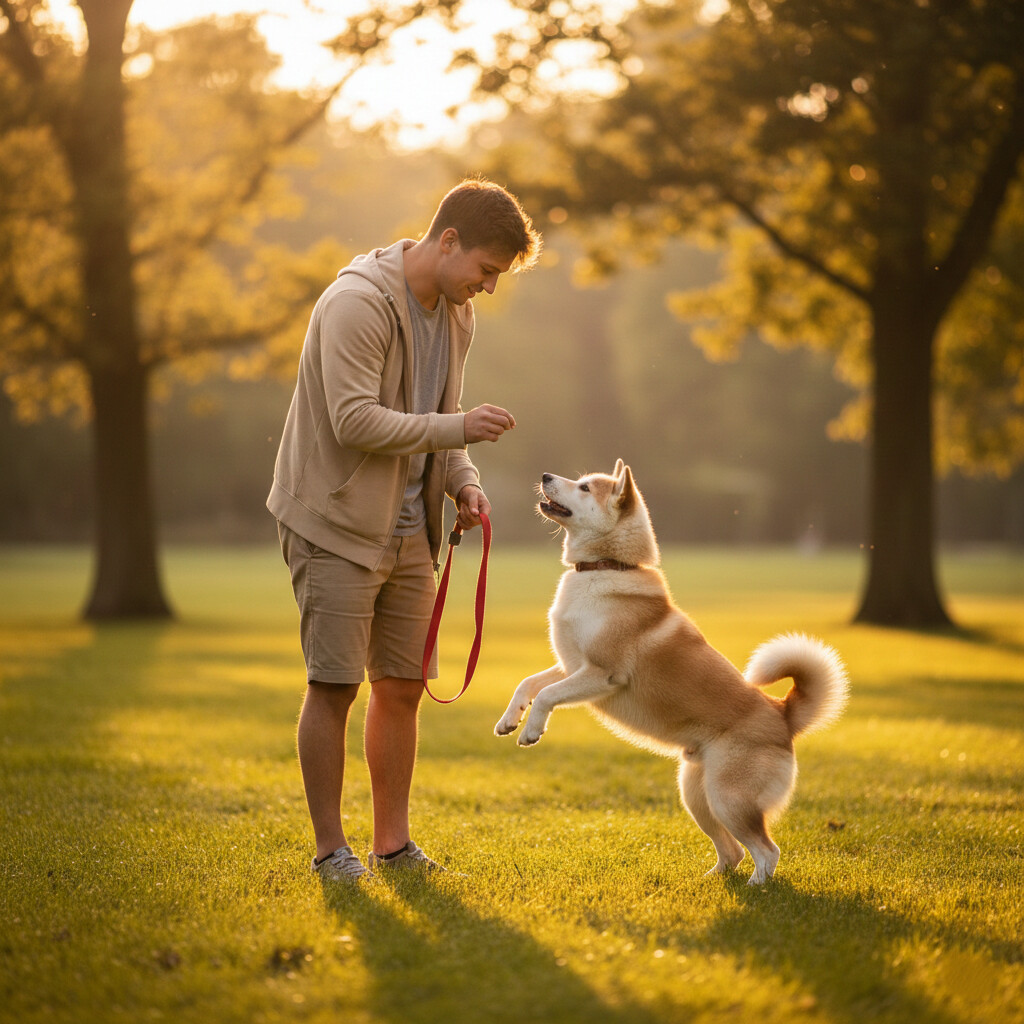
Training improves a dog’s mental health by providing essential cognitive stimulation, establishing clear communication, and creating a sense of predictability. Regular training sessions release dopamine (the feel-good hormone), reduce cortisol (stress hormone) levels, and build confidence, helping to alleviate anxiety, boredom, and destructive behaviors while strengthening the emotional bond between the dog and the owner.
Summary Table
| Benefit | How It Works | Impact on Mental Health |
| Cognitive Stimulation | Challenges the brain to solve problems and learn new patterns. | Prevents boredom and reduces destructive behaviors like chewing or digging. |
| Stress Reduction | Creates a predictable routine and clear expectations. | Lowers anxiety and helps the dog feel safe and secure in their environment. |
| Confidence Building | Uses positive reinforcement to reward success. | Helps shy or fearful dogs overcome insecurity and handle new situations better. |
| Communication | Bridges the gap between human language and canine understanding. | Reduces frustration for both the dog and the owner, fostering trust. |
| Socialization | Exposes the dog to new triggers in a controlled way. | Reduces fear-based aggression and reactivity toward other dogs or people. |
Why Training Is More Than Just Obedience
When most people think of dog training, they picture a dog sitting on command or walking politely on a leash. While these are convenient behaviors for owners, the internal process occurring inside the dog’s brain is much more significant. Training is not just about control; it is a fundamental pillar of canine mental healthcare.
Dogs are intelligent, sentient beings that were bred for specific purposes, such as herding, hunting, or guarding. In modern life, many dogs lack a specific “job,” which leads to a sedentary lifestyle that is mentally stagnating. This lack of purpose is a leading cause of canine depression and anxiety.
Training fills this void. It gives a dog a job to do. It transforms their environment from a confusing place into a structured world where they understand how to earn rewards and interact safely. This article explores exactly how training acts as therapy for your dog’s mind.
Read Also: Why Some Dogs Are Harder to Train Than Others
The Biology of a Happy Dog Brain
To understand mental health, we have to look at brain chemistry. Training sessions that utilize positive reinforcement (rewarding good behavior rather than punishing bad behavior) trigger chemical reactions in a dog’s brain.
- Dopamine: Often called the “reward chemical,” dopamine is released when a dog solves a problem and gets a treat or praise. This creates a natural high and a feeling of satisfaction.
- Cortisol: This is the primary stress hormone. Uncertainty and confusion raise cortisol levels. Training provides predictability, which naturally lowers cortisol, keeping your dog calm.
By training regularly, you are essentially providing your dog with a steady dose of happy hormones while reducing the stress hormones that lead to anxiety.
1. Combating Boredom and Destructive Behavior
One of the most common reasons owners surrender dogs to shelters is “bad behavior.” This includes chewing furniture, excessive barking, digging in the yard, or getting into the trash. In the vast majority of cases, these are not signs of a “bad dog.” They are symptoms of a bored mind.
A dog’s brain is like a muscle; if it isn’t exercised, it becomes restless. A bored dog will create their own fun, and their version of fun usually involves destruction.
How Training Fixes This
- Mental Exhaustion: Five minutes of intense mental training (learning a new trick) can be as tiring as a 30-minute walk.
- Focus: It teaches the dog to focus their energy on a specific task rather than scattering it around the house.
- Impulse Control: Training teaches a dog to wait for what they want rather than taking it immediately.
2. Building Confidence in Shy or Fearful Dogs
The world can be a terrifying place for a dog. Loud trucks, strange people, other animals, and unpredictable noises can cause significant fear. A fearful dog is a stressed dog. Over time, chronic fear can degrade a dog’s mental health, leading to reactivity or shutting down completely.
Training is the most effective tool for building confidence. It works through a process called successive approximation. You start with a very easy task that the dog can definitely succeed at. When they win, they get a reward. This repeated success tells the dog, “I am capable. I can control my outcome.”
The “Place” Command Example
Consider a fearful dog who is scared of guests. If the dog has no training, they might pace, bark, or hide when the doorbell rings.
However, if the dog is trained on the “Place” command (staying on a specific mat or bed):
- The doorbell rings.
- The dog knows to go to their “Place.”
- They know that staying there earns them a high-value treat.
- Instead of panicking, their brain focuses on the job: “Go to mat, get treat.”
This shifts the dog’s mental state from fear to work mode.
3. Reducing Anxiety Through Predictability
Anxiety often stems from the unknown. Imagine if you lived in a house where you didn’t speak the language, and people randomly got angry at you or gave you food without you understanding why. You would be constantly on edge. This is the life of an untrained dog.
Training creates a language. It builds a framework of rules and routine. Dogs thrive on routine because it makes them feel safe. When a dog understands that “Sit” equals “Treat,” or “Down” means “Relax,” the world makes sense.
Key Aspects of Predictability
- Clear Expectations: The dog knows exactly what is expected of them in different situations.
- Consistent Consequences: They learn that specific actions lead to specific outcomes (rewards), removing the guesswork.
- Safe Zones: Crate training or mat training gives the dog a designated safe space where they can retreat and decompress.
4. Strengthening the Human-Animal Bond
A strong relationship with an owner is crucial for a social animal like a dog. If a dog feels disconnected or misunderstood by their owner, they can experience isolation and distress.
Training is a cooperative activity. It requires the owner and the dog to work together toward a common goal. This two-way communication fosters deep trust.
Moving Beyond Dominance
Old-school training methods focused on “dominance” or being the “alpha.” Modern behavioral science shows that these methods can actually harm mental health by inducing fear.
Modern training focuses on partnership. When you train using positive reinforcement, your dog looks at you not as a dictator, but as a source of guidance, safety, and fun. This secure attachment style is the bedrock of good mental health for social mammals.
5. Socialization and Handling the World
Socialization does not just mean letting your dog play with other dogs. It means teaching your dog how to exist calmly in the presence of new things. A dog with poor socialization is in a constant state of high alert (hyperarousal) when they leave the house. This is mentally exhausting and stressful.
Training facilitates proper socialization by giving the dog a point of focus.
The Role of Engagement Training
“Engagement training” teaches a dog to look at their owner regardless of what is happening around them.
- Scenario: A loud motorcycle passes by.
- Untrained Dog Response: Lunges, barks, panic spikes, cortisol rushes.
- Trained Dog Response: Looks immediately at the owner (checks in), receives a treat, and remains calm.
By training these responses, you protect your dog’s mental health from the daily stressors of the outside world. You are teaching them emotional regulation.
Read Also: Understanding Dog Allergies (Environmental vs Seasonal)
6. Neuroplasticity and Aging
Just like humans, dogs can suffer from cognitive decline as they age. This is often referred to as Canine Cognitive Dysfunction (CCD), similar to dementia in humans.
Training is one of the best defenses against cognitive decline. Learning new things keeps the brain plastic (neuroplasticity). It encourages the growth of new neural pathways. You absolutely can teach an old dog new tricks, and for the sake of their mental health, you should.
Mental Workouts for Senior Dogs
- Scent Work: Hiding treats and having the dog sniff them out. This engages the olfactory part of the brain, which is huge in dogs.
- Gentle Trick Training: Simple tricks like “shake” or “touch” that don’t require heavy physical exertion.
- Puzzle Toys: Food puzzles that require paw and nose manipulation.
7. The Difference Between Physical and Mental Exercise
A common misconception is that a tired dog is a happy dog. While physical exercise is vital, it is not enough on its own.
- Physical Exercise: Builds stamina. If you only run your dog, you eventually get a dog with high endurance who is still bored and anxious.
- Mental Exercise (Training): Uses brain power. This satisfies the dog’s biological drives.
A 15-minute training session can do more for a dog’s mental state than a 1-hour run. Ideally, a dog needs a balance of both. Training provides the “mental fatigue” that leads to deep, restorative sleep and a calm demeanor.
Types of Training for Mental Health
You do not need to be a professional to provide mental health benefits. Here are different types of training you can do at home:
Basic Obedience
This is the foundation. Sit, stay, down, come, and loose-leash walking.
- Mental Benefit: Establishes communication and impulse control.
Trick Training
Spin, roll over, play dead, weave through legs.
- Mental Benefit: High fun factor, builds confidence, and strengthens the bond. Because tricks are “low stakes” (it doesn’t matter if the dog messes up), owners tend to be more relaxed, making it a very positive experience for the dog.
Scent Work / Nose Work
Hiding birch oil or treats in boxes for the dog to find.
- Mental Benefit: Taps into the dog’s primary sense. Sniffing naturally lowers a dog’s pulse and induces relaxation.
Agility (Home Version)
Using makeshift jumps or tunnels.
- Mental Benefit: Increases body awareness (proprioception) and focus.
Warning Signs Your Dog Needs More Mental Stimulation
How do you know if your dog’s mental health is suffering due to a lack of training? Look for these symptoms:
- Excessive Vocalization: Barking or whining for no apparent reason.
- Tail Chasing or Shadow Chasing: These can be signs of obsessive-compulsive behaviors driven by stress or boredom.
- Destruction: Chewing door frames, shoes, or furniture.
- Hyperactivity: The “zoomies” are normal occasionally, but constant inability to settle suggests unspent mental energy.
- Over-grooming: Licking paws until they are raw (acral lick dermatitis) is often a self-soothing behavior for anxiety or boredom.
If you see these signs, increasing training sessions is often the first step in treatment.
Conclusion
Training is far more than a tool for convenience. It is the key to unlocking your dog’s mental well-being. By engaging their brain, providing structure, and building a language of trust, you are inoculating your dog against anxiety, boredom, and depression.
A trained dog is a confident dog. They know their place in the world, they understand how to communicate with their human, and they have an outlet for their natural drives.
If you want to improve your dog’s quality of life, grab a handful of treats and start training today. It is the single best investment you can make in your dog’s happiness.