
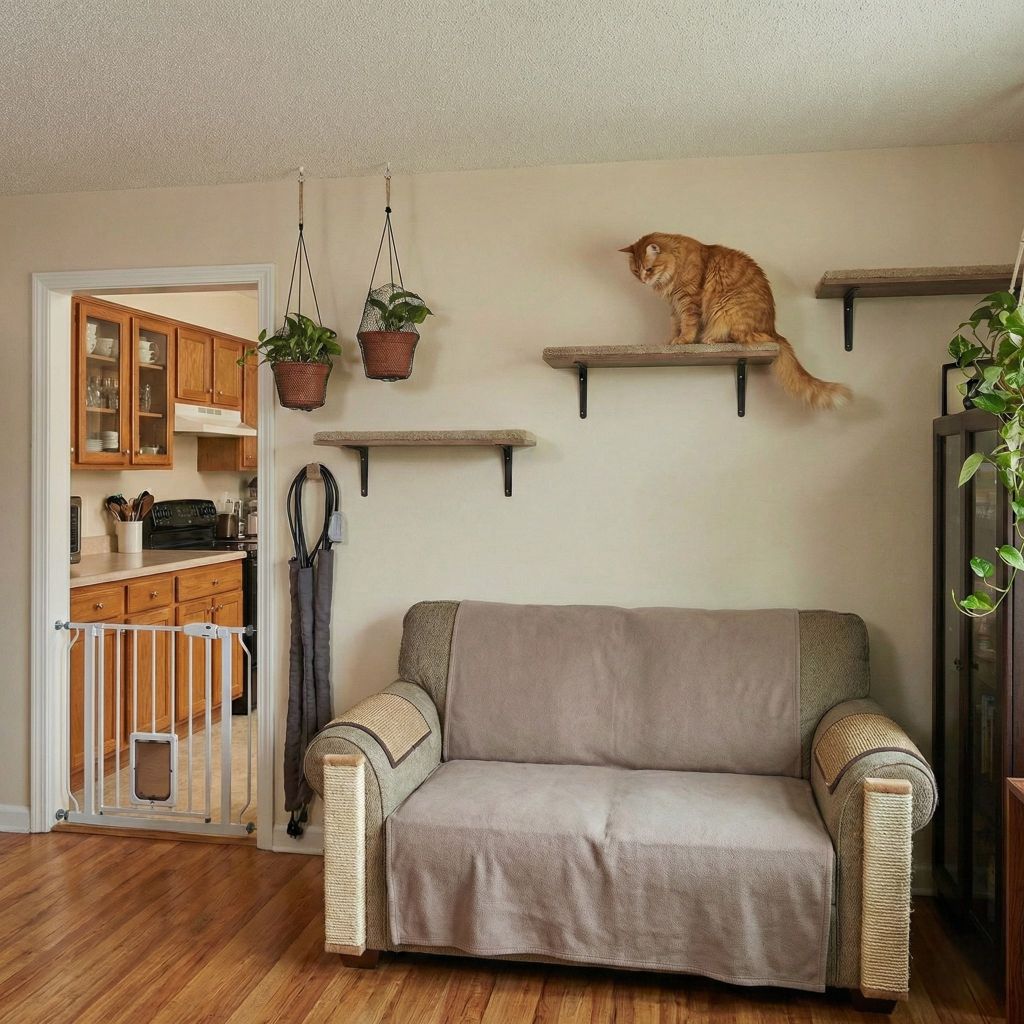
To make your home cat-safe, identify and remove common hazards like toxic plants (lilies, ivy), secure loose electrical cords, and lock away cleaning chemicals and medications. Ensure windows have secure screens, keep toilet lids down, and check appliances like washers before use. Regular “crawl-through” inspections from a cat’s perspective help identify hidden dangers.
Summary Table: Top Cat Safety Hazards & Fixes
| Hazard Category | Common Examples | Quick Fix |
| Toxic Plants | Lilies, Poinsettias, Tulips, Aloe | Replace with Spider Plants, Ferns, or cat grass. |
| Kitchen & Food | Chocolate, onions, garlic, grapes | Store food in sealed containers; use pet-proof trash cans. |
| Chemicals | Bleach, antifreeze, essential oils | Lock in cabinets with child-proof latches. |
| Household Items | Rubber bands, hair ties, needles | Keep small items in drawers; use covered bins. |
| Electrical | Phone chargers, lamp cords | Use cord protectors or bitter spray deterrents. |
| Windows/Doors | Open windows, balcony doors | Install sturdy screens; keep balcony doors shut. |
Why Cat-Proofing Matters
Cats are naturally curious explorers. Their instinct to climb, scratch, and squeeze into tight spaces can get them into trouble quickly. Cat-proofing isn’t just for kittens; adult cats also face risks from common household items.
Making your home cat-safe prevents costly emergency vet visits and keeps your pet healthy. This guide covers every room in your house to ensure a secure environment for your feline friend.
Read Also: How to Reduce Shedding in Cats
1. The Kitchen: A Hotspot for Hazards
The kitchen is full of interesting smells and dangerous appliances.
Secure Your Trash Cans
Cats are scavengers. A trash can left open invites them to eat spoiled food, bones, or plastic wrappers.
- Use a trash can with a heavy, locking lid.
- If possible, keep the trash can inside a cabinet.
Watch the Stove and Countertops
Cats can burn their paws on hot stoves or knock over heavy pans.
- Use stove knob covers to prevent cats from accidentally turning on the gas.
- Never leave food unattended on the counter.
- Keep electric cords for blenders and toasters coiled and tucked away.
Foods Toxic to Cats
Many human foods are poisonous to cats. Keep these strictly out of reach:
- Chocolate: Contains theobromine, which affects the heart and nervous system.
- Onions and Garlic: Can cause anemia by damaging red blood cells.
- Grapes and Raisins: Can cause kidney failure.
- Xylitol: An artificial sweetener found in gum and peanut butter, highly toxic to pets.
2. Living Room Safety
The living room is where your cat likely spends most of their time relaxing, but it hides subtle dangers.
Manage Electrical Cords
Dangling wires look like toys to a cat. Chewing on them can cause burns or electrocution.
- Bundle cords: Use velcro straps or cable ties to keep wires tight.
- Cover cords: Buy plastic cord protectors or tubing.
- Deterrents: Spray cords with a bitter apple spray to discourage chewing.
Curtains and Blinds
Cats love looking out windows, but blind cords are a strangulation hazard.
- Tie up long cords so they are out of reach.
- Cut loops in blind cords to prevent a cat’s head from getting stuck.
- Consider cordless blinds for maximum safety.
Secure Heavy Furniture
Cats jump on bookshelves and TV stands. If these aren’t stable, they can tip over.
- Anchor tall bookshelves to the wall.
- Ensure your TV is stable or mounted securely to the wall.
Read Also: How to Stop Cat Sleeping on Bed?
3. Bathroom and Laundry Room
These rooms contain chemicals and appliances that are major threats.
Keep the Toilet Lid Down
Kittens can fall into a toilet and drown, or they may drink water that contains cleaning chemicals. Always keep the lid closed.
Lock Away Medications
Pills dropped on the floor are easily swallowed.
- Store all medicines in a medicine cabinet, not on the counter.
- Never use human medication on cats unless prescribed by a vet. Acetaminophen (Tylenol) is fatal to cats.
Washer and Dryer Safety
Cats see open dryers as warm, dark caves.
- Always check inside the washer and dryer before starting a load.
- Keep the appliance doors closed when not in use.
4. Bedroom Hazards
The bedroom should be a sanctuary, but small items pose choking risks.
Jewelry and Hair Ties
Cats are attracted to shiny objects and elastic bands.
- Hair ties and rubber bands: If swallowed, these can cause life-threatening intestinal blockages.
- Earrings and necklaces: Keep jewelry in a box, not on the nightstand.
Mothballs
Mothballs are highly toxic. The fumes alone can cause illness. Use cedar blocks or lavender sachets instead, but ensure the cat cannot eat them.
Sewing Supplies
Needles and thread are extremely dangerous. If a cat swallows a thread, it can saw through their intestines.
- Store sewing kits in a latched container.
- Use a magnet to find dropped needles immediately.
Read Also: Why does my cat hate me?
5. Garage and Utility Areas
These are often the most dangerous parts of a home.
Antifreeze (Ethylene Glycol)
Antifreeze tastes sweet to animals but is deadly. Even a teaspoon can kill a cat.
- Clean up spills immediately.
- Switch to pet-safe antifreeze (propylene glycol based).
Sharp Tools and chemicals
- Store screws, nails, and saw blades in sealed toolboxes.
- Keep pesticides, fertilizers, and rodent poisons on high shelves or in locked cabinets.
Poisonous Plants vs. Safe Plants
Houseplants improve air quality, but you must choose the right ones.
Plants to Avoid (Toxic)
- Lilies: Highly toxic. Even the pollen can cause kidney failure.
- Sago Palm: Causes liver failure.
- Oleander: Affects the heart.
- Dieffenbachia: Causes mouth irritation and swelling.
- Poinsettia: Mildly toxic, causing irritation.
Cat-Safe Alternatives
- Spider Plant: Easy to grow and fun for cats to bat at.
- Boston Fern: Lush and safe.
- Bamboo: Most true bamboo is safe (avoid “Lucky Bamboo” which is actually a Dracaena and toxic).
- Cat Grass: Wheatgrass or oat grass grown specifically for cats to eat.
Window and Balcony Safety
“High-Rise Syndrome” refers to injuries sustained by cats falling from windows or balconies.
Screens are Mandatory
Cats have a high prey drive. If they see a bird, they may lunge at a window.
- Ensure all windows have secure, tear-proof screens.
- Check screens annually for holes or loose frames.
Balcony Safety
- Do not let cats on balconies unsupervised.
- Install netting or specialized “catios” (cat patios) to enclose the space safely.
Essential Oils and Diffusers
Many essential oils are toxic to cats, either through skin contact or inhalation from a diffuser.
Oils to Avoid
- Tea Tree Oil (Melaleuca)
- Peppermint Oil
- Citrus Oils (Lemon, Orange)
- Eucalyptus Oil
- Cinnamon Oil
If you use a diffuser, ensure it is in a room the cat cannot access, or switch to cat-safe scents like diluted chamomile or lavender (consult your vet first).
Seasonal and Holiday Safety
Holidays bring new decorations that can be hazardous.
- Tinsel: If eaten, tinsel can bunch up in the intestines (linear foreign body) requiring surgery. Avoid tinsel completely.
- Christmas Trees: Anchor the tree so it doesn’t fall if climbed.
- Candles: use battery-operated flameless candles to prevent singed whiskers or house fires.
Emergency Preparation
Even with the best prevention, accidents happen. Be prepared.
- First Aid Kit: Include bandages, tweezers, hydrogen peroxide (ask a vet for dosage), and a digital thermometer.
- Emergency Contacts: Post the number for your vet, an emergency 24-hour animal hospital, and the Pet Poison Helpline (855-764-7661 in the US) on your fridge.
- Carrier Training: Keep your cat carrier accessible so you can leave quickly in an emergency.
Summary Checklist for Cat Owners
- Kitchen: Trash locked, toxic food put away.
- Living Room: Wires covered, unstable furniture anchored.
- Bathroom: Toilet lid down, meds in cabinet.
- Bedroom: Hair ties and needles stored safely.
- Plants: Lilies removed, safe plants installed.
- General: Windows screened, chemicals locked up.
By following this guide, you create a sanctuary where your cat can play, sleep, and explore without risk. Cat-proofing is an ongoing process; as your home changes, re-assess for new hazards to keep your feline family member safe.