
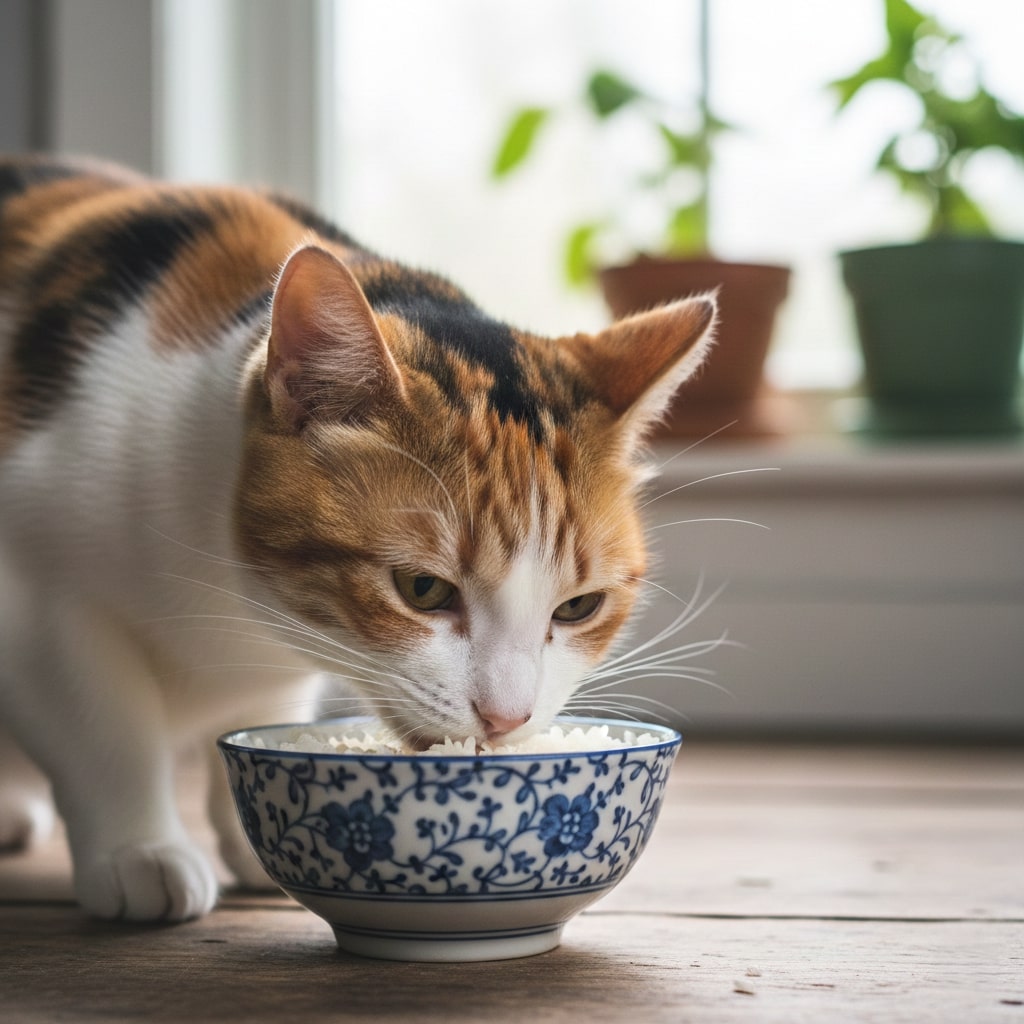
Yes, cats can eat rice in small amounts. It is non-toxic and can help with mild digestive issues like diarrhea. However, rice offers very little nutritional value for cats because they are obligate carnivores who need meat-based protein. It should never replace their regular balanced diet and should always be served plain and fully cooked.
Summary Table
| Category | Details |
| Is Rice Toxic? | No, plain rice is safe for cats. |
| Best Type to Feed | Plain white rice (fully cooked and soft). |
| Benefits | Can help soothe an upset stomach or diarrhea. |
| Risks | High carbohydrates, little nutrition, obesity risk if overfed. |
| Serving Size | A teaspoon or two mixed with food occasionally. |
| Seasoning? | Never. No salt, garlic, onions, or oil. |
Can Cats Have Rice? Everything You Need to Know
If you have ever wondered, “Can cats eat rice?” while cooking dinner, the simple answer is yes. Rice is generally safe for cats to eat. It is not poisonous and is often found in many commercial cat foods as a filler.
However, just because they can eat it doesn’t mean it should be a big part of their daily routine. Cats are obligate carnivores, meaning their bodies are designed to get nutrition from meat, not grains.
Read Also: Can Cats Eat Chicken?
Is Rice Good for Cats?
Rice is not “good” for cats in the same way meat is, but it does have specific uses.
- Digestive Aid: The most common reason veterinarians recommend rice is for digestive problems. If your cat has diarrhea or an upset stomach, a small amount of plain white rice mixed with boiled chicken can help firm up their stool.
- Easy to Digest: White rice is bland and easy for a cat’s stomach to process, making it helpful for recovering from illness.
- Safe Filler: It provides calories without adding toxic ingredients, which is why it is used in some pet foods.
White Rice vs. Brown Rice: Which is Better?
When feeding rice to a cat, the type of rice matters.
White Rice
This is the best option for cats. The husk, bran, and germ have been removed, which lowers the fiber content.
- Pros: Easier to digest; better for calming an upset stomach.
- Cons: Higher starch content; can spike blood sugar if fed in large amounts.
Brown Rice
Brown rice is a whole grain and retains the outer bran layer.
- Pros: Slightly more nutritional value than white rice.
- Cons: Harder for cats to digest. It is not recommended for cats with sensitive stomachs or diarrhea because the extra fiber might make the issue worse.
Read Also: Can Cats Eat Tuna?
Potential Risks of Feeding Rice to Cats
While rice is non-toxic, feeding it incorrectly can cause problems.
- Malnutrition: If you fill your cat up on rice, they won’t eat enough meat. This can lead to a deficiency in taurine and protein, which are essential for their heart and eye health.
- Obesity: Rice is pure carbohydrate. Cats do not need many carbs. Too much rice can lead to weight gain and obesity.
- Uncooked Rice: Never feed a cat uncooked or instant rice that hasn’t been prepared. Uncooked rice is hard to digest and can cause bloating, gas, and stomach pain.
- Toxic Additives: Rice dishes made for humans often contain garlic, onions, salt, soy sauce, or butter. Garlic and onions are highly toxic to cats and can damage their red blood cells.
How to Safely Feed Rice to Your Cat
If you want to give your cat rice, follow these rules to keep them safe.
- Cook it Thoroughly: The rice must be soft and moist.
- Keep it Plain: Do not add salt, oil, butter, spices, or sauces.
- Use Small Portions: Think of it as a garnish, not a meal. A teaspoon mixed into their wet food is enough.
- Monitor Your Cat: Watch for any signs of allergic reaction or vomiting after they eat it.
When to Avoid Rice Completely
Do not feed rice if your cat suffers from specific health issues unless your vet says otherwise:
- Diabetes: The high carbohydrate content can negatively affect blood sugar levels.
- Grain Sensitivities: Some cats are allergic to grains and may experience itchy skin or vomiting.
Read Also: Can Cats Eat Cheese?
Frequently Asked Questions
Can kittens eat rice?
It is better to avoid giving rice to kittens. They are in a crucial growth stage and need nutrient-dense food (protein and fat) to develop properly. Rice fills up their tiny stomachs without providing the nutrients they need to grow.
Can cats eat fried rice?
No. Fried rice usually contains oil, high sodium (soy sauce), garlic, onions, and sometimes pork or egg. The garlic and onions are toxic, and the high sodium content is dangerous for cats.
Is rice pudding safe for cats?
No. Rice pudding is full of sugar and dairy (milk/cream). Many adult cats are lactose intolerant, and sugar is unhealthy for them.
Conclusion
Cats can eat plain, cooked rice safely in small amounts. It is a helpful tool for managing mild diarrhea but offers little nutritional benefit for a healthy cat. Always prioritize high-quality meat proteins for your feline friend and consult your veterinarian if you are unsure about adding new foods to their diet.