
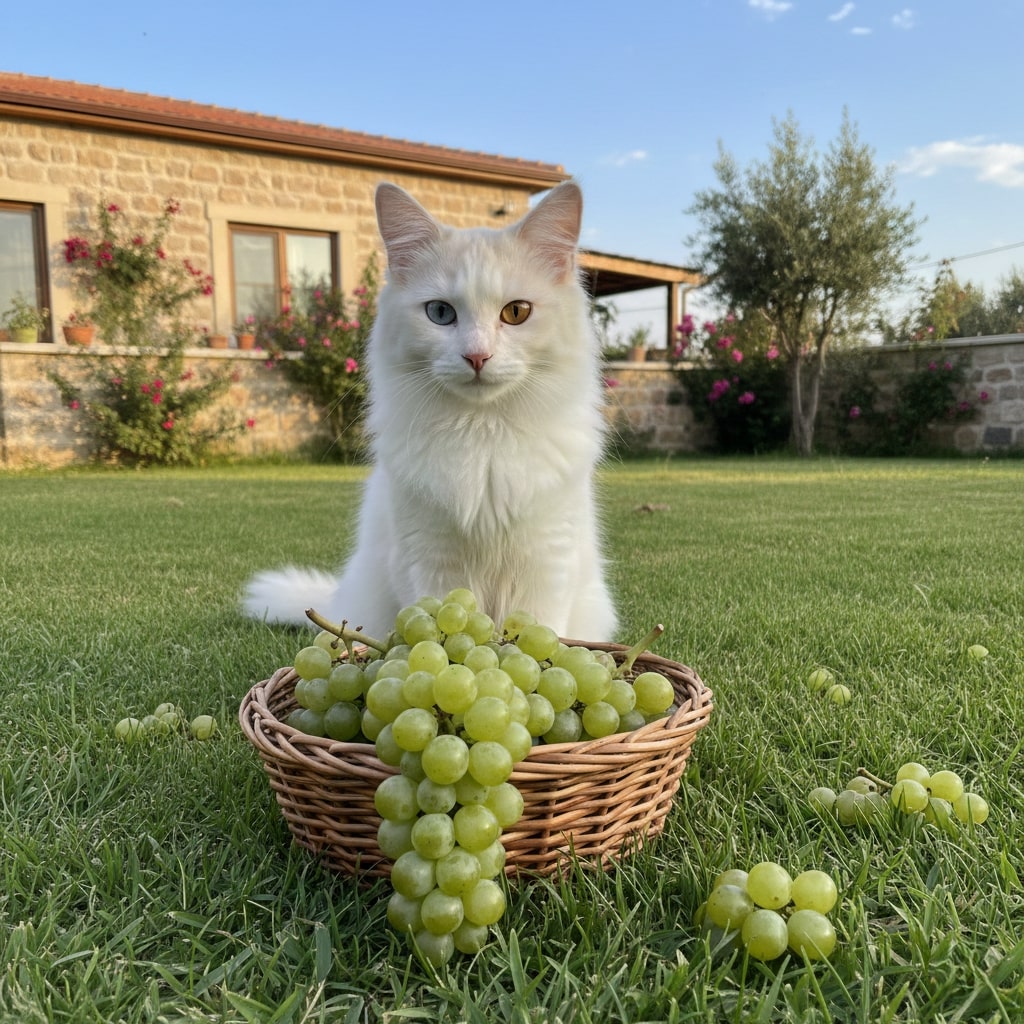
No, cats cannot eat grapes. Grapes and raisins are highly toxic to cats and can cause sudden kidney failure. Even a small amount can be fatal. If you suspect your cat has eaten a grape or raisin, contact your veterinarian or an emergency animal hospital immediately.
Summary Table: Are Grapes Safe for Cats?
| Category | Details |
| Verdict | Strictly Unsafe |
| Toxic Substance | Exact toxin is unknown (possibly tartaric acid). |
| Main Risk | Acute Kidney Failure (Renal Failure). |
| Toxic Dose | Unknown; even one grape can be dangerous. |
| Related Foods | Raisins, currants, sultanas, grape juice. |
| Immediate Action | Call a veterinarian immediately. Do not wait for symptoms. |
Can Cats Have Grapes? (The Dangers Explained)
Many cat owners know that chocolate is bad for pets, but fewer realize that grapes and raisins are just as dangerous. While you might enjoy snacking on them, sharing even a single grape with your cat can lead to a medical emergency.
This guide explains why grapes are toxic, the symptoms of poisoning, and exactly what you need to do if your cat eats one.
Read Also: Can Cats Eat French Fries?
Why Are Grapes Toxic to Cats?
The exact reason grapes are poisonous to cats (and dogs) is still a bit of a mystery to veterinarians.
- The Unknown Toxin: Scientists have not officially pinpointed the specific substance in grapes that causes the damage. Recent studies suggest tartaric acid might be the culprit, but this is not yet fully confirmed.
- Kidney Damage: Regardless of the specific chemical, the result is well-documented: eating grapes can lead to acute renal failure (sudden kidney failure). This means the kidneys stop filtering waste from the blood, which is life-threatening.
- No Safe Amount: Because the toxin is unknown, there is no calculated “safe dose.” Some cats might eat a grape and be fine, while others could become critically ill from just one. It is never worth the risk.
Are Raisins Worse Than Grapes?
Yes. Raisins (as well as sultanas and currants) are simply dried grapes.
Because they have been dried out, the toxins are much more concentrated. A handful of raisins contains significantly more toxic material than a handful of fresh grapes. If you bake cookies or bread containing raisins, keep them securely stored away from your cat.
Symptoms of Grape Poisoning in Cats
If your cat manages to steal a grape, symptoms often appear within 6 to 12 hours. However, kidney failure can take up to 24 to 72 hours to fully develop.
Watch for these early warning signs
- Vomiting: This is usually the first sign. You may see pieces of grape or raisin in the vomit.
- Diarrhea: Loose stools or straining in the litter box.
- Lethargy: Your cat seems unusually tired, weak, or unresponsive.
- Loss of Appetite: Refusing to eat, even their favorite treats.
- Dehydration: Dry nose, gums, and skin that doesn’t snap back when pinched.
Signs of advanced kidney failure
- Abdominal Pain: Crying when picked up or touched on the belly.
- Change in Thirst: Excessive drinking or refusing water entirely.
- Change in Urination: Urinating frequently or stopping urination completely (this is a critical emergency).
- Tremors or Seizures.
Read Also: Why Do Cats Shake Their Heads When They Eat?
What to Do If Your Cat Eats a Grape
Time is critical. Do not wait to see if your cat gets sick. Once kidney damage begins, it is difficult to reverse.
- Remove the Threat: Take away any remaining grapes or raisins immediately.
- Call the Vet: Call your regular veterinarian or the nearest emergency animal hospital. Tell them what your cat ate and roughly how much.
- Do Not Induce Vomiting (Unless Instructed): Do not try to make your cat throw up at home unless a vet explicitly tells you to. Giving hydrogen peroxide to cats can cause severe ulcers and bleeding in their stomach.
- Go to the Clinic: Get your cat to the vet as soon as possible.
What Will the Vet Do?
Treatment usually focuses on getting the toxin out of the system and supporting the kidneys.
- Decontamination: The vet may safely induce vomiting or pump the stomach.
- Activated Charcoal: This is given to absorb toxins remaining in the gut.
- IV Fluids: This is the most important step. Aggressive fluid therapy helps flush the kidneys and keep them functioning. This often requires the cat to stay in the hospital for 48 hours.
Read Also: How Long Does Dry Cat Food Last
Safe Fruit Alternatives for Cats
Cats are “obligate carnivores,” meaning they need meat to survive. They do not need fruit in their diet. However, if your cat is curious and wants a treat, these fruits are generally safe in small amounts (peeled and seeds removed):
- Blueberries
- Strawberries
- Bananas (small slices only, high in sugar)
- Melon (Cantaloupe or Watermelon)
- Pumpkin (Plain, not pie filling)
Note: Always avoid citrus fruits (lemons, oranges, limes) as they can upset a cat’s stomach.
The Bottom Line
Never feed grapes, raisins, currants, or sultanas to a cat. The risk of kidney failure is too high, and the consequences are too severe. Stick to meat-based treats or safe, vet-approved snacks.