
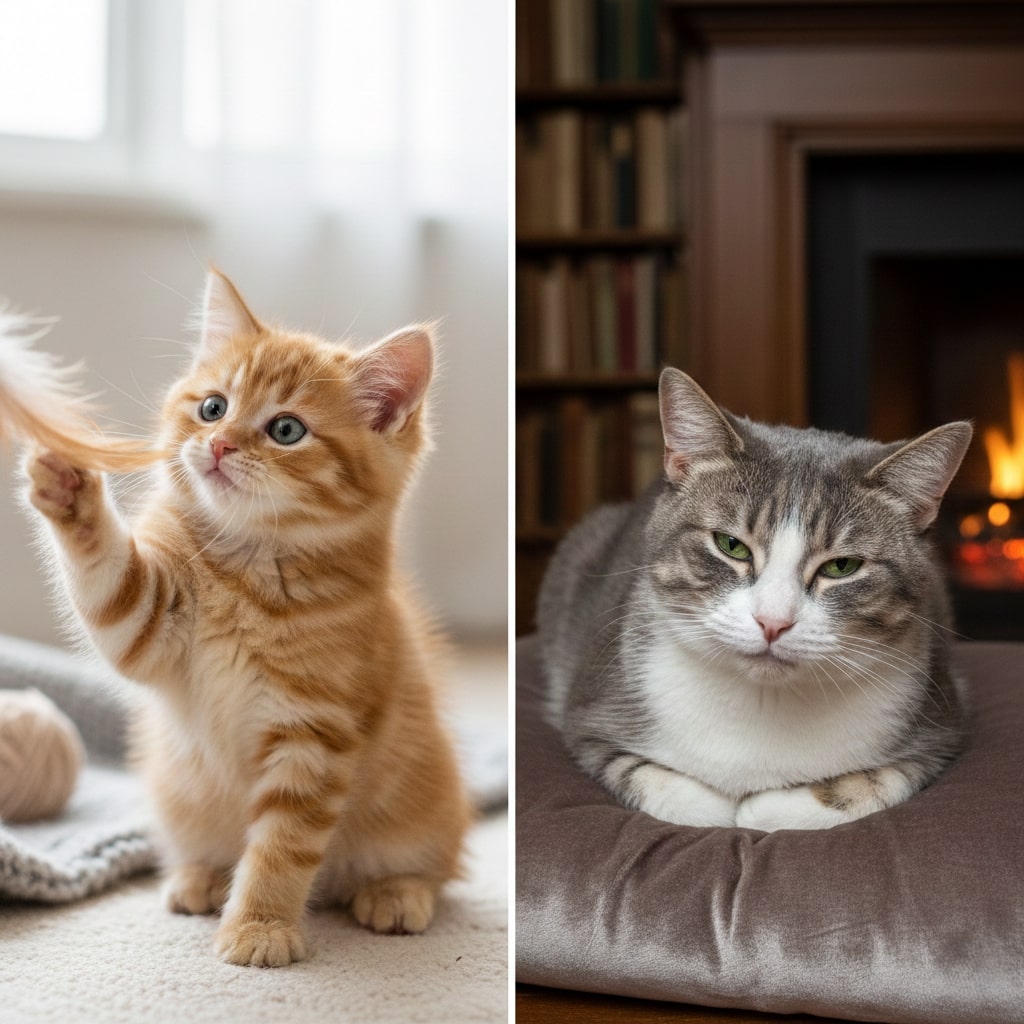
A cat is generally considered senior between the ages of 11 and 14 years old, which is roughly equivalent to a human in their 60s and 70s. However, veterinarians often start monitoring for age-related health changes when a cat becomes “Mature” at 7 to 10 years old. Cats aged 15 years and older are classified as geriatric.
Summary Table: Feline Life Stages
| Life Stage | Cat Age | Human Equivalent | Key Care Focus |
| Mature | 7 – 10 Years | 44 – 56 Years | Baseline blood work, weight monitoring, dental checks. |
| Senior | 11 – 14 Years | 60 – 72 Years | Twice-yearly vet visits, mobility support, diet changes. |
| Geriatric | 15+ Years | 76+ Years | Pain management, cognitive support, kidney function monitoring. |
When Is a Cat Considered a Senior? A Complete Guide to Aging Felines
Determining exactly when your cat enters their golden years can be tricky. Unlike dogs, who show their age with gray muzzles and stiff joints relatively early, cats are masters at hiding signs of aging. You might look at your ten-year-old tabby and think they look exactly the same as they did at five. However, internal changes are happening that require a shift in how you care for them.
Understanding the specific life stages of a cat is crucial. It helps you catch diseases early, adjust their diet for longevity, and keep them comfortable. This guide covers everything you need to know about senior cat classification, how to calculate their age in human years, and the signs that it is time to switch to a senior care routine.
Read Also: Can Cats Be Trained?
The Three Stages of an Older Cat
Veterinarians and organizations like the American Association of Feline Practitioners (AAFP) have moved away from simply calling every old cat a “senior.” Instead, they break the aging process down into three distinct categories. This helps in tailoring medical care more precisely.
1. Mature (Middle Age)
Age: 7 to 10 years
This is the equivalent of a human in their 40s or 50s. Your cat is not “old” yet, but their metabolism is beginning to slow down. This is the critical window for prevention. If your cat is overweight, this is the time to fix it before it leads to diabetes or arthritis. Vet visits should focus on establishing baseline blood values so you have something to compare against later.
2. Senior
Age: 11 to 14 years
At this stage, your cat is comparable to a human in their 60s or early 70s. You will likely start seeing physical changes. They may sleep more, play less, or have trouble jumping onto high counters. This is when age-related diseases like Hyperthyroidism or Chronic Kidney Disease often begin to manifest.
3. Geriatric
Age: 15 years and older
These are the “super seniors,” equivalent to humans in their late 70s, 80s, and beyond. Many geriatric cats are dealing with at least one chronic health condition. The focus shifts from prevention to management and quality of life. Comfort is the main priority here.
Read Also: Why Do Cats Hide When They’re Sick
Calculating Cat Years to Human Years
A common myth is that one cat year equals seven human years. This is not accurate because cats mature very quickly in their first two years and then age more slowly after that.
Here is a more accurate formula used by veterinarians:
- The first year of a cat’s life is equal to about 15 human years.
- The second year adds roughly 9 years (making a 2-year-old cat roughly 24 in human years).
- Each year after that adds approximately 4 human years.
Using this math, a 7-year-old cat is roughly 44, while a 15-year-old cat is roughly 76.
Physical Signs Your Cat Is Aging
Because cats are predators, they are biologically wired to hide weakness. They will not complain about an aching hip or a toothache. As a cat owner, you have to be observant to spot the subtle physical clues of aging.
Coat and Skin Changes
As cats enter their senior years, they may groom themselves less effectively. This can be due to arthritis making it painful to twist and reach certain spots, or simply a lack of energy.
- Matting: You might find mats on their lower back or hindquarters.
- Thinning Fur: The coat may feel thinner or appear greasy.
- Skin Elasticity: Older cats often have skin that is thinner and less elastic, making them more prone to cuts or tears.
- Nail Overgrowth: Senior cats often do not use scratching posts as vigorously. Their claws can become thick, brittle, and grow into their paw pads if not trimmed regularly.
Weight Fluctuations
Weight changes are a massive indicator of health status in senior cats.
- Weight Gain: In the “Mature” stage (7-10 years), cats often gain weight as their metabolism slows but their appetite remains the same.
- Weight Loss: In the “Senior” and “Geriatric” stages (11+), unexplained weight loss is a major red flag. It is a common symptom of kidney disease, diabetes, cancer, or hyperthyroidism. You might notice their spine or hips becoming more bony even if they are eating normally.
Vision and Hearing Loss
- Cloudy Eyes: You might notice a bluish haze in your cat’s pupils. This is usually Lenticular Sclerosis, a normal aging change that does not affect vision much. However, opaque whiteness could be cataracts.
- Iris Atrophy: The colored part of the eye (iris) may look patchy or like it has “moth-eaten” edges. This can make them sensitive to bright light.
- Hearing Loss: If your cat stops greeting you when you open the door or sleeps through loud noises, they may be losing their hearing.
Read Also: Why Do Cats Suddenly Get the Zoomies?
Behavioral Changes in Senior Cats
Behavior is often the first thing to change when a cat hits their senior years. Do not dismiss these changes as just “getting grumpy.”
Changes in Activity and Mobility
Arthritis (osteoarthritis) affects a huge percentage of cats over age 12. Unlike dogs who limp, cats with arthritis simply stop doing things.
- They hesitate before jumping up.
- They take more “steps” to get down from high places (e.g., chair to ottoman to floor).
- They sleep more deeply and are harder to wake up.
- They avoid stairs.
Cognitive Dysfunction Syndrome (CDS)
Feline cognitive dysfunction is similar to dementia or Alzheimer’s in humans. It affects a significant number of geriatric cats. Symptoms include:
- Disorientation: Walking into a room and staring at the wall, or getting “stuck” in corners.
- Vocalization: Loud crying or yowling, especially at night.
- Altered Sleep Cycles: Sleeping all day and pacing or wandering all night.
- House Soiling: Forgetting where the litter box is.
Litter Box Habits
If a senior cat starts going outside the box, it is rarely out of spite. It is usually medical.
- High sides: If the box has high walls, it may be too painful for an arthritic cat to step over.
- Location: If the box is in the basement, the stairs may be a barrier.
- Kidney Issues: Increased urination volume might mean the box gets dirty faster than you can clean it, causing them to go elsewhere.
Top Health Risks for Senior Cats
Once your cat reaches the age of 7, the risk for several chronic conditions increases. Catching these early through blood work usually means a good prognosis.
1. Chronic Kidney Disease (CKD)
This is one of the most common ailments in older cats. The kidneys gradually lose their ability to filter toxins from the blood.
- Signs: Excessive drinking, excessive urination, weight loss, vomiting, bad breath.
2. Hyperthyroidism
This occurs when the thyroid gland produces too much hormone. It speeds up the metabolism to dangerous levels.
- Signs: Ravenous appetite but losing weight, hyperactivity, rapid heart rate, vocalizing, vomiting.
3. Diabetes
Like humans, cats can develop Type 2 diabetes, especially if they were overweight during their “Mature” years.
- Signs: Increased thirst, increased urination, ravenous appetite.
4. Dental Disease
Years of plaque buildup can lead to periodontal disease. This is not just about bad breath; bacteria from the mouth can enter the bloodstream and damage the heart and kidneys.
- Signs: Drooling, dropping food while eating, pawing at the mouth, bleeding gums.
Read Also: Why Do Cats Follow You Everywhere?
How to Care for a Senior Cat
Caring for a senior cat requires a proactive approach. You cannot wait for them to get sick. Here is a checklist for optimizing your cat’s golden years.
Adjust Their Diet
Senior cats have different nutritional needs than adult cats.
- Protein: Unless they have kidney disease, senior cats actually need more high-quality protein to prevent muscle wasting.
- Hydration: Older cats are prone to dehydration. Switch to wet food if possible, or add water fountains to encourage drinking.
- Supplements: Look for foods containing Omega-3 fatty acids (for joints and brain health) and antioxidants.
Change the Environment
Make your home “senior-friendly” to accommodate their limited mobility.
- Ramps and Steps: Place pet stairs near the bed or their favorite window perch so they don’t have to jump.
- Heated Beds: Arthritis gets worse in the cold. A heated bed or a self-warming mat can soothe sore joints.
- Accessible Litter Boxes: Switch to a box with a low entry point. Ensure there is a litter box on every floor of your home so they don’t have to use stairs.
- Night Lights: If your cat has poor vision, plug in night lights in hallways and near their food/water bowls to help them navigate in the dark.
Increase Veterinary Visits
The standard “once a year” checkup is not enough for a senior cat.
- Schedule: Visit the vet every 6 months. A lot can change in a cat’s health in half a year (which is equal to 2 human years).
- Diagnostics: Ask for a “Senior Panel.” This includes a Complete Blood Count (CBC), biochemistry profile, thyroid check, and urinalysis.
- Blood Pressure: Hypertension is a silent killer in cats and should be checked regularly after age 10.
Read Also: Why Do Cats Stare at Walls?
Grooming Assistance
Since they cannot reach their back or hind legs easily, you need to help them.
- Brushing: Gentle brushing 2-3 times a week prevents painful mats.
- Nail Trims: Check their claws every two weeks. Thick senior nails may need high-quality clippers.
When to Say Goodbye
This is the hardest part of owning a senior cat. Quality of life is more important than quantity of life. To monitor this, use a “Quality of Life Scale” (often called the HHHHHMM scale).
Monitor these five factors:
- Hurt: Is pain managed?
- Hunger: Are they eating?
- Hydration: Are they drinking?
- Hygiene: Can they keep themselves clean?
- Happiness: Do they still enjoy their favorite toys or laps?
- Mobility: Can they move around on their own?
- More good days than bad: This is the ultimate measure.
Conclusion
A cat is considered senior starting around age 11, but the preparation for this life stage begins at age 7. Aging is not a disease; it is a natural process. With modern veterinary medicine and attentive home care, cats are living longer than ever before—many reaching their late teens or early twenties.
By watching for the subtle signs of aging, like changes in water intake, hesitation to jump, or weight fluctuations, you can catch issues early. Simple changes, like adding a ramp to the sofa or switching to a senior-specific diet, can make a world of difference in your cat’s comfort. Cherish these golden years; senior cats often become the most affectionate and bonded companions of all.