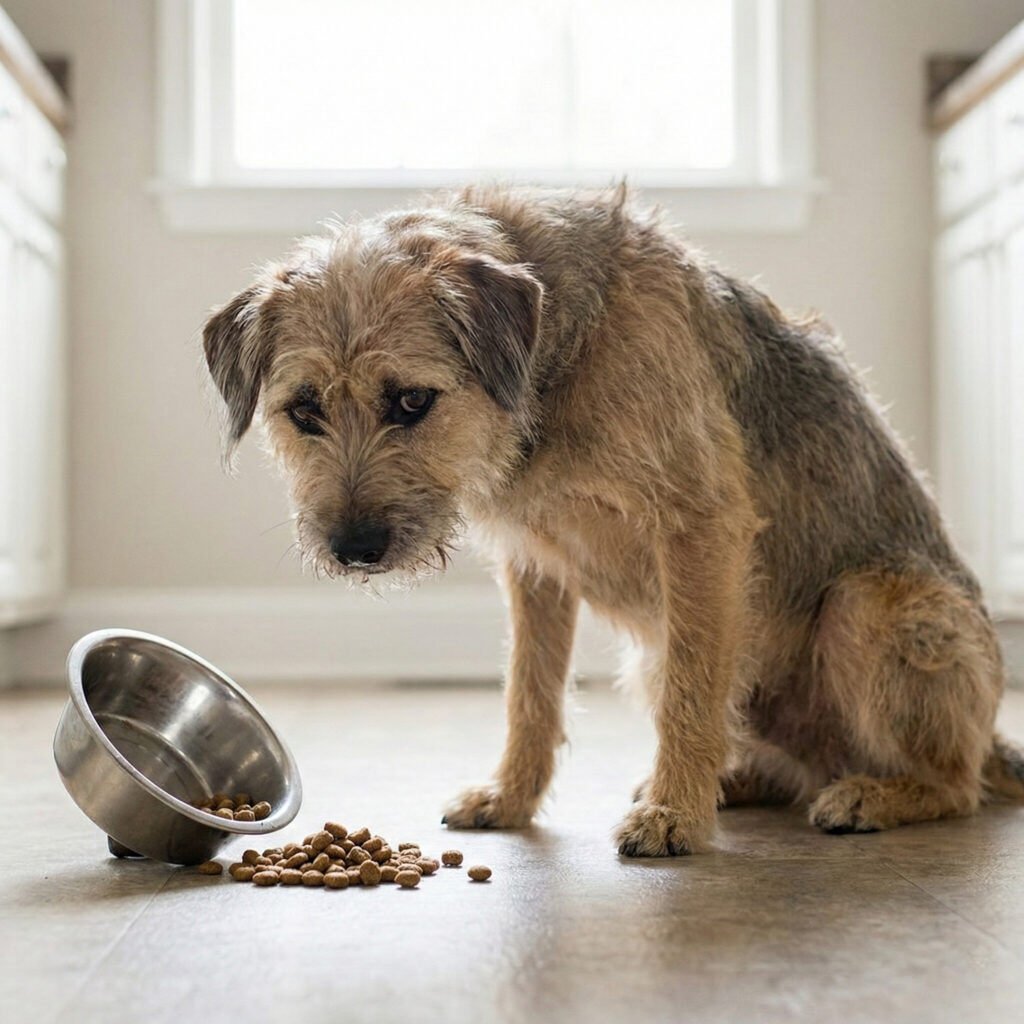
When a dog eats too fast, it swallows large amounts of air along with their food, a condition known as aerophagia. This often leads to immediate issues like choking, gagging, and regurgitation (spitting up undigested food). The most severe consequence is Gastric Dilatation-Volvulus (GDV), commonly known as Bloat. GDV occurs when the stomach fills with gas and twists, cutting off blood flow; this is a life-threatening emergency that requires immediate surgery. Long-term speed eating can also cause poor nutrient absorption, dental issues, and behavioral problems like food aggression.
Summary Table
| Category | Key Information |
| Main Causes | Instinct, competition with other pets, medical conditions (parasites), poor nutrition history. |
| Immediate Risks | Choking, gagging, vomiting, regurgitation, excessive gas. |
| Severe Risks | Bloat (GDV) – A fatal condition where the stomach twists. |
| Symptoms of Bloat | Swollen hard belly, retching without vomiting, restlessness, drooling. |
| Best Solutions | Slow feeder bowls, puzzle toys, snuffle mats, muffin tin method. |
| When to see a Vet | If the dog attempts to vomit with no result, has a distended belly, or collapses. |
The Dangers of Speed Eating in Dogs
It is a common sight for many dog owners: you pour a bowl of kibble, set it down, and within thirty seconds, the entire meal is gone. Your dog might look at you as if they haven’t eaten in days. While this might seem like just a quirky personality trait or a sign of a “healthy appetite,” eating too fast is actually a significant health hazard.
Speed eating, technically called tachyphagia, puts your dog at risk for problems ranging from minor tummy aches to fatal medical emergencies.
Understanding the biology behind why this happens and knowing the risks can help you extend your dog’s life and improve their daily comfort.
Read Also: How to Choose Healthy Dog Treats
Why Do Dogs Eat So Fast?
Before fixing the behavior, it helps to understand why your dog is inhaling their food. For most dogs, this is biological, but for others, it might be environmental or medical.
Ancestral Instincts
In the wild, dogs and their wolf ancestors were scavengers. They did not know when their next meal would arrive. When they made a kill or found food, they had to eat as much as possible, as quickly as possible, before a larger predator stole it or the rest of the pack finished it. Domestic dogs still carry this “feast or famine” DNA.
Competition and Anxiety
If you have a multi-dog household, your dog might eat fast because they feel competitive pressure. Even if the other dogs are friendly, the mere presence of another animal can trigger a resource-guarding instinct. They eat fast to ensure no one else gets their share.
Medical Causes
Sometimes, a ravenous appetite is a symptom of an underlying health issue.
- Parasites: Worms can steal nutrients, leaving the dog constantly hungry.
- Diabetes or Thyroid Issues: Hormonal imbalances can mess with hunger signals.
- Poor Nutrition: If a dog’s current food is full of fillers and low on actual nutrition, their body may signal them to eat more to get the vitamins they need.
Immediate Physical Consequences
The moment your dog starts gulping food, physical reactions begin. The most common immediate issues are uncomfortable but usually manageable if addressed quickly.
Choking and Gagging
When a dog does not chew, they swallow whole pieces of kibble or large chunks of meat. This creates a high risk of blockage in the esophagus. You might hear your dog coughing, hacking, or making high-pitched wheezing noises immediately after eating.
Regurgitation vs. Vomiting
It is important to know the difference between these two expulsions, as speed eating usually causes regurgitation.
- Vomiting: This is an active process. The dog’s stomach muscles contract, they might heave, and the food comes up partially digested.
- Regurgitation: This happens passively and quickly. The food never really makes it to the stomach to be digested. The dog simply opens their mouth, and the food (often shaped like a tube from the esophagus) slides back out, covered in slime but looking mostly like it did in the bowl. This happens because the esophagus is blocked or overwhelmed.
Read Also: How Treats Affect Dog Training Success
The Silent Killer: Bloat (GDV)
The most serious danger of speed eating is Gastric Dilatation-Volvulus (GDV), commonly referred to as Bloat. This is not just a “full tummy.” It is a top killer of dogs, especially deep-chested breeds like Great Danes, German Shepherds, and Boxers.
How Bloat Happens
When a dog eats too fast, it swallows a massive amount of air (aerophagia). The food and air mix in the stomach, causing it to expand like a balloon.
In mild cases, the dog burps or passes gas, and the pressure is relieved. In severe cases, the distended stomach rotates or twists around its own axis.
This twisting traps the gas inside so it cannot escape. Even worse, it twists the blood vessels, cutting off blood supply to the stomach and sometimes the spleen.
Why It Is Fatal
Once the stomach twists:
- Tissue Death: The stomach lining begins to die from a lack of blood.
- Toxin Release: As tissue dies, toxins are released into the bloodstream.
- Shock: The dog goes into shock rapidly.
- Heart Failure: The pressure on the diaphragm makes it hard to breathe and compresses large veins, stopping blood return to the heart.
Without emergency surgery to untwist the stomach, a dog with GDV will die within hours.
Warning Signs of Bloat
If your dog eats fast and then shows these signs, go to the emergency vet immediately:
- A swollen, hard belly (it may feel like a drum).
- Non-productive retching (trying to vomit but nothing comes up).
- Restlessness and pacing (unable to get comfortable).
- Excessive drooling.
- Pale gums.
Long-Term Health Risks
If your dog manages to avoid bloat, chronic speed eating can still damage their health over time.
Dental Problems
Kibble is designed to provide some mechanical cleaning action for teeth when chewed. When a dog swallows kibble whole, they lose this benefit.
Furthermore, digestion begins in the mouth with saliva. Skipping this step can alter the pH balance in the mouth, leading to faster plaque buildup and gum disease.
Poor Nutrient Absorption
Digestion is a chain reaction. Chewing breaks food down so stomach acids can do their job. If food arrives in the stomach in giant chunks, it takes longer to break down. This can lead to loose stools and the dog failing to absorb all the vitamins and minerals from the food.
Weight Gain
Just like in humans, it takes time for the brain to register that the stomach is full. A dog that eats a meal in 30 seconds doesn’t feel full immediately. They may beg for more food, leading owners to overfeed them, resulting in obesity.
Behavioral Consequences
Speed eating affects the mind as well as the body. The frantic energy around mealtime can translate into behavioral issues.
Food Aggression
A dog that eats as if they are starving is in a high-arousal state. If you or another pet walks by while they are in this “frenzy,” they are more likely to snap, growl, or bite to protect their bowl. This is known as resource guarding.
Scavenging
Dogs that don’t feel satiated after a meal are more likely to raid garbage cans or steal food from counters (counter-surfing). Because they have learned to swallow food instantly to avoid losing it, they are more likely to swallow dangerous items they find on the ground, such as socks, rocks, or toxic foods.
Read Also: Signs of Food Sensitivities in Dogs
Practical Solutions: How to Slow Down Your Dog
The good news is that speed eating is one of the easiest canine problems to solve. You do not need expensive training; you simply need to change the mechanics of how they are fed.
1. Slow Feeder Bowls
These are bowls with raised ridges, mazes, or bumps in the center. The dog has to use their tongue to navigate around the obstacles to get the kibble.
- Benefit: Can turn a 30-second meal into a 10-minute meal.
- Tip: Start with an easy design so your dog doesn’t get frustrated and flip the bowl over.
2. The Muffin Tin Method (DIY)
You don’t need to buy a special bowl. Take a standard muffin tin and flip it upside down. Scatter the kibble between the raised muffin cups. The dog has to pick the food out of the narrow valleys. Alternatively, keep it right side up and put small amounts of food in each cup, placing a tennis ball over each cup so the dog has to move the ball to eat.
3. Snuffle Mats
A snuffle mat is a fabric mat made of felt strips tied to a base. You hide the dry food inside the shaggy strips.
- Benefit: This encourages the dog’s natural foraging instinct. Sniffing and searching are mentally tiring and calming for dogs.
- Best for: Dry kibble and anxious dogs.
4. Food Puzzle Toys
Toys like the Kong Wobbler or treat-dispensing balls require the dog to knock the toy around to release a few pieces of food at a time. This makes them work for their calories and provides excellent mental stimulation.
5. Hand Feeding
If you are working on bonding or training, use their meal ration for training sessions. Ask for a “sit,” “shake,” or “down,” and reward them with a small handful of kibble. This guarantees they cannot eat too fast and reinforces obedience.
6. Cookie Sheet Spreading
For a very simple fix, pour the food onto a large cookie sheet or baking tray. Spreading the food out over a large surface area prevents the dog from taking massive mouthfuls at once.
Dietary Adjustments
Sometimes the type of food contributes to the speed.
- Add Water: Adding water or low-sodium broth to kibble can turn it into a soup. The dog is forced to lap up the liquid to get to the food, which slows down the intake and improves hydration.
- Switch Food Size: If you have a large dog eating tiny kibble, they can swallow it without chewing. Switching to a “Large Breed” formula with larger kibble sizes forces them to crunch.
When to Consult a Veterinarian
While buying a slow feeder is the first step, you should consult a vet if the behavior appears suddenly.
- Sudden Onset: If your dog used to be a slow eater and suddenly becomes voracious, get them checked for diabetes, Cushing’s disease, or thyroid imbalances.
- Weight Loss: If they are eating fast but losing weight, they may have parasites or malabsorption issues.
- Behavioral Changes: If the speed eating is accompanied by aggression that you cannot manage safely.
Conclusion
A dog eating too fast is not just a quirky habit; it is a behavior that carries distinct medical risks. From the discomfort of excess gas to the tragedy of Bloat, the consequences of “inhaling” food are serious.
Fortunately, as a pet owner, you have full control over the environment. By ditching the standard deep bowl and using slow feeders, puzzles, or simple DIY methods, you can transform mealtime from a dangerous race into a mentally stimulating activity.
Not only will you protect your dog from life-threatening conditions like GDV, but you will also likely see a happier, calmer dog who actually tastes their dinner.