
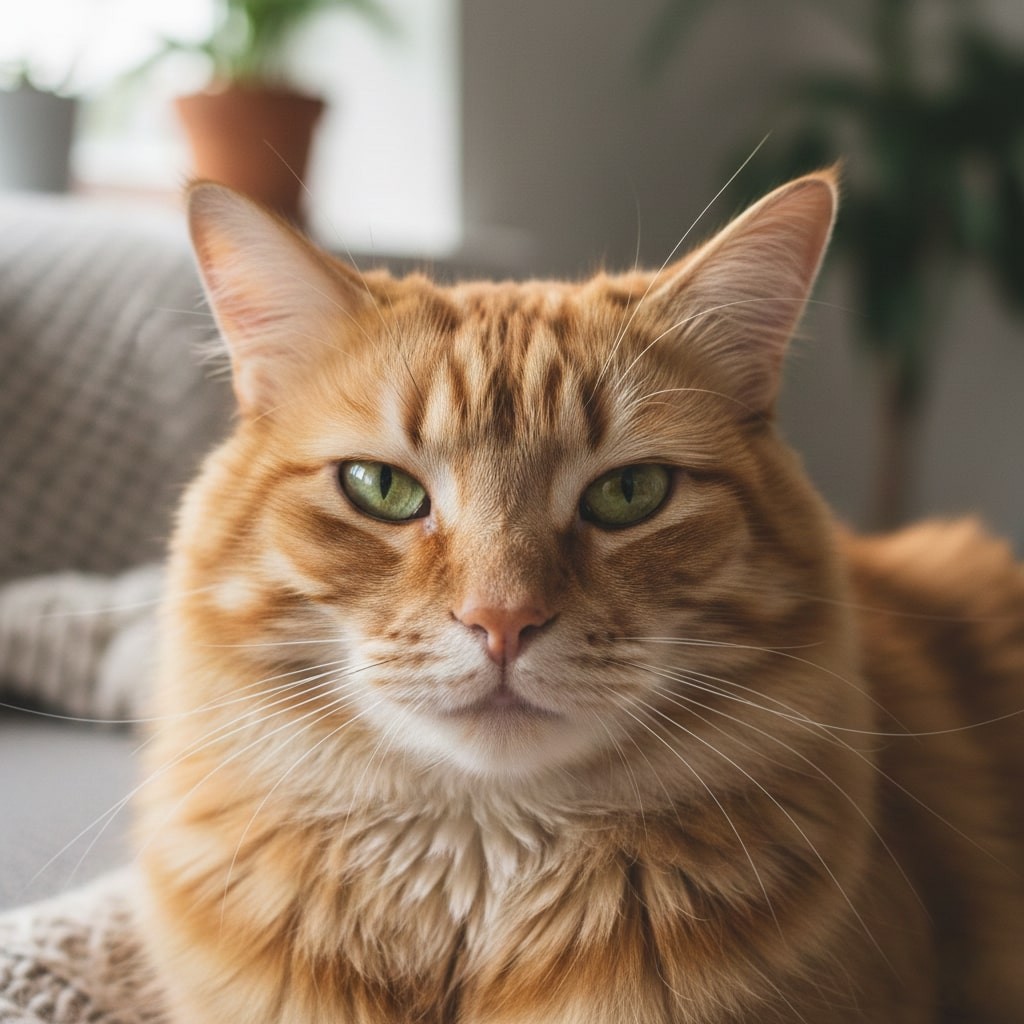
When a cat looks at you and slowly closes and opens its eyes, it is communicating trust and affection. Often called a “cat kiss,” this gesture signals that the cat feels safe enough to lower its guard in your presence. It is a deliberate social signal used to maintain a positive emotional bond with humans and other cats.
Summary Table: Key Facts About Cat Slow Blinking
| Feature | Description |
| Primary Meaning | Trust, love, and relaxation. |
| Common Nickname | “Cat Kiss” or “Kitty Smile.” |
| Scientific Basis | Confirmed by a 2020 University of Sussex study to facilitate communication. |
| How to Respond | Slowly close your eyes and open them again to show you trust them back. |
| Evolutionary Reason | Closing eyes is a sign of vulnerability; doing so voluntarily proves safety. |
| Context | Usually happens when the cat is relaxed, purring, or resting. |
| Red Flags | If eyes are squinting constantly with discharge, it may be a medical issue, not a slow blink. |
What Does It Mean When a Cat Slowly Blinks?
If you share your home with a cat, you have likely experienced the “stare down.” You look over at your feline friend, they lock eyes with you, and then, slowly and deliberately, they close their eyes and open them again. It’s not a quick flutter like a human blink; it is a languid, purposeful movement.
For years, cat owners have suspected this was a sign of love. Now, science backs that up. This guide will dive deep into the world of feline non-verbal communication, explaining exactly why cats slow blink, the science behind it, and how you can use this secret language to bond with your pet.
Read Also: Why Does My Cat Poop in the Sink?
1. The “Cat Kiss”: Decoding the Gesture
The slow blink is widely considered the highest compliment a cat can pay a human. In the world of animal behavior, direct eye contact is often perceived as a threat or a challenge. In the wild, staring usually precedes a fight.
However, when a cat breaks that stare by slowly closing its eyes, it is effectively saying, “I do not want to fight you. I feel safe enough to close my eyes in your presence.”
Why Is It Significant?
As predators who are also prey to larger animals, cats are naturally hyper-vigilant. Their survival depends on keeping their eyes open to scan for threats. Voluntarily cutting off their vision, even for a second, is a massive display of vulnerability.
When your cat does this to you, they are communicating three specific things:
- Trust: They know you will not attack them while they aren’t looking.
- Relaxation: They are in a calm state and want you to be calm too.
- Affection: They enjoy your company and recognize you as a friend.
This is why behaviorists often refer to the slow blink as a “Cat Kiss.” It carries the same emotional weight as a warm smile or a hug between humans.
2. The Science Behind the Blink
For a long time, the meaning of the slow blink was anecdotal—something cat lovers “just knew.” However, in 2020, a team of psychologists at the University of Sussex published the first scientific study verifying this behavior.
The Study Findings
Professor Karen McComb and her team conducted two experiments to understand the function of the slow blink interaction.
- Experiment 1: Owners sat near their cats and slow blinked at them. The results showed that cats were more likely to slow blink back at their owners after the owner initiated the gesture, compared to when the owner just sat there with a neutral face.
- Experiment 2: A stranger (the researcher) sat near the cat. The stranger slow blinked at the cat and extended a hand. The study found that cats were more likely to approach the stranger’s outstretched hand after a slow blink exchange than they were with a neutral expression.
The Conclusion
The study proved that the slow blink is a positive emotional communication tool. It isn’t just a random reflex; it is a way for cats to build rapport with humans. The researchers compared the narrowing of the eyes in cats to the “Duchenne smile” in humans (a genuine smile that involves the eyes crinkling at the corners).
3. How to Slow Blink Back (And Why You Should)
One of the best ways to strengthen the bond with your cat is to learn their language. You don’t need to meow; you just need to use your eyes. Reciprocating a slow blink tells your cat that you understand them and that you are not a threat.
Step-by-Step Guide to “Speaking Cat”
- Wait for the Right Moment: Pick a time when your cat is already relatively relaxed. Do not try this if they are in “hunting mode,” zoomed out, or agitated.
- Soften Your Gaze: Look at your cat, but do not stare intensely. Relax your facial muscles.
- The Slow Close: Slowly lower your eyelids until your eyes are closed or nearly closed. This should take about half a second to a full second.
- The Pause: Keep your eyes closed for a brief moment.
- The Slow Open: Slowly open your eyes again.
- Avert Your Gaze: After opening your eyes, softly look away or look slightly to the side. This reinforces that you are not challenging them.
Pro Tip: You can combine the slow blink with a soft head turn to further emphasize that you are non-threatening.
Read Also: Why Do Cats’ Tails Fall Off?
4. Slow Blinking vs. Other Eye Behaviors
While the slow blink is a positive sign, cats use their eyes to communicate a wide variety of emotions. It is crucial to read the context so you don’t mistake a medical issue or aggression for a sign of love.
The Direct Stare (Unblinking)
If a cat is staring at you with wide eyes and unblinking focus, this is not a sign of affection.
- Meaning: This is usually a sign of dominance, aggression, or fear.
- What to do: Do not stare back. Blink slowly and look away to de-escalate the tension.
Squinting or Half-Closed Eyes
Sometimes a cat will keep their eyes half-shut without the opening and closing motion.
- Meaning: This usually indicates pure relaxation or sleepiness. They are content and monitoring the room with “low power mode.”
- Caution: If the squinting looks tight or uncomfortable, check for medical issues (see below).
Dilated Pupils
- Meaning: Big, saucer-like pupils usually mean excitement, fear, or the instinct to hunt.
- Context: If you are playing, it means they are about to pounce. If there is a loud noise, it means they are terrified.
5. When “Blinking” Is Actually a Medical Issue
Entity optimization requires distinguishing between behavioral signs and medical symptoms. Sometimes, a cat blinking frequently or squinting is a sign of ocular distress, not love.
You should consult a veterinarian if the blinking is accompanied by:
- Discharge: Green, yellow, or clear goop in the corner of the eye.
- Redness: Inflammation of the pink tissue around the eye (conjunctivitis).
- Rubbing: The cat is pawing at its eye or rubbing its face on the carpet.
- Asymmetry: One eye is blinking or squinting while the other is open.
- Cloudiness: The surface of the eye looks milky.
Rule of Thumb: A slow blink is a deliberate, smooth communication. A medical blink is usually rapid, twitchy, or involves keeping the eye shut for long periods due to pain.
Read Also: Can Cats See Fire?
6. Other Signs Your Cat Loves You
The slow blink is part of a larger cluster of “affiliative behaviors.” To fully understand your cat’s feelings, look for these accompanying signs of affection.
The Head Bunt (Bunting)
When a cat bumps their head against your hand, leg, or face, they are depositing pheromones from scent glands on their cheeks.
- Translation: “I am marking you. You belong to me, and you are part of my safe territory.”
Kneading (Making Biscuits)
Rhythmic pushing of the paws against a soft surface (or your lap) is called kneading or biscuit making. This behavior stems from kittenhood when they kneaded their mother’s belly to stimulate milk flow.
- Translation: “I feel as safe and comforted as I did when I was a kitten.”
The Upright Tail
A cat approaching you with their tail held high in the air, often with a little crook or “question mark” at the top.
- Translation: “I am happy to see you and feeling confident.”
Purring
While cats can purr when they are in pain to soothe themselves, a purr combined with a slow blink and a relaxed posture is the ultimate sign of contentment.
7. Can All Cats Slow Blink?
Yes, all domestic cats are capable of this behavior. However, the frequency depends on the individual cat’s personality and their history.
Rescue and Feral Cats
Cats that were not socialized with humans as kittens may be less likely to slow blink initially. They often hold direct eye contact to monitor threats. With these cats, you should initiate the slow blink. It is a powerful tool for rehabilitation. By consistently slow blinking at a fearful cat, you can gradually teach them that you are not a predator.
Different Breeds
While the behavior is universal, some breeds known for being more affectionate (like Ragdolls, Maine Coons, or Siamese) may perform the gesture more frequently than more independent breeds.
Frequently Asked Questions
Should I stare at my cat before slow blinking?
No. Hard staring is aggressive. Catch their eye softly, then immediately go into the slow blink.
My cat never slow blinks at me. Does he hate me?
Not at all. Some cats are just less expressive with their eyes. Look for other signs of love, like following you from room to room or sleeping near you.
Can I slow blink at other people’s cats?
Yes! It is actually the polite way to introduce yourself to a new cat. It signals that you are a “cat person” who understands their boundaries.
Do cats slow blink at each other?
Yes. It is a social signal used between cats to de-escalate conflict and show peaceful intentions.
Conclusion: The Power of the Blink
Understanding “What does it mean when a cat slow blinks?” transforms the way you interact with your pet. It changes the dynamic from owner and pet to two living beings sharing a conversation.
The next time you are sitting on the couch and you catch your cat looking at you, don’t just look away. Pause, soften your face, and slowly close your eyes. When you open them and see your cat doing the same, you’ll know you’ve just shared a silent “I love you.”
Next Step for You
Go find your cat right now. Sit calmly near them, wait for them to look at you, and try the slow blink technique. Observe their reaction, do they blink back? Do they relax their posture? Using this simple trick daily will deepen your bond significantly.