
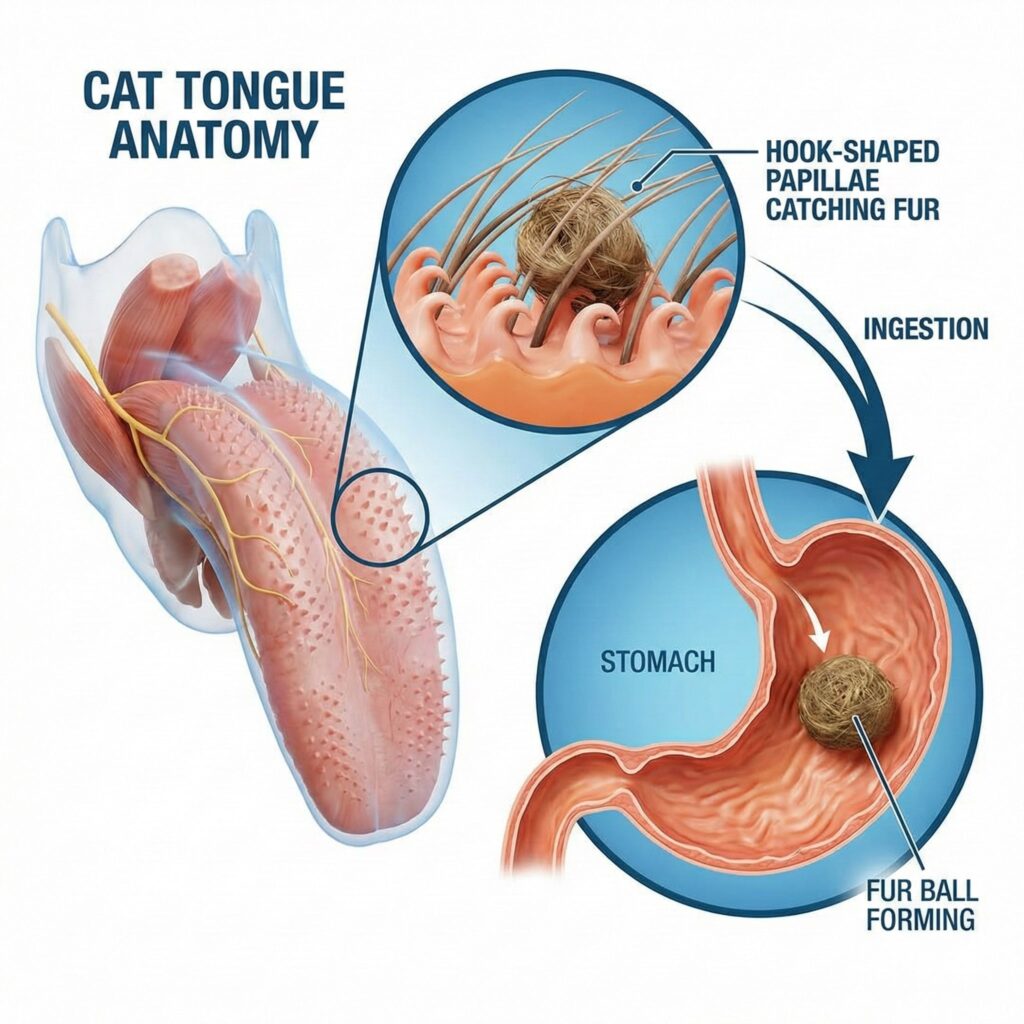
A hairball, scientifically known as a trichobezoar, is a clump of fur that accumulates in a cat’s stomach as a result of grooming. While most ingested fur passes through the digestive tract, excess fur can bind together with digestive fluids. If it becomes too large to pass into the intestines, the cat vomits it up. Frequent hairballs can indicate over-grooming, dietary issues, or underlying digestive health problems.
Summary Table: What is Hairball in Cats
| Category | Key Details |
| Scientific Name | Trichobezoar |
| Primary Cause | Ingestion of loose fur during self-grooming |
| Normal Frequency | Once every few weeks or months |
| Warning Signs | Retching without producing a hairball, lethargy, loss of appetite, swollen belly |
| Best Prevention | Daily brushing, high-fiber diet, hydration, hairball remedy gels |
| When to see a Vet | If hairballs occur weekly, or if the cat is vomiting food/bile frequently |
Understanding Hairballs in Cats: Causes & Prevention
Hairballs are one of the most common issues cat owners face. It is easy to dismiss them as a messy nuisance or “just part of owning a cat.” However, understanding why they happen is crucial for your pet’s long-term health. While an occasional hairball is normal, frequent issues can signal that your cat’s digestive system needs help.
This guide covers exactly how hairballs form, why some cats get them more than others, and the specific steps you can take to stop them.
Read Also: How Sleep Patterns Differ Between Cats and Humans
What Is a Hairball?
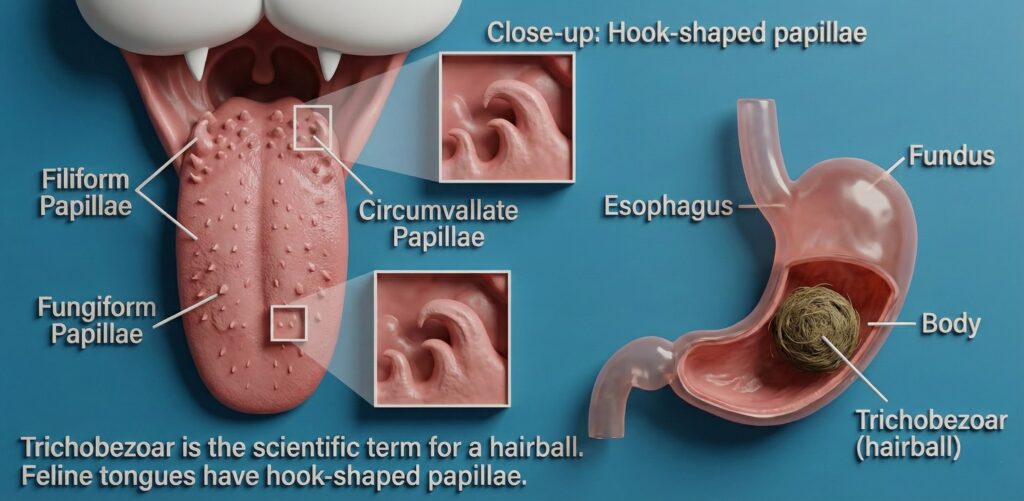
A hairball is a dense collection of fur and digestive fluids. The technical term is a trichobezoar. Despite the name “ball,” they often look like a tube or a sausage when your cat brings them up. This shape occurs because the mass is squeezed through the narrow esophagus on the way out.
How They Form
Cats are meticulous groomers. They spend roughly 30% to 50% of their waking hours grooming themselves. Their tongues are covered in tiny, backward-facing barbs called papillae. These barbs act like a natural comb, catching loose hair, dirt, and debris.
Because the barbs face backward, a cat cannot spit the hair out. They are forced to swallow it. In a healthy scenario, this hair travels through the stomach, into the intestines, and exits with the feces. You usually never see it.
However, if a cat swallows a large amount of fur, or if their digestive system is moving slowly, the hair stays in the stomach. It churns with bile and mucus, matting into a solid mass. When this mass irritates the stomach lining, the cat vomits to eject it.
Primary Causes of Hairballs in Cats
Every cat grooms, but not every cat suffers from frequent hairballs. Several specific factors increase the risk.
1. Excessive Shedding and Coat Length
Long-haired breeds like Persians, Maine Coons, and Ragdolls are significantly more prone to hairballs. They have more fur to swallow, and that fur is longer, making it easier to tangle into knots inside the stomach.
Seasons also play a role. As the weather warms up in spring and early summer, cats shed their heavy winter undercoats. During this “shedding season,” the volume of loose fur increases dramatically, leading to more ingestion.
2. Over-Grooming (Psychogenic Alopecia)
Sometimes grooming goes beyond hygiene. Cats may lick themselves excessively due to stress, anxiety, or boredom. This condition is often called psychogenic alopecia. Common triggers include:
- Moving to a new home.
- Introduction of a new pet or baby.
- Changes in routine.
- Skin allergies or fleas (itchiness causes licking).
If you notice bald patches on your cat’s belly or legs, they are ingesting massive amounts of fur, which will almost certainly lead to hairballs.
Read Also: Why Cats Groom So Much
3. Digestive Motility Issues
This is a critical factor often overlooked. If a cat’s digestive system is “sluggish,” it moves food and hair through the intestines too slowly. This gives the hair more time to accumulate in the stomach. Chronic issues like Inflammatory Bowel Disease (IBD) or mild pancreatitis can slow down gastric motility, turning normal grooming into a hairball problem.
4. Low Moisture Diet
Hydration is the lubricant of the digestive system. Cats on a strictly dry food diet (kibble) may not consume enough water. Without adequate moisture, the digestive tract cannot flush hair through the intestines efficiently.
Symptoms: Normal vs. Dangerous
It is vital to distinguish between a cat expelling a hairball and a cat in distress.
The Sound of a Hairball
The process usually begins with a specific sound. You will hear a rhythmic retching or hacking noise, often described as “ack-ack-ack.” This is the stomach contracting. Within a few moments, the cat should expel the hairball, perhaps with some frothy liquid or bile. Afterward, the cat usually returns to normal behavior immediately.
When to Call the Vet
Sometimes a hairball creates a blockage in the intestines. This is a life-threatening emergency. Watch for these red flags:
- Unproductive Retching: The cat keeps hacking and gagging but nothing comes out. This can look like asthma or a blockage.
- Lethargy: The cat is hiding, sleeping more than usual, or refuses to play.
- Loss of Appetite: Refusing to eat for more than 24 hours.
- Constipation or Diarrhea: Changes in litter box habits.
- Swollen Abdomen: The belly feels hard or distended to the touch.
If you see these signs, do not wait. A blockage may require surgery to remove.
Read Also: How much hair does a cat shed in a day?
Proven Prevention Strategies
You cannot stop a cat from grooming, but you can minimize the amount of hair they swallow and help them pass what they do ingest.
1. Grooming is the First Line of Defense
The most effective way to prevent hairballs is to remove the loose fur before your cat can lick it up.
- Short-haired cats: Brush 2–3 times a week using a rubber grooming mitt or a bristle brush.
- Long-haired cats: Brush daily. Use a de-shedding tool (like a Furminator) carefully to reach the undercoat, but use it typically once a week to avoid irritating the skin. Use a slicker brush for daily maintenance.
Tip: Make grooming a positive experience. Start with short sessions and reward your cat with a treat immediately after.
2. Dietary Changes: The Fiber Factor
Fiber is essential for sweeping hair through the digestive tract.
- Specialized Hairball Formulas: Many pet food brands offer “Hairball Control” recipes. These are high in insoluble fiber (often from cellulose or beet pulp). The fiber adds bulk to the stomach contents, pushing the hair into the intestines so it passes in the stool.
- Pumpkin: Adding a teaspoon of plain, canned pumpkin (not pie filling) to your cat’s food adds natural fiber and moisture.
Read also: Why Is My Cat Losing Hair Around His Eyes?
3. Hydration and Wet Food
Increasing water intake improves gastric motility.
- Switch to Wet Food: Wet food contains 70-80% moisture, whereas dry food has only 10%. This extra fluid helps lubricate the digestive tract.
- Water Fountains: Cats prefer moving water. A fountain can encourage them to drink more than a stagnant bowl.
4. Hairball Remedies and Gels
There are various over-the-counter lubricants available, often flavored like malt, tuna, or chicken.
- How they work: These gels usually contain petroleum jelly, mineral oil, or waxes. They coat the swallowed hair and the stool, making it slippery enough to pass easily through the digestive system.
- Usage: Typically, you place a small strip of gel on your cat’s paw or nose, and they lick it off. Use these once or twice a week as a preventative measure, or as directed by your vet.
Frequently Asked Questions
Are hairballs painful for cats?
Expelling a hairball can be uncomfortable due to the stomach contractions, but it shouldn’t be painful. If your cat cries out while retching, or pants heavily afterward, they may be in pain and should see a vet.
Does grass help with hairballs?
Yes. Many cats instinctively eat grass when their stomach is upset. The grass provides roughage that can induce vomiting to clear the stomach of fur, parasites, or indigestible bones (in the wild). While it makes a mess on your carpet, it is a natural instinct. You can grow “cat grass” (usually wheatgrass or oat grass) indoors for a safe alternative to chemically treated lawn grass.
How many hairballs are too many?
Veterinarians generally agree that one or two hairballs a month is within the normal range for most cats. If your cat is vomiting hairballs weekly, or multiple times a week, that is not normal. It suggests that the volume of hair is too high (shedding) or the gut isn’t moving fast enough (motility issue).
Conclusion
Hairballs are a byproduct of a cat’s cleanliness, but they don’t have to be a constant problem. By understanding the mechanics of trichobezoars, from the papillae on the tongue to the gastric motility of the stomach, you can take control of the situation.
Focus on the three pillars of prevention: Brushing to reduce intake, Fiber to improve digestion, and Hydration to keep things moving. If you implement these changes and your cat continues to struggle, consult your veterinarian to rule out underlying skin or gut conditions. A proactive approach will keep your cat’s coat shiny, their stomach settled, and your floors clean.