
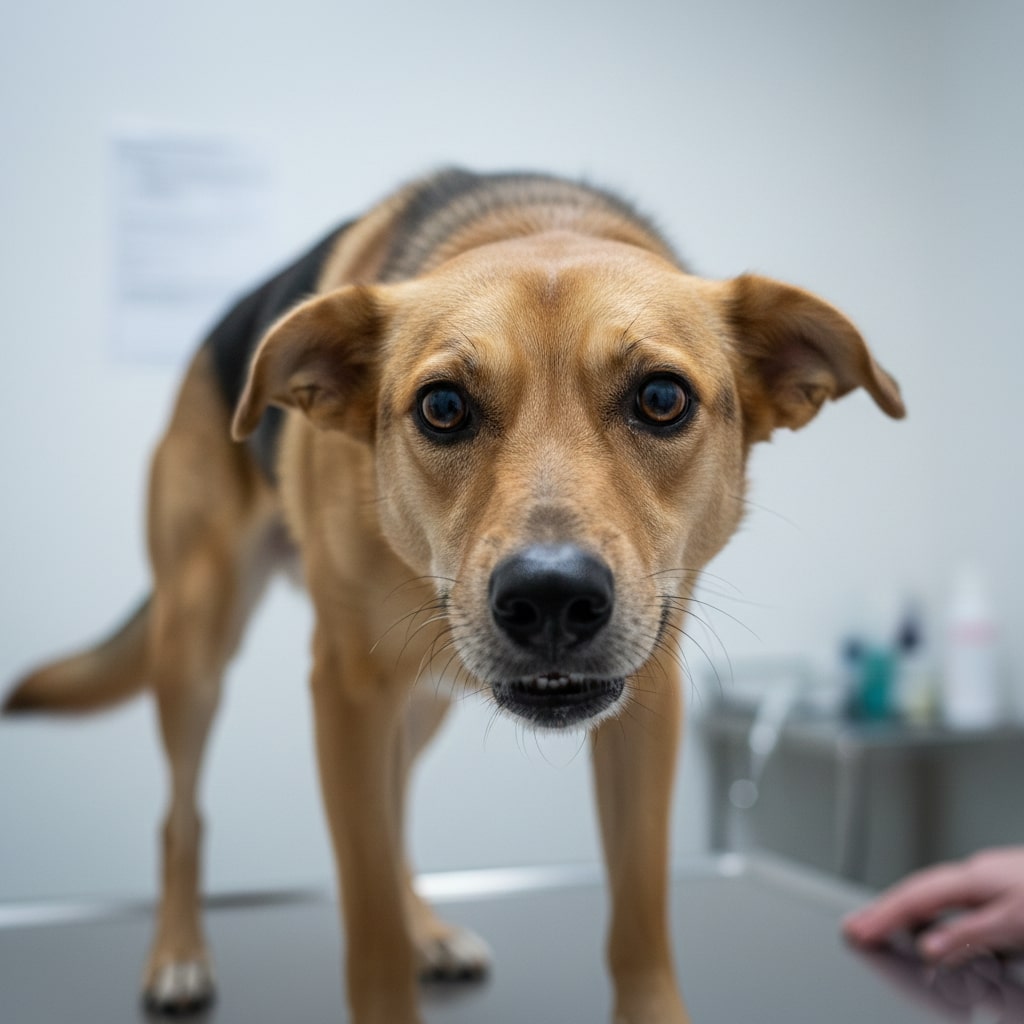
Signs your dog is stressed include body language cues like pinned ears, a tucked tail, or “whale eye” (showing the whites of the eyes). Behavioral changes such as excessive yawning, lip licking, pacing, or sudden shedding are also common indicators. To help, remove the stressor immediately, provide a safe “quiet zone,” stick to a predictable routine, and use positive reinforcement training. If stress becomes chronic, consult a veterinarian or animal behaviorist.
Summary Table: Signs of A Stressed Dog
| Stress Category | Common Signs | Immediate Solution | Long-Term Fix |
| Body Language | Pinned ears, tucked tail, stiffness, whale eye | Create distance between the dog and the trigger. | Counter-conditioning training. |
| Vocalizations | High-pitched whining, excessive barking, growling | Do not punish; identify what they are reacting to. | Desensitization to the noise/trigger. |
| Displacement | Yawning, lip licking, shaking off (when dry) | Offer a calming activity (licking mat, chew toy). | Establish a predictable daily routine. |
| Physical | Heavy panting, drooling, “stress shedding” | Move to a cool, quiet, and safe location. | Consult a vet to rule out pain/illness. |
| Avoidance | Hiding, looking away, freezing | Allow them to hide; do not force interaction. | Create a designated “safe space” (crate/room). |
Signs of A Stressed Dog
We often think of our dogs as happy-go-lucky companions, but they experience anxiety and stress just like humans do. The problem is that dogs communicate differently. While a human might say, “I am overwhelmed,” a dog might yawn or scratch an ear.
Understanding these subtle signals is critical for dog owners. Chronic stress releases cortisol, a hormone that can weaken your dog’s immune system, lead to digestive issues, and shorten their lifespan.
Furthermore, a stressed dog is often a fearful dog, and fear is the leading cause of aggression. By learning to “speak dog,” you can prevent bites, improve your bond, and ensure your pet lives a happier, healthier life.
Read Also: What Are The Signs Of A Stressed Cat?
1. Body Language: The Silent Signals
Dogs speak primarily through posture. Before a dog ever growls or snaps, they have likely provided a dozen silent warnings that they are uncomfortable.
The Eyes and Ears
The face tells you a lot about a dog’s emotional state. When a dog is relaxed, their eyes are soft and often squinty. When stressed, the eyes change.
- Whale Eye: This is one of the most distinct signs of anxiety. It happens when a dog turns their head away from a trigger but keeps their eyes fixed on it. This reveals the white part of the eye (the sclera) in a crescent shape. It signals that the dog feels threatened but is trying not to escalate the situation.
- Dilated Pupils: If your dog’s pupils are huge even in bright light, their fight-or-flight response has been activated.
- Pinned Ears: Relaxed ears sit in a neutral position. Stressed ears are often pinned back flat against the head. In some breeds, ears may also prick forward rigidly if the dog is in a state of high arousal or alert.
Read Also: Why Do Dogs Circle Before Lying Down?
The Tail and Posture
A wagging tail does not always mean a happy dog. This is a common myth that leads to many misunderstandings.
- The Tucked Tail: A tail tucked between the legs is the universal sign of fear. The dog is trying to make themselves smaller and protect their vital organs.
- The Rigid Wag: A happy wag is loose and often involves the whole body (the “wiggle butt”). A stressed wag is stiff, vibrating, and usually held high or very low. If the tail is moving slowly and stiffly, it is a warning flag, not a greeting.
- Cowering or Freezing: A stressed dog may lower their body to the ground or freeze completely. This is known as “shutting down.” If you approach a dog that has frozen still, use extreme caution.
2. Displacement Behaviors: Subtle Stress Indicators
Displacement behaviors are normal behaviors displayed out of context. For example, a human might scratch their head when confused, even if their head doesn’t itch. Dogs do similar things to self-soothe or release nervous energy.
Yawning
If your dog yawns when they just woke up, they are tired. If they yawn while you are hugging them, engaging in a training session, or introducing them to a new dog, they are likely stressed. A “stress yawn” is often more intense and prolonged than a sleepy yawn.
Lip Licking
Watch for a quick flick of the tongue over the nose. This is called a “tongue flick” or lip licking. It is an appeasement signal used to calm themselves down or signal to a threat that they come in peace. You will often see this when a person leans over a dog or stares at them too intently.
The “Shake Off”
Have you ever seen your dog shake their entire body as if they were wet, even though they are completely dry? Dogs do this to literally “shake off” tension. You might see this after a rough play session, after being hugged, or after a stressful encounter with another dog. It is a sign that the stressful event is over and they are resetting their nervous system.
Read Also: Can Dogs Eat Cake?
3. Physiological Signs: When The Body Reacts
Sometimes the signs of stress are involuntary physical reactions. These are controlled by the autonomic nervous system and are impossible for the dog to fake.
Stress Shedding
If you take your dog to the vet and suddenly find your clothes covered in fur, your dog is likely “blowing their coat” due to anxiety. Acute stress triggers the hair follicles to release, resulting in sudden, heavy shedding.
Panting and Drooling
Panting is how dogs cool down. However, if it is a cool day and your dog hasn’t been exercising, heavy panting is a major red flag.
- Stress Panting: Look for “spatulate tongue,” where the tongue is wide at the bottom and curled up at the edges. The breathing will be shallow and rapid.
- Drooling: Excessive salivation, or foaming at the mouth, can indicate nausea or severe anxiety. This is common in dogs with car sickness or separation anxiety.
Changes in Bodily Functions
Stress affects the digestive tract. A terrified dog may express their anal glands (releasing a fishy smell), urinate submissively, or experience sudden diarrhea. Refusal to eat high-value treats is also a critical indicator. If your food-motivated dog suddenly won’t eat a piece of steak, their anxiety level is likely over the threshold.
Common Triggers: What Stresses Dogs Out?
To help your dog, you must identify the root cause. While every dog is different, there are common entities and scenarios that trigger cortisol spikes.
Trigger Stacking
This is a crucial concept in animal behavior. Trigger stacking occurs when multiple small stressors happen in a short period.
- Event 1: The mailman knocks on the door (mild stress).
- Event 2: It starts thundering outside (moderate stress).
- Event 3: A toddler accidentally steps on the dog’s tail (tipping point).On a normal day, the tail step might not bother the dog. But because of trigger stacking, the dog might snap. The dog isn’t “bad”; they are just overwhelmed.
Lack of Routine
Dogs thrive on predictability. Moving to a new house, a change in work hours, or the arrival of a new baby can disrupt their sense of security.
Sensory Overload
Loud noises (fireworks, thunder, construction), strong smells, or chaotic environments can overwhelm a dog’s sensitive senses. This is particularly true for herding breeds and dogs with high sensory drive.
Read Also:Can Dogs Eat Honey?
How to Help A Stressed Dog: Actionable Solutions
Once you recognize the signs, you need a plan. Do not force your dog to “face their fears” without preparation, as this can lead to sensitization (making the fear worse).
1. Remove the Stressor
The immediate solution is management. If your dog is afraid of a strange dog at the park, move away. If they are scared of the vacuum, put them in another room while you clean. Creating distance is the kindest thing you can do for a stressed dog.
2. Create a Safe Zone
Every dog needs a retreat. This could be a crate, a specific bed, or a quiet room.
- The Rules: When the dog is in their safe zone, no one touches them. No kids, no guests, no petting. It is their sanctuary.
- Comforts: Add a blanket that smells like you, a comfortable bed, and white noise to block out scary sounds.
3. Licking and Chewing
Licking and chewing release endorphins in a dog’s brain, which naturally calms them down.
- Lick Mats: Spread peanut butter or yogurt on a textured mat.
- Chews: Bully sticks or yak cheese chews provide a long-lasting outlet for nervous energy.
- Sniffing: Scatter feeding (throwing treats in the grass) encourages sniffing, which lowers heart rate.
4. Desensitization and Counter-Conditioning (DSCC)
This is the scientific approach to changing how your dog feels about a trigger.
- Desensitization: Exposing the dog to the scary thing at a very low intensity (e.g., playing thunder sounds at volume level 1).
- Counter-Conditioning: Pairing that low-level exposure with something amazing (e.g., high-value chicken).
- The Goal: The dog learns that “Scary Sound = Chicken,” changing the emotional response from fear to anticipation.
5. Exercise and Enrichment
A tired dog is often a calmer dog, but the type of exercise matters. High-intensity fetch can sometimes increase arousal. Instead, try “decompression walks.”
- Decompression Walk: Put your dog on a long line (10-15 feet) in a quiet nature area. Let them sniff, wander, and explore at their own pace. This lowers cortisol levels significantly compared to a rigid heel-walk on a busy city street.
When to Seek Professional Help
If your dog’s stress is affecting their quality of life, or if they are showing signs of aggression (growling, snapping), it is time to call in the experts.
- Veterinarian: First, rule out pain. Many “behavioral” issues are actually pain-related. Your vet may also discuss anti-anxiety medication (like fluoxetine or gabapentin) to help lower your dog’s baseline stress so training can be effective.
- Certified Dog Behavior Consultant (CDBC) or Veterinary Behaviorist: These professionals are trained to handle complex anxiety and fear cases. Look for professionals who use positive reinforcement methods, as punishment-based training will only increase your dog’s anxiety.
Conclusion
Recognizing that your dog is stressed does not make you a bad owner. In fact, noticing these subtle signs makes you a great one. By reading their body language, the whale eye, the lip licks, the pinned ears, you can intervene before the stress becomes overwhelming.
Remember, you are your dog’s advocate. When you see them struggling, step in. Create space, offer comfort, and build a life where they feel safe. A stress-free dog is a happy dog, and that peace of mind is worth every effort.