
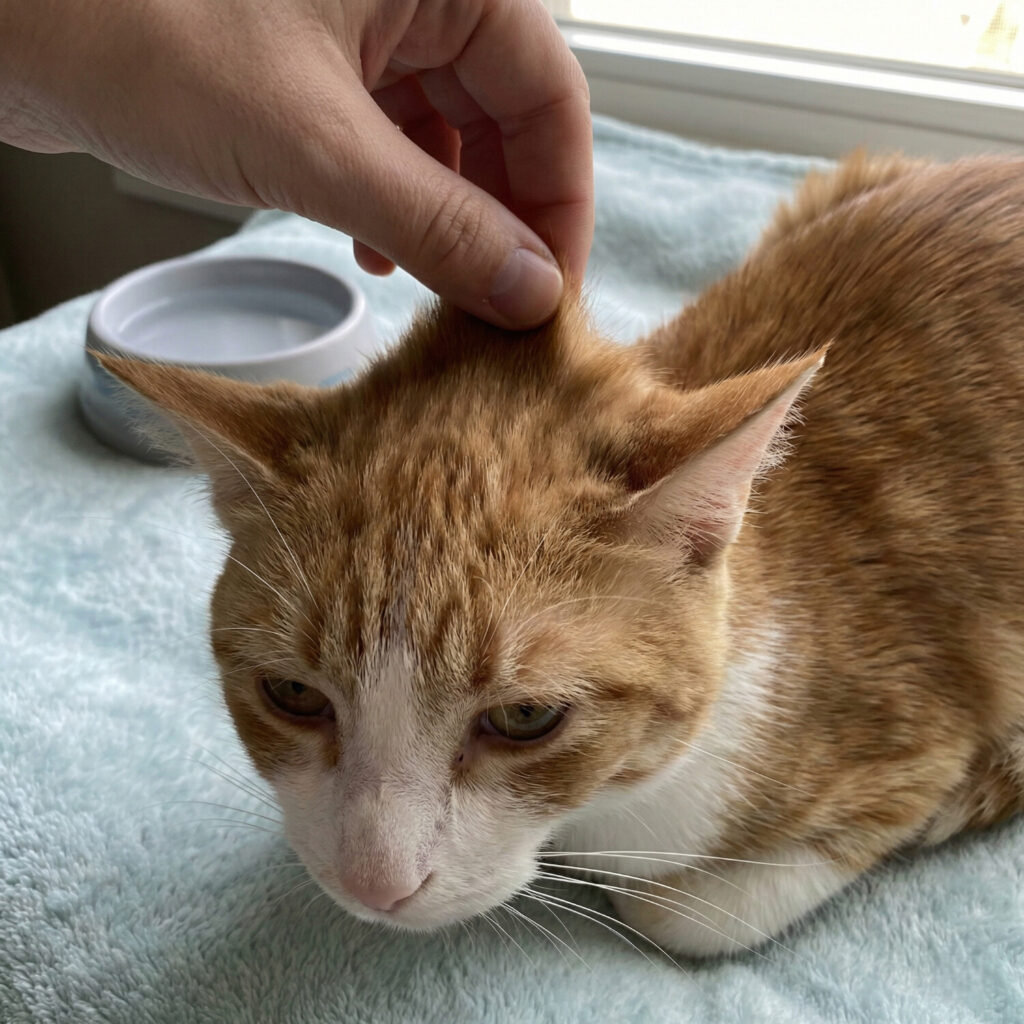
Dehydration in cats occurs when a cat loses more fluid than it takes in, leading to an imbalance of electrolytes. The most common signs include sticky or dry gums, loss of skin elasticity (skin does not snap back when pinched), sunken eyes, and lethargy. If you notice your cat is panting, has cold paws, or is hiding more than usual, these may also indicate severe dehydration requiring immediate veterinary attention.
Summary Table: Feline Dehydration Signs
| Symptom | Description | Urgency Level |
| Skin Elasticity | Skin stays peaked after pinching (tenting). | Moderate to High |
| Gum Texture | Gums feel sticky, tacky, or dry instead of slick. | Moderate |
| Eye Appearance | Eyes look dull, sunken, or lack focus. | High |
| Energy Level | Extreme tiredness, sleeping more, listlessness. | Moderate |
| Heart Rate | Rapid or elevated heart rate. | High |
| Panting | Open-mouth breathing or heavy panting. | Critical |
Signs of Dehydration in Cats
Water is essential for every chemical process in your cat’s body. It maintains body temperature, helps internal organs function, and lubricates joints. When a cat loses water faster than they can replace it, their blood volume decreases. This makes it harder for oxygen to reach vital tissues.
While many owners worry about what their cat eats, dehydration is often a symptom of other issues rather than just a lack of drinking. It can happen quickly, especially in hot weather or if the cat is sick. Recognizing the physical and behavioral changes early can save your pet’s life.
Read Also: Why Do Cats Shed More in Certain Seasons?
The Skin Tent Test
One of the most reliable ways to check hydration levels at home is by checking skin elasticity. This is often called skin turgor.
How to perform the test
- Gently grasp a small amount of loose skin over your cat’s shoulders or the back of the neck.
- Lift it up slightly to form a tent shape.
- Release the skin and watch how it returns to place.
What to look for
- Hydrated Cat: The skin snaps back into place immediately. It looks like it was never pinched.
- Mild Dehydration: The skin goes back down but does so slowly. It might take a second or two to look normal.
- Severe Dehydration: The skin remains in a tent shape or takes a very long time to flatten out.
This test is generally accurate, but keep in mind that older cats naturally have less elastic skin. In senior cats, the skin might not snap back quickly even if they are hydrated.
For overweight cats, the extra fat might make the skin snap back quickly even if they are dehydrated. Always use this test alongside other signs.
Check the Gums and Mouth
Your cat’s mouth offers significant clues about their hydration status. A healthy cat has a mouth that is moist and slick.
The Finger Test
Lift your cat’s lip gently and run your finger along their gum line.
- Normal: The gums feel wet and slippery. Your finger should slide easily.
- Dehydrated: The gums feel tacky or sticky. It feels similar to touching the sticky side of a post-it note.
- Severely Dehydrated: The gums are completely dry to the touch.
Capillary Refill Time (CRT)
This tests how well the blood is circulating.
- Press your finger firmly onto a pink area of the cat’s gums. The area will turn white as you push the blood away.
- Remove your finger and count how long it takes for the pink color to return.
- In a healthy cat, the color returns in less than two seconds.
- If it takes longer than two seconds for the pink color to return, the cat may be dehydrated and have poor circulation.
Read Also: How Long Can a Cat Go Without Pooping?
Examining the Eyes
The eyes are sensitive to fluid loss. As the tissues behind the eyes lose water, they shrink slightly. This causes the eyes to recede into the sockets.
Visual Symptoms
- Sunken Appearance: The eyes look like they are set deeper in the head than usual.
- Dullness: The eyes lack their normal shine or sparkle. They may look glazed over.
- Third Eyelid Visibility: You might see the nictitating membrane, or third eyelid, protruding across the eye. This is a white or pinkish membrane that comes from the inner corner of the eye. While this can happen with other illnesses, it is a common marker for dehydration.
Read Also: Why Does My Cat Lick Metal?
Physical Energy and Behavior
Behavioral changes are often the first thing an owner notices. Cats are masters at hiding illness, but dehydration drains their energy reserves significantly.
Lethargy and Depression
A dehydrated cat will sleep more than usual. While cats normally sleep a lot, this is different. They may not greet you at the door or react to their favorite toys.
If you pick them up, they might feel limp or listless. They essentially lack the energy to move because their blood pressure is low.
Hiding
Cats instinctively hide when they feel vulnerable. If your cat is under the bed, in a closet, or in a dark corner and refuses to come out, they are signaling distress. Dehydration makes them feel weak, so they seek protection in isolation.
Confusion
Severe fluid loss affects the brain. Your cat might seem disoriented. They might wobble when walking or stare blankly at walls. This indicates that the dehydration has progressed to a dangerous level where it is affecting neurological function.
Heart Rate and Breathing
As blood volume drops, the heart has to work harder to pump blood to the organs. This places significant stress on the cardiovascular system.
Elevated Heart Rate
You can feel your cat’s heartbeat by placing your hand on the left side of their chest, just behind the front leg. A normal resting heart rate for a cat is between 140 and 220 beats per minute.
If the heart feels like it is racing or fluttering very fast while the cat is resting, this is a warning sign.
Panting
Cats do not pant like dogs. If a cat is panting with their mouth open, it is almost always a medical emergency. While this can be caused by stress or heat, it is also a sign of severe dehydration and shock.
If you see open-mouth breathing, you should transport the cat to a vet immediately.
Litter Box Habits
Monitoring the litter box is essential for tracking hydration. What comes out is a direct result of what goes in.
Decreased Urination
The kidneys try to save water when the body is dehydrated. This means the cat will pee less.
- Clump Size: If you use clumping litter, look at the size of the urine clumps. If they are significantly smaller than usual, the cat is not expelling enough fluid.
- Frequency: If the litter box remains dry for 12 to 24 hours, this is a critical issue. A urinary blockage can also cause this and is fatal if untreated.
Constipation
The colon absorbs water from waste. If the body is low on water, the colon absorbs every drop it can from the stool. This results in hard, dry, and small stools. You may notice your cat straining in the litter box or leaving feces that look like small, hard pellets.
Read Also: Why Does My Cat Sleep Face Down?
Temperature Extremes of the Paws
Extremities like paws and ears are the first places to lose circulation when a cat is dehydrated.
Cold Paws
If a cat is in shock from severe dehydration, their body pulls blood toward the vital organs like the heart and brain. This leaves the paws feeling cool or cold to the touch.
Heat Stroke
Conversely, if the dehydration is caused by overheating, the cat might feel extremely hot. Heat stroke and dehydration often go hand in hand. If the cat has been trapped in a hot room or car, check for bright red gums and rapid panting.
Non-Dietary Causes of Dehydration
Understanding why dehydration happens helps in prevention. Excluding food choices, there are many medical and environmental reasons a cat loses fluids.
Kidney Disease
Chronic Kidney Disease (CKD) is very common in older cats. The kidneys lose their ability to concentrate urine. This causes the cat to urinate excessive amounts of water, leading to systemic dehydration even if they are drinking water.
Diabetes
Feline diabetes causes high blood sugar. The body tries to flush out the excess sugar through urine. This pulls fluid from the body, leading to frequent urination and rapid fluid loss.
Vomiting and Diarrhea
This is the fastest way for a cat to lose fluids and electrolytes. If a cat vomits or has diarrhea, they are expelling water that has not yet been absorbed. A stomach bug or parasite can drain a cat’s hydration levels in a matter of hours.
Heat and Environment
Hot weather increases fluid loss through minor sweating (through paw pads) and panting. If a house is too dry or too hot, the cat loses moisture simply by breathing.
Read Also: How Much Salt Can Kill a Cat?
When to See a Veterinarian
You should not try to treat severe dehydration at home. It requires professional medical intervention.
Seek immediate help if:
- The cat has not eaten for 24 hours.
- The gums are dry and tacky.
- The eyes are visibly sunken.
- The cat is vomiting or has diarrhea.
- The skin does not snap back after the tent test.
- The cat is lethargy and unresponsive.
Veterinary Treatments
A vet will diagnose the severity of the dehydration.
- Subcutaneous Fluids: For mild cases, the vet may inject fluids under the loose skin on the back. This forms a hump of fluid that the body slowly absorbs over a few hours.
- Intravenous (IV) Fluids: For severe cases, the cat will need a catheter placed in a vein. This delivers fluids directly into the bloodstream to restore blood volume and electrolyte balance quickly.
- Blood Tests: The vet will run blood work to check kidney function, blood sugar, and electrolyte levels to find the underlying cause.
Prevention Tips (Lifestyle and Environment)
Preventing dehydration is easier than treating it. You can make changes to the environment to encourage drinking and reduce stress.
Water Accessibility
Cats can be picky about water sources.
- Freshness: Change water bowls daily. Cats are sensitive to the taste of stale water or dust.
- Location: Keep water bowls away from litter boxes. Cats do not like to drink near where they eliminate.
- Variety: Place multiple bowls in different rooms. This reminds the cat to drink as they move through the house.
Read Also: Can Cats Eat Eggs?
Running Water
Many cats prefer running water over standing water. In the wild, running water is safer than stagnant water. Consider using a cat water fountain. The sound and movement of the water can stimulate a cat’s interest in drinking.
Stress Reduction
Stress can cause a cat to stop drinking. Ensure your home is a calm environment. If you have multiple cats, make sure there are enough resources so that one cat does not guard the water bowl and prevent others from drinking.
Regular Health Checkups
Since dehydration is often a symptom of underlying illness like kidney disease or diabetes, regular vet visits are crucial. Blood tests can catch these issues early before they lead to chronic dehydration.
Conclusion
Dehydration is a serious condition that affects the entire body. By monitoring your cat’s skin elasticity, gum moisture, and litter box habits, you can catch the signs early. Remember that cats are experts at hiding pain and illness. Small changes in behavior or physical appearance are often the only warning signs you will get.
If you suspect your cat is dehydrated, performing the skin tent test and checking their gums are the best first steps. However, these home checks never replace professional veterinary advice.
If your cat shows signs of dehydration, consult your veterinarian immediately to prevent permanent organ damage. Your vigilance is the best defense your cat has against this common but dangerous condition.