
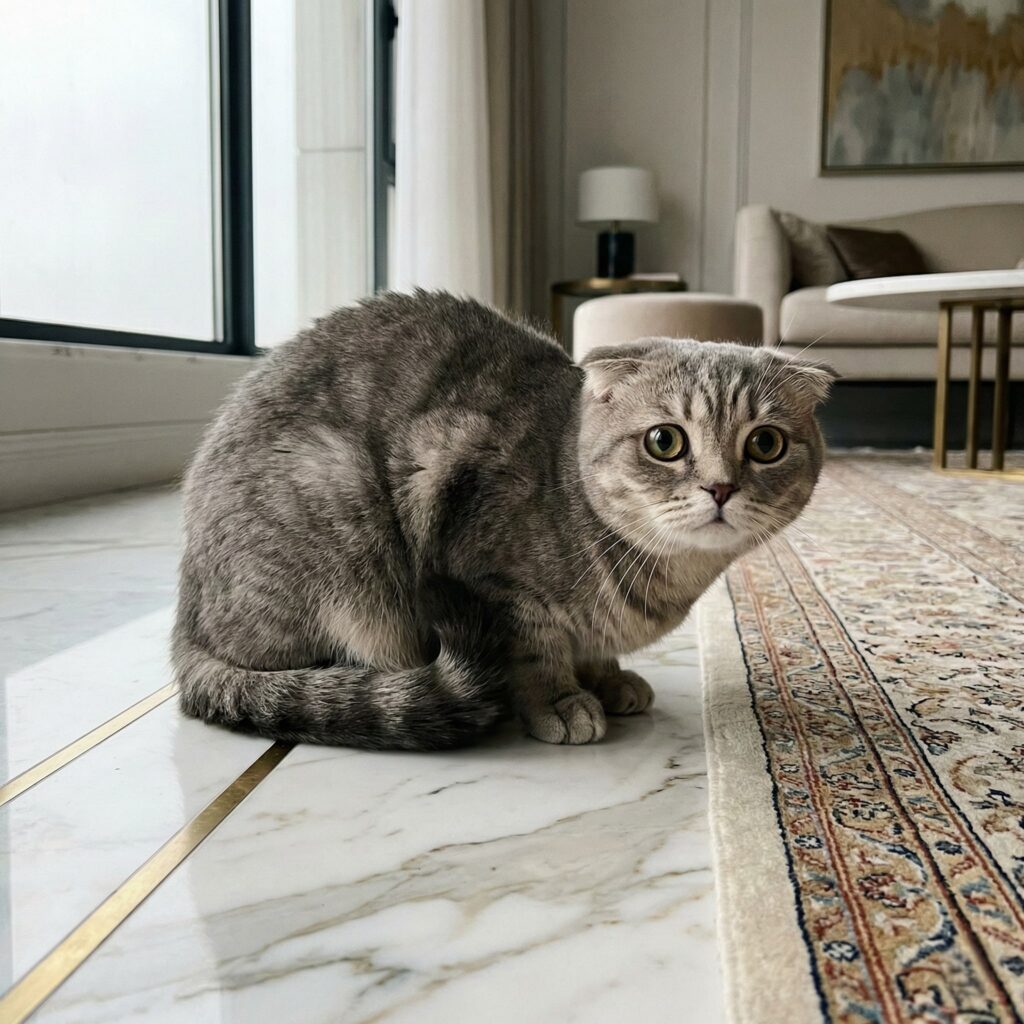
What are the signs of anxiety in cats? Common signs of anxiety in cats include behavioral changes like hiding, aggression, and urinating outside the litter box. Physical symptoms often involve dilated pupils, overgrooming (causing bald spots), and a tucked tail. To manage anxiety, owners should first rule out medical issues with a vet, then implement environmental enrichment (vertical spaces, scratching posts), use pheromone diffusers like Feliway, and maintain a consistent daily routine.
Summary Table: Signs vs. Solutions
| Anxiety Category | Key Signs to Watch For | Management Strategy |
| Behavioral | Hiding, pacing, aggression, house soiling | Create safe zones, stick to a routine, clean litter boxes daily |
| Physical | Dilated pupils, weight loss/gain, trembling | Veterinary checkup, quality diet, calming supplements |
| Grooming | Overgrooming (bald patches), lack of grooming | Pheromone diffusers, anti-anxiety wraps (ThunderShirt) |
| Vocal | Excessive meowing, yowling, hissing | Interactive play therapy, ignoring attention-seeking noise |
Understanding Feline Anxiety
Anxiety in cats is a biological response to perceived danger or stress. While a short burst of fear is normal (like reacting to a loud noise), chronic anxiety is a medical and behavioral condition that affects your cat’s quality of life. It is not just “bad behavior.” It is a sign that your cat feels unsafe in their territory.
Anxiety can be triggered by:
- Environmental Changes: Moving to a new home, new furniture, or a change in your work schedule.
- Social Stress: New pets, a new baby, or conflict with neighborhood cats seen through windows.
- Trauma: Past history of abuse, abandonment, or lack of socialization during the kitten phase.
- Medical Issues: Pain or illness often mimics anxiety.
Read Also: How Spaying or Neutering Affects Cat Behavior
Behavioral Signs of Anxiety
Behavioral changes are often the first thing owners notice. These actions are your cat’s attempt to cope with their stress.
1. Inappropriate Elimination (House Soiling)
This is the most common reason cats are surrendered to shelters. If your cat stops using the litter box, they are not acting out of spite. They are communicating distress.
- Middening: Pooping in prominent places (like your bed or sofa) to mix their scent with yours for comfort.
- Spraying: Urinating on vertical surfaces (walls, doors) to mark territory against perceived threats.
- Squatting: Urinating on soft surfaces (laundry piles, rugs) because they associate the litter box with pain or fear.
2. Aggression
Anxiety-induced aggression can be directed at you, other pets, or even inanimate objects.
- Redirected Aggression: The cat sees a threat outside (like a bird or another cat) but attacks the nearest person or pet because they cannot reach the intruder.
- Petting-Induced Aggression: The cat becomes overstimulated quickly and bites or swipes while being petted.
3. Excessive Hiding
While cats love naps, a happy cat will usually nap in the open or semi-hidden spots. An anxious cat will “disappear.”
- Spending all day under the bed or deep inside a closet.
- Refusing to come out for food or treats.
- “Pancaking” (flattening their body to the floor) when moving from room to room.
4. Psychogenic Alopecia (Overgrooming)
Stress grooming is a self-soothing mechanism, similar to a human biting their fingernails.
- Bald bellies or inner thighs: The cat licks the fur off completely.
- Sores or scabs: Intense biting or chewing at the skin.
- Note: You must see a vet to rule out fleas or allergies before assuming this is anxiety.
Read Also: Why is My Cat Licking the Carpet?
Physical and Vocal Indicators
Your cat’s body language is a constant stream of information regarding their emotional state.
Body Language Cues
- Ears: Flattened sideways (“airplane ears”) or pinned back.
- Eyes: Dilated pupils (black circles) even in bright light.
- Tail: Tucked between the legs, thrashing violently, or held low to the ground.
- Posture: Crouched low, tense muscles, ready to run.
Vocalization Changes
- Yowling: Deep, mournful howls, often at night (common in senior cats with cognitive dysfunction or separation anxiety).
- Hissing/Growling: Defensive sounds indicating “stay away.”
- Silence: Some normally chatty cats may go completely silent when traumatized or deeply depressed.
Step 1: The Veterinary Rule-Out
Before trying behavioral fixes, you must visit a veterinarian. Many medical conditions look exactly like anxiety.
- Feline Idiopathic Cystitis (FIC): Stress causes inflammation of the bladder. The cat pees outside the box because it hurts to pee.
- Hyperthyroidism: Causes restlessness, pacing, and vocalizing (common in older cats).
- Arthritis: Pain makes a cat aggressive or unwilling to use a litter box with high sides.
Do not skip this step. Training will not fix a bladder infection or a thyroid imbalance.
Step 2: Environmental Management
Once medical issues are cleared, look at your home environment. You need to increase your cat’s “territorial confidence.”
Create a “Base Camp”
If your cat is severely anxious, shrink their world. Set up a single room (Base Camp) with all their essentials:
- Food and water (placed away from the litter box).
- A cozy bed or cave.
- A clean litter box.
- Toys and scratching posts. This gives them a predictable, safe zone where no threats exist.
Vertical Space (Catification)
Cats draw confidence from height. Being high up allows them to survey their territory safely.
- Cat Trees: Place tall cat trees near windows or in social areas (living rooms).
- Shelving: Install “cat highways” (floating shelves) so the cat can cross a room without touching the floor.
- Window Perches: Give them a view, but ensure they can’t see stray cats outside if that triggers them.
Scent Soakers
Anxious cats need to smell themselves in their environment to feel secure.
- Scratching Posts: Scratching deposits pheromones from the paws. Place posts in high-traffic areas, not hidden in corners.
- Bedding: Do not wash your cat’s favorite blanket too often. The scent is comforting.
Read Also: Why Does My Cat Slap Me?
Step 3: Pheromones and Calming Aids
Supplements and tools can lower the threshold of anxiety, making training easier.
Pheromone Therapy
- Diffusers (e.g., Feliway Classic or Multicat): These plug into the wall and release synthetic versions of feline facial pheromones. These are the “happy messages” cats leave when they rub their cheeks on things.
- Sprays: Use pheromone sprays on carrier bedding before vet visits.
Calming Apparel
- ThunderShirt: A compression vest that applies gentle, constant pressure. This mimics swaddling and can help during acute stress events like thunderstorms or fireworks.
Natural Supplements
- L-Theanine: An amino acid found in green tea that promotes relaxation without sedation (e.g., Anxitane).
- Alpha-Casozepine: A milk protein derivative that has a calming effect (e.g., Zylkene).
- CBD Oil: Some owners find success with pet-specific CBD, though research is still ongoing. Always consult your vet first.
Read Also: How Long Can a Cat Go Without Urinating?
Step 4: Behavior Modification Techniques
You cannot punish anxiety out of a cat. Punishment increases fear. Instead, use positive reinforcement.
Counter-Conditioning
Change the cat’s emotional response to a trigger.
- The Trigger: A visitor enters the house.
- The Action: Give the cat a high-value treat (like boiled chicken or a lickable treat) immediately when the visitor appears.
- The Goal: The cat learns that “Visitor = Chicken,” changing the emotion from fear to anticipation.
Desensitization
Expose the cat to the trigger at a very low intensity.
- Example: If your cat is afraid of the carrier, leave the carrier out in the living room 24/7 with the door open and a soft blanket inside.
- Progression: Once they sleep in it, try closing the door for 1 second, then opening it and treating. Build up slowly over weeks.
Interactive Play Therapy
Play is the best confidence builder. It mimics the “Hunt, Catch, Kill, Eat, Groom, Sleep” cycle.
- Use a wand toy (feather or mouse on a string).
- Make the toy act like prey (hiding, scuttling away).
- Let the cat “catch” the kill multiple times.
- Follow play immediately with a meal or treat.
- Frequency: Two 15-minute sessions a day can drastically reduce stress.
Step 5: When to Use Medication
If environmental changes and supplements aren’t working, your cat may have a chemical imbalance requiring prescription medication. This is not a failure; it is compassionate care.
Common medications prescribed by vets include:
- Gabapentin: Often used for short-term situational anxiety (like vet visits or car rides).
- Fluoxetine (Prozac): A daily SSRI used for long-term generalized anxiety, urine spraying, or aggression.
- Clomipramine: A tricyclic antidepressant often used for obsessive-compulsive behaviors like overgrooming.
Important: Never give human anti-anxiety meds to a cat. Tylenol and other common human drugs are fatal to felines.
Dealing with Separation Anxiety
Cats are social creatures and can suffer when you leave.
- Signs: Urinating on your bed, destruction near doors, howling when you leave.
- Management:
- Departure Cues: Pick up your keys or put on your shoes, then sit back down on the couch. Do this repeatedly until the cat ignores these cues.
- No Drama: Ignore the cat for 10 minutes before you leave and 10 minutes after you return. This lowers the emotional contrast of your absence.
- Puzzle Feeders: Leave a food puzzle or treat ball when you walk out the door to create a positive association with your departure.
Conclusion
Managing a cat with anxiety requires patience. It is rarely a quick fix. By identifying the signs early, whether it’s a bald patch on the belly or a puddle on the rug, and responding with empathy rather than punishment, you can help your cat feel safe again. Start with a vet visit, optimize your home with vertical space, and use play as therapy. A confident cat is a happy cat.