
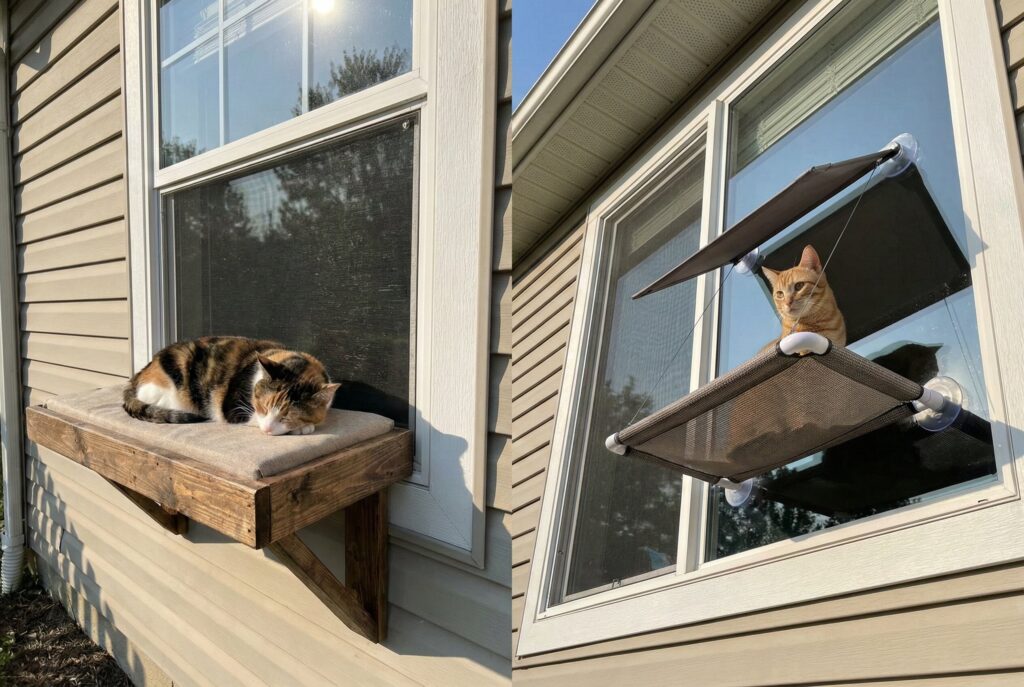
Every indoor cat dreams of the great outdoors. They spend hours staring through the glass, watching birds, tracking bugs, and following the movement of leaves in the wind. While keeping your cat indoors is the safest choice for their health and the local wildlife, it can lead to boredom. This is where an outdoor cat window perch comes in.
Also known as window catios or window boxes, these secure enclosures attach to your window frame and extend outward. They allow your cat to step outside the house, feel the fresh breeze, smell the outdoor scents, and get a panoramic view of the yard, all while remaining completely safe from predators, cars, and getting lost.
In this comprehensive guide, we will explore over ten of the best outdoor cat window perch ideas, covering both ready-to-buy products and do-it-yourself projects. We will also cover essential safety tips, window compatibility, and how to make these spaces the ultimate feline retreat.
Why Your Indoor Cat Needs an Outdoor Window Perch
Before diving into the ideas, it is important to understand why this addition to your home is so beneficial for feline welfare.
Mental and Visual Stimulation
Cats are natural hunters. In the wild, their senses are constantly engaged. Indoors, environments are static. An outdoor window perch acts as “cat television.” The dynamic outdoor environment provides endless visual and auditory stimulation, which prevents cognitive decline and behavioral issues linked to boredom, such as over-grooming or destructive scratching.
Safe Access to Fresh Air and Smells
A cat’s sense of smell is significantly stronger than a human’s. When they step into an outdoor window perch, they are flooded with complex scents from the neighborhood. This olfactory enrichment is incredibly satisfying for them. A secure mesh enclosure lets the breeze in while keeping dangerous insects, like ticks or mosquitoes (if using proper screens), out.
Sunbathing and Warmth
Cats love to seek out warm spots to regulate their body temperature. An outdoor perch allows them to soak up direct sunlight. This is not only comforting but also helps them maintain a healthy sleep cycle.
Space Maximization
For apartment dwellers or people living in smaller homes, floor space is valuable. An outdoor window box expands your cat’s territory vertically and externally, giving them a dedicated zone without taking up a single square foot of your interior living space.
Top Store-Bought Outdoor Cat Window Perches
If you are not naturally handy with tools or simply prefer the convenience of a ready-made product, there are excellent commercial options available. When shopping, look for terms like “window catio” or “outdoor feline window box.”
1. The Classic Mesh Window Box
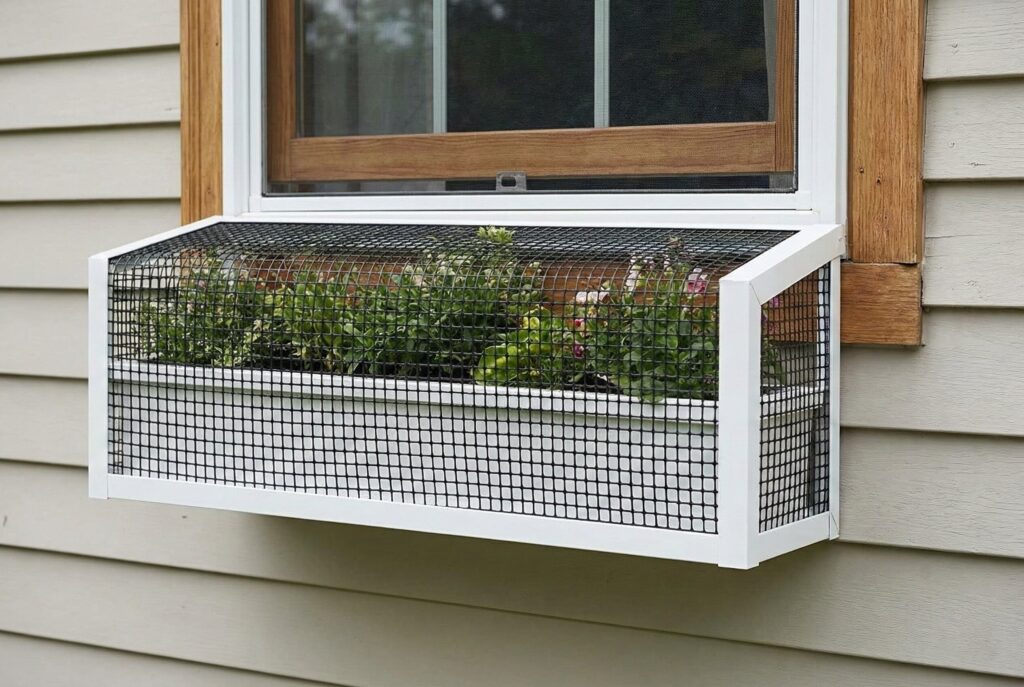
This is the most common and practical store-bought option. It typically features a lightweight but strong aluminum or cedar wood frame wrapped in durable, pet-proof screen mesh.
- Best For: Most standard double-hung windows and mild climates.
- Pros: Easy to install (usually by lowering the window sash onto the top edge of the box), excellent 360-degree airflow, and keeps bugs out while letting sounds and smells in.
- Cons: Does not provide protection from rain or cold winds, meaning the window must be closed during bad weather.
2. The Clear Acrylic Cat Window Enclosure
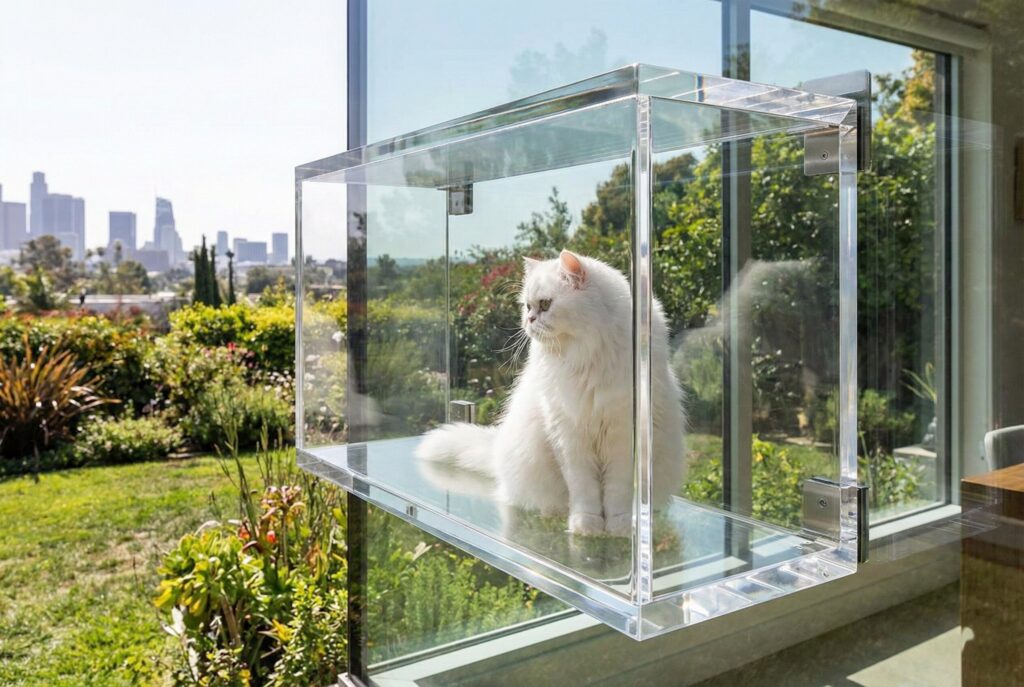
For a more modern look that does not obstruct your own view out the window, clear acrylic (or polycarbonate) window boxes are fantastic. They look like a transparent bubble or box extending from your house.
- Best For: Modern homes, areas with frequent rain, and cats who want an unobstructed view.
- Pros: Highly weather-resistant. It keeps the rain and wind out, meaning you can leave the window open to the box more often. It also offers the clearest view for the cat.
- Cons: Acrylic can heat up quickly in direct, intense sunlight. It is crucial to ensure the unit has adequate ventilation holes to prevent it from becoming a greenhouse.
3. The Multi-Level Window Catio
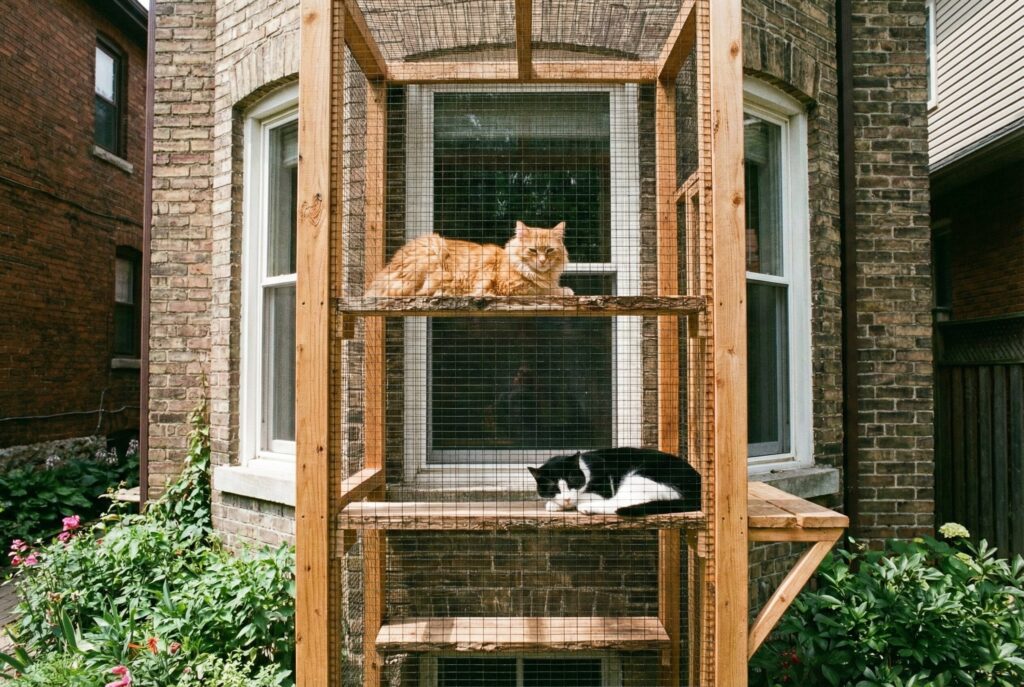
If you have a large window and multiple cats, a standard single-level box might cause territorial disputes. Several companies manufacture taller window catios that feature two or three internal shelves.
- Best For: Multi-cat households and tall windows.
- Pros: Allows multiple cats to enjoy the space simultaneously without crowding. Encourages climbing and light exercise.
- Cons: Heavier and more difficult to install. It often requires permanent mounting brackets drilled into the exterior siding of the house for structural safety.
4. The Soft-Sided Pop-Up Window Tent

Not all outdoor perches need to be permanent fixtures made of wood or metal. For renters or people who travel with their pets, soft-sided pop-up enclosures offer a temporary solution. These often sit on an existing deep window sill or balcony ledge and strap securely into the window frame.
- Best For: Renters, temporary setups, and travel.
- Pros: Lightweight, affordable, requires no tools for assembly, and folds flat for easy storage during the winter months.
- Cons: Not as durable as rigid structures. It cannot support heavy weight if suspended; it must rest on a solid surface like a deep sill or a table pushed against the window.
5. The Balcony-Style Railing Perch
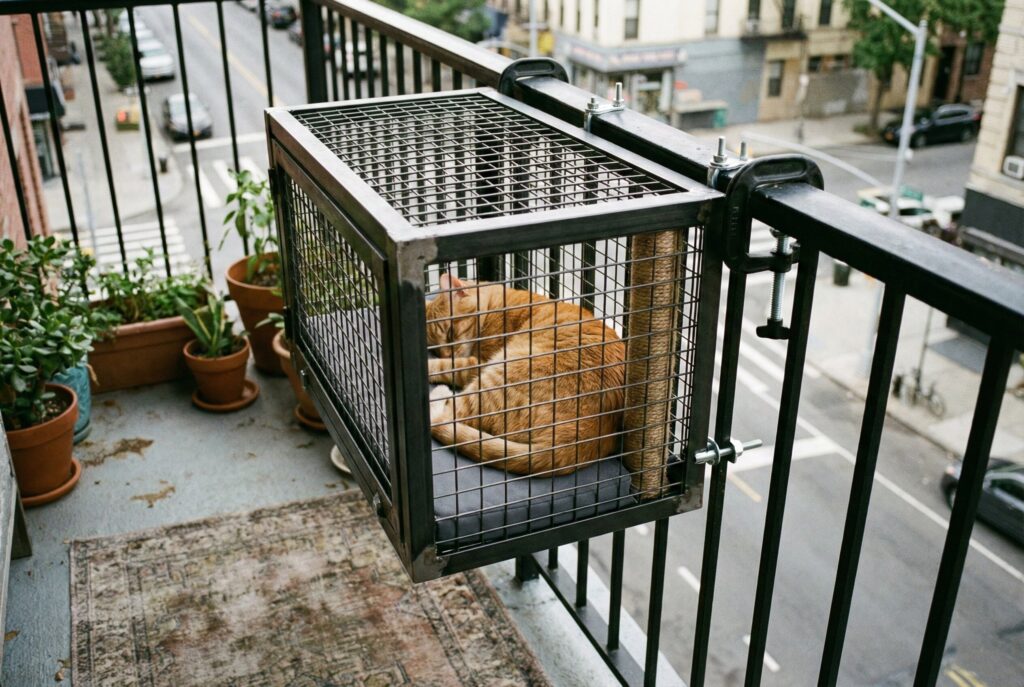
While not strictly a “window” perch, this is a vital variation for apartment dwellers. These units are designed to clamp securely over the railing of an apartment balcony, creating a safe, enclosed overhang.
- Best For: High-rise apartments with balconies.
- Pros: Utilizes balcony space safely, preventing the catastrophic risk of a cat falling from a high elevation.
- Cons: Installation depends entirely on the thickness and style of your specific balcony railing.
Creative DIY Outdoor Cat Window Perch Ideas
Building your own outdoor cat window perch allows for complete customization. You can match the paint to your house, size it perfectly for your specific window, and use heavy-duty materials to ensure it lasts for years.
6. The Repurposed Wooden Crate Perch
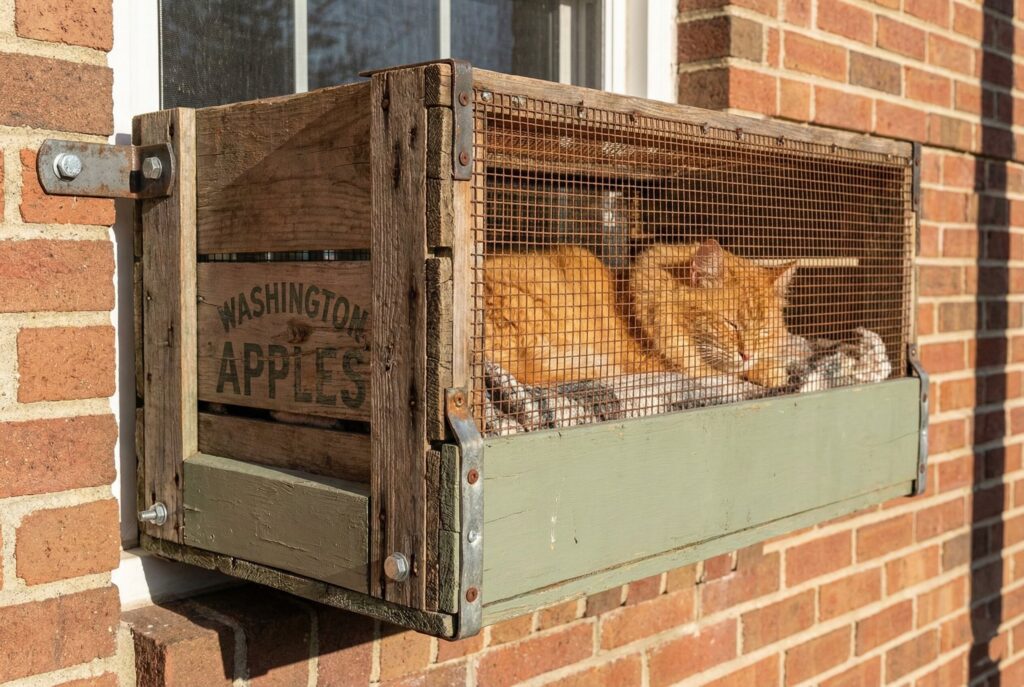
If you want a rustic look and an easy starting point, repurposing a sturdy wooden crate (like a vintage apple or wine crate) is a great weekend project.
- Materials Needed: Heavy-duty wooden crate, outdoor wood sealant, staple gun, pet-proof screen or hardware cloth, heavy-duty shelf brackets, and masonry or wood screws.
- How to Build: Sand and seal the wood to protect it from the elements. Remove one of the long sides of the crate. This will be the opening facing the window. Wrap the remaining open areas in hardware cloth, securing it tightly with a staple gun. Mount sturdy brackets to your home’s exterior right below the window sill, and screw the crate onto the brackets.
7. PVC Pipe and Mesh Window Enclosure
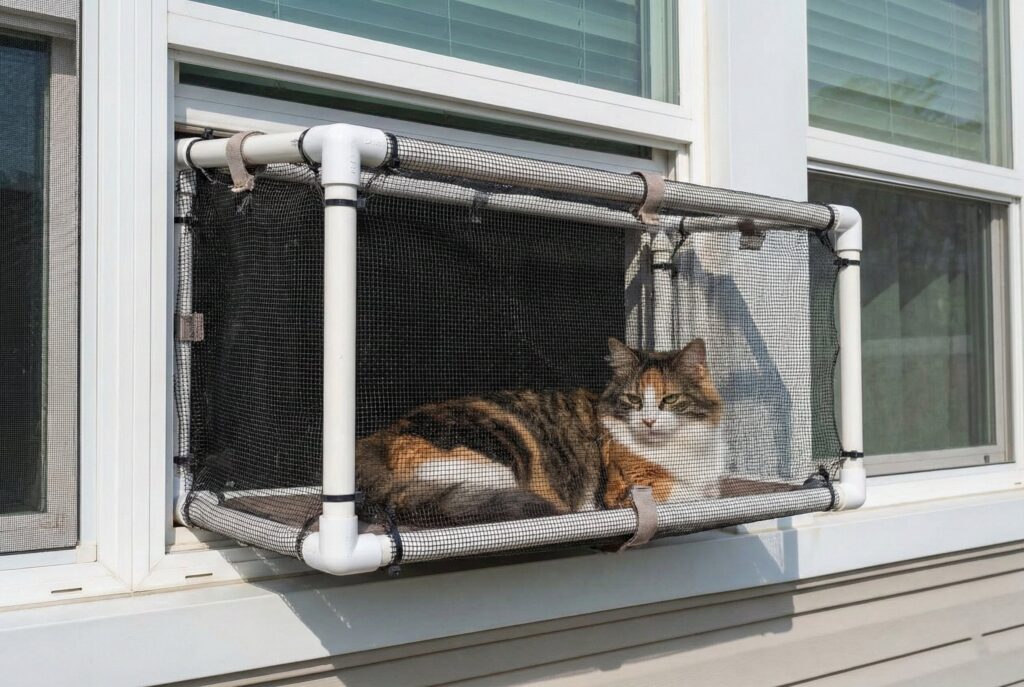
PVC is an incredibly versatile, lightweight, and weather-proof material. It is easy to cut and assemble using standard PVC connectors.
- Materials Needed: 1-inch PVC pipes, PVC corners and T-joints, PVC cement, heavy-duty pet screen, outdoor-rated zip ties, or self-tapping screws.
- How to Build: Measure the width of your open window. Cut the PVC pipes to create a box frame that fits exactly into that opening and extends outward by about 12 to 18 inches. Glue the joints for stability. Wrap the frame tightly in pet screen, sewing it on with heavy nylon thread or securing it with small self-tapping screws and washers.
8. The Shelf Bracket and Wire Mesh Box
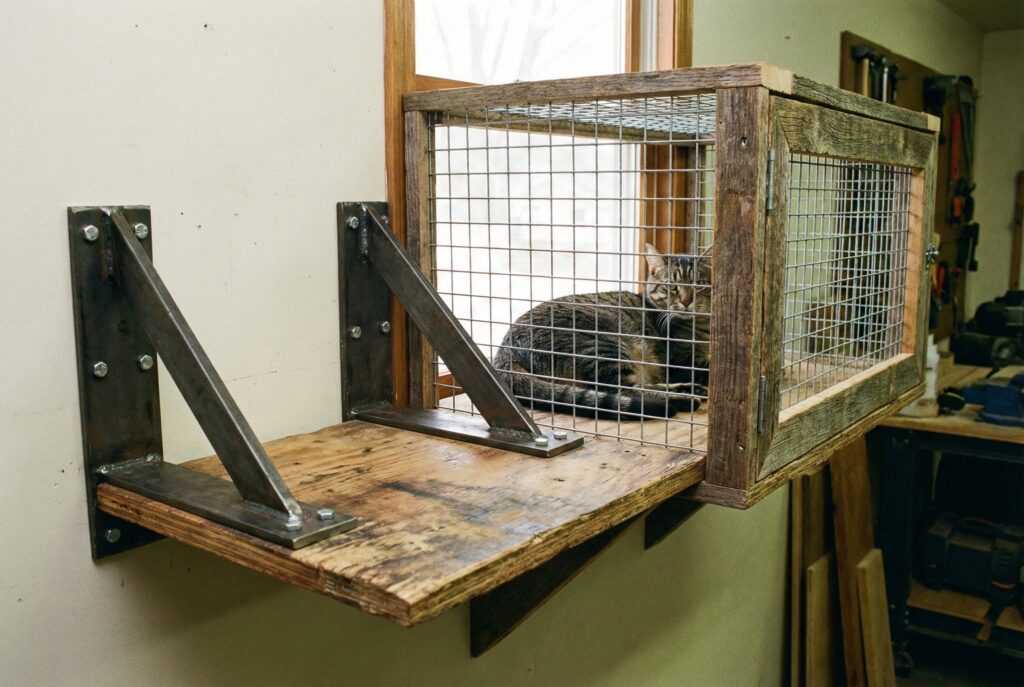
For large or heavy cats (like Maine Coons), durability is the top priority. This DIY method uses heavy construction materials to ensure maximum weight capacity.
- Materials Needed: 3/4-inch exterior-grade plywood, heavy-duty metal triangular shelf brackets (rated for 100+ lbs), 1×2 pine lumber for framing, 16-gauge galvanized welded wire mesh, and exterior paint.
- How to Build: Cut the plywood to the desired base size. Mount the heavy-duty brackets to the wall studs under the window and attach the plywood base. Build a simple square frame out of the 1×2 lumber to sit on the base. Staple the welded wire mesh to the inside of the frame to create the walls and roof. Paint all exposed wood to prevent rot.
9. The Upcycled Baby Crib Window Catio
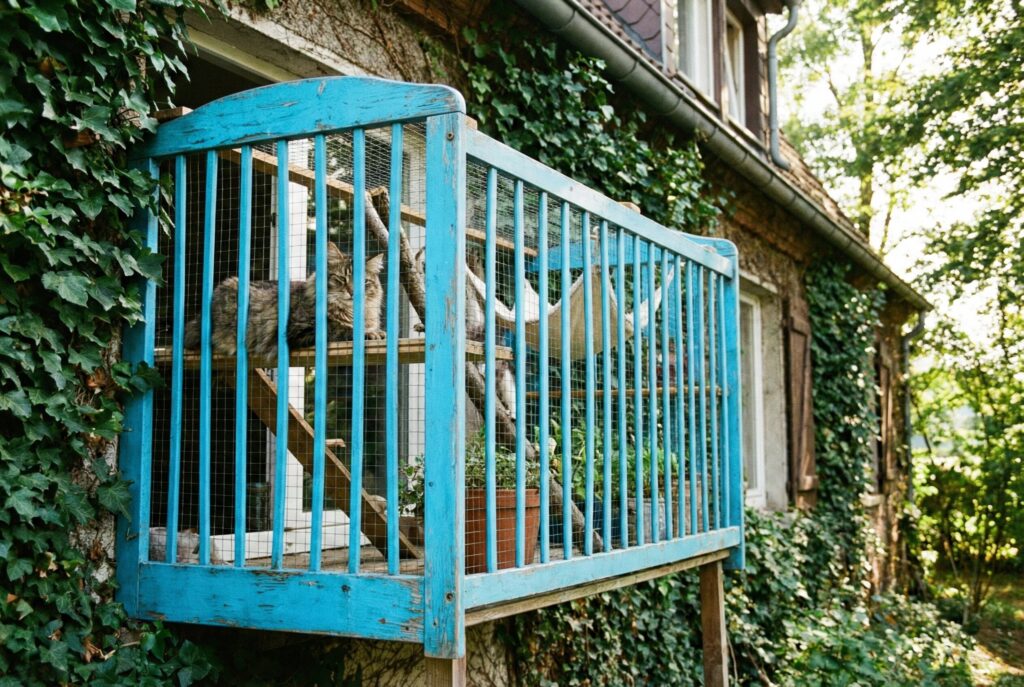
Old baby cribs are frequently discarded, but their slatted sides are perfect for building catios. The gaps are usually small enough to keep cats in while providing excellent airflow.
- Materials Needed: One solid wooden baby crib side, additional scrap wood for the base and roof, screws, and L-brackets.
- How to Build: Cut the crib side into three pieces to form the front and two side walls of the perch. Attach these to a solid wooden base. Add a slatted or solid roof. The crib slats act as the barrier, though you can add standard window screening on the inside to keep bugs out.
10. The Extended Window Sill Platform with Chicken Wire
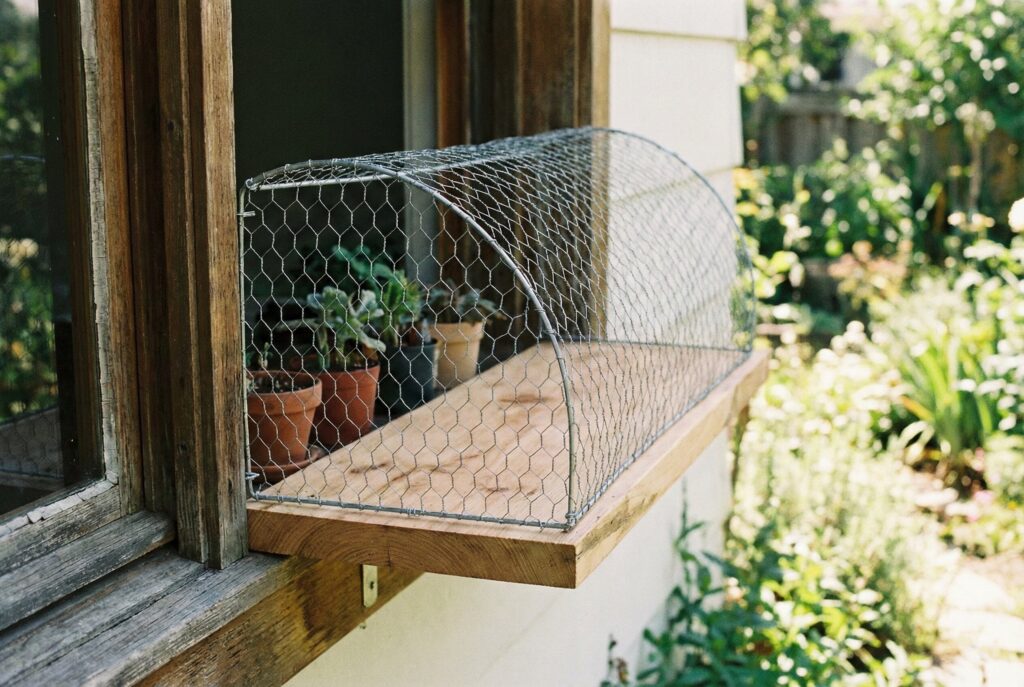
If you are on a strict budget, you do not need to build a perfect box. You can create a simple platform extension.
- Materials Needed: A solid piece of treated wood, wood screws, heavy-duty staples, chicken wire or hardware cloth.
- How to Build: Securely screw the piece of wood directly to your existing exterior window sill to widen it. Take a sheet of chicken wire, bend it into an arch or dome shape over the platform, and staple the edges firmly to the wood. Make sure there are no sharp wire edges pointing inward.
11. The Plywood and Polycarbonate Weatherproof Perch
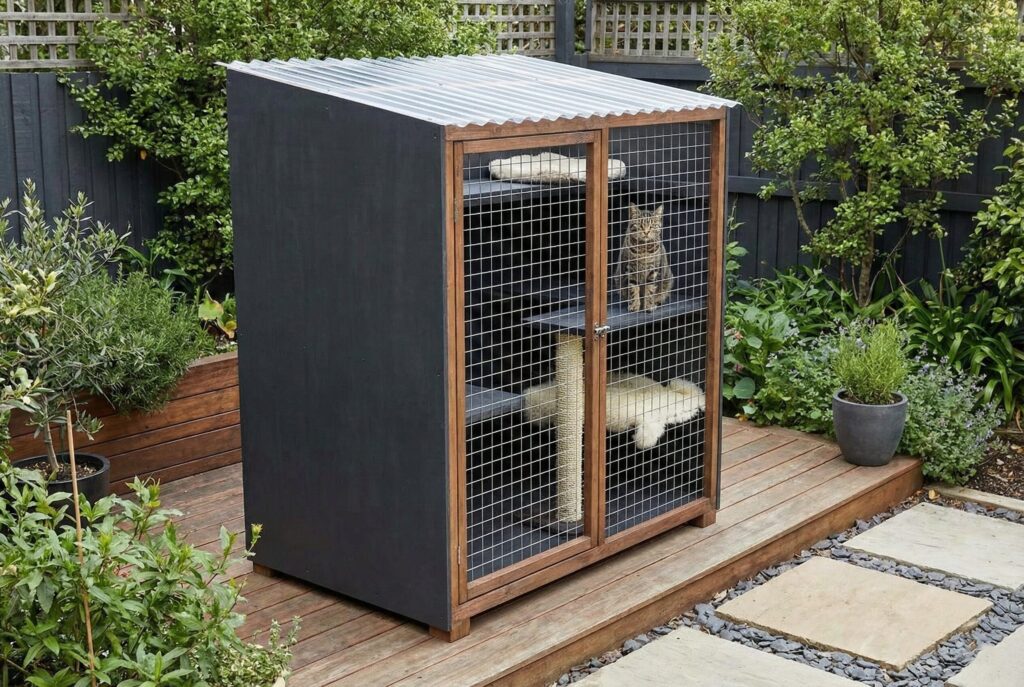
If you live in a rainy climate like the Pacific Northwest, a mesh box will be unusable for much of the year. This DIY build prioritizes weather protection.
- Materials Needed: Exterior plywood, 1×2 framing lumber, corrugated clear polycarbonate roofing panels, roofing screws with rubber washers, and hardware cloth.
- How to Build: Build the solid base and two solid side walls out of the plywood to block crosswinds. Use hardware cloth only for the front-facing wall so the cat can look out. For the roof, cut a piece of corrugated polycarbonate and attach it at a slight downward angle so rain flows off easily away from the house.
Important Safety Considerations for Outdoor Cat Perches
Building or buying the perch is only half the job. Ensuring it is completely safe for your cat is the most critical step. An outdoor perch is suspended above the ground, meaning failure can result in serious injury or escape.
Weight Limits and Structural Integrity
Never guess the weight capacity of a window perch. An average domestic cat weighs between 8 and 12 pounds, but if it jumps aggressively into the perch, the dynamic force is much higher.
Always use brackets rated for at least triple your cat’s weight. If building a DIY perch, ensure you are anchoring your screws into structural wall studs, not just the exterior siding or trim, which can pull away under pressure.
Escape-Proofing
Cats are liquid. If there is a gap, they will find it.
- Mesh Selection: Do not use standard fiberglass window screening. A cat’s claws will shred it in minutes. Always use “pet-proof screen” (made of thick vinyl-coated polyester) or metal hardware cloth.
- Window Gaps: When you lower a double-hung window onto a window box, it often creates a gap between the upper and lower window sashes. You must block this gap with weather stripping or a piece of foam to prevent insects from entering and your cat from squeezing through.
Weather and Pest Protection
Ensure the wood used in DIY projects is treated or painted with non-toxic, pet-safe exterior paint. Untreated wood will rot, weakening the structure. Check the perch periodically for wasp nests or spider webs, as these pests love to build in enclosed outdoor corners.
How to Choose the Right Perch for Your Window Type
Not all perches work with all windows. You must identify your window type before making a decision.
Double-Hung Windows
These slide up and down. They are the easiest windows for outdoor perches. Most commercial boxes are designed so you simply raise the window, place the box on the sill, and pull the window down to lock it in place.
Sliding Windows
These slide left and right. You can still use a window box, but you will have a large vertical gap left open above the box. You will need to build or buy a rigid vertical insert (like a piece of plexiglass or plywood) to seal the rest of the open window space above the perch.
Casement Windows
These operate with a crank and swing outward like a door. These are the most difficult to outfit with a window perch. You cannot use a traditional insert box. Your best option is a custom DIY enclosure that builds around the entire window frame on the outside, allowing the window to crank open into the enclosed catio space.
Step-by-Step Guide: How to Install a Basic Window Perch
Proper installation ensures longevity and safety. Here is a general workflow for installing a standard bracket-supported outdoor perch.
- Measure Twice: Measure the exact width of your open window from the inside tracks. Ensure your box is slightly narrower than this width so it fits through the opening.
- Locate Wall Studs: Using a stud finder on the interior wall beneath the window, locate the vertical wooden studs. Mark these locations. Transfer these measurements to the exterior of the house.
- Attach the Brackets: Drill pilot holes into the exterior wall, ensuring you hit the studs. Secure your heavy-duty metal brackets using long exterior-grade lag screws.
- Place the Box: Open the window fully. Carefully pass the window box through the window from the inside to the outside, resting it squarely on the brackets.
- Secure the Box to the Brackets: Go outside and drive screws upward through the holes in the metal brackets directly into the wooden base of the cat perch.
- Seal the Edges: Close the window sash down firmly onto the top of the box. Use foam weatherstripping around the sides to block drafts and bugs.
Making the Perch Comfortable for Your Cat
Once the structure is safe and secure, it is time to make it inviting. A bare wooden or metal floor is not appealing for long naps.
[Visual Prompt: An interior view of an outdoor window box decorated with a plush, machine-washable cat bed, a small pot of cat grass, and a dangling feather toy.]
- Add Weather-Resistant Bedding: Use an outdoor patio cushion or a machine-washable cat bed. Avoid materials that hold moisture if the perch is exposed to rain.
- Provide Shade: If the window gets direct afternoon sun, the perch can become uncomfortably hot. Drape a small piece of UV-blocking shade cloth over one side of the box, or install a mini awning above the window to provide a cool resting spot.
- Incorporate Nature: Place a small, heavy pot of cat-safe grass inside the perch. This gives them something safe to nibble on while they enjoy the outdoor air.
- Keep Access Open: If the weather permits, install a microchip cat flap in a piece of plexiglass next to the perch. This allows your cat to go in and out of their outdoor window catio whenever they please, even when you are not home to open the glass window.
Frequently Asked Questions (FAQs)
Are outdoor cat window perches safe for winter use?
It depends on the design. Open mesh perches will let freezing air into your house and offer no warmth for the cat. If you live in a cold climate, it is best to remove mesh boxes during winter. Clear acrylic boxes block the wind, but your cat will still need a heated pad to stay comfortable in freezing temperatures.
Do outdoor window perches damage the window frame?
Store-bought units designed to rest in the window track usually cause no damage and require no drilling into the frame itself. However, large DIY units that require heavy exterior brackets will require drilling holes into your home’s exterior siding, which must be properly caulked to prevent water damage.
Can a large cat break through the screen?
Standard insect screens can absolutely be broken by a determined or frightened cat. You must ensure the perch utilizes thick pet-proof screen or metal hardware cloth. If constructed with the correct materials, it is entirely secure.
Conclusion
Providing your indoor cat with an outdoor window perch is one of the best ways to improve their daily quality of life. Whether you choose the quick convenience of a store-bought clear acrylic box or spend a weekend building a custom multi-level wooden catio, the effort is well worth it. You are giving them the sights, sounds, and smells of the natural world while keeping them completely safe from harm.
Take the time to evaluate your window type, assess your DIY skills, and prioritize heavy-duty, weather-resistant materials. Before you know it, your cat will have a new favorite spot in the house, and you will have peace of mind knowing they are safe and entertained.