
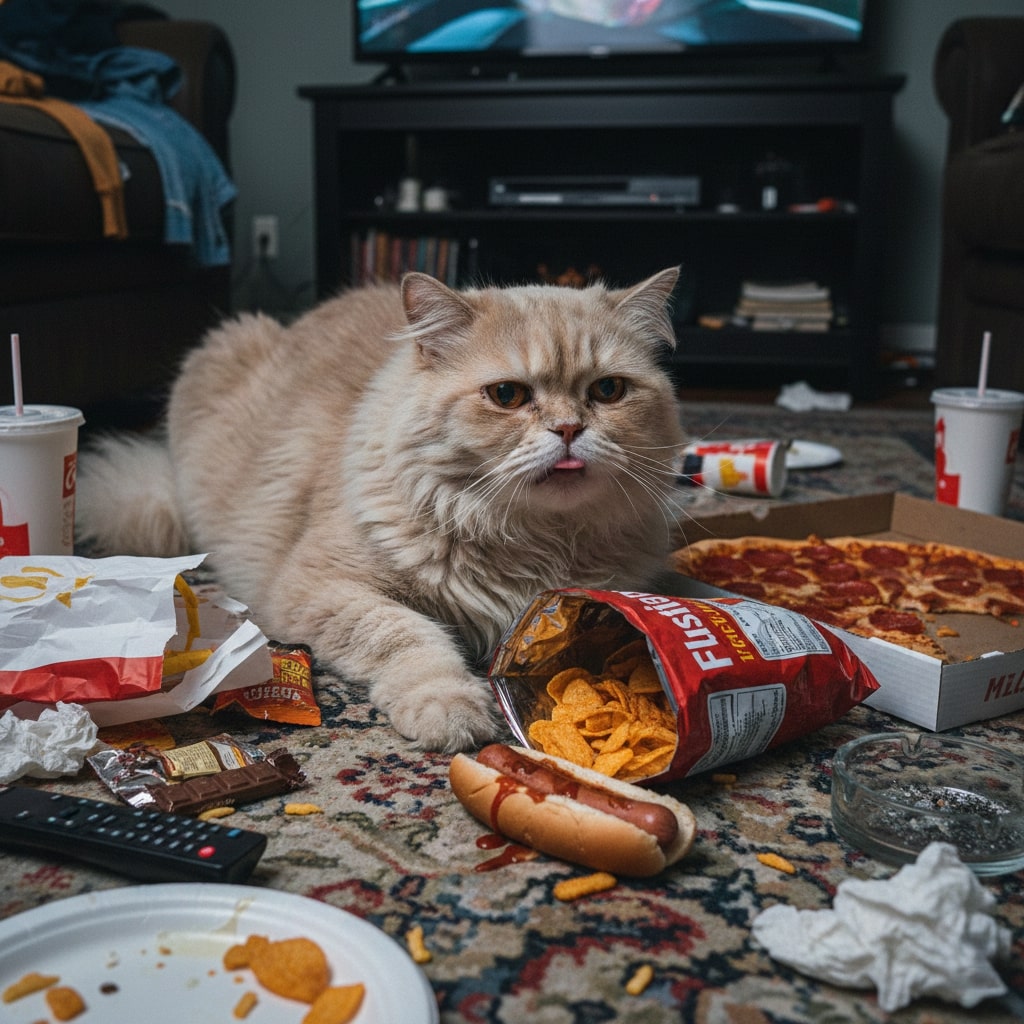
Feeding cats human junk food long-term causes serious, life-shortening health problems. High levels of salt, fat, and sugar lead to obesity, diabetes, pancreatitis, and kidney failure. Because cats are obligate carnivores, their digestive systems cannot process additives found in chips, pizza, and sweets. Over time, these foods cause organ damage, chronic pain from arthritis, and nutritional deficiencies.
Summary: Risks of Human Junk Food for Cats
| Food Category | Harmful Ingredients | Long-Term Health Risks |
| Salty Snacks (Chips, Pretzels) | Sodium, Preservatives | Kidney damage, excessive thirst, sodium ion poisoning. |
| Sweets (Candy, Ice Cream) | Sugar, Xylitol | Obesity, diabetes, dental decay. Xylitol is toxic. |
| Processed Meats (Ham, Bacon, Salami) | Sodium, Nitrates, Fat | Pancreatitis, digestive upset, kidney strain. |
| Fried Foods (Fried Chicken, Fries) | Saturated Fats, Breading | Obesity, severe digestive issues, pancreatitis. |
| Seasoned Foods (Pizza, Curries) | Garlic, Onion, Spices | Anemia (red blood cell damage), gastrointestinal distress. |
Long-Term Effects of Feeding Cats Human Junk Food
We all know that look. You open a bag of chips or slice a pepperoni pizza, and your cat stares at you with wide, pleading eyes. It is tempting to toss them a small piece. While a tiny scrap once in a blue moon might not kill them instantly, making a habit of feeding your cat human junk food has devastating long-term effects.
Cats are obligate carnivores. This means their bodies are designed to eat meat—and only meat. They lack the biological machinery to process the carbohydrates, sugars, and heavy spices found in human junk food.
Here is a detailed look at what happens to your cat’s body over time when they eat human scraps.
Read Also: Can Cats Eat French Fries?
1. Obesity and Joint Problems
The most visible effect of junk food is weight gain. Human food is incredibly calorie-dense compared to cat food. A few potato chips for a cat is the equivalent of a human eating a double cheeseburger.
- The Domino Effect: Obesity is not just about a chubby cat. Excess weight puts severe stress on joints and bones.
- Arthritis: Heavy cats often develop arthritis early in life. This causes chronic pain and makes it difficult for them to jump, run, or even use the litter box comfortably.
2. Pancreatitis (Inflammation of the Pancreas)
The pancreas helps aid digestion and regulate blood sugar. It is very sensitive to fat. Human junk food—especially bacon, cheese, sausage, and fried items—is dangerously high in fat.
- The Risk: Chronic consumption of fatty foods can cause the pancreas to become inflamed.
- The Symptoms: This is a painful condition that causes vomiting, diarrhea, loss of appetite, and lethargy. In severe cases, pancreatitis can be fatal.
3. Kidney and Liver Damage
Your cat’s kidneys and liver act as filters for their body. Human processed foods are loaded with sodium (salt) and chemical preservatives to make them taste good and last longer.
- Sodium Overload: A cat’s kidneys are not built to handle high salt intake. Over time, processing excess salt can damage the kidneys, leading to chronic kidney disease or failure.
- Toxic Buildup: The liver struggles to break down artificial preservatives and spices, leading to gradual organ stress and potential failure.
4. Diabetes
Cats do not have taste receptors for sweetness, but they will eat sugary foods like ice cream or cake because of the fat content.
- Carbohydrate Overload: Cats need very few carbohydrates. Junk food is full of carbs and sugar.
- Insulin Resistance: Eating sugary foods spikes blood glucose. Over time, the cat’s body stops responding to insulin properly, leading to Feline Diabetes. This requires daily insulin injections and strict diet management for the rest of the cat’s life.
5. Digestive System Issues
A cat’s digestive tract is short and acidic, designed to break down raw proteins quickly. It is not designed for the complex fibers, gluten, and additives in human food.
- Chronic Vomiting/Diarrhea: Regular junk food eaters often have “sensitive stomachs.” This usually manifests as chronic vomiting or loose stools.
- Imbalanced Gut Bacteria: Junk food destroys the healthy bacteria in a cat’s gut, lowering their immune system and making them more susceptible to illness.
6. Behavioral Issues
The damage isn’t just physical; it is behavioral, too.
- Picky Eaters: Junk food is essentially flavor-enhanced addiction. If a cat gets used to the strong salty/fatty taste of human food, they may refuse to eat their nutritionally balanced cat food.
- Aggressive Begging: Cats that are fed from the table often become pests during mealtime, stealing food or meowing incessantly.
Specific Toxic Ingredients to Watch
Some human “junk” foods contain ingredients that are not just unhealthy, but actually poisonous.
- Onions and Garlic: Found in pizza sauce, seasoned chips, and baby food. These damage red blood cells and cause anemia.
- Chocolate: Contains theobromine, which causes heart arrhythmias and seizures.
- Xylitol: An artificial sweetener found in gum, peanut butter, and low-sugar sweets. It causes a rapid drop in blood sugar and liver failure.
- Grapes and Raisins: Can cause sudden kidney failure.
Better Alternatives
If you want to treat your cat, stick to single-ingredient, cat-safe foods.
- Cooked Chicken: Plain, boiled, with no bones or skin.
- Fish: Plain salmon or tuna (in water, not oil) in small amounts.
- Freeze-Dried Treats: These are usually 100% meat and safe for cats.
Final Thoughts
Food is love, but feeding your cat junk food is hurting them, not loving them. The best way to ensure your cat lives a long, pain-free life is to stick to a high-quality, species-appropriate diet and keep the pizza crusts for yourself.