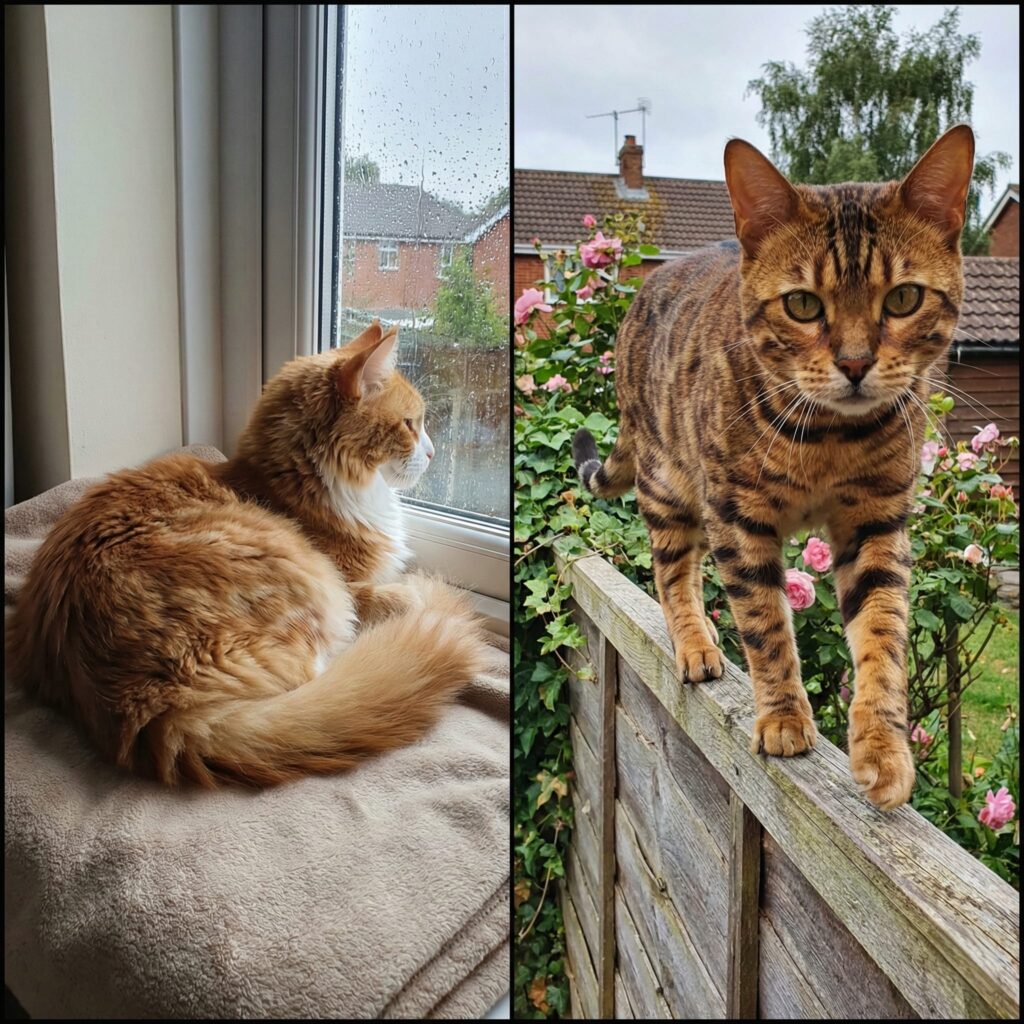
The choice between keeping a cat indoors or letting them outdoors largely depends on safety versus enrichment. Indoor cats generally live significantly longer (10 – 15+ years) and are safe from traffic, predators, and infectious diseases, but they require dedicated effort to prevent boredom and obesity. Outdoor cats enjoy natural mental stimulation and exercise, reducing behavioral issues, but face high risks of accidents, fighting, parasites, and a much shorter average lifespan (2 – 5 years). The growing trend is to keep cats indoors while providing safe outdoor access via “catios” or leash walking.
Summary Table: Indoor vs Outdoor Cats
| Feature | Indoor Cats | Outdoor Cats |
| Average Lifespan | 10 to 15+ years | 2 to 5 years |
| Safety Level | High (Protected from cars, predators) | Low (High risk of accidents, theft) |
| Health Risks | Low (Obesity, stress-related issues) | High (FIV, FeLV, parasites, poisoning) |
| Exercise | Requires owner interaction/toys | Natural running, climbing, hunting |
| Cost | Lower vet bills (fewer injuries) | Higher vet bills (wounds, infections) |
| Environmental Impact | None | High (Predation on birds/wildlife) |
Indoor vs Outdoor Cats: Detailed Guide
Deciding whether to keep your feline friend inside or let them roam free is one of the biggest decisions a new cat owner makes. It is a topic that sparks heated debates among veterinarians, animal shelters, and cat lovers.
Decades ago, it was standard practice to put the cat out at night. However, our understanding of feline health and the dangers of modern urban environments has changed. Today, the decision involves weighing the cat’s physical safety against their mental happiness.
This guide breaks down the specific pros and cons of each lifestyle, helping you make an informed choice that suits your home, your neighborhood, and your cat’s unique personality.
Read Also: How to Introduce a New Cat to Your Home
The Indoor Cat: Safety First
Keeping a cat strictly indoors is strongly recommended by organizations like the American Veterinary Medical Association (AVMA) and the Humane Society. The primary driver for this recommendation is safety and longevity.
Pros of Keeping Cats Indoors
1. Significantly Longer Lifespan
The statistics are stark. Indoor cats live much longer than their outdoor counterparts. By eliminating external threats, you are giving your pet the best chance to reach their senior years comfortably.
2. Protection from Traffic and Vehicles
Cars are the number one killer of outdoor cats. Even on quiet streets, a startled cat can dart under a wheel. Indoor cats are completely removed from this danger.
3. Prevention of Infectious Diseases
Outdoor cats often fight over territory. These fights transmit deadly viruses such as:
- Feline Leukemia (FeLV): A virus that suppresses the immune system.
- Feline Immunodeficiency Virus (FIV): Often called “cat HIV,” spread through deep bite wounds.
- Rabies: A fatal viral disease.
- Distemper (Panleukopenia): A highly contagious and life-threatening virus.
4. Freedom from Parasites
While indoor cats can still get fleas (often tracked in by humans or dogs), their risk is incredibly low compared to outdoor cats. Outdoor cats are constantly exposed to fleas, ticks, ear mites, ringworm, and intestinal worms from eating infected prey.
5. Protection from Predators and Cruelty
Depending on where you live, outdoor cats are prey for coyotes, foxes, large owls, and loose dogs. Sadly, they are also at risk from cruel humans who may harm them.
6. No Wildlife Predation
Cats are natural hunters. Outdoor cats kill billions of birds and small mammals every year. Keeping your cat inside protects local biodiversity.
Read Also: How Long Can a Cat Go Without Pooping?
Cons of Keeping Cats Indoors
1. Boredom and Frustration
A bored cat is a destructive cat. Without the sights, sounds, and smells of nature, indoor cats can become under-stimulated. This can lead to:
- Scratching furniture.
- Aggression toward other pets or humans.
- Over-grooming (licking fur off due to stress).
2. Obesity and Diabetes
Indoor cats generally move less. If they have free access to food and lack exercise, they pack on weight. Obesity leads to serious health issues like diabetes, arthritis, and urinary tract problems.
3. Reliance on the Litter Box
Indoor cats require a clean litter box. For the owner, this means daily scooping and regular cleaning to prevent odors and hygiene issues. If the box isn’t clean, the cat may find other places to go.
4. Dependence on Owners for Stimulation
You cannot just open the door and let them entertain themselves. You must be the source of their fun. You need to invest in cat trees, puzzle feeders, and engage in daily interactive play.
Read Also: Why Do Cats “Make Biscuits”?
The Outdoor Cat: The Call of the Wild
Some owners believe that denying a cat access to the outdoors is unnatural. They argue that the quality of life—feeling the grass, climbing trees, and hunting—is worth the risks.
Pros of Letting Cats Outdoors
1. Natural Exercise
Outdoor cats are rarely overweight. They sprint, climb fences, jump, and stalk. This physical activity keeps their muscles toned and their weight managed naturally.
2. Mental Stimulation
The outdoors provides an ever-changing environment. New smells, moving leaves, insects, and other animals keep a cat’s brain engaged. This intense sensory input satisfies their primal instincts.
3. Natural Elimination
Most outdoor cats prefer to do their business outside in soil or sand. This reduces the amount of litter box maintenance required by the owner and keeps odors out of the house.
4. Outlet for Instinctive Behaviors
Behaviors that are problematic indoors, like scratching and spraying, are often performed outdoors on trees or bushes, sparing your sofa and carpets.
Read Also: Why Does My Cat Slap Me?
Cons of Letting Cats Outdoors
1. High Risk of Trauma and Death
The world is dangerous for a small animal. Risks include:
- Vehicular Accidents: As mentioned, this is a leading cause of death.
- Getting Lost: Cats can be chased out of their territory and become disoriented.
- Traps: They may wander into garages, sheds, or pest traps.
2. Exposure to Toxins
Outdoor cats encounter substances that are lethal.
- Antifreeze: It tastes sweet to cats but causes rapid kidney failure.
- Rat Poison: Eating a poisoned rodent can kill the cat (secondary poisoning).
- Garden Chemicals: Pesticides and fertilizers can be toxic if licked off paws.
3. Vet Bills
Outdoor cats are more expensive medically. They require more frequent deworming and flea treatments. They are also prone to abscesses from fighting, which require antibiotics and sometimes surgery to drain.
4. Becoming a Nuisance
Your neighbors may not love your cat as much as you do. Outdoor cats may dig up neighbors’ gardens, poop in their flower beds, or fight with their pets, causing neighborhood disputes.
Read Also: Why Does My Cat Keep Sniffing Me?
The Compromise: Safe Outdoor Access
You do not have to choose between a bored indoor cat and a specific outdoor danger. There is a growing movement toward “managed outdoor access.” This gives your cat the best of both worlds: the safety of the indoors with the enrichment of the outdoors.
1. Catios (Cat Patios)
A catio is an enclosed outdoor space. It can be a simple box extending from a window or a large screened-in porch. It allows your cat to smell the fresh air and watch birds without the risk of escaping or being attacked.
2. Leash Training
Believe it or not, many cats can be trained to walk on a harness and leash.
- Start Young: It is easier with kittens, but adults can learn too.
- Use a Harness: Never attach a leash to a collar, as it can damage a cat’s throat. Use a secure “H” style or vest harness.
- Go Slow: Let them wear the harness inside first to get used to the feeling.
3. Cat-Proof Fencing
Specialized fencing can make your backyard escape-proof. These fences usually have a top section that angles inward, making it impossible for a cat to climb over. This allows your cat to roam the yard freely while keeping predators out.
Essential Care for Each Lifestyle
Regardless of which choice you make, your cat has specific needs that must be met to ensure they are healthy.
If You Choose Indoor Only
You must become the “Chief Entertainment Officer.”
- Vertical Space: Cats love to observe from high up. Install cat shelves or tall cat trees.
- Window Perches: Place a resting spot near a window. Hanging a bird feeder outside that window provides “Cat TV” for hours.
- Food Puzzles: Don’t just pour kibble in a bowl. Use puzzle feeders that require the cat to work for their food. This mimics hunting.
- Playtime: Dedicate 15 minutes twice a day to play with a wand toy. Make the cat jump and run to burn off energy.
Read Also: Why Do Cats’ Tails Fall Off?
If You Choose Outdoor Access
You must be vigilant about preventative health.
- Microchip: This is non-negotiable. If your cat loses its collar, a microchip is the only way a shelter can identify them.
- Vaccinations: Outdoor cats need core vaccines (Rabies, Distemper) and non-core vaccines like FeLV (Feline Leukemia), which is highly recommended for any cat that goes outside.
- Spay/Neuter: Never let an intact cat outside. This contributes to the pet overpopulation crisis and increases the desire to roam and fight.
- Flea/Tick Prevention: Use high-quality veterinary-approved prevention year-round.
Factors to Help You Decide
If you are still on the fence, consider these three critical factors specific to your situation.
1. Your Location
- Urban/City: High traffic makes outdoor access extremely dangerous. Indoor is the only safe option.
- Suburban: Moderate risk. Traffic is still a concern, as are neighbors’ dogs.
- Rural: While traffic is low, predators (coyotes, owls) and farm machinery pose significant risks.
2. The Cat’s Personality and History
- Former Strays: A cat that lived on the streets for years may be miserable if suddenly locked inside. Transitioning them requires patience and perhaps a catio.
- Kittens: If you raise a kitten indoors from birth, they won’t miss the outdoors because they never knew it.
- Fearful Cats: Shy or skittish cats are better off indoors. If they get scared outside, they may hide and never return.
3. Your Local Laws
Many cities and homeowners’ associations (HOAs) have leash laws for cats or “no free roam” policies. Letting your cat out might result in fines or animal control picking them up.
Conclusion
The debate between indoor and outdoor living is not about which is “right” or “wrong,” but about risk management.
Indoor cats are undeniably safer. They live longer, healthier lives free from predators, cars, and poisons. However, they rely entirely on you for their happiness and physical fitness.
Outdoor cats enjoy a life rich in natural stimulation, but that life is often cut tragically short by accidents or disease.
For the modern cat owner, the gold standard is keeping the cat indoors to ensure safety, while providing controlled outdoor experiences (like catios or leash walking) and an enriched indoor environment. This approach protects your beloved pet from the dangers of the world while still allowing them to be a cat.
What is your next step?
Evaluate your home environment today. If you have an indoor cat, look for one spot where you can add a vertical shelf or a window perch to improve their view. If you have an outdoor cat, check when their last vaccination update was and schedule a vet visit if they are overdue.