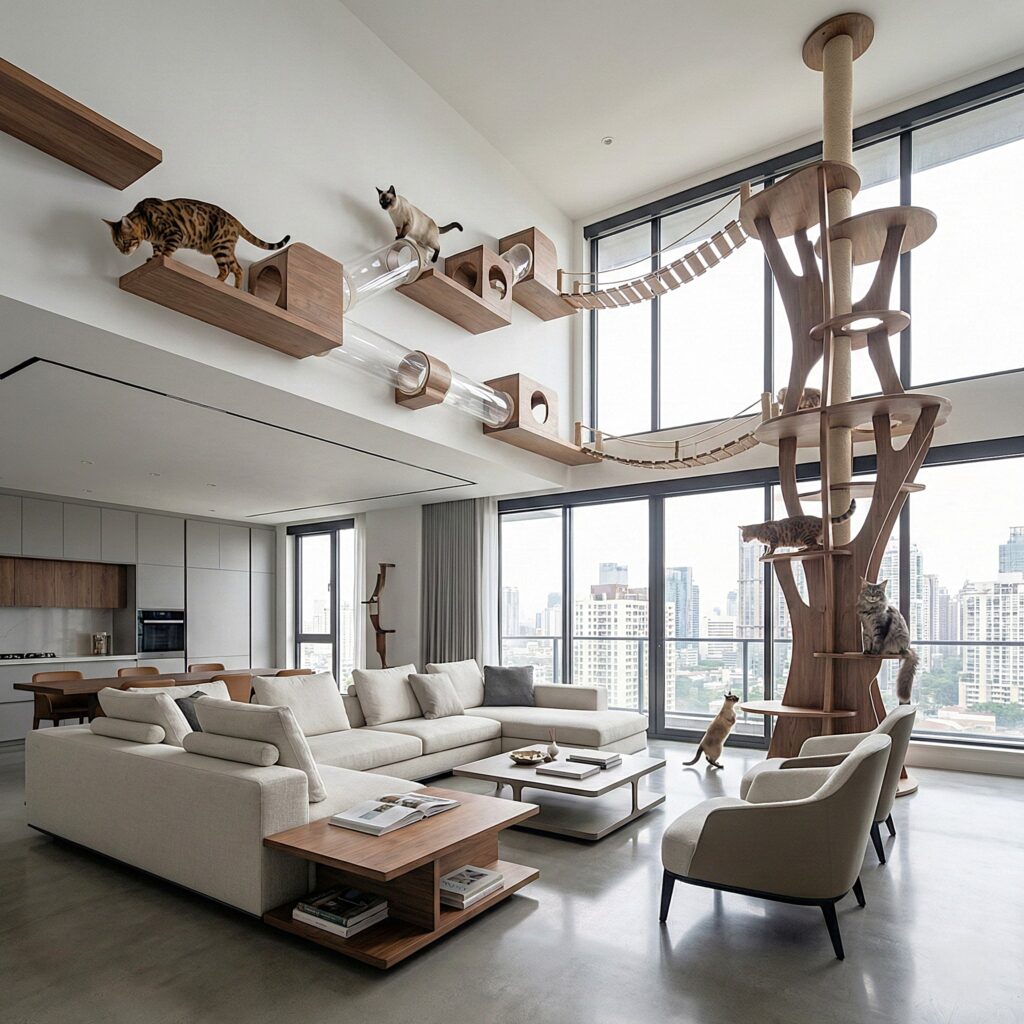
Vertical space is essential for cats because it satisfies their natural instinct to climb, observe their environment from a safe vantage point, and establish territory. Providing elevated areas like cat trees, shelves, and window perches reduces stress, minimizes conflict in multi-cat households by increasing usable territory, and promotes physical exercise. It transforms a flat human home into a dynamic, stimulating environment that caters to a feline’s three-dimensional lifestyle.
Summary Table: Benefits of Vertical Space for Cats
| Benefit | Description | Best Solution |
| Safety & Security | High spots allow cats to observe threats without being reached. | Tall cat trees or top of cabinets. |
| Territory Management | Increases total livable space, crucial for multi-cat homes to avoid fights. | Wall-mounted shelves and walkways. |
| Physical Health | Encourages jumping, climbing, and stretching, which combats obesity. | Floor-to-ceiling poles or stepped shelving. |
| Mental Stimulation | Provides new angles for visual enrichment, especially near windows. | Window perches or hammocks. |
| Confidence Building | Timid cats feel bolder when they can look down on their surroundings. | High hiding spots or “condos.” |
The Importance of Vertical Space for Cats
When humans look at a room, we see the floor area. We measure our living space in square footage. Cats, however, see the world in cubic feet. To a cat, the space above the sofa, the top of the refrigerator, and the empty walls are just as important as the rug on the floor.
Providing vertical space is not just about giving your cat a fun place to sleep. It is a biological necessity that ties directly to their evolution, mental health, and physical well-being. A home without vertical options can feel cramped and stressful to a cat, even if the house is large by human standards.
Read Also: How to Make Your Home Cat-Safe
1. The Evolutionary Need to Climb
Domestic cats share significant DNA with their wild ancestors. In the wild, cats are both predators and prey. This dual role dictates much of their behavior, including their need for height.
The Vantage Point of a Predator
As hunters, cats need to survey their territory to spot potential prey. A high vantage point gives them a clear, unobstructed view of the ground below. This allows them to plan an ambush or simply watch the movement of “prey” (which, in your home, might be a toy, a bug, or your feet).
The Safety of Prey
Because smaller wild cats can be eaten by larger predators, climbing is a survival mechanism. High places are generally safe zones. Land-based predators like coyotes or wolves cannot easily climb trees.
When a cat feels threatened or anxious, their instinct is to go up. If your home has no vertical escape routes, a nervous cat may feel trapped, leading to behavioral issues like aggression or hiding under beds.
Read Also: How Cats Choose Their Favorite Sleeping Spots
2. Psychological Benefits of Elevation
Beyond basic survival instincts, vertical space plays a massive role in your cat’s daily emotional state.
Stress Reduction and Confidence
A shy or fearful cat gains confidence from height. When they are high up, they are out of reach of grabby toddlers, enthusiastic dogs, or the vacuum cleaner.
They can watch household activity without being forced to participate. This sense of control lowers their cortisol levels.
If you have a cat that is constantly hiding under the sofa, adding a high shelf or a tall tree often brings them out into the open because they feel safer observing from above than hiding below.
Visual Enrichment
Boredom is a major enemy of indoor cats. A bored cat can become destructive, scratching furniture or over-grooming. Vertical spaces, especially those near windows, provide “Cat TV.”
Being able to look out at birds, squirrels, and passing cars stimulates their brain. Even watching you cook dinner from the top of the fridge is more interesting than staring at table legs.
3. Vertical Space in Multi-Cat Households
If you own more than one cat, vertical space is not optional; it is mandatory.
increasing Territory
Cats are territorial animals. In a small apartment or even a standard house, floor space is limited. If two cats do not get along, forcing them to share the floor can lead to constant friction. Vertical space effectively doubles or triples the size of the territory.
Time-Sharing and Hierarchy
Cats often assert their status through height. The “top cat” (socially dominant) will often claim the highest perch. However, cats are also masters of time-sharing. One cat may use the high shelf in the morning to sunbathe, while another claims it in the afternoon.
By providing multiple elevated levels, you allow cats to navigate a room without crossing paths. Cat A can walk across the floor, while Cat B watches from a shelf.
They can exist in the same room without confrontation. This vertical separation is one of the most effective ways to stop bullying and fighting in multi-cat homes.
Read Also: Seasonal Changes That Affect Cat Behavior
Types of Vertical Space Solutions
You do not need to be a carpenter to create a vertical world for your cat. Solutions range from expensive furniture to simple rearrangements.
Cat Trees and Towers
These are the most common solutions.
- Stability is Key: A wobbly tree will scare a cat. They need to feel like they are climbing a sturdy oak, not a flimsy twig.
- Height Matters: A three-foot post is a scratching post, not vertical space. Aim for trees that are at least five or six feet tall.
- Texture: Look for trees wrapped in sisal rope, which doubles as a scratching surface.
Wall Shelves and Perches
If you lack floor space, look to the walls. Floating shelves specifically designed for cats are sleek and modern.
- Sturdy Mounting: These must be mounted into wall studs. Drywall anchors are rarely strong enough to support the force of a cat launching itself onto a shelf.
- Non-Slip Surfaces: The tops should have carpet, felt, or sisal mats so the cat doesn’t slide off.
Window Perches
These attach to the glass via strong suction cups or hook onto the sill. They are excellent for entertainment but usually don’t offer the “escape route” benefits of a tree unless connected to other furniture.
Utilizing Existing Furniture
You don’t always need to buy “cat furniture.”
- The Fridge: Clear off the cereal boxes from the top of the refrigerator. Put a cozy bed up there.
- Bookcases and Wardrobes: Clear a space on a high shelf. Ensure the furniture is anchored to the wall so it doesn’t tip over.
- Window Sills: Ensure they are wide enough for lounging.
Read Also: How Do Cats Communicate With Humans?
Designing a “Cat Superhighway”
The gold standard of vertical space is the “Cat Superhighway.” This is a concept popularized by cat behaviorist Jackson Galaxy.
A superhighway is a continuous path that allows a cat to travel around a room without touching the floor. It connects different pieces of furniture.
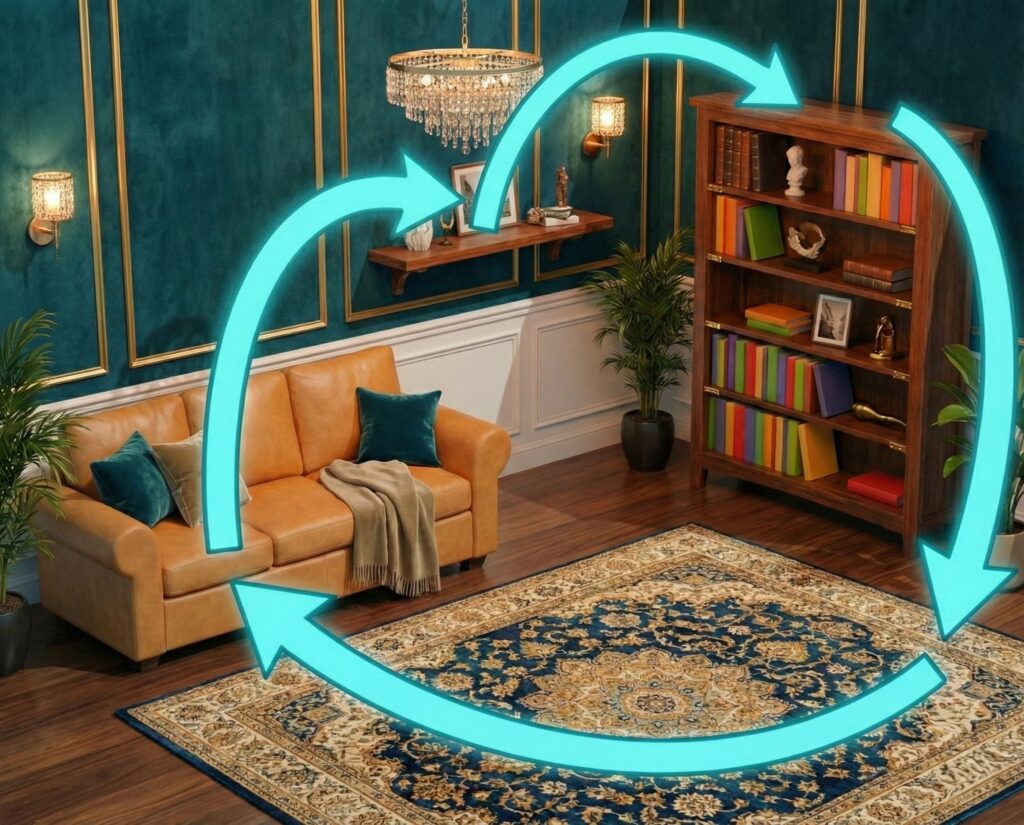
Example Layout:
- The cat jumps from the sofa arm to a cat tree.
- From the top of the tree, they step onto a wall shelf.
- The shelf leads to the top of a tall bookcase.
- The bookcase has a step down to a window perch.
- The window perch leads to a chair.
Why this works: It prevents dead ends. If a cat is chased by another cat (or a dog) and runs up a tree that has no exit, they are cornered. A superhighway allows for traffic flow. The cat can go up, move across, and come down in a different spot.
Considerations for Different Life Stages
Not all vertical space is suitable for all cats. You must tailor the environment to the physical abilities of your pet.
Kittens and Young Adults
- Needs: High energy, desire to climb fast.
- Setup: Floor-to-ceiling tension poles are great. They can climb straight up the sisal rope. Complex layouts with gaps for jumping are excellent for burning energy.
Senior Cats
- Needs: Comfort and accessibility. Arthritic joints make jumping painful.
- Setup: Avoid large gaps. Use ramps or “stairs” (smaller shelves placed close together). Ensure the landing surfaces are heavily padded to cushion their joints. The destination should be warm and draft-free.
Heavy or Large Breeds (e.g., Maine Coons)
- Needs: Heavy-duty support.
- Setup: Standard pet store shelves may break. You need reinforced brackets and wide platforms. A standard shelf is roughly 9-10 inches deep; a Maine Coon may need 12-14 inches to lie down comfortably.
Read Also: Why Cats Don’t “Taste” Spicy Food
Where to Place Vertical Enhancements
Placement is just as important as the equipment itself. A generic cat tree tucked in a dark corner of the basement will likely be ignored.
Social Significance
Cats want to be where you are. The best place for a cat tree is in the living room, near the sofa where the family gathers. This allows the cat to be part of the “group scent” and social activity while maintaining their safe boundary.
Viewpoints
Place shelves near windows. This grants the cat visual access to the outdoors. However, be mindful of what is outside. If stray cats constantly roam your yard, a window view might cause aggression rather than entertainment.
Warmth
Heat rises. High shelves are naturally warmer, which cats love. In winter, placing a perch near a sunny window or a heating vent (but not directly on it) creates a prime napping spot.
How to Encourage Use
You bought a $200 cat tree and your cat is sleeping in the box it came in. This is a common frustration. Here is how to fix it:
- Location, Location, Location: Move the tree. If it’s in a corner, move it near a window or the sofa.
- Scent Marking: The furniture smells like a factory. Rub it with catnip. Better yet, rub a towel on your cat’s cheek (where their pheromones are) and then rub that towel on the new tree. This marks it as “theirs.”
- Positive Reinforcement: Place treats on the different levels. Feed them their dinner on the lowest shelf, then gradually move the bowl higher over a few days.
- Play: Use a wand toy to lure them up the tree or shelves. Make the game end with them catching the “prey” on the perch.
Conclusion
Vertical space is not a luxury for cats; it is a fundamental requirement for a happy, healthy life indoors. By expanding your cat’s territory upward, you provide them with the security they crave and the stimulation they need.
Whether you install an elaborate system of wall bridges or simply clear off the top of a sturdy bookcase, the result is the same: a more confident, relaxed, and satisfied cat. Look at your walls and see the potential. Your cat certainly does.