
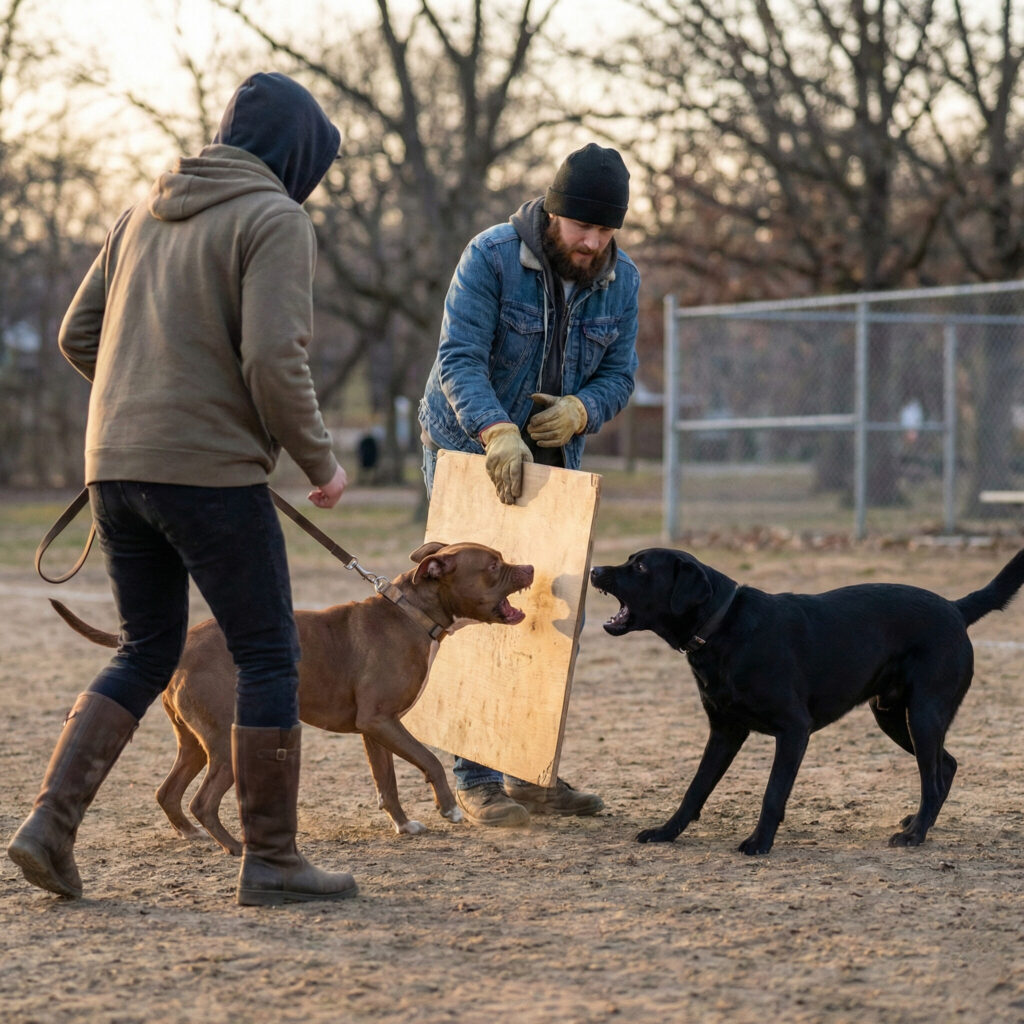
The safest way to break up a dog fight is never to get physically between the dogs. If two people are present, the most effective technique is the “wheelbarrow method,” where each person grabs the hind legs of a dog and pulls them backward and away from each other, turning in a circle to prevent them from biting back. If you are alone, use loud noises like an air horn, spray them with a water hose, or throw a large blanket over them to distract and disorient them. Never grab a fighting dog by the collar near its head, as this often leads to a severe redirected bite.
Summary Table
| Category | Key Actions & Information |
| Safest Method (2 People) | Wheelbarrow Technique: Grab hind legs, lift, and pull backward away from each other. |
| Safest Methods (Alone) | Distraction & Barriers: Use loud noises (air horn, yelling), spray with water (hose, bucket), throw a large blanket over them, or place a physical object like a chair between them. |
| CRITICAL DON’TS | NEVER put your hands, arms, or face near the fighting dogs’ heads. NEVER grab their collars. NEVER try to pull them apart by their tails. DO NOT kick or punch the dogs. |
| Key Risks | Redirected Aggression: In the heat of the fight, a dog will often bite anything that touches it, including its owner, without realizing it. |
| Immediate Aftermath | Separate the dogs into different rooms or secure areas immediately. Do not let them stay together even if they seem calm. Check everyone (dogs and humans) for injuries. |
How to Safely Break Up a Dog Fight
Witnessing a dog fight is one of the most terrifying experiences for any dog owner. The sound of snarling, snapping teeth, and the sight of two animals locked in combat can induce instant panic. Your natural instinct is to jump in and pull them apart to save your beloved pet. However, acting on this impulse without a plan is the single most common cause of severe human injury during dog altercations.
Knowing how to safely intervene can save your dog’s life and prevent you from a serious trip to the emergency room.
This guide will detail practical, safe methods for breaking up a fight, what you absolutely must not do, and how to prevent these situations from happening in the first place. The primary goal in any dog fight situation is to stop the conflict while ensuring human safety first.
Read Also: How to Read Warning Signs Before a Dog Bite
Understanding Why Dogs Fight
Before diving into intervention techniques, it helps to understand that not all fights are born from pure aggression. Sometimes, rough play can escalate when one dog gets overstimulated or doesn’t respect the other’s “stop” signals. Other times, fights are triggered by:
- Resource Guarding: Protecting food, toys, a favorite spot, or even a human.
- Territorial Behavior: Defending their home or yard from a perceived intruder.
- Fear or Anxiety: A dog acting aggressively because it feels threatened and trapped.
- Redirected Aggression: A dog that is highly aroused by something else (like a squirrel on the other side of a fence) may turn and attack another dog standing nearby.
Recognizing that a dog in “fight mode” is acting on a primal instinct is crucial. They are not thinking clearly, and they will likely not recognize you as their owner in that split second.
The Danger of Redirected Bites
The most important concept to understand is “redirected aggression” or a “redirected bite.” When dogs are fighting, their arousal levels are off the charts. Their focus is entirely on the other dog. If you reach in with your hands to grab a collar, pull a tail, or push them apart, the dog’s natural reflex is to snap at whatever is touching them.
They aren’t trying to hurt you; they are reacting blindly to a new stimulus in a high-stress situation. These bites are often severe, causing deep punctures and tearing flesh, because the dog is biting with full force. This is why keeping your hands away from their heads is rule number one.
What NEVER To Do
Avoiding the wrong actions is just as important as knowing the right ones. Do not do any of the following:
- Never get in the middle: Do not use your body, legs, or arms to block the dogs from each other. You will get bitten.
- Never grab collars: Reaching for the collar puts your hand inches away from snapping jaws. This is the most common way people get bitten.
- Do not scream repeatedly: While a single loud shout might work as a distraction initially, continuous screaming and panicking adds chaotic energy to the situation and can make the dogs fight harder.
- Do not hit or kick the dogs: Causing pain to an already fighting dog will likely only increase its aggression and adrenaline, making the fight worse or causing it to turn on you.
The Safest Method: The Wheelbarrow Technique (Requires Two People)
If there are two adults present, this is widely considered the safest and most effective way to break up a fight. It works by physically separating the dogs while keeping human hands far away from their mouths.
- Communicate quickly: You and the other person need to act together. Quickly agree on who is taking which dog.
- Approach from behind: Move quickly and calmly behind your respective dogs.
- Grab the hind legs: Firmly grasp the dog’s back legs just above the ankles.
- Lift and pull backward: Lift the dogs’ back ends off the ground so they are balancing on their front paws, like a wheelbarrow. Immediately begin pulling them backward, away from each other.
- Turn in a circle: As you pull backward, start turning in a slow circle. This is a critical step. It forces the dog to side-step with its front paws to keep its balance, making it nearly impossible for it to curl its body around and bite your hands.
- Keep separating: Continue pulling backward and turning until the dogs are completely separated and cannot see each other. Do not let go until the dog is secured behind a barrier like a door or gate. If you let go too soon, they may charge back into the fight.
How to Intervene When You Are Alone
Breaking up a fight alone is significantly more dangerous and difficult. Your focus must be on distracting or disorienting the dogs long enough for them to disengage on their own, or creating a physical barrier.
1. Use Loud Noise Distraction
Sound can sometimes snap dogs out of their intense focus. The key is that the sound must be sudden and incredibly loud.
- Air horn: A marine air horn is excellent for this. The sudden blast can startle the dogs into stopping.
- Metal on metal: Banging two metal pot lids together violently near the dogs.
- Yell once, loudly: A deep, booming “HEY!” or “NO!” can work, but don’t keep screaming if it doesn’t work immediately.
2. Water Spray
If a water hose with good pressure is nearby, spray the dogs directly in their faces. The shock of the water can force them to break their hold to breathe or shake it off. A large bucket of water dumped right on their heads can also have a similar effect.
3. The Blanket Drop
If you have a large, heavy blanket, tarp, or coat handy, throw it over the top of both dogs. This suddenly blocks their vision and can disorient them enough to stop fighting.
They may try to wiggle out from under the blanket, giving you a chance to grab the less aggressive dog’s back legs (using the wheelbarrow technique) to pull it away. Be careful, as they may still be snapping under the blanket.
4. Create a Physical Barrier
Try to shove a large, solid object between the dogs. This could be a large piece of plywood, a garbage can lid, a folding chair, or even a large piece of cardboard.
The goal is to break their visual contact and give them something other than each other to bite. Keep your hands well behind the object you are using.
High-Risk “Last Resort” Measures
These methods are extremely dangerous and should only be attempted if a dog’s life is in immediate danger and all other safer options have failed. They carry a very high risk of human injury.
- The Collar Pull (Modified): If you absolutely must grab a dog, approach from the rear and grab the collar at the very back of the neck, as far from the mouth as possible. Pull straight back and upward to cut off the air supply and force a release. Be prepared for the dog to try to whip around to bite you. This is not recommended for standard flat collars that can slip, but rather for choke or prong collars that will tighten.
- Using a Break Stick: This is a specialized tool used primarily by professionals handling breeds prone to locking onto an opponent. A break stick is a wedge-shaped piece of wood or plastic inserted behind the dog’s molars to pry its jaws open. Using one requires skill and practice. If done incorrectly, you can break the dog’s teeth or jaw, and you put your hands dangerously close to their mouths. This is not a recommended method for the average pet owner without training.
Read Also: How Portion Sizes Affect Dog Energy Levels
Immediate Steps After the Fight Ends
The moments after a fight are just as critical as the fight itself. The dogs’ adrenaline will still be extremely high.
- Separate completely: Do not just pull them a few feet apart and let go. Immediately take the dogs to separate rooms, put them in crates, or on opposite sides of a secure fence. They must not be able to see each other.
- Do not soothe them together: Do not try to comfort both dogs in the same space. They need time to physically and mentally calm down, which can take hours.
- Check for injuries: Once the dogs are secured and calmer, inspect them thoroughly for puncture wounds. Dog bites can be deceptive; a small hole on the surface can hide extensive damage underneath the skin. Check areas with thick fur carefully, especially around the neck, ears, and legs.
- Seek veterinary care: Even if injuries appear minor, it is always a good idea to have a veterinarian examine any dog that has been in a fight. They may need antibiotics to prevent infection from bites.
- Check humans for injuries: In the adrenaline rush, you may not realize you have been bitten or scratched. Clean any wounds immediately and seek medical attention for deep bites, as they carry a high risk of infection.
Prevention: The Best Strategy
The best way to handle a dog fight is to prevent it from starting. Learning to read canine body language is your best defense.
Watch for these pre-fight warning signs:
- Stiff body posture: The dog stands rigid and tense.
- Hard stare: A fixed, unwavering gaze at another dog.
- Raised hackles: The fur along the spine stands up.
- Low, throaty growl.
- Lip curling: Showing teeth, even slightly.
- “Whale eye”: Showing the whites of their eyes.
If you see these signs, intervene immediately by calmly removing your dog from the situation before it escalates into a fight. Avoid high-risk situations like crowded dog parks if your dog is anxious or reactive. Manage resources like food and toys carefully in multi-dog households. Training and socialization can also go a long way in preventing aggressive behavior.
By being prepared, staying calm, and knowing the safest techniques, you can protect yourself and your canine companions from the dangers of a dog fight. Remember, human safety must always come first.