
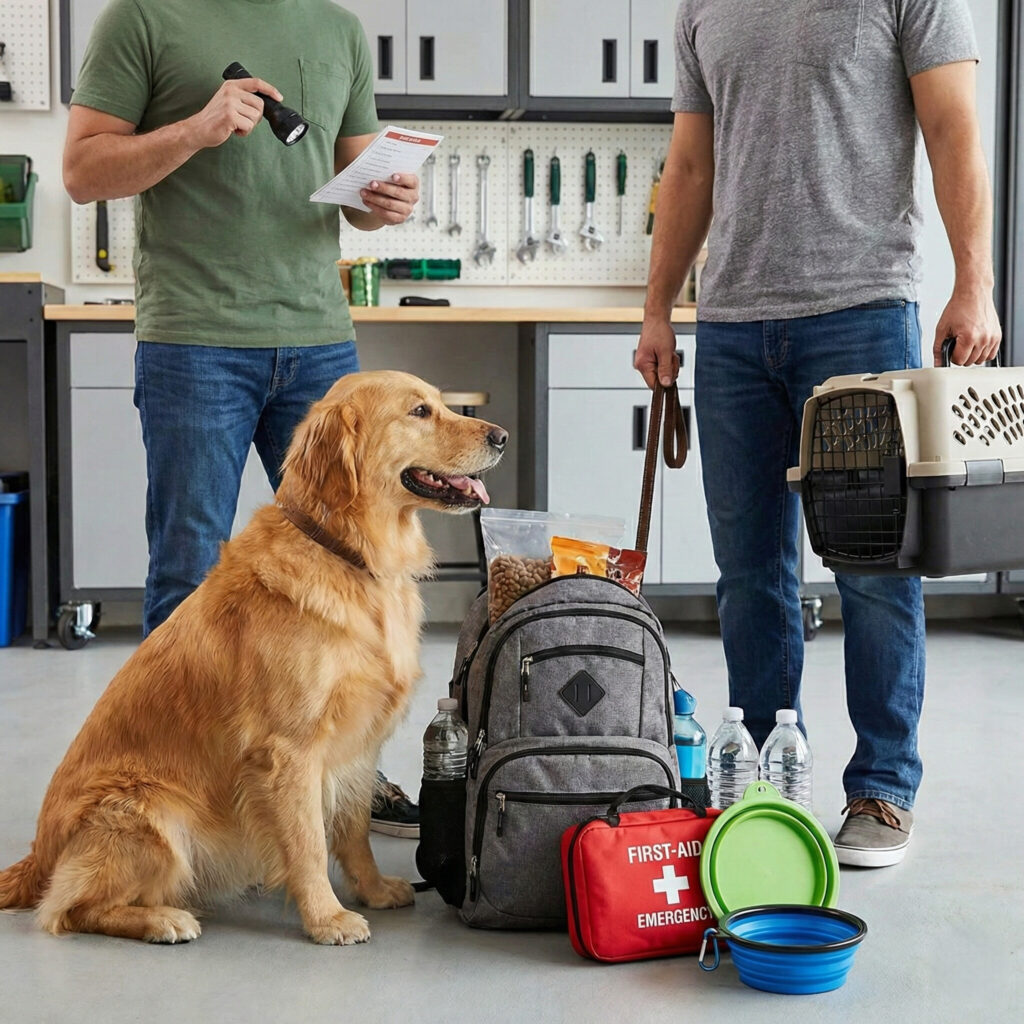
To prepare your dog for emergencies, you must create a specific pet disaster plan. Build a “grab-and-go” bag containing at least five days of food, water, medications, and copies of medical records. Ensure your dog’s microchip information is up-to-date, and they are wearing collar tags with current phone numbers. Identify pet-friendly hotels or shelters along potential evacuation routes in advance, as many public emergency shelters do not accept pets. Practice your evacuation routine with your dog so they are comfortable with crates and car travel during stressful situations.
Summary Table
| Preparedness Category | Critical Actions | Why It matters |
| Identification | Update microchip info and collar tags. Take current photos of your dog. | Ensures you can be reunited if separated during a disaster. |
| Emergency Kit | Pack food, water, meds, first aid, and documents in a waterproof bag. | Provides essential survival supplies when stores are closed or inaccessible. |
| Evacuation Plan | Locate pet-friendly hotels outside your immediate area beforehand. | Prevents being turned away from safety because you have a dog with you. |
| Medical Readiness | Keep vaccinations current and have a copy of medical records. Learn basic pet first aid. | Protects against disease outbreaks in shelters and allows for immediate care. |
| Practice | Regularly practice loading up and driving to reduce anxiety. | Familiarity reduces panic for both you and your dog during a real event. |
How to Prepare for Emergencies With Dogs
When a disaster strikes, every second counts. In the chaos of an emergency, our pets are completely dependent on us for their safety and survival. Including your dog in your household emergency planning isn’t just a good idea; it is essential responsible pet ownership.
Leaving a dog behind during a hurricane, wildfire, or severe storm should never be an option. If it is not safe for you to stay in your home, it is not safe for your dog either.
This guide will outline practical, simple steps to ensure your dog is ready for unexpected events. By focusing on preparation now, you can reduce panic and ensure the safety of your entire family when it matters most.
Read Also: How Dogs Sense Danger
1. Proper Identification is Crucial
The most common tragedy during emergencies is pets getting separated from their owners. Loud noises, confusing environments, and unfamiliar people can cause even the calmest dog to bolt and become lost. Ensuring they can be identified is your primary line of defense.
Microchipping
A microchip is a permanent identification hidden under your dog’s skin. Unlike collars, it cannot fall off.
- Get it done: If your dog is not microchipped, have your veterinarian do it immediately.
- Update the registry: A microchip is useless if the contact information linked to it is old. If you move or change phone numbers, update your profile with the microchip manufacturer right away.
Collar and Tags
Your dog should always wear a secure collar with up-to-date tags.
- Essential Info: The tag should include your current cell phone number.
- Backup Info: Consider adding a second number of a friend or relative who lives outside your immediate geographical area, just in case local phone lines are down.
- Rabies Tag: Keep their current rabies vaccination tag on the collar as well. This proves your dog is not a health risk.
Photo Proof
Have current photographs of you with your dog. This serves two purposes:
- It helps identify them if they are lost.
- It proves ownership to shelter workers if you need to reclaim them.
2. Building Your Dog’s “Grab-and-Go” Bag
Just as every human family needs an emergency supply kit, your dog needs one too. Do not count on being able to find pet supplies during a widespread disaster. Stores may be closed, out of stock, or destroyed.
Build a specific kit in a waterproof container, backpack, or duffel bag. Store it in an easily accessible spot, like a front closet, so you can grab it quickly on your way out the door. Check the kit every six months to rotate food and check expiration dates on meds.
Essential Kit Items Checklist
Food and Water:
- Water: Plan for at least one gallon of water per day for a medium-sized dog for drinking and sanitation. Store at least a 5-day supply.
- Food: A 5-day supply of their regular food. Dry kibble is best as it doesn’t require refrigeration. If you use canned food, buy pop-top cans so you don’t need a can opener.
- Bowls: Collapsible travel bowls are lightweight and easy to pack.
Medical Supplies:
- Medications: A two-week supply of any chronic medications your dog takes (e.g., for heart conditions, thyroid issues, or anxiety). Keep these in a waterproof container.
- Medical Records: Physical copies of vaccination records (especially rabies, distemper, and Bordetella) and a brief medical history from your veterinarian. Many boarding facilities will not take a dog without proof of vaccination.
- Canine First Aid Kit: This should include bandages, antiseptic wipes, flea and tick prevention, tweezers, and antibiotic ointment.
Handling and Safety Gear:
- Extra Leash and Collar: Have a sturdy backup set in case the primary one breaks.
- Muzzle: Even the friendliest dog may bite when injured, terrified, or in pain. A basket muzzle allows them to pant but prevents biting during transport or medical treatment. Train your dog to accept the muzzle beforehand.
- Carrier or Crate: This is vital for evacuation. It provides a safe space for your dog and is often required at emergency shelters or hotels. Write your name and phone number clearly on the crate.
Comfort and Sanitation:
- Waste Bags: A large supply of poop bags.
- Cleaning Supplies: Paper towels and pet-safe disinfectant for accidents in the car or crate.
- Comfort Item: A favorite toy or a blanket that smells like home to reduce stress.
Read Also: How to Teach Dogs to Be Calm Around Strangers
3. Creating an Evacuation Plan
The hardest part of an emergency is deciding when to leave and where to go. Waiting until the last minute limits your options severely.
Know Where to Go
Do not assume public emergency shelters (like those run by the Red Cross) will accept pets. For health and safety reasons, many only accept service animals.
- Identify Pet-Friendly Hotels: Research hotels and motels outside your immediate area that allow dogs. List their phone numbers in your emergency plan. During a disaster, “no pet” policies are sometimes waived, but do not count on this.
- Stay with Friends or Family: Arrange in advance with relatives or friends who live out of town to stay with them in an emergency. Ensure they are comfortable having your dog there.
- Animal Shelters and Boarding Kennels: Create a list of local boarding facilities and animal shelters. They may offer temporary emergency housing during a local disaster, but they will fill up very quickly.
The Evacuation Process
When local authorities issue an evacuation warning, take action immediately.
- Bring Pets Inside: At the first sign of danger (like approaching severe weather), bring your dog inside. Animals can sense weather changes and may hide if frightened, making them impossible to find when you need to leave.
- Load Up Early: Do not wait until the mandatory evacuation order. Traffic will be horrendous. Leaving early is safer for everyone.
- Secure Your Dog in the Vehicle: Dogs should be secured in a crate or with a seatbelt harness during transport. A loose, panicked dog in a car is a dangerous distraction for the driver.
4. Sheltering in Place
Sometimes the safest option is to stay home. This usually happens during short-term events like tornadoes or severe thunderstorms, or when authorities advise “sheltering in place” due to chemical spills.
Choose a Safe Room:
Identify the safest area in your home. This is usually an interior room without windows on the lowest level, such as a basement, bathroom, or large closet.
Prepare the Room:
- Move your dog’s crate, food, and water into this room when a watch or warning is issued.
- Close off small areas where a frightened dog might wedge themselves and get stuck (like under a low bed or behind a sofa).
- Keep your emergency kit in this room.
During the Event:
Keep your dog on a leash even when inside the safe room. If your house is damaged, fences may be down, and doors may be blown off. You need to have immediate physical control of your dog to prevent them from escaping into a dangerous environment.
Read Also: How to Safely Break Up a Dog Fight
5. Medical Preparedness and Anxiety
Emergencies are incredibly stressful for dogs. They pick up on your anxiety and the chaotic environment.
Managing Anxiety
If you know a storm is coming, try to exercise your dog heavily beforehand to burn off energy. During the event, remain as calm as possible. Your dog looks to you for cues on how to react.
If your dog has severe storm anxiety or travel anxiety, talk to your veterinarian in advance. They may prescribe sedatives or anti-anxiety medication to keep in your emergency kit to help your dog cope during a crisis.
Canine First Aid
Veterinary care may not be immediately available after a disaster. Knowing basic canine first aid can save your dog’s life.
Consider taking a pet first aid and CPR class online or in your local community. Learn how to:
- Bandage a cut paw pad.
- Check for signs of shock (pale gums, rapid breathing).
- Safely restrain an injured dog.
- Perform CPR.
Always have the phone numbers for the nearest 24-hour emergency veterinary hospital written down in your kit and saved in your phone.
Conclusion
Disaster preparedness for dogs is not about being paranoid; it is about being responsible. By taking these steps to identify your pet, build a kit, and create a plan, you are ensuring that when the unexpected happens, your focus can remain on keeping your family safe, rather than scrambling to find dog food or worrying about a lost pet. Do not wait for a warning to start preparing. Do it today.