
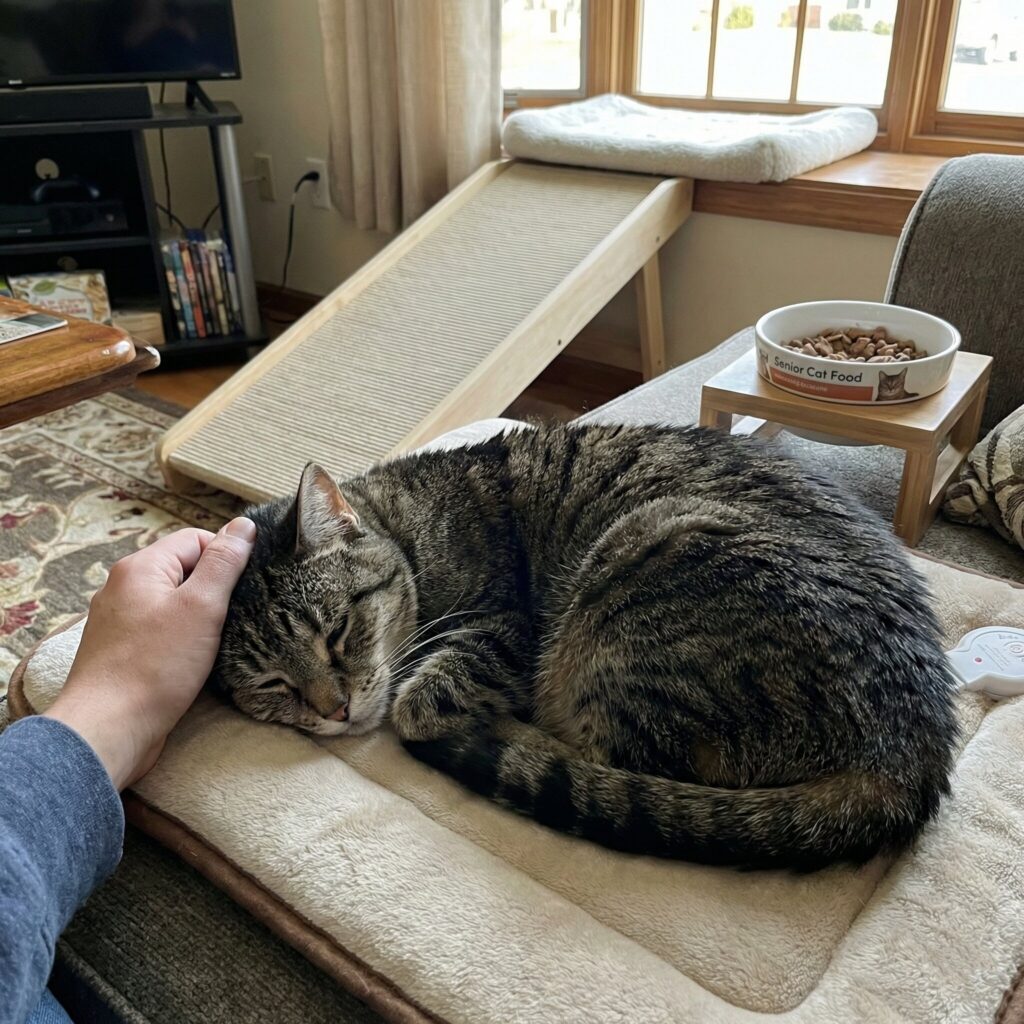
To improve the quality of life for an aging cat, focus on comfort, nutrition, and regular veterinary care. Provide an orthopedic bed and ensure easy access to food, water, and litter boxes by using ramps or low-entry trays. Switch to a senior-specific diet to support kidney and joint health, and increase hydration with wet food or water fountains. Maintain a routine of gentle play for mental stimulation and schedule vet checkups every six months to catch age-related issues like arthritis or dental disease early.
Summary Table
| Category | Actionable Tip | Benefit |
| Comfort | Use orthopedic beds and heated pads | Relieves joint pain and stiffness |
| Accessibility | Install ramps or pet stairs | Helps cats reach favorite spots without jumping |
| Nutrition | Switch to high-quality senior food | Supports organ function and weight management |
| Hydration | Add water fountains or wet food | Prevents kidney issues and dehydration |
| Health | Vet visits every 6 months | Early detection of arthritis, diabetes, or thyroid issues |
| Litter Box | Use low-entry, large boxes | Reduces pain and accidents associated with arthritis |
| Activity | Gentle puzzle toys and grooming | Keeps the mind sharp and coat healthy |
How to Improve Quality of Life for Aging Cats
As cats age, their needs change significantly. “Senior” status generally begins around age 11, though many cats show signs of slowing down sooner. Understanding these changes is the first step in providing the right care. Aging brings physical limitations like stiff joints, reduced vision, and hearing loss. It also brings metabolic changes that require dietary adjustments.
By making small, thoughtful changes to your home and routine, you can help your feline friend feel safe, loved, and comfortable during their golden years.
Read Also: Cost of Care: Cat vs Dog Comparison
Optimizing Their Physical Environment
The most immediate way to help an older cat is to make their environment easier to navigate. Arthritis is very common in older cats, even if they don’t limp. They often just stop jumping or hesitate before moving.
Upgrading Bedding
Older cats lose muscle mass and body fat, making it harder for them to regulate body temperature and stay comfortable on hard surfaces.
- Orthopedic Beds: Look for beds made of memory foam. These distribute weight evenly and take pressure off sore hips and shoulders.
- Heated Options: A self-heating pad or a low-voltage electric pet bed can do wonders for stiff joints, especially in winter.
- Location Matters: Place beds in draft-free, quiet corners where the cat feels safe. Avoid high places unless there is a ramp.
Improving Accessibility
If your cat used to love the window perch but rarely visits it now, it isn’t because they lost interest. It is likely because it hurts to get there.
- Pet Stairs and Ramps: Place these next to the sofa, bed, or favorite window sills. Carpeted ramps provide better traction than plastic ones.
- Non-Slip Surfaces: Hardwood or tile floors can be slippery for unstable legs. Add yoga mats or area rugs to create “pathways,” so your cat can walk confidently without sliding.
- Night Lights: Senior cats often suffer from reduced night vision. Plugging in a few night lights helps them navigate the house in the dark without bumping into furniture or becoming disoriented.
Diet and Nutrition for Longevity
What your cat eats plays a massive role in how they feel. Older cats have different nutritional requirements than kittens or active adults.
Choosing the Right Food
- Protein Levels: Unless your vet advises otherwise (due to kidney issues), senior cats need high-quality protein to maintain muscle mass.
- Texture: Dental issues can make crunching dry kibble painful. Transitioning to wet food or a soft mousse can ensure they eat enough calories.
- Supplements: Look for foods enriched with glucosamine and chondroitin for joint support, and antioxidants to boost the immune system.
The Importance of Hydration
Kidney disease is a leading cause of illness in older cats. Water is the best defense.
- Water Fountains: Many cats prefer running water. A fountain encourages them to drink more than a stagnant bowl.
- Multiple Stations: Place water bowls in several rooms so the cat doesn’t have to walk far to drink.
- Wet Food: This is the easiest way to increase water intake. You can even add a teaspoon of warm water to their wet food to make a “soup.”
Read Also: What are the Signs of Resource Guarding Between Cats?
Litter Box Logistics
Litter box habits often change as cats age. If your cat starts going outside the box, rule out medical issues first, but then look at the box itself.
- Low Entry: Standard boxes have high sides that require jumping or stepping high. A low-entry box (or even a potting tray) allows the cat to walk in easily.
- Location: If your cat spends all day upstairs, do not keep the only litter box in the basement. Navigating stairs may be too painful. Keep a box on every floor of the house.
- Size: As cats get stiffer, they cannot turn around as easily in small boxes. Get the largest box possible to give them room to maneuver.
- Litter Type: Sandy, soft litter is gentler on paws than crystal or pellet litter.
Veterinary Care and Health Monitoring
Prevention is better than a cure. In senior years, health conditions can progress rapidly.
Frequent Checkups
An annual exam is no longer enough. Veterinarians usually recommend checkups every six months for seniors. This usually includes:
- Blood Work: To check kidney, liver, and thyroid function.
- Blood Pressure: Hypertension is common and can cause blindness if untreated.
- Weight Checks: Sudden weight loss is a major red flag for conditions like hyperthyroidism or diabetes.
Dental Health
Dental disease is painful and stresses the immune system. Bacteria from the mouth can actually travel to the heart and kidneys.
- Professional Cleaning: If your vet deems it safe, a cleaning can relieve massive amounts of chronic pain.
- Home Care: If brushing is impossible, use dental treats or water additives approved by vets.
Mental Stimulation and Enrichment
A cat’s body may slow down, but their brain still needs exercise. Boredom can lead to cognitive decline and depression.
Gentle Play
Your cat might not chase a laser pointer for 20 minutes anymore, but they still want to play.
- Wand Toys: Move the toy slowly along the ground, mimicking a mouse. Do not make the cat jump.
- Puzzle Feeders: Use simple food puzzles that require them to bat a lever to get a treat. This keeps their cognitive skills sharp.
Visual Enrichment
- Window TV: Ensure they have a comfortable spot to watch the birds. If you don’t have wildlife, putting on “Cat TV” videos of birds and squirrels can be very engaging.
Read Also: How Do Cats Establish Territory?
Grooming and Physical Maintenance
Older cats often develop arthritis in their spine, making it hard to twist around and groom their back or hindquarters. This can lead to mats and painful skin.
- Daily Brushing: Use a soft-bristled brush. This feels like a massage and removes loose fur and dander. It also helps you bond with your pet.
- Nail Trimming: Senior cats’ nails tend to get thick and brittle. They also don’t retract as well, leading to clicking on the floor or getting stuck in carpets. Trim them every 2-3 weeks.
- Check for Lumps: While grooming, feel for any new bumps, scabs, or irregularities on the skin.
Recognizing Pain
Cats are masters at hiding pain. They will not cry out until it is unbearable. You must look for subtle signs:
- Hiding: Spending more time under the bed or in the closet.
- Grumpiness: Hissing when touched or avoiding interaction.
- Hesitation: Thinking twice before jumping on the couch.
- Accidents: Missing the litter box.
If you notice these, do not assume it is just “old age.” It is likely treatable pain. Options like Solensia (a monthly injection for arthritis) or Gabapentin can completely transform a senior cat’s life.
Conclusion
Improving the quality of life for an aging cat is about adaptation. By adjusting their environment, staying on top of veterinary care, and providing extra comfort, you can ensure their final years are dignified and happy. These cats have spent a lifetime offering companionship; giving them extra care now is the best way to say thank you. Pay attention to the small details, a softer bed, a lower litter box, a warm meal, and you will see a huge difference in their spirit and vitality.