
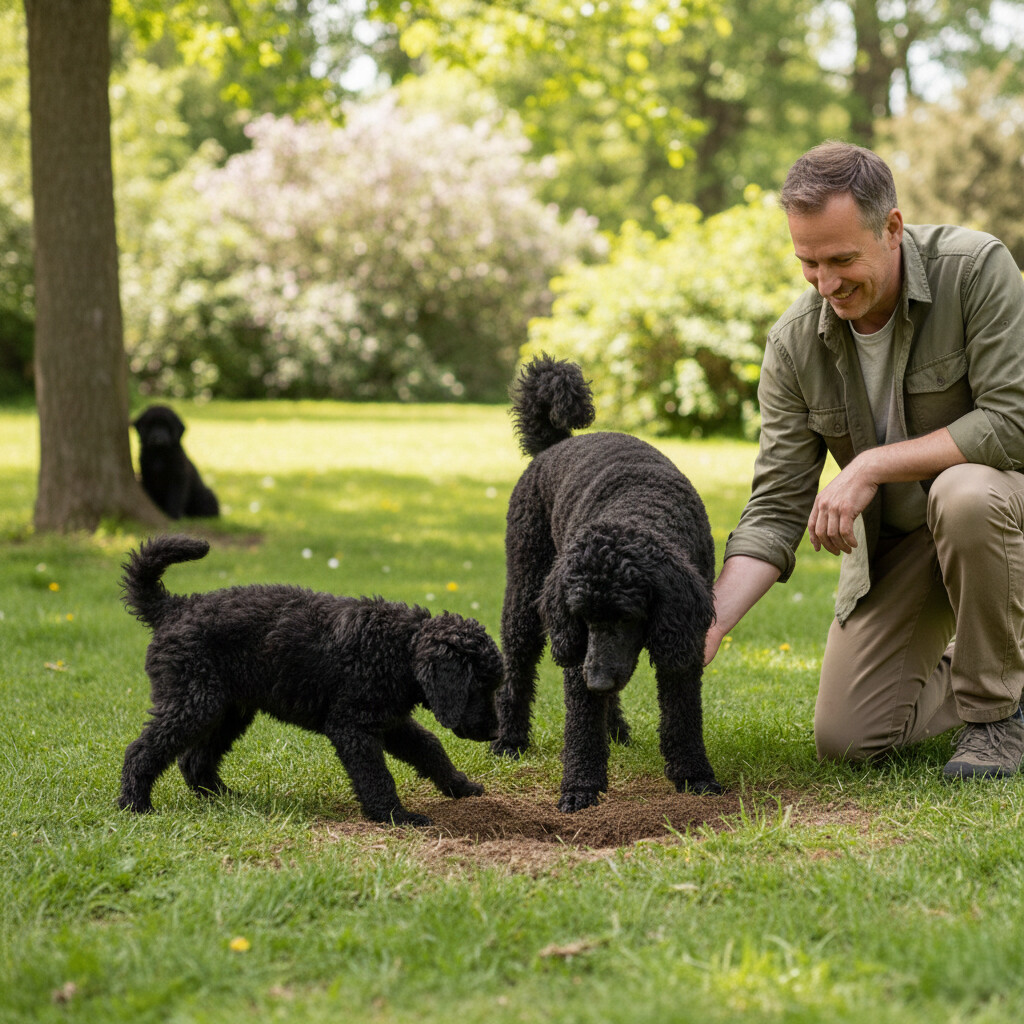
Puppies learn from adult dogs primarily through a process called allelemimetic behavior (mimicry) and observational learning. By watching older dogs, puppies understand social cues, bite inhibition, hunting techniques, and appropriate reactions to new environments. The adult dog serves as a model, demonstrating how to navigate the world safely, while also providing immediate feedback, such as a growl or a “timeout” during play, to correct unwanted behaviors like hard biting or jumping. This peer-to-peer education is crucial for emotional stability and cannot be fully replicated by human training.
Summary Table
| Learning Area | Key Concept | Description |
| Bite Inhibition | Impulse Control | Puppies learn to soften their mouth when playing; if they bite too hard, the adult stops playing. |
| Communication | Body Language | Understanding the difference between a “play bow” (safe) and a “stiff posture” (warning). |
| Social Hierarchy | Boundaries | Learning when to approach an adult and when to give space to avoid conflict. |
| Anxiety/Fear | Emotional Modeling | If an adult dog is calm during thunder, the puppy learns to be calm. If the adult is fearful, the puppy mimics the fear. |
| Potty Habits | Substrate Preference | Puppies often follow older dogs to specific spots to relieve themselves, mimicking scent marking. |
How Puppies Learn From Adult Dogs
When you bring a new puppy home, you likely have a training plan ready. You have the treats, the clicker, and the patience. However, there is a layer of education that humans simply cannot provide. This is the education a puppy receives from adult dogs.
From the moment they open their eyes, puppies are soaking up information. While humans teach obedience (sit, stay, come), adult dogs teach conduct. They teach a puppy how to be a dog.
This process, biologically wired into their DNA, is essential for raising a well-adjusted, confident, and socially capable animal. Understanding this dynamic helps owners facilitate better socialization and choose the right canine mentors for their new pets.
Read Also: When Do Puppies Start Recognizing Their Name
The Science of Copying: Allelemimetic Behavior
The fancy term for “copycat” behavior in animals is allelemimetic behavior. This is a group activity where individuals do what others in the group are doing. In the wild, this is a survival mechanism. If the pack runs, the puppy must run. If the pack sleeps, the puppy sleeps.
This behavior is not just about moving together; it is about emotional synchronization. When a puppy sees an older dog react to a stimulus, like a doorbell or a vacuum cleaner, they look for the emotional context.
Observation and Verification
Puppies are constantly verifying their safety through the older dog. If a stranger walks into the house and the adult dog wags its tail, the puppy registers the stranger as “safe.” If the adult dog barks aggressively or tucks its tail, the puppy registers the stranger as a “threat.”
This is why having a confident adult dog is often the best cure for a nervous puppy. The puppy borrows confidence from the adult.
This phenomenon is often more effective than human reassurance because dogs communicate through subtle micro-movements of the ears, tail, and eyes that humans often miss but puppies instinctively understand.
The First Teacher: The Dam (Mother Dog)
The education begins in the whelping box. The mother dog (dam) is the strictest and most effective teacher a dog will ever have. Between the ages of three to eight weeks, she delivers critical lessons on frustration tolerance.
Weaning as a Lesson
As puppies grow teeth, nursing becomes uncomfortable for the mother. She begins to walk away or growl when they try to nurse too aggressively. This is the puppy’s first lesson in rejection and frustration.
They learn that they cannot always get what they want immediately. Puppies taken from their mothers too early (before 8 weeks) often struggle with this, leading to biting and demand-barking issues later in life.
Discipline Style
The mother does not use “time-outs” in a crate. Her discipline is swift and physical but rarely harmful. She might use a low growl, a lip curl, or a muzzle pin (gently holding the puppy’s muzzle with her mouth) to say “stop.” This teaches the puppy to respect physical boundaries and pay attention to warning signs before a situation escalates.
Mastering Bite Inhibition
Perhaps the single most important lesson a puppy learns from other dogs is bite inhibition. This is the ability to control the force of their jaws. A dog that has never learned bite inhibition is dangerous because when they react out of fear or pain later in life, they will bite with full force.
The “Ouch” Factor
When puppies play with littermates or adult dogs, they use their mouths constantly. Puppy teeth are needle-sharp. When a puppy bites an adult dog too hard during play, the interaction changes instantly.
- The Yelp: A littermate might yelp loudly and stop playing.
- The Correction: An adult dog might bark sharply or simply stand up and walk away.
This immediate withdrawal of attention is devastating to a social puppy. They learn the equation quickly: Hard Bite = Fun Ends.
Humans try to mimic this by saying “ouch,” but dogs are much better at timing the correction. An adult dog will communicate the exact threshold of pressure that is acceptable. This creates a “soft mouth,” ensuring that even if the dog is provoked later in life, their bite is inhibited and less likely to cause severe damage.
Read Also: How Long Does Puppy Training Take?
Decoding Canine Body Language
Dogs are non-verbal communicators. While they bark, 90% of their communication is physical. A puppy is not born fluent in this language; they must learn the dialect from adults.
The Play Bow
One of the first signals a puppy learns is the play bow (front legs down, rear end up). This universal signal means “everything I do after this is a joke.” It allows dogs to wrestle, growl, and bite without triggering a real fight.
Without adult role models, a puppy might misinterpret a play bow as a threat, or conversely, might not understand that a stiff, staring dog is not playing.
Cut-Off Signals
Adult dogs teach puppies when to back off using “cut-off signals.” These include:
- Looking away: The adult turns their head to the side to diffuse tension.
- Lip licking: A sign of discomfort or a request to calm down.
- Sniffing the ground: A way to ignore the puppy and lower excitement levels.
If a puppy ignores these polite requests to stop, the adult dog will escalate to a growl. This teaches the puppy to be observant. They learn that if they miss the whisper, they will get the shout. This heightened observation skill makes them better at reading human body language as well.
Respecting Boundaries and Hierarchy
In a domestic setting, “dominance” is often a misunderstood concept. It isn’t about being the alpha wolf; it’s about resource access and space. Adult dogs teach puppies that they are not the center of the universe.
If an adult dog has a bone, and the puppy tries to take it, the adult will defend the resource. This teaches the puppy impulse control. They learn that they cannot simply take whatever they want. They learn to wait their turn or to trade.
The “Check-In”
You will often see puppies “checking in” with adult dogs. Before entering a new room or approaching a new object, the puppy will glance at the adult. This is a respectful request for guidance.
A well-socialized adult dog will lead the way, showing the puppy the appropriate path or behavior. This mentorship builds a follower mindset in the puppy, which translates well to training with their human owners.
Potty Training and Scent Marking
Housebreaking is often faster when an adult dog is present in the home. This is pure observational learning.
Dogs are instinctively clean animals that prefer not to soil their sleeping area. However, the concept of “outside” is learned. When a puppy sees the adult dog go to the back door, wait to be let out, and then eliminate in the grass, the puppy mimics the routine.
Scent Motivation
Furthermore, the scent of the adult dog’s urine triggers the puppy’s instinct to mark over it or near it. The adult dog essentially highlights the “bathroom” zone for the puppy. This doesn’t replace human training, but it significantly accelerates the process.
Read Also: Why Puppies Chew Everything
The Double-Edged Sword: Learning Bad Habits
It is vital to note that social learning does not distinguish between “good” and “bad” behaviors. Puppies are efficient learning machines, and they will copy whatever the adult dog does.
If you have an older dog that is reactive, fearful, or has bad habits, the puppy will learn those, too.
Common Negative Behaviors Transferred
- Doorbell Reactivity: If the old dog charges the door barking when the bell rings, the puppy will join the charge, assuming this is how we greet guests.
- Counter Surfing: If the older dog knows how to jump up and steal food, the puppy will watch and learn that counters are a source of snacks.
- Fear of Thunder/Fireworks: Anxiety is highly contagious. A trembling, pacing adult dog validates the puppy’s fear, turning a loud noise into a traumatic event.
- Leash Reactivity: If the adult dog lunges at other dogs on walks, the puppy perceives other dogs as threats rather than friends.
Before bringing a puppy into a home with an existing dog, you must honestly evaluate the behavior of your current pet. If your current dog has severe behavioral issues, it is often better to resolve those before adding a blank slate puppy to the mix.
How Humans Can Facilitate Peer Learning
You don’t need to own a second dog for your puppy to benefit from social learning. In fact, relying solely on a housemate dog can sometimes lead to “Littermate Syndrome” (even if they aren’t littermates), where the puppy bonds too closely to the dog and ignores the human.
Structured Socialization
To get the benefits of peer learning without the downsides, you should curate your puppy’s social circle.
- The “Uncle/Aunt” Dog: Find a friend with a calm, vaccinated, and well-behaved adult dog. Arrange playdates. Look for dogs that are tolerant but correct puppies gently.
- Puppy Classes: Good puppy classes include “off-leash play” intervals. This allows puppies to figure out social hierarchy in a controlled environment where trainers can step in if things get too rough.
- Avoid Dog Parks: Dog parks are the “Wild West” of socialization. They are unpredictable. One bad experience with an aggressive adult dog can traumatize a puppy for life. Stick to known, safe dogs.
The Role of Breed and Instincts
The breed of the adult dog influences what the puppy learns. A puppy raised with a Border Collie might learn to chase moving objects and stare intensely. A puppy raised with a Beagle might learn to keep its nose to the ground and howl.
This transmission of “culture” is fascinating. We often see behaviors that seem out of character for a breed simply because they were raised by a different breed.
For example, a Rottweiler raised by a Greyhound might try to run down rabbits rather than guard the yard. The instinct is genetic, but the application of that instinct is often modeled by the pack.
Conclusion
Puppies are not just raised by humans; they are raised by the company they keep. The lessons a puppy learns from an adult dog, bite inhibition, body language, emotional regulation, and social etiquette, are deep, primal, and lasting.
While we humans can teach commands, adult dogs teach wisdom. They bridge the gap between an instinctual animal and a social companion.
By understanding this dynamic, you can ensure your puppy has the right role models to grow into a balanced, polite, and happy dog. Whether it is your own older dog or a friend’s steady companion, the influence of a canine mentor is one of the most valuable gifts you can give your new puppy.