
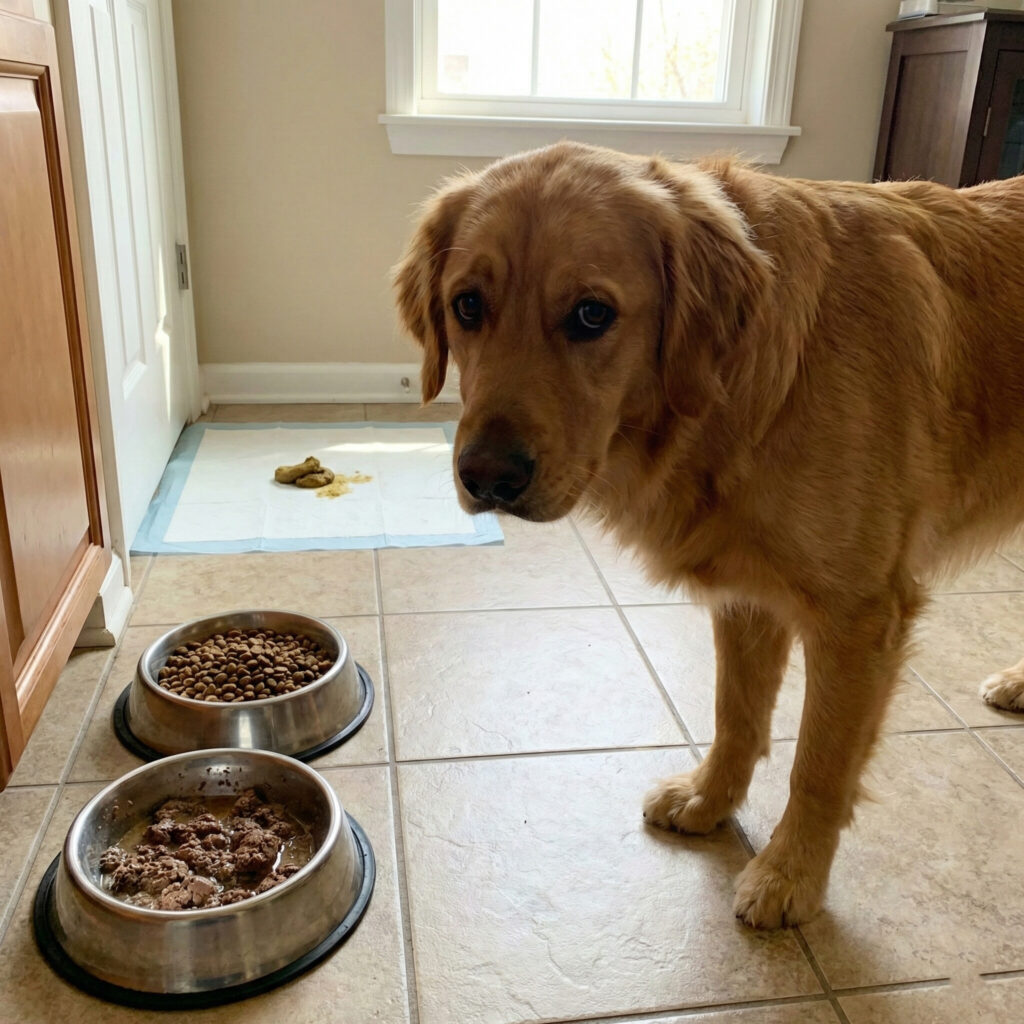
Changing a dog’s food suddenly often disrupts their digestive system. Dogs develop specific gut bacteria tailored to break down their usual diet. Introducing new ingredients, different protein sources, or changing fiber levels abruptly can overwhelm these bacteria, leading to gastrointestinal upset. Common symptoms of a digestive change include diarrhea, vomiting, excessive gas, and a refusal to eat. To avoid these issues, veterinarians recommend a gradual transition to new food over a period of 7 to 10 days, allowing the canine gut microbiome time to adapt.
Summary Table
| Topic | Key Takeaway |
| The Canine Gut | Sensitive ecosystem of bacteria adapted to a specific diet. Not an “iron stomach.” |
| Main Cause of Upset | Sudden changes shock the microbiome; bacteria cannot process new ingredients efficiently. |
| Common Symptoms | Loose stools, diarrhea, vomiting, flatulence (gas), abdominal discomfort, reduced appetite. |
| Key Ingredient Triggers | Switching protein sources (e.g., chicken to beef), major changes in fat content, or different fiber levels. |
| The Solution | A gradual transition mixing old and new food over 7–10 days. |
| When to see a Vet | Vomiting or diarrhea lasting more than 24 hours, blood in stool, or severe lethargy. |
How Food Changes Can Affect Dog Digestion
Many dog owners believe the old myth that dogs have “iron stomachs” and can eat anything without consequences. While some dogs are hardier than others, the reality is that the canine digestive system is quite sensitive.
The stomach and intestines of a dog are designed to process a consistent diet. When that diet changes abruptly, the entire system can be thrown into chaos. Understanding how food changes affect dog digestion is crucial for maintaining your pet’s health and avoiding messy accidents in the house.
This guide explains the mechanics of the canine gut, why ingredients matter, and the correct way to introduce new foods.
The Canine Digestive System and Microbiome
To understand why changing food causes problems, you need to understand what is happening inside your dog’s gut.
Digestion isn’t just about stomach acid breaking down food. A massive part of digestion relies on the “gut microbiome.” This is a complex ecosystem of billions of bacteria and microorganisms living in your dog’s intestines.
Think of the microbiome as a specialized workforce. Over time, the bacteria in your dog’s gut adapt specifically to the food they eat every day. If your dog eats a chicken-and-rice-based kibble, they develop a population of bacteria that are experts at digesting chicken and rice.
Why Sudden Changes Cause Shock
When you suddenly switch to a new food, perhaps a grain-free beef recipe, that specialized workforce is unprepared. The bacteria that digest chicken are useless against the new beef proteins and different carbohydrates.
The new food sits in the gut poorly digested. This leads to fermentation, which creates excess gas and draws water into the intestines. The result is the most common symptom of a sudden food change: diarrhea.
It takes time for the gut to grow a new population of bacteria tailored to the new diet. Until that happens, digestion will be compromised.
Immediate Effects of Changing a Dog’s Diet
If you run out of your dog’s usual food today and fill their bowl with a completely different brand tomorrow, you will likely see immediate negative effects. These symptoms usually appear within 12 to 24 hours of the first new meal.
The most common signs that a food change has upset your dog’s digestion include:
- Diarrhea or loose stools: This is the number one indicator. The stool may be watery, unformed, or very soft.
- Vomiting: Sometimes the stomach simply rejects the unfamiliar food before it even reaches the intestines.
- Flatulence (Gas): Poorly digested food ferments in the lower intestine, causing very foul-smelling gas and bloating.
- Borborygmus: This is the technical term for very loud stomach rumbling and gurgling noises.
- Inappetence: Your dog may refuse to eat the new food after feeling sick the first time, or they may feel too nauseous to eat anything at all.
- Lethargy: Dealing with an upset stomach is exhausting. Your dog may seem tired and less playful.
Read Also: How Feeding Schedules Affect Dog Behavior
How Specific Ingredients Impact Digestion
Not all food changes are equal. Switching between two very similar chicken-based kibbles might cause minor gas. Switching from a low-quality dry kibble to a high-fat raw diet will cause a major digestive event.
Here is how different components of food affect the canine digestive tract during a transition.
Protein Sources
The protein source is often the main ingredient in dog food. Dogs digest different proteins differently.
If a dog has eaten chicken their whole life, their enzymatic and bacterial makeup is geared toward chicken. Suddenly introducing lamb, beef, or fish requires different digestive processes.
Furthermore, some dogs have unrecognized food sensitivities. You might switch food to improve their health, but accidentally switch them to a protein they are intolerant to. This causes chronic inflammation in the gut, leading to ongoing soft stools regardless of how slow the transition is.
Fat Content
The amount of fat in a diet is critical. A sudden increase in dietary fat is one of the hardest things for a dog’s system to handle.
The pancreas is responsible for producing enzymes to break down fat. If a dog suddenly eats a very high-fat meal (like switching to a high-performance kibble or a fatty raw diet), the pancreas can become overworked and inflamed.
This can lead to pancreatitis, a very painful and potentially dangerous condition requiring veterinary care. Even without full-blown pancreatitis, high-fat foods often cause greasy, loose stools.
Fiber Types and Amounts
Fiber plays a huge role in regulating stool quality. Dog foods use different sources of fiber, such as beet pulp, pumpkin, grains, or legumes.
- Soluble fiber absorbs water and turns into a gel during digestion, which slows things down.
- Insoluble fiber adds bulk to the stool and helps food move through the tract faster.
If you switch from a low-fiber food to a high-fiber food, your dog may experience gas and larger stool volume. Conversely, drastically dropping fiber content might lead to constipation initially. The gut needs time to adjust to the new “flow rate” dictated by the fiber levels.
Types of Food Transitions
The severity of digestive upset often depends on how drastically different the old and new diets are.
Kibble to Different Kibble
This is the most common switch. If the two brands have similar ingredient profiles (e.g., both are grain-inclusive chicken formulas with about 25% protein), the transition might be relatively smooth. If the brands have different main ingredients and macronutrient percentages, a full transition period is necessary.
Kibble to Canned (Wet) Food
Wet food has a much higher moisture content and is often richer in fat and protein than dry kibble. The sudden increase in richness can easily cause loose stools. The texture difference also affects how quickly the food moves through the stomach.
Kibble to Raw or Fresh Cooked Diets
This is the most significant change you can make. Kibble is highly processed and sterile. Raw food is unprocessed and contains different bacteria (good and bad) and active enzymes.
A dog’s stomach acid pH is often higher (less acidic) when eating kibble. To digest raw bone and meat effectively, the stomach acid needs to become much stronger. This physiological change takes time. Switching cold turkey from kibble to raw will almost guarantee significant digestive upset and potential vomiting of undigested bone.
Read Also: What Happens When Dogs Eat Too Fast
The Right Way to Switch: The Gradual Transition
To avoid the issues described above, you must give your dog’s microbiome time to adapt. The golden rule of changing dog food is to do it gradually over a period of 7 to 10 days.
Some sensitive dogs, particularly those with pre-existing GI issues, may need an even slower transition lasting two weeks.
Here is the standard transition schedule recommended by veterinarians:
- Days 1–3: Mix 25% of the new food with 75% of the old food.
- Days 4–6: Mix 50% of the new food with 50% of the old food.
- Days 7–9: Mix 75% of the new food with 25% of the old food.
- Day 10: Feed 100% new food.
During this process, monitor your dog’s stool closely. If at any point the stool becomes very loose, do not advance to the next step. Go back to the previous ratio and stay there for a few extra days until their digestion settles down.
Supporting Digestion During Change
Even with a slow transition, some sensitive dogs may still experience minor changes in their digestion. You can use supplements to help smooth the process.
Probiotics
Canine probiotics are supplements containing beneficial bacteria. Giving probiotics during a food transition can help bolster the “good guys” in the gut while they are trying to adapt to the new food source. They can help reduce gas and firm up stools.
Plain Canned Pumpkin
Plain 100% canned pumpkin (not pumpkin pie filling, which has spices and sugar) is a fantastic digestive aid. It is high in soluble fiber.
Interestingly, it helps with both diarrhea and constipation. It absorbs excess water in the case of diarrhea, and adds soothing bulk in the case of constipation. Adding a tablespoon to their meals during the transition can be very helpful.
When to See a Veterinarian
While temporary digestive upset during a food change is normal, certain symptoms indicate a more serious problem that requires professional attention.
Do not assume severe symptoms are just because of the food change. The timing could be coincidental, and your dog could have a parasite, an obstruction, or an illness.
Call your veterinarian immediately if you see:
- Blood in the stool: Red blood or black, tarry stools are serious red flags.
- Uncontrollable vomiting: If your dog cannot keep water down, they can become dehydrated quickly.
- Diarrhea lasting longer than 48 hours: Especially if you have slowed down the transition and it isn’t improving.
- Extreme lethargy or signs of pain: If your dog is hunched over, whining, or refusing to move.
- Fever: A warm nose is not an accurate test; if your dog feels excessively hot to the touch, combined with other symptoms, seek help.
Conclusion
Your dog’s digestive system is a finely tuned environment designed for consistency. Changing that environment requires patience.
By understanding the role of the gut microbiome and the impact of different ingredients like protein and fat, you can manage your dog’s diet better.
Always choose a gradual transition plan over a sudden switch. Taking 10 days to change food may seem slow, but it is much faster and pleasanter than dealing with weeks of digestive distress and cleaning up messes.