
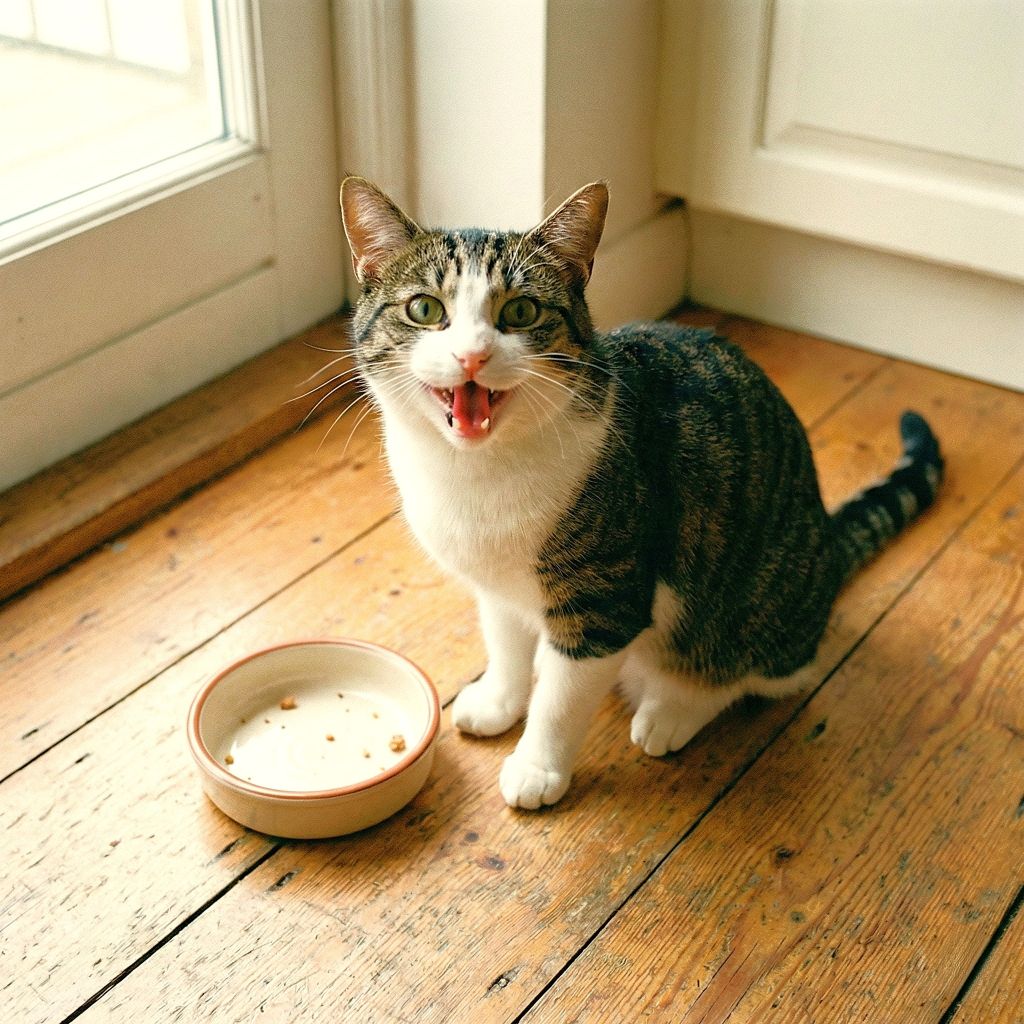
Cats communicate with humans through a complex mix of vocalizations, body language, and scent. While meowing is a behavior developed almost exclusively for interacting with people, they also use tail position, ear movement, blinking, and rubbing (head bunting) to convey needs, affection, or displeasure. Understanding these signals, such as a slow blink meaning trust or a twitching tail signaling irritation, helps owners respond correctly to their pet’s emotional state.
Summary Table: Key Cat Communication Signals
| Signal | Type | Meaning |
| Meowing | Vocal | Direct request for food, attention, or help (rarely used with other cats). |
| Purring | Vocal | Contentment, self-soothing during pain, or anxiety. |
| Slow Blink | Visual | “Cat kiss,” signaling trust and safety. |
| Tail Up (Hooked) | Visual | Friendly greeting; happiness. |
| Tail Twitching | Visual | Irritation, overstimulation, or impending aggression. |
| Head Bunting | Scent/Tactile | Marking you as safe; showing affection. |
| Hissing/Growling | Vocal | Warning; fear or defensiveness. |
| Kneading | Tactile | Comfort; instinct from kittenhood (nursing). |
How Cats Communicate With Humans
Many people mistake cats for aloof or solitary animals, but they are actually highly communicative. Unlike dogs, who wear their hearts on their sleeves, cats use subtle and sophisticated methods to “talk” to their human companions.
Research suggests that cats have even evolved specific behaviors, such as the “solicitation purr,” specifically to manipulate human emotions and get what they want.
By learning to interpret these signals, you can deepen your bond with your pet and ensure their needs are met. This guide breaks down the three main pillars of feline communication: vocalization, body language, and scent.
Read Also: How Cats Show Affection
1. Vocal Communication: More Than Just Meows
Cats are capable of making over 100 different sounds, but they save their most distinct vocalizations for their humans. Interestingly, adult cats rarely meow at each other; they use scent and body language for intraspecies communication. The meow is a tool reserved for you.
The Meow
The meow is the most versatile sound in a cat’s vocabulary. It is an all-purpose request for attention. The tone, pitch, and length of the meow often dictate its meaning.
- Short, high-pitched meow: Usually a standard greeting. “Hello, I see you.”
- Drawn-out, mid-pitched meow: often a demand. “I want food” or “Open this door.”
- Low-pitched, repetitive meow: Can indicate annoyance or a complaint.
- Loud, urgent meow: Signals distress, pain, or intense hunger.
Purring
Most people assume a purring cat is a happy cat. While this is often true, purring is more complex. It is a mechanism for self-soothing.
- Contentment: A soft, steady purr while being petted means they are relaxed.
- Pain or Fear: Cats often purr when they are injured, scared, or giving birth. The vibration frequency of a purr (25–150 Hz) is known to promote tissue regeneration and bone healing.
- Solicitation Purr: This is a “manipulative” purr that includes a high-frequency cry embedded within the low rumble. It mimics the frequency of a human baby’s cry, making it nearly impossible for humans to ignore.
Read Also: What Cat Purring Really Means
Hissing, Growling, and Yowling
These are distance-increasing behaviors. If a cat makes these sounds, they are asking for space.
- Hissing: A defensive warning. The cat feels threatened and is mimicking a snake to scare off a predator.
- Growling: A deeper warning that often precedes a bite or scratch.
- Yowling: A long, loud moan. This can mean a cat is in pain, feeling hormonal (if not fixed), or suffering from cognitive dysfunction (common in senior cats).
2. Body Language: Reading the Signs
Visual cues are the most honest form of cat communication. While a cat can manipulate you with a meow, their tail and ears rarely lie.
Tail Position
The tail is the emotional barometer of the cat.
- Straight up: A sign of confidence and friendliness.
- Straight up with a hook at the tip: The ultimate friendly greeting. This is how a cat says, “I am happy to see you.”
- Puffed up (Bottle brush): The cat is terrified or feeling aggressive. They are trying to look bigger to ward off a threat.
- Tucked between legs: Submission, fear, or anxiety.
- Twitching or thrashing: Irritation. Unlike a dog wagging its tail, a thrashing cat tail means “Stop what you are doing immediately.”
Read Also: What Different Cat Tail Positions Really Mean
Ear Movement
Ears are highly mobile and act as radar dishes, but their position also signals mood.
- Forward: Interested, alert, and happy.
- Sideways (Airplane mode): Annoyed or uncertain. This is often seen when a cat is deciding whether to flee or fight.
- Pinned back (Flat): Furious or terrified. This protects the ears during a potential fight. Do not touch a cat with pinned ears.
The Eyes and Blinking
Eye contact in the animal kingdom is often a sign of aggression, but cats have modified this for humans.
- Dilated pupils: Can mean excitement (hunting mode) or fear. Look at the rest of the body to determine which one.
- Constricted pupils (Slits): Aggression or dominance, though naturally occurs in bright light.
- The Slow Blink: This is one of the most important communication tools. If a cat looks at you and slowly closes and opens their eyes, they are saying, “I trust you enough to close my eyes in your presence.” You can return the sentiment by slow-blinking back at them.
Read Also: What Does It Mean When a Cat Slow Blinks?
3. Tactile and Scent Communication
Cats live in a world of smells that humans can barely comprehend. They use scent to claim territory and bond with their social group.
Head Bunting (Bunting)
When a cat rubs their head, cheeks, or chin against your leg or hand, they are not just scratching an itch. They are depositing pheromones from scent glands located on their face. This marks you as “safe” and part of their territory. It is a sign of affection and ownership.
Kneading (Making Biscuits)
This rhythmic pushing of paws against a soft surface (or your lap) is a leftover behavior from kittenhood. Kittens knead their mother’s belly to stimulate milk flow. When an adult cat does this to you, it indicates extreme comfort and safety. They view you as a maternal figure.
Read Also: Why Do Cats “Make Biscuits”?
Showing the Belly
This is often the most misunderstood signal. When a cat rolls over and exposes their belly, they are showing you their most vulnerable spot. This is a massive sign of trust.
- The Trap: However, unlike dogs, this is rarely a request for a belly rub. Because the belly is so vulnerable, touching it often triggers a defensive reflex (biting or scratching).
- The Correct Response: Admire the belly from a distance or pet their head instead.
4. Context Matters: Combining Signals
To truly understand what a cat is saying, you must look at the whole picture (signals in clusters) rather than one isolated behavior.
Example 1: The “I want to play” Cluster
- Ears: Forward and alert.
- Tail: Up or swaying gently.
- Eyes: Dilated pupils focused on a toy.
- Vocal: Chirping or trilling sounds.
Example 2: The “Leave me alone” Cluster
- Ears: Turned sideways (“airplane ears”).
- Tail: Thumping or twitching the tip.
- Body: Tense or crouching.
- Vocal: Low growl or silence.
How to Communicate Back to Your Cat
Communication is a two-way street. Once you understand them, you can speak their language to build trust.
- Use the Slow Blink: When you catch your cat staring at you, relax your face and blink slowly. It is a powerful way to de-escalate tension.
- Respect Their Space: If you see a twitching tail or pinned ears, stop petting them immediately. Respecting their “no” builds confidence.
- Use a Soft Voice: Cats are sensitive to tone. High-pitched, soft voices are generally perceived as friendlier than low, loud voices.
- Get on Their Level: Standing over a cat can be intimidating. Crouching down or sitting on the floor makes you more approachable.
- Let Them Initiate: Instead of reaching out to grab a cat, extend a finger and let them sniff and rub against it (the “nose boop”). This gives them the choice to interact.
Conclusion
Cats are constantly communicating with us; we just have to learn to listen. They are not enigmatic mysteries, but animals with a clear set of signals designed to bridge the gap between their species and ours. By paying attention to the angle of an ear, the speed of a blink, or the tone of a meow, you can understand exactly what your cat is thinking. This understanding leads to a happier cat, a safer home, and a much deeper friendship.