
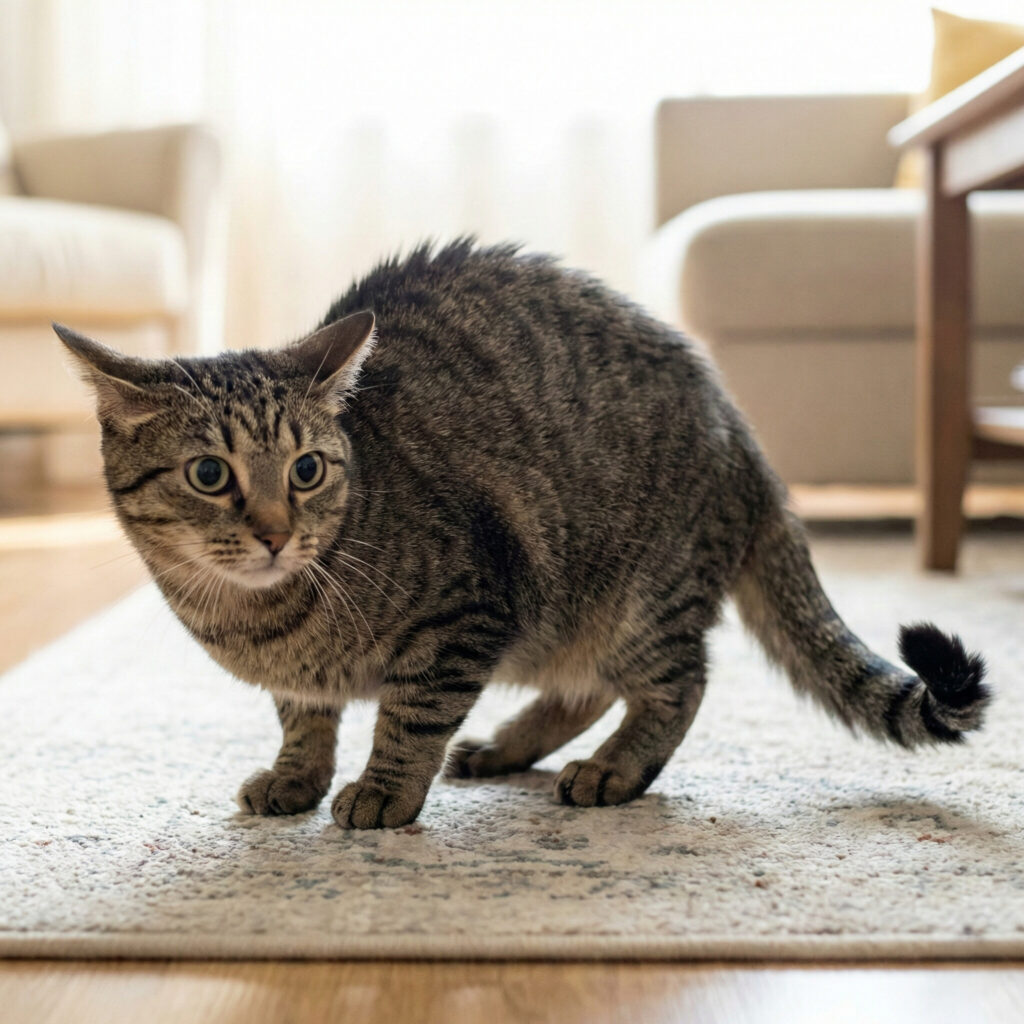
Cats communicate boundaries primarily through body language and vocalizations. Early warning signs include twitching tails, flattened ears, dilated pupils, and skin rippling. If these subtle cues are ignored, a cat will escalate to clear warnings like hissing, growling, swatting, or biting to stop an interaction or defend their personal space.
Summary Table: How Cats Communicate Boundaries
| Signal Category | Specific Behavior | Meaning | Recommended Action |
| Tail Action | Thumping or lashing | Irritation or high arousal | Stop touching immediately |
| Ear Position | Flattened or sideways | Fear or aggression | Back away slowly |
| Eyes | Dilated pupils | Overstimulation or fear | Avoid direct eye contact |
| Vocal | Low growl or hiss | Serious warning | Give immediate space |
| Skin | Rippling (twitching) | Hyperesthesia or irritation | Stop petting that area |
| Posture | Crouched or tensed | Defensive readiness | Do not approach |
How Cats Communicate Boundaries
Understanding cat behavior is essential for building a trusting relationship with your pet. Unlike dogs, who often use broad and obvious gestures, cats rely on subtle micro-movements to signal their comfort levels. When a cat feels the need to set a boundary, they are usually reacting to fear, pain, overstimulation, or territorial encroachment.
Recognizing these signals protects you from scratches and bites. It also lowers your cat’s stress levels. A cat that feels heard does not need to resort to aggression.
This guide covers the specific ways cats say “no” and how you should respond to them.
Read Also: Why Do Cats Hiss at Other Cats?
The Tail Tells the Story
The tail is often the first place a cat displays irritation. It acts like a barometer for their emotional state. While a high, upright tail signals friendliness, a moving tail usually signals conflict or arousal.
The Twitch
The very tip of the tail might flick back and forth. This is a polite, early warning. It often happens when you are petting a cat and they are starting to feel overstimulated. It means “I am getting annoyed.” If you stop now, the cat will likely remain calm.
The Thump
If the twitch is ignored, the tail movement will become larger. The entire tail may rise and fall, thumping against the floor or the surface the cat is lying on. This is a sign of rising frustration. The cat is actively losing patience.
The Lash
A tail whipping rapidly from side to side is a clear sign of high arousal or anger. This motion is swift and forceful. At this stage, the cat is ready to swat or bite. This is not a playful wag like a dog might display. It is a distance-increasing signal.
Ear Positions and What They Mean
Cat ears are controlled by over 30 muscles, allowing them to pivot 180 degrees. This mobility helps them capture sound, but it also serves as a primary communication tool.
Airplane Ears
When the ears rotate sideways and flatten slightly, they look like airplane wings. This often indicates anxiety or conflict. The cat is unsure about the situation. You might see this if a loud noise startles them or if a stranger approaches too quickly.
Pinned Back Ears
This is a serious defensive signal. When the ears are pressed flat against the head, the cat is protecting them from potential injury during a fight. A cat with pinned ears feels threatened and is prepared to strike. You should never reach for a cat in this state.
Read Also: Can Cats Eat Mango?
Eye Contact and Pupil Changes
A cat’s eyes reveal their internal level of arousal. In the wild, staring is an intimidating act between predators.
Dilated Pupils
Large, round pupils (saucer eyes) often mean a cat is terrified or overstimulated. The pupil expands to take in more visual information. If you are playing with a cat and their eyes go black, they have switched into hunting mode. If you are petting them and this happens, they are likely overstimulated and may bite reflexively.
The Hard Stare
A cat maintaining direct, unblinking eye contact with you is challenging you. This is a distance-increasing behavior. It is an assertion of dominance or territory. To de-escalate, you should blink slowly and look away. This signals to the cat that you are not a threat.
Constricted Pupils
In some cases, narrowed pupils can signal aggression, especially if combined with a tense posture. However, pupil size is also affected by light levels, so you must always read eye signals in context with the rest of the body.
Vocal Warnings
Cats usually prefer to solve problems silently to avoid attracting other predators. When they use their voice, it means their visual signals have been ignored.
The Growl
A low, rumbling growl is a clear threat. It comes from deep in the throat. A growl is a final warning before a strike. It means the cat feels cornered or possesses a resource they are unwilling to share, like food or a favorite toy.
The Hiss
Hissing sounds like a snake and serves the same purpose. It is a defensive sound used to startle an opponent. A hissing cat feels vulnerable and wants the threat to go away. It is effective because it mimics the sound of a dangerous predator.
The Yowl
A long, drawn-out moan or yowl indicates significant distress or territorial dispute. You often hear this when two outdoor cats are facing off. It is a pre-fight verbal shove.
Skin and Fur Indicators
The condition of a cat’s coat and skin can change instantly in response to adrenaline.
Piloerection
This is the technical term for “puffing up.” A cat will make their fur stand on end to appear larger to a threat. This usually happens along the spine and on the tail. A cat with a puffed tail is often referred to as having a “bottle brush” tail. This is an involuntary reaction to fear or shock.
Skin Rippling
You might see the skin on a cat’s back twitch or roll. This is common in a condition called Feline Hyperesthesia, but it also happens in normal cats who are overstimulated. It indicates that the nerves in the skin are firing rapidly and the sensation of touch has become painful or irritating rather than pleasant.
Read Also: Can Cats Eat Blueberries?
Posture and Body Position
The way a cat holds their body tells you if they are confident, fearful, or ready to attack.
The Crouch
A cat that crouches low to the ground with legs tucked underneath is trying to make themselves small. They are hiding. This is a fear response. Approaching a crouching cat can cause them to lash out in self-defense.
The Lean
If a cat leans away from your hand while you are petting them, they are setting a boundary. They are physically removing themselves from the interaction. Many humans ignore this and lean in further, which forces the cat to use a stronger deterrent like a swat.
The Belly Up
This is the most misunderstood signal in feline communication. When a cat rolls over and exposes their belly, they are not always asking for a rub. In a fight, a cat on their back has all four sets of claws and their teeth ready to use. It is a defensive position. While some trusting cats enjoy belly rubs, many will grab and bite your hand if you touch their stomach.
Understanding Petting Induced Aggression
Many owners are confused when a cat seeks attention but then bites moments later. This is called petting-induced aggression or overstimulation aggression.
It happens because the cat has a limit for tactile stimulation. The repetitive sensation of stroking can quickly turn from pleasant to irritating, like static electricity building up.
The Tolerance Threshold
Every cat has a different threshold. Some can be petted for hours, while others only tolerate a few strokes. The bite that follows is not unpredictable. The cat almost always signals the boundary first. They will stop purring, their tail will twitch, or their skin will ripple. The bite occurs because the human missed these precursors.
Territorial Boundaries
Cats are solitary hunters by nature and are attached to their territory. They communicate spatial boundaries through scent and visual marks.
Scent Marking
Cats have scent glands on their cheeks, paws, and flanks. When they rub their face on your leg or the furniture, they are claiming ownership. This is a friendly boundary. They are saying “this is safe” and “this is mine.”
Scratching
Scratching serves two purposes. It conditions the claws, but it also leaves a visual mark and a scent mark from the paw pads. A cat scratching a door frame is signaling that this entry point belongs to them.
Spraying
Urine spraying is a high-intensity territorial signal. It is usually done on vertical surfaces. This happens when a cat feels their territory is threatened, perhaps by a stray cat outside or a new pet in the home. It is a way of reinforcing their emotional security by surrounding themselves with their own scent.
Read Also: Can Cats Eat Apples?
How to Respect Feline Boundaries
Respecting a cat’s “no” is the best way to bond with them. When you show a cat that you understand their language, they learn to trust you.
The Consent Test
Before petting a cat, hold out your finger or a pair of glasses. Let the cat come to you. If they rub their cheek against your finger, they are consenting to contact. If they sniff and look away or walk past, they are saying “no thank you.”
Stop and Assess
If you are petting a cat and notice any of the warning signs discussed (tail twitching, ears turning), stop immediately. Take your hands away. Let the cat decide what happens next. Often, the cat will relax once the stimulation stops and may even ask for more affection after a break.
Provide Escape Routes
Never corner a cat. If a cat is hiding under a bed or in a closet, do not drag them out. This violates their boundary of safety. Blocking a cat’s exit path triggers their fight-or-flight response. Always ensure they have a clear path to run away.
Safe Zones
Give your cat high places to perch, like cat trees or shelves. Cats feel safer when they can observe their territory from above. This allows them to set a boundary by simply jumping up out of reach when they want to be alone.
Summary of Interaction Rules
- Observe first Look at the tail and ears before reaching out.
- Invite contact Let the cat initiate the touch.
- Keep it short Keep petting sessions brief, especially with new cats.
- Watch for change Be alert for the shift from relaxed to tense.
- Respect the hiss Never punish a hiss. It is a valid communication of fear.
By paying attention to these signals, you move from being just a pet owner to being a knowledgeable guardian. You create an environment where the cat feels safe and understood.
This dramatically reduces behavioral issues and prevents injuries. A cat that knows their boundaries will be respected is a cat that is happy to be around you.