
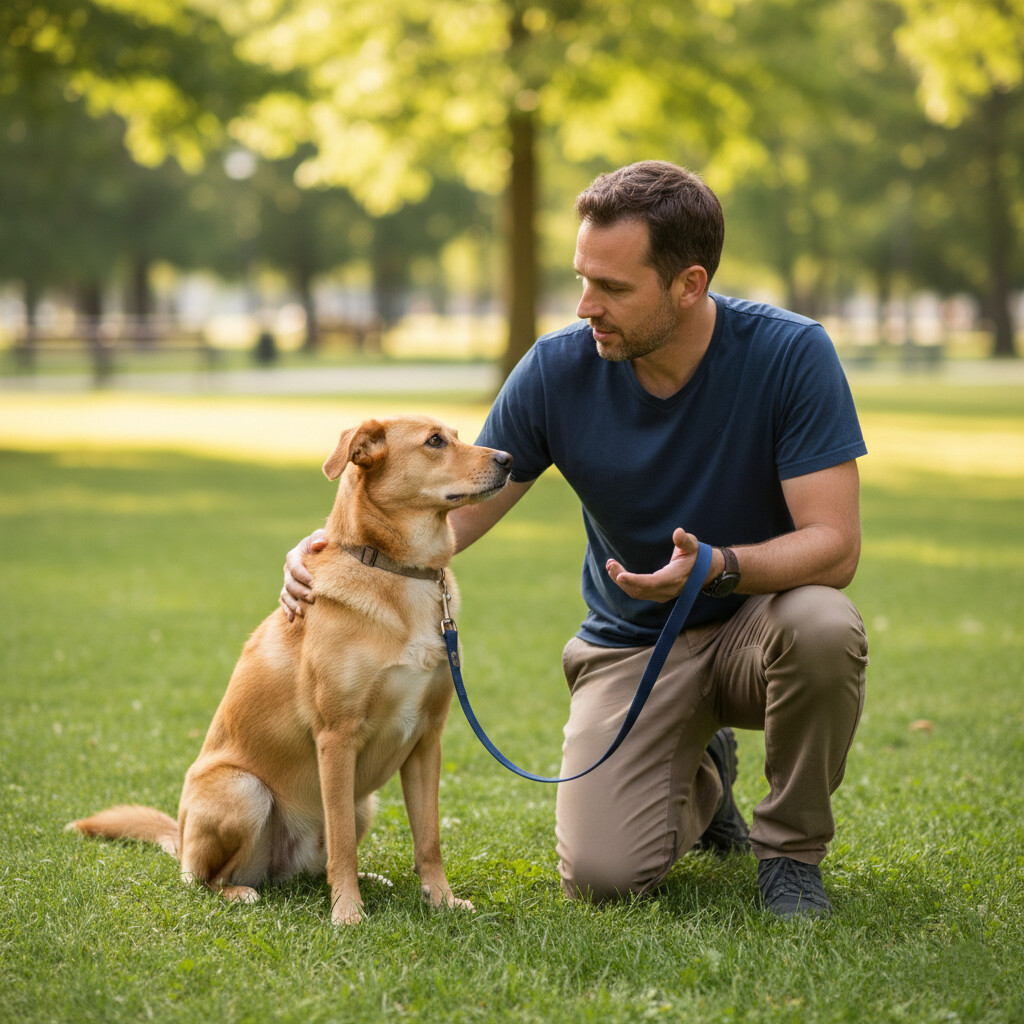
Dog psychology is the study of how canines think, feel, and learn. Unlike wolves, dogs do not strictly follow a linear “alpha” hierarchy but live in family-oriented social groups. Their behavior is driven primarily by associative learning (connecting actions to consequences) and body language, rather than spoken words or complex dominance struggles.
Summary Table
| Topic | Key Insight |
| Learning Style | Associative: Dogs learn by connecting immediate consequences (treats, praise, or ignoring) to their actions. |
| Social Structure | Family Group: They view humans as family, not “pack leaders” to be overthrown. The “Alpha Dog” theory is largely debunked. |
| Communication | Non-Verbal: 90% of communication is body language (ears, tail, posture). Vocalization (barking) is secondary. |
| Primary Senses | Smell & Hearing: A dog’s world is scent-based. They “see” the world through their nose first. |
| Common Issues | Anxiety & Boredom: Most destructive behaviors (chewing, digging) stem from lack of mental stimulation or separation anxiety. |
The Complete Guide to Dog Behavior & Psychology
Understanding dog behavior is not about teaching your dog to sit; it is about learning how your dog views the world. When you understand the “why” behind a bark, a tail wag, or a chewed shoe, you move from simply owning a pet to truly communicating with a companion.
This guide breaks down canine psychology into actionable insights, helping you build a stronger bond based on trust and clear communication.
Read Also: How Dogs Bond With Humans
1. The Canine Mind: How Dogs Perceive the World
To understand dog behavior, you must first understand their sensory experience. Humans are visual creatures; dogs are olfactory (scent-oriented) creatures.
The Nose Knows
A dog’s sense of smell is 10,000 to 100,000 times more acute than yours. When you walk into a kitchen, you smell “stew.” Your dog smells carrots, onions, beef, pepper, and the distinct odor of the person who chopped them.
- Olfactory Bulb: The part of a dog’s brain devoted to analyzing smells is 40 times greater than ours.
- Time Travel: Dogs can smell the past (who walked here an hour ago) and the future (a storm approaching on the wind).
Visual Perception
Dogs are not colorblind, but they see differently.
- Dichromatic Vision: They see primarily in shades of blue and yellow. Red and green items often look grayish-brown to them.
- Motion Sensitivity: They are better at detecting movement at a distance than humans, a trait left over from their hunting ancestors.
2. Decoding Dog Body Language
Dogs speak volumes without saying a word. Misinterpreting these signals is the leading cause of dog bites and behavioral misunderstandings.
The Tail: It’s Not Just About Happiness
A wagging tail does not always mean a friendly dog. It indicates arousal or emotional engagement.
- High, stiff wag: Alert, dominant, or potentially aggressive.
- Low, slow wag: Insecure, submissive, or unsure.
- Tucked tail: Fearful or anxious.
- Loose, sweeping wag: Friendly and relaxed. (Often involves the whole butt wiggling).
Ear Positions
- Pricked forward: Alert, interested, or focusing on a target.
- Relaxed/Neutral: Calm and content.
- Pinned back: Fearful, anxious, or defensive.
The Eyes
- Soft Eyes: Relaxed lids, almond shape. Indicates safety.
- Hard Stare: Unblinking, intense direct contact. This is a threat or challenge.
- Whale Eye: Showing the whites of the eyes (sclera). This signals extreme stress or fear.
Posture and Piloerection
- Play Bow: Front elbows on the ground, butt in the air. The universal sign for “everything I do next is just for fun.”
- Hackles Raised (Piloerection): Hair standing up along the spine. This is an involuntary reaction to arousal (excitement, fear, or surprise), similar to goosebumps in humans. It does not always mean aggression.
3. Social Structure: The Myth of the “Alpha.”
For decades, dog training was dominated by the “Alpha Wolf” theory—the idea that you must physically dominate your dog to maintain status. Modern canine science has debunked this.
Why Dominance Theory Fails
The original study on wolves that popularized the “alpha” term was observed in captive wolves unrelated to each other. In the wild, wolf packs are actually family units: parents and offspring. There is no violent coup for leadership.
The Modern View: Family Group
Dogs know you are not a dog. They do not view you as a pack member to compete with, but as a provider and social partner.
- Resource Guarding: If a dog growls over a bone, they aren’t trying to be “alpha.” They are simply afraid of losing a valuable resource.
- Ignoring Commands: A dog who doesn’t sit is usually distracted or untrained, not plotting a takeover.
Read Also: Common Puppy Behavior Problems (And Solutions)
4. How Dogs Learn: The Psychology of Training
Dogs are masters of Associative Learning. They learn by immediate consequence. This occurs in two main ways: Classical Conditioning and Operant Conditioning.
Classical Conditioning (The Pavlov Effect)
This is learning by association without conscious effort.
- Example: You grab the leash • The dog gets excited.
- Application: If you want your dog to like the vet, you must pair the vet clinic with high-value treats so the association changes from “scary poke” to “chicken time.”
Operant Conditioning (Consequences)
This is learning that actions have outcomes.
- Positive Reinforcement (+R): Adding something good (a treat) to increase behavior (sitting). This is the most effective method for teaching new skills.
- Negative Punishment (-P): Removing something good (attention) to decrease behavior (jumping).
- Example: Turning your back when a dog jumps on you.
- Positive Punishment (+P): Adding something bad (yelling/shock) to decrease behavior.
- Risk: Can cause fear and aggression.
- Negative Reinforcement (-R): Removing something bad to increase behavior.
- Example: Releasing pressure on a leash when the dog walks nicely.
5. Common Behavioral Issues & Psychological Roots
Most “bad” behavior is actually normal dog behavior that simply doesn’t fit into a human household.
Separation Anxiety
Dogs are intensely social. Being left alone can trigger panic.
- Symptoms: Destruction near doors, howling, and accidents only when alone.
- Psychology: The dog is not angry; they are terrified of abandonment. Punishment makes this worse.
Aggression and Reactivity
Aggression is rarely “mean.” It is usually a distance-increasing behavior. The dog wants a scary thing to go away.
- Fear Aggression: “I will bite you so you don’t hurt me.”
- Frustration Reactivity: “I want to say hi to that dog, but the leash stops me, so I will bark.”
Destructive Chewing
- Puppies: Teething pain and exploration.
- Adults: Boredom or anxiety. Chewing releases endorphins in a dog’s brain, which calms them down.
Read Also: Indoor vs Outdoor Dogs: Pros and Cons
6. Enrichment: The Key to a Happy Dog
A tired dog is a good dog, but a mentally tired dog is a great dog. Physical exercise is not enough; you must engage the brain.
Mental Stimulation Ideas
- Scent Walks: Let your dog sniff. A 20-minute “sniffari” is as mentally tiring as a 1-hour fast walk.
- Puzzle Toys: Make them work for their meals using Kongs or snuffle mats.
- Training Sessions: 10 minutes of learning tricks burns significant mental energy.
The Importance of Routine
Dogs thrive on predictability. A chaotic schedule creates anxiety.
- Feed at similar times.
- Walk at similar times.
- Create a consistent “wind down” routine at night.
7. Checklist for Dog Owners
To ensure you are covering all bases with your dog’s psychological health, use this checklist:
- Socialization: Exposure to new sounds/people (crucial before 16 weeks).
- Desensitization: Gradual exposure to scary things (vacuums, thunder).
- Counter-Conditioning: Changing the emotional response to a trigger.
- Impulse Control: Teaching the dog to wait for what they want.
Conclusion
Dog behavior and psychology is not magic. It is a biological science driven by instincts, associations, and social needs. By abandoning the “alpha” mindset and embracing positive reinforcement and clear body language, you create a relationship where your dog obeys because they trust you, not because they fear you.
Start observing your dog today. Watch the ears. Watch the tail. Listen to the silence. Your dog is talking to you all the time.