
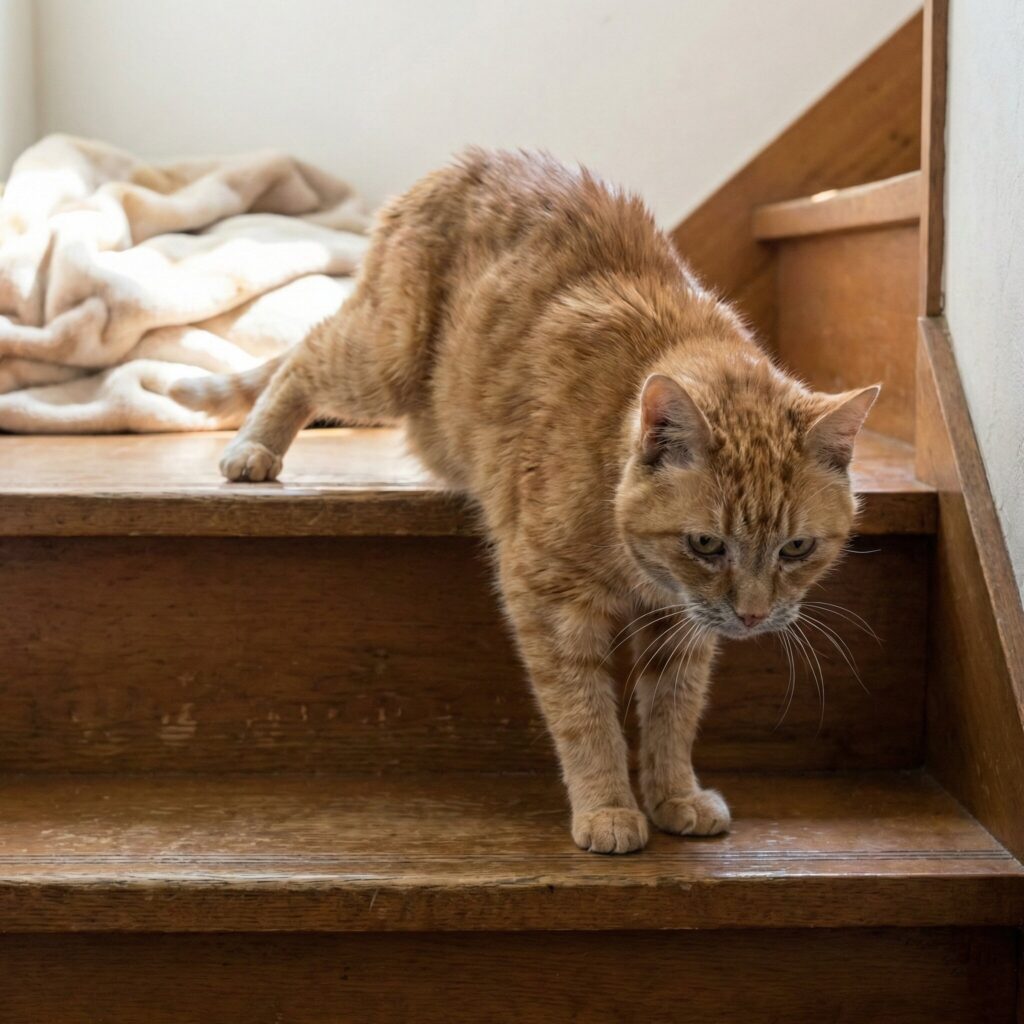
Mobility issues in older cats are most commonly caused by Osteoarthritis (Degenerative Joint Disease), affecting over 90% of cats aged 12 and older. Other frequent causes include obesity, which stresses joints, diabetes, which can cause nerve damage (neuropathy), and overgrown claws. Unlike dogs, cats rarely limp; instead, they show subtle signs like reluctance to jump, sleeping more, “accidents” outside the litter box, and irritability when touched. Early management through weight loss, home modifications (like ramps), and veterinary treatments (such as Solensia) is crucial for maintaining quality of life.
Summary Table
| Condition | Primary Symptoms | Key Treatments |
| Osteoarthritis | Solensia injections, joint supplements (Glucosamine/Omega-3s), and heating pads. | Insulin therapy to regulate blood sugar, and dietary changes. |
| Diabetic Neuropathy | Weakness in hind legs, walking flat on hocks (plantigrade stance). | Inability to groom, shortness of breath, and reluctance to move. |
| Obesity | Anti-inflammatories, Gabapentin, and physical therapy. | Calorie-restricted diet, gentle interactive play. |
| Spinal/Neuro Issues | Stiffness, hesitation to jump, and matted fur on the back. | Dragging legs, loss of balance (ataxia), and incontinence. |
| Onychauxis (Claws) | Regular trimming, scratching posts, and vet intervention if infection occurs. | Regular trimming, scratching posts, vet intervention if infection occurs. |
Common Mobility Issues in Older Cats
Watching a once-agile cat slow down is heartbreaking for any pet parent. One day, they are scaling the refrigerator, and the next, they hesitate to jump on the sofa. While many owners dismiss this as “just old age,” a significant decrease in movement is often a sign of treatable medical conditions.
Cats are masters at hiding pain. By the time you notice a limp or a behavioral change, your cat may have been suffering for months. This guide breaks down exactly why older cats lose mobility, how to spot the silent signs of pain, and what you can do to give them their golden years back.
Read Also: Signs of Cognitive Decline in Cats
1. The Silent Signals: Identifying Mobility Loss
Cats do not display pain like humans or dogs. They rarely whine or cry out. Instead, they change their lifestyle to accommodate their discomfort. You must become a detective to spot these subtle shifts.
Physical Changes
- The “Hock Walk”: If your cat walks flat on their back ankles (hocks) rather than on their toes, this is a serious sign of weakness, often linked to diabetes.
- Overgrown Claws: If you hear your cat’s nails clicking on the floor, they aren’t retracting properly. Older cats with joint pain stop using scratching posts, leading to thick, curved nails that can grow into their paw pads.
- Muscle Wasting: Run your hands along your cat’s spine and hips. If the spine feels bony and the thighs feel thin, they are losing muscle mass (sarcopenia) from lack of use.
- Matted Fur: An arthritic cat cannot twist its spine to groom the lower back or base of the tail. Matting in these areas is a classic “red flag” for spinal or hip pain.
Behavioral Changes
- Hesitation to Jump: Does your cat look up at the bed, crouch to jump, but then walk away? This hesitation indicates they are calculating the pain cost of the movement.
- Litter Box Misses: High-sided litter boxes are torture for stiff joints. If your cat urinates right next to the box, they are trying to be good, but physically cannot step inside.
- Irritability: “Grumpy old cat” syndrome is often just a cat in pain. If they hiss or swat when you stroke their hips or pick them up, they are protecting a sore area.
- Increased Sleep: While seniors sleep more, a cat that withdraws entirely from family interaction is likely in distress.
2. Top Causes of Mobility Issues
Understanding the why is the first step to treatment. These are the most prevalent conditions affecting senior feline mobility.
Osteoarthritis (Degenerative Joint Disease)
This is the number one enemy of senior cats. Over time, the cartilage cushioning the joints wears down, causing bone to rub against bone.
- Affected Areas: Hips, elbows, knees, and the spine.
- Prevalence: Studies show that 90% of cats over age 12 have some form of radiographic arthritis.
- The Vicious Cycle: Pain leads to inactivity, which leads to muscle loss and stiffness, which leads to more pain.
Feline Diabetes and Neuropathy
Uncontrolled high blood sugar damages the nerves, particularly in the hind legs.
- Specific Symptom: Diabetic Neuropathy causes the plantigrade stance. The cat loses the ability to stand on its toes and drops its hocks to the ground.
- Reversibility: Unlike arthritis, this can often be significantly improved with proper insulin regulation.
Obesity
Fat is not just “extra weight,” it is biologically active tissue that releases inflammatory hormones, worsening joint pain.
- Mechanical Stress: Every extra pound on a cat is equivalent to roughly 15 pounds on a human frame. An obese cat’s joints are under constant, crushing pressure.
Kidney Disease (CKD)
While primarily an organ issue, Chronic Kidney Disease causes potassium depletion (hypokalemia).
- Mobility Link: Low potassium causes severe muscle weakness. Cats with CKD may appear wobbly or unable to hold their head up properly.
Neurological Disorders
- Intervertebral Disc Disease (IVDD): While less common in cats than in dogs, discs in the spine can bulge or burst, pressing on the spinal cord.
- Degenerative Myelopathy: A slow, progressive wasting of the nerves controlling the hind legs, leading to dragging feet and lack of coordination.
Read Also: Adaptability: Cats vs Dogs in New Environments
3. Diagnosis: What to Expect at the Vet
Do not guess, get a diagnosis. Many owners assume it’s arthritis when it could be a treatable infection or a diabetic issue.
The Physical Exam
Your vet will manipulate the joints to check for “crepitus” (a crunching feeling) and range of motion. They will check the claws for overgrowth and the spine for sensitivity.
Diagnostic Tools
- X-Rays (Radiographs): The gold standard for seeing bone spurs and cartilage loss. However, an important note: A cat can have terrible-looking X-rays but hide pain well, or mild X-rays with severe pain.
- Blood Panels: Essential to rule out diabetes (glucose levels), kidney function (potassium levels), and hyperthyroidism.
- Gait Analysis: The vet may watch your cat walk across the room to identify which leg is favoring the weight.
4. Medical Treatments and Pain Management
Modern veterinary medicine has made huge strides in managing feline pain.
Solensia (Frunevetmab)
This is a game-changer for feline arthritis.
- What it is: A monthly injection of monoclonal antibodies.
- How it works: It targets Nerve Growth Factor (NGF), a key driver of arthritis pain. Unlike steroids or NSAIDs, it is processed like a protein, putting very little stress on the kidneys or liver.
- Results: Many owners report their cats acting like kittens again after 1-2 doses.
NSAIDs (Non-Steroidal Anti-Inflammatories)
- Medications: Meloxicam (Metacam) or Robenacoxib (Onsior).
- Caution: These must be used with extreme caution in cats due to kidney toxicity risks. They are usually prescribed for short-term flare-ups rather than lifetime maintenance.
Gabapentin
A medication that treats nerve pain and acts as a mild sedative. It is excellent for “wind-up pain” (chronic pain that has sensitized the nervous system). It is often used in combination with other treatments.
Adequan Injections
Polysulfated glycosaminoglycan (PSGAG) injections help repair cartilage and increase joint lubrication.
5. Supplements and Nutrition
Supplements can slow the progression of joint damage, though they rarely fix advanced pain on their own.
- Omega-3 Fatty Acids: High-quality fish oil is a potent natural anti-inflammatory. Look for high levels of EPA and DHA.
- Glucosamine & Chondroitin: The building blocks of cartilage. Best given in a liquid or powder mixed into wet food, as pills are hard to administer to cats.
- Green-Lipped Mussel: A superfood supplement containing unique fatty acids and compounds that support joint health.
Read Also: How to Help a Senior Cat Stay Active
6. Actionable Home Modifications
You can reduce your cat’s pain immediately by changing their environment. This is often just as important as medication.
Modify the “Bathroom”
- Low Entry: Buy a litter box with a low opening (or cut a dip into a plastic storage bin).
- Location: If you have a two-story house, ensure there is a litter box on every floor. Do not make a painful cat walk down into a basement.
- Size: Seniors need more room to turn around. Get a large box.
Create “Steps” to Favorite Spots
- Pet Stairs/Ramps: Place sturdy, carpeted stairs next to the bed and the sofa.
- The “Mid-Step”: Use an ottoman or a sturdy box to bridge the gap between the floor and a high window sill.
Warmth is Medicine
Arthritic joints ache more in the cold.
- Heated Beds: Invest in a low-voltage heated cat bed or a self-warming thermal mat.
- Sun Spots: Clear areas in front of sunny windows so the cat can bake their joints in the warmth.
Traction Control
Slipping on hardwood or tile scares senior cats and risks injury.
- Yoga Mats: Cut up yoga mats and place them in “runways” down hallways.
- Toe Grips: Ensure the fur between the toes is trimmed so the paw pads can make contact with the floor.
7. Grooming Assistance
Since your cat can no longer twist to groom, you must become their groomer.
- Daily Brushing: Focus on the lower back and hips. Use a soft-bristled brush, as their skin may be sensitive.
- Sanitary Trims: Carefully trim the long fur around the anus and back legs to prevent waste from sticking to them.
- Nail Trimming: Check nails every 2-3 weeks. If they are thick, you may need heavy-duty clippers or vet assistance.
Conclusion
Mobility issues in older cats are common, but they are not “normal.” They are a sign of conditions that need attention. By combining veterinary treatments like Solensia with simple home modifications and weight management, you can extend your cat’s life and, more importantly, their happiness.
If you notice your cat hesitating to jump or slowing down, they are not just “getting old”. They are asking for help.