
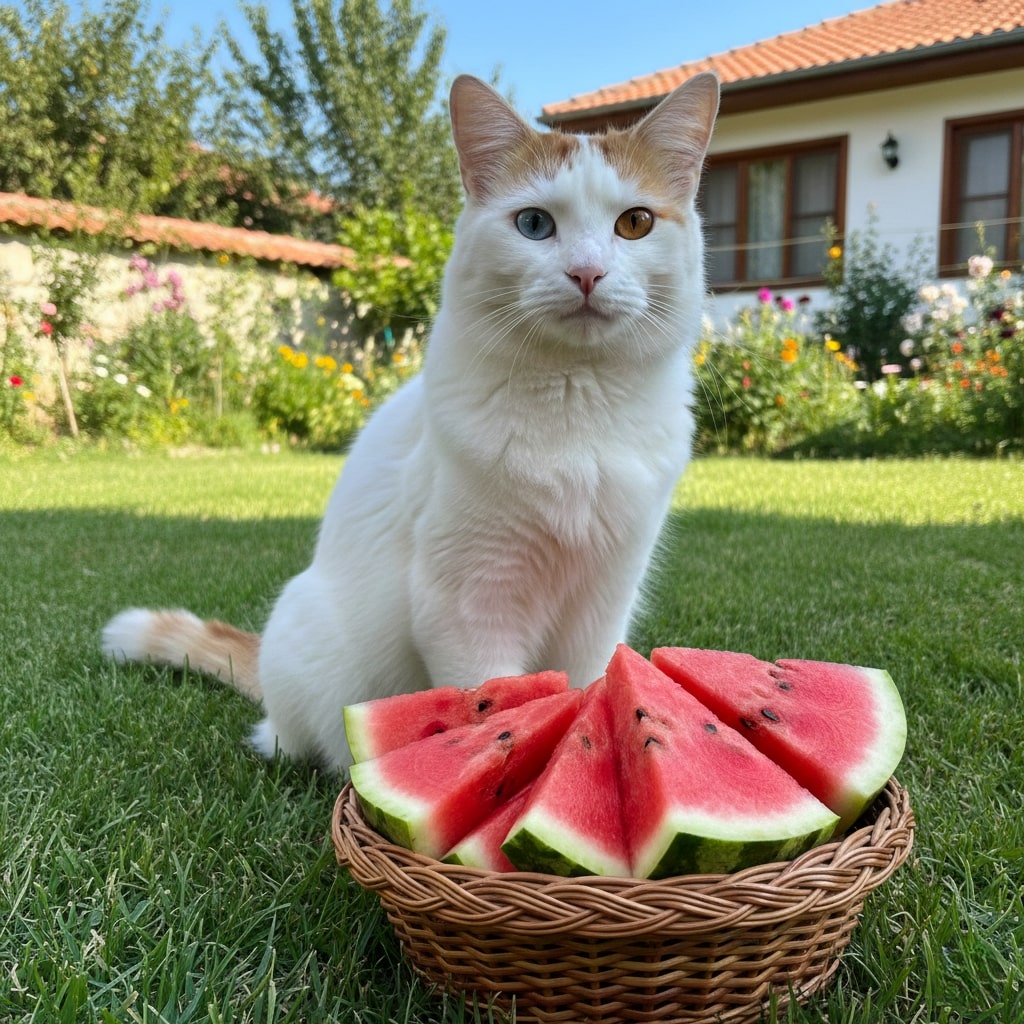
Yes, cats can eat watermelon in moderation. The soft, pink flesh is safe and hydrating for most healthy cats. However, you must remove all seeds and the rind before serving. Seeds contain trace amounts of cyanide and pose a choking hazard, while the tough rind can cause intestinal blockages. Because cats are obligate carnivores, watermelon offers them little nutritional value and should only be an occasional treat.
Summary Table: Is Watermelon Safe for Cats?
| Feature | Safe? | Notes |
| Pink Flesh | Yes | Safe in small amounts. Great for hydration. |
| Seeds | No | Choking hazard; contains trace cyanide. |
| Rind (Skin) | No | Indigestible; causes blockages and upset stomach. |
| Kittens | Avoid | Digestive systems are too sensitive. |
| Diabetic Cats | No | High sugar content spikes blood glucose. |
| Serving Size | — | 1-inch cube, cut into small pieces (Max 1x week). |
Can Cats Have Watermelon? Detailed Breakdown
Generally, yes. Watermelon is non-toxic to cats. Many cats are actually attracted to the high moisture content rather than the sweet taste, as cats lack the taste receptors to perceive sweetness.
However, just because it is safe does not mean it should be a staple in their diet. Cats are obligate carnivores, meaning their digestive systems are optimized for meat, not plant matter. While they can digest the fruit flesh, it offers them very little nutritional benefit compared to high-quality meat proteins.
The Dangers: Seeds and Rind
While the pink flesh is safe, the rest of the watermelon can be dangerous for your cat.
1. Watermelon Seeds
You should never let your cat eat watermelon seeds (black or white).
- Choking Hazard: The small, slippery seeds can easily become lodged in a cat’s throat.
- Toxicity: Seeds contain trace amounts of cyanide. While a cat would need to chew many seeds to suffer cyanide poisoning, it is an unnecessary risk.
- Digestive Blockage: If swallowed whole, seeds can accumulate and cause a blockage in the intestines.
2. The Rind
The green outer skin and the hard white layer of the rind are strictly off-limits.
- Indigestible: Cats cannot break down the tough fibers in the rind.
- Intestinal Blockage: Ingesting rind can lead to a blockage that may require emergency surgery.
- Gastrointestinal Upset: Even small pieces can cause vomiting or diarrhea.
Are There Any Benefits?
Watermelon is not a “superfood” for cats, but it does have a few minor perks when given as a rare treat:
- Hydration: Watermelon is approximately 92% water. If your cat struggles to drink enough water from a bowl, a small piece of watermelon can help boost their fluid intake, especially on hot days.
- Vitamins: It contains Vitamins A, C, and B6, as well as potassium. However, cats consuming a balanced commercial diet already get these nutrients in the correct amounts.
- Fiber: Small amounts of fiber can aid digestion, though too much will have the opposite effect (diarrhea).
Risks: Sugar and Diabetes
The biggest hidden risk in watermelon is sugar. While healthy for humans, the natural sugars in fruit can be problematic for felines.
- Obesity: Excess sugar converts to fat. If your cat is overweight, avoid fruit treats entirely.
- Diabetes: Cats with diabetes should never eat watermelon. The sugar can cause dangerous spikes in blood glucose levels.
- Digestive Upset: A cat’s gut bacteria are not designed to ferment large amounts of sugar. Overfeeding can lead to gas, bloating, and diarrhea.
How to Safely Serve Watermelon to Cats
If you want to share a summer snack with your pet, follow these steps to ensure safety:
- Wash the fruit: Remove any pesticides from the rind before cutting (cross-contamination can occur).
- Remove the Rind and Seeds: Cut away all green and white parts and pick out every single seed.
- Cut into Bite-Sized Pieces: Dice the flesh into pieces the size of a blueberry or small kibble.
- Moderation: Offer only a few small pieces (about 1 tablespoon total) occasionally.
Tip: You can freeze small chunks of seedless watermelon to make a cooling treat for hot weather!
Can Kittens Eat Watermelon?
It is best to avoid giving watermelon to kittens. Their digestive systems are still developing and are extremely sensitive. Introducing plant-based sugars can cause severe diarrhea, leading to dehydration—which is dangerous for small kittens. Stick to high-quality kitten food to ensure they grow properly.
Conclusion
Watermelon is a safe, occasional treat for healthy adult cats if prepared correctly. Always remove the seeds and rind, and keep portions small to prevent an upset stomach. If your cat has diabetes or a sensitive stomach, stick to meat-based treats instead.