
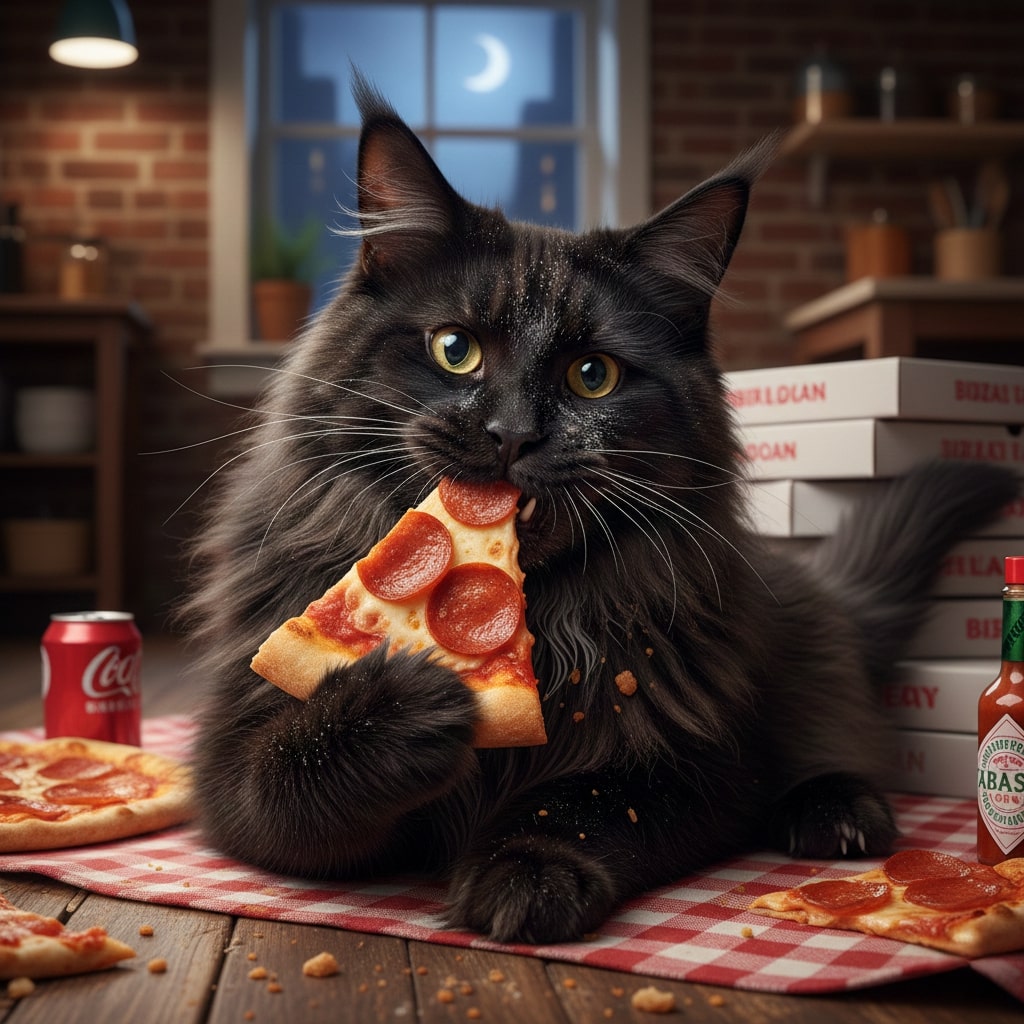
No, cats should not eat pizza. Pizza contains ingredients that are harmful or toxic to cats, specifically garlic and onions found in the sauce, which can damage red blood cells. Additionally, the high salt content in processed meats like pepperoni, combined with lactose in the cheese, can cause severe digestive upset and sodium poisoning. While a small bite of plain crust might not kill them, it offers no nutritional value and should be avoided.
Summary Table: Pizza Ingredients and Risks
| Pizza Part | Safety Level | Main Risks for Cats |
| Tomato Sauce | High Risk | Contains garlic and onions (toxic); high acidity. |
| Cheese | Moderate Risk | Lactose intolerance (diarrhea, vomiting); high fat. |
| Crust | Low/Moderate Risk | Empty calories; raw dough is dangerous (yeast expands). |
| Pepperoni/Sausage | High Risk | Excessive salt; spices; high fat content. |
| Mushrooms | Low Risk | Store-bought are generally safe, but not necessary. |
Why Pizza Is Bad for Cats?
While pizza is a favorite human food, it is a nutritional nightmare for felines. Cats can not process heavy carbohydrates, dairy, or plant-based spices.
Feeding your cat pizza exposes them to three main dangers:
- Toxic Ingredients: Garlic and onion powder are common in pizza sauce and processed meats.
- Lactose Intolerance: Most adult cats cannot digest dairy.
- Sodium Poisoning: The salt levels in pizza are dangerous for a small animal.
Read Also: Can Cats Eat Walnuts?
The Dangers of Pizza Sauce
The sauce is often the most dangerous part of the pizza for a cat. Almost all pizza sauces contain garlic, onions, or onion powder.
These belong to the Allium plant family. Even in powdered form, they are highly toxic to cats. Eating them can lead to oxidative damage to red blood cells, causing a condition called hemolytic anemia. This makes the red blood cells burst, leading to weakness, pale gums, and potentially fatal complications.
The Problem with Cheese
You might see cats drinking milk in cartoons, but in reality, most adult cats are lactose intolerant. They lack the enzyme (lactase) needed to break down the sugar in dairy products.
Eating the mozzarella or provolone found on pizza can cause:
- Stomach cramps
- Gas and bloating
- Diarrhea
- Vomiting
The Risks of Processed Toppings
Toppings like pepperoni, salami, and sausage are heavily processed. They are packed with sodium and preservatives (like nitrates) that are unhealthy for cats.
- Salt: Excessive salt can lead to excessive thirst, urination, and in severe cases, sodium ion poisoning, which causes tremors and seizures.
- Fat: High-fat meats can trigger pancreatitis, a painful inflammation of the pancreas that requires veterinary treatment.
Is Pizza Crust Safe?
The crust is the “safest” part of the pizza, but that does not mean it is good for them. Pizza crust is full of carbohydrates and empty calories. Since cats do not need carbs to survive, eating crust contributes to feline obesity and can spike blood sugar levels, which is a concern for diabetic cats.
Warning on Raw Dough: Never give a cat raw pizza dough. The yeast will ferment in their stomach, producing alcohol and gas. This can cause the stomach to expand dangerously (bloat) and lead to alcohol poisoning.
Symptoms of Poisoning in Cats
If your cat has sneaked a slice of pizza, watch closely for these signs of illness. If you notice them, contact your veterinarian immediately.
- Digestive issues: Vomiting, diarrhea, or loss of appetite.
- Behavioral changes: Lethargy, weakness, or hiding.
- Physical signs: Pale gums, red urine (a sign of blood cell damage), or panting.
- Neurological signs: Tremors, seizures, or uncoordinated movement (from high sodium).
Safe Alternatives to Pizza for Cats
If you want to treat your cat while you enjoy your dinner, stick to plain, unseasoned proteins that mimic their natural diet.
- Plain Cooked Chicken: Boiled or baked without salt or spices.
- Plain Tuna: Canned tuna in water (not oil), given in moderation.
- Freeze-Dried Treats: Commercial cat treats made from single ingredients like liver or salmon.
- Cat Grass: A safe plant fiber they can chew on.
Frequently Asked Questions
Can cats have a tiny piece of pepperoni?
No. Pepperoni is too spicy, fatty, and salty. The preservatives and paprika used in pepperoni can irritate a cat’s stomach quickly.
Is it okay if I wash the sauce off the cheese?
It is still not recommended. Traces of garlic or onion powder can remain on the cheese, and the dairy itself can still cause stomach upset.
Can cats eat vegan pizza?
Generally, no. Vegan cheese often contains nut oils or starches that are hard for cats to digest, and the sauce will still likely contain toxic garlic and onions.
What should I do if my cat ate pizza?
If they ate a small piece of crust, they will likely be fine. If they ate sauce, onions, or garlic, call your vet or the Pet Poison Helpline immediately.
Final Verdict
Keep the pizza box closed. The risk of toxicity from garlic and onion, combined with the digestive distress from cheese and salt, makes pizza a strictly “humans only” meal.