
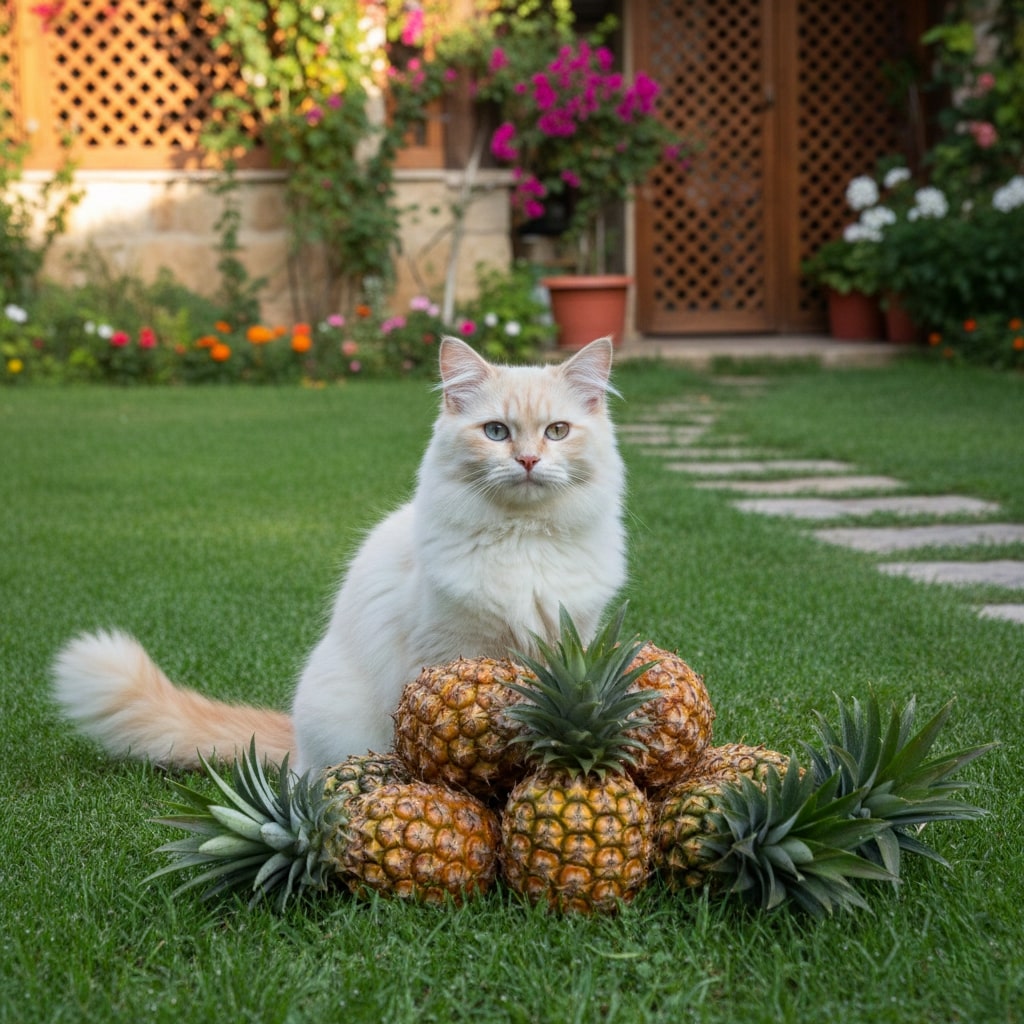
Yes, cats can eat fresh pineapple in small amounts. It is non-toxic to cats. However, because it is high in sugar and acidity, it should only be given as a rare treat. Avoid canned pineapple because the syrup contains excess sugar and preservatives that are harmful to your cat’s digestive system.
Summary Table: Are Pineapples Safe for Cats
| Feature | Details |
| Is it Toxic? | No, pineapple is not toxic to cats. |
| Best Type | Fresh, raw pineapple flesh only. |
| Types to Avoid | Canned pineapple, pineapple juice, leaves, skin, and core. |
| Serving Size | 1 or 2 very small bite-sized cubes. |
| Frequency | Rare occasion (once every few weeks). |
| Main Risks | High sugar content, acidity, potential choking hazard. |
Can Cats Have Pineapple? Detailed Breakdown
While pineapple is not poisonous, it isn’t necessarily “good” for cats in the way it is for humans.
Nutritional Benefits (and Why They Don’t Matter Much)
Pineapple contains nutrients that are healthy for humans, but cats process them differently:
- Vitamin C: Pineapple is rich in Vitamin C. However, unlike humans, cats produce their own Vitamin C naturally. They do not need it from their diet.
- Fiber: Small amounts of fiber can help digestion, but too much fruit fiber can cause diarrhea in cats.
- Manganese & Copper: These minerals are present, but your cat should already be getting enough of these from their high-quality cat food.
The Bottom Line: Your cat does not need pineapple for health benefits. It is strictly a flavor curiosity or a treat.
The Risks: Why You Should Limit Pineapple
Even though it is safe to eat, pineapple comes with several downsides for felines.
1. High Sugar Content
Cats cannot taste sweetness. When they eat pineapple, they are ingesting fructose (fruit sugar) without enjoying the sweet flavor.
- Obesity: Excess sugar leads to weight gain.
- Diabetes: Frequent sugar spikes can contribute to feline diabetes over time.
- Digestion: Cats lack the enzymes to process large amounts of sugar, which can lead to upset stomachs.
2. High Acidity
Pineapple is very acidic. A cat’s stomach is sensitive to high acidity in food that isn’t meat-based. Eating too much can cause:
- Vomiting
- Abdominal pain
- Diarrhea
3. The Texture and Parts
- The Skin and Leaves: The spiky skin and tough leaves are hard to chew and can damage a cat’s mouth or esophagus.
- The Core: The hard center core is a major choking hazard and can cause intestinal blockages if swallowed in large chunks.
Can Cats Eat Canned Pineapple?
No. You should never feed your cat canned pineapple.
Canned fruit typically sits in heavy syrup or fruit juice loaded with added sugars and artificial preservatives. The sugar concentration in canned fruit is far too high for a cat and can cause immediate digestive distress.
How to Safely Feed Pineapple to Your Cat
If your cat seems interested in your snack, follow these steps to serve it safely:
- Peel and Corer: Remove all spiky skin and the hard central core.
- Cut Small: Dice the soft flesh into very small pieces (about the size of a pea).
- Fresh Only: Use only raw, fresh pineapple.
- Monitor: Watch your cat after they eat it to ensure they don’t have an allergic reaction or stomach upset.
Note: If your cat has a pre-existing condition like diabetes or sensitive digestion, do not feed them pineapple at all.
Symptoms of Eating Too Much Pineapples
If your cat manages to steal a large slice of pineapple off the counter, watch for these signs of illness:
- Vomiting or heaving
- Runny stool (diarrhea)
- Lethargy
- Lack of appetite
If these symptoms last for more than 24 hours, contact your veterinarian.
Alternative Treats for Cats
If you want to treat your cat, it is usually better to stick to meat-based snacks. However, if they enjoy the texture of fruit, here are safer and less safe options:
Safe Fruits (in moderation)
- Blueberries
- Strawberries
- Watermelon (seedless)
- Apples (flesh only, no seeds)
Toxic Fruits (Avoid Completely)
- Grapes and Raisins (Can cause kidney failure)
- Citrus fruits (Lemons, Limes, Oranges)
- Cherries (Pits contain cyanide)