
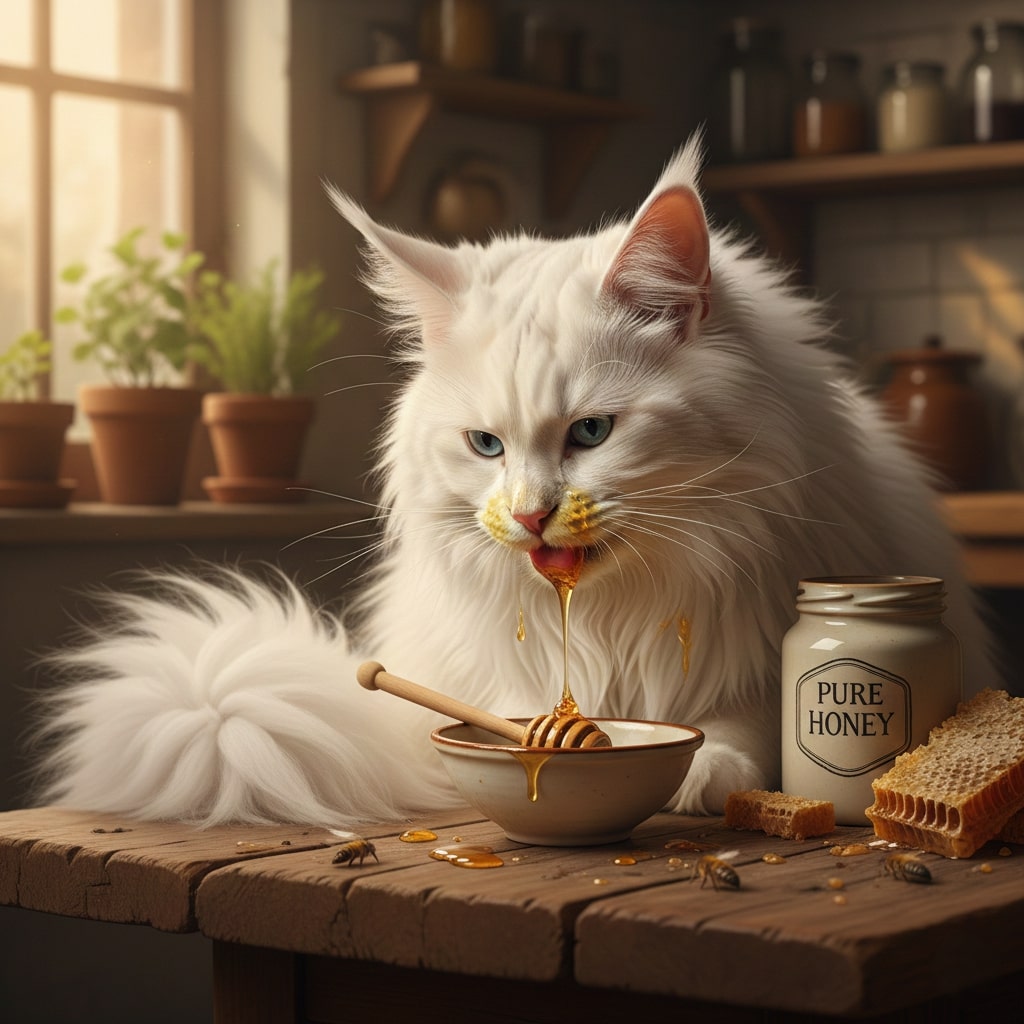
Technically, yes, cats can eat honey in very small amounts, as it is not toxic to them. However, it is not recommended. Honey is packed with sugar, which cats cannot digest efficiently. Eating it can lead to weight gain, spikes in blood sugar, and stomach upset. For kittens, raw honey is dangerous due to the risk of botulism.
Summary Table: Is Honey Safe for Cats?
| Feature | Details |
| Is it Toxic? | No, honey is not poisonous to cats. |
| Is it Healthy? | No, it offers no nutritional benefit for cats. |
| Main Risks | Obesity, diabetes, dental issues, vomiting, diarrhea. |
| Kitten Safety | Unsafe. High risk of botulism bacteria. |
| Taste Perception | Cats cannot taste sweet flavors. |
| Max Serving Size | A tiny lick (size of a pea) rarely. |
Can Cats Have Honey? Detailed Guide
Many cat owners wonder if sharing a sweet treat like honey is safe for their feline friends. While honey is a superfood for humans, the rules are different for cats.
The simple truth is that while honey is not poisonous, it does not belong in a cat’s diet.
Read Also: Can Cats Eat Fish Sticks?
Do Cats Like the Taste of Honey?
Surprisingly, cats cannot taste sweetness. Unlike humans and dogs, cats lack the specific taste receptors on their tongues required to identify sugary flavors.
If your cat shows interest in honey, they are likely attracted to the texture or the smell, not the sweet taste. Because they don’t get the “reward” of sweetness, there is very little reason to offer it to them.
The Risks of Feeding Honey to Cats
Even though honey isn’t toxic, feeding it to your cat can cause several health problems.
1. Blood Sugar Spikes and Diabetes
Honey consists almost entirely of fructose and glucose. A cat’s digestive system struggles to break down large amounts of sugar. Regular consumption can lead to consistently high blood sugar levels, increasing the risk of feline diabetes. Diabetic cats often require daily insulin injections and strict dietary management.
2. Weight Gain and Obesity
Honey is calorie-dense. For a small animal like a cat, even a teaspoon of honey contains a massive amount of calories relative to their daily needs. Excess calories lead to obesity, which puts stress on joints and can shorten your cat’s lifespan.
3. Digestive Upset
Because cats do not produce enough of the enzymes needed to digest sugars, eating honey can cause gastrointestinal distress. Symptoms often include:
- Vomiting
- Diarrhea
- Stomach cramping
- Gas
4. Dental Decay
The sticky consistency of honey clings to teeth. Since cats don’t brush their teeth, the sugar sits on the enamel and accelerates tooth decay and gum disease (periodontal disease).
Read Also: Why Cats Beg for Food That’s Bad for Them
Special Warning: Honey and Kittens
You should never feed honey to a kitten.
Raw honey can contain spores of a bacteria called Clostridium botulinum. While adult cats (and humans) have mature immune systems that can usually handle these spores, kittens do not.
Ingesting these spores can lead to botulism, a rare but serious illness that causes paralysis. If a kitten consumes honey and appears weak, uncoordinated, or has trouble breathing, seek veterinary care immediately.
Can Honey Help a Cat with a Sore Throat?
Some owners try to use honey as a home remedy to soothe a cat’s sore throat or cough, similar to how humans use it.
Is it effective?
There is little scientific evidence that honey helps cats with throat issues. The risks of the high sugar content generally outweigh the potential soothing benefits. If your cat is coughing or wheezing, it is safer to consult a veterinarian rather than trying home remedies.
What If My Cat Licked Some Honey?
If your adult cat managed to lick a drop of honey off the counter or your spoon, there is no need to panic.
Steps to take:
- Monitor them: Watch for signs of stomach upset like vomiting or soft stool.
- Water: Ensure they have access to fresh water to help flush their system.
- No more treats: Skip other treats for the rest of the day to avoid calorie overload.
If your cat is diabetic, obese, or has a compromised immune system, call your vet for advice even after a small accidental ingestion.
Read Also: How Much Salt Can Kill a Cat?
Safe and Healthy Alternatives
If you want to treat your cat, stick to foods that align with their carnivorous biology. Great alternatives include:
- Commercial Cat Treats: Formulated specifically for feline nutrition.
- Plain Cooked Chicken: No salt, garlic, or onion.
- Freeze-Dried Fish: High in protein and very palatable for cats.
- Cat Grass: Helps with digestion and hairballs.
Final Verdict
While cats can technically eat honey without being poisoned, they should not eat it. It provides no nutritional value, poses risks for diabetes and weight gain, and is dangerous for kittens. The best way to show your cat love is through high-protein, meat-based treats that fuel their bodies correctly.