
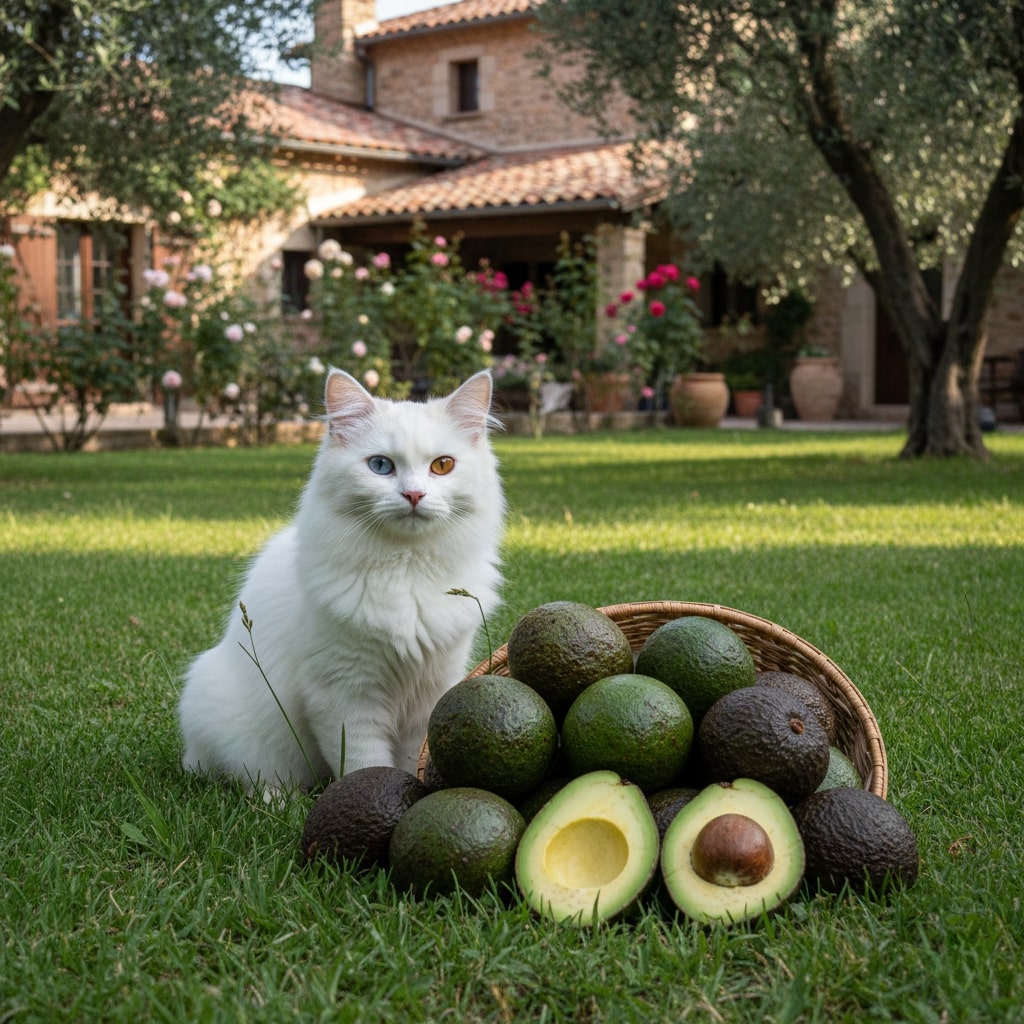
Yes, cats can eat a very small amount of avocado flesh, but it is not recommended. While the soft green “meat” is not lethal to cats, avocados contain a toxin called persin (mostly in the skin and pit) and are extremely high in fat. Eating too much can cause pancreatitis or stomach upset. Never feed your cat the skin, pit, or guacamole.
Summary Table: Are Avocados Safe for Cats?
| Part of Avocado | Safety Level | Risk Factor |
| Flesh (Meat) | Safe in tiny amounts | High fat content; risk of pancreatitis. |
| Skin (Peel) | UNSAFE | Choking hazard; higher persin concentration. |
| Pit (Seed) | DANGEROUS | Major choking hazard; intestinal blockage risk. |
| Leaves/Bark | TOXIC | Highest levels of persin toxin. |
| Guacamole | TOXIC | Often contains garlic/onion (poisonous to cats). |
Can Cats Have Avocados? Detailed Breakdown
If you are making toast or slicing up a salad, you might wonder if you can share a piece of avocado with your cat. While cats are curious eaters, avocado is a complicated food for felines.
This guide covers the safety risks, the dangers of persin, and why high-fat foods can be dangerous for your cat’s health.
1. The Main Problem: What is Persin?
Avocados contain a fungicidal toxin called persin.
- Where is it? It is most concentrated in the leaves, bark, skin, and pit of the avocado plant.
- Is it deadly to cats? Cats are actually more resistant to persin than other animals (like birds, rabbits, and horses, for whom it is deadly). However, in high enough doses, persin can still cause gastrointestinal distress in cats, including vomiting and diarrhea.
While the flesh of the avocado contains low levels of persin, it is rarely enough to cause severe poisoning in cats unless they eat a large amount.
2. The Hidden Risk: Pancreatitis
Even if we ignore the toxin, avocado is extremely high in fat.
Cats are obligate carnivores designed to eat lean proteins. Their digestive systems are not built to process large amounts of plant-based fats.
If a cat eats too much avocado, the high fat content can trigger pancreatitis (inflammation of the pancreas).
Symptoms of Pancreatitis:
- Repeated vomiting
- Lethargy
- Loss of appetite
- Abdominal pain (hunched back)
3. Choking Hazards and Obstructions
The biggest immediate danger to your cat is the pit (seed) and the skin.
- The Pit: If a cat plays with or tries to eat the pit, it can easily become lodged in their throat (choking) or cause a blockage in their stomach or intestines. Intestinal obstructions often require emergency surgery.
- The Skin: The tough, leathery texture of the skin is indigestible and can also cause blockages.
4. Can Cats Eat Guacamole?
No. Never.
Guacamole is far more dangerous than plain avocado. Most recipes include:
- Onions and Garlic: These are highly toxic to cats. They damage red blood cells and can cause anemia.
- Lime/Lemon Juice: Citrus causes stomach upset.
- Salt: Excessive salt is bad for a cat’s kidneys.
5. What Should I Do If My Cat Ate Avocado?
If your cat stole a small lick of plain avocado mash, they will likely be fine. However, you should monitor them closely.
Watch for these symptoms:
- Vomiting or diarrhea
- Refusal to eat
- Sluggishness or hiding
- Straining to poop (sign of blockage)
Action Step: If your cat ate the pit, the skin, or guacamole, contact your veterinarian or the ASPCA Animal Poison Control Center immediately.
6. Safe Alternatives to Avocado
If you want to give your cat a healthy treat, skip the fatty avocado and try these safer, nutrient-dense options:
- Plain Pumpkin: Great for digestion and fiber.
- Blueberries: High in antioxidants and safe in moderation.
- Cooked Chicken: Lean protein that fits their natural diet.
- Green Beans: A crunchy, low-calorie snack.
Final Verdict
While a tiny bite of plain avocado flesh likely won’t kill your cat, the risks of pancreatitis and stomach upset outweigh the benefits. It is best to keep the guacamole bowl out of reach and stick to treats made specifically for felines.