
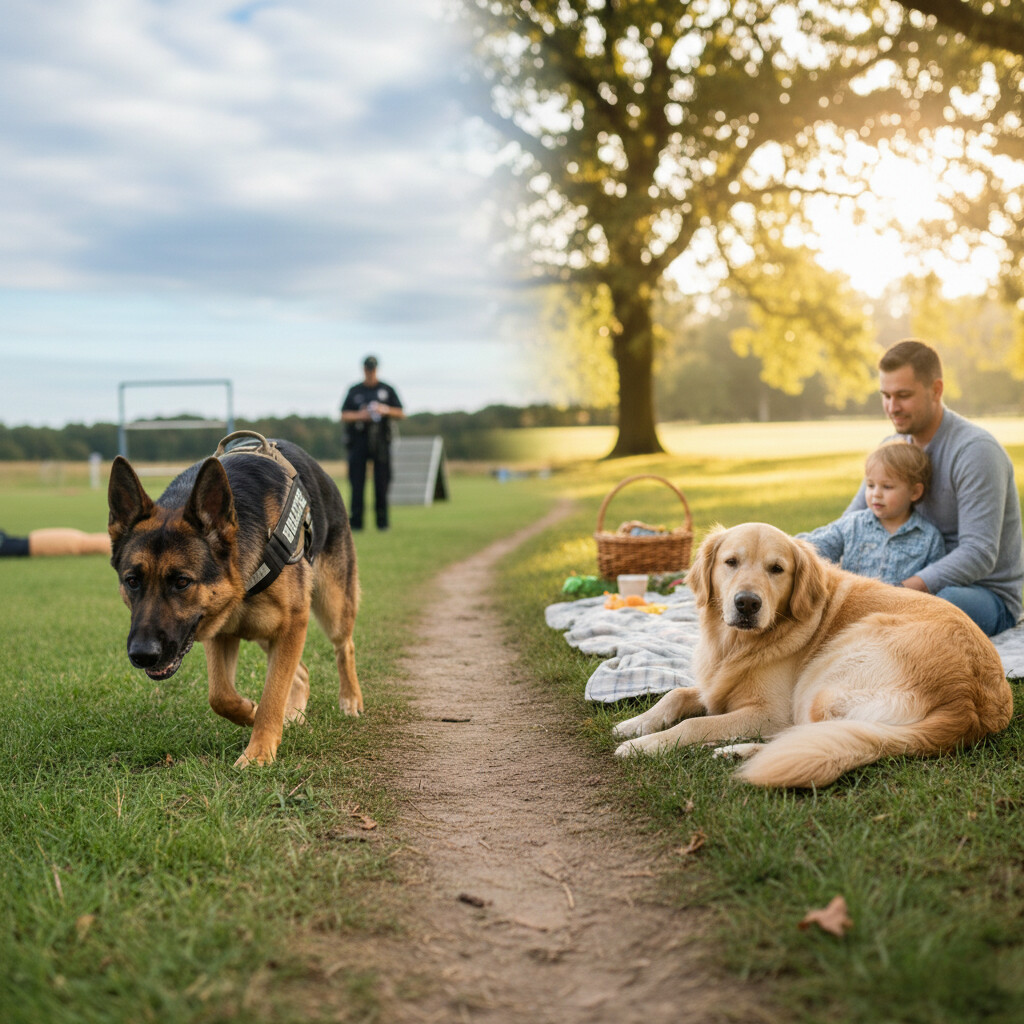
The main difference between a Working Dog and a Companion Dog is their purpose and energy level. Working dogs (like Shepherds, Collies, and Huskies) are bred to perform specific tasks such as herding, guarding, or hunting; they have high mental and physical energy needs and require a “job” to stay happy. Companion dogs (like Pugs, Shih Tzus, and Spaniels) are bred primarily for friendship; they have lower energy requirements and are content with moderate exercise and simply being near their owners.
Summary Table: Working Dogs vs. Companion Dogs
| Feature | Working Dogs | Companion Dogs |
| Primary Purpose | Performing tasks (herding, guarding, hunting) | Providing affection and company |
| Energy Level | Very High (Need hours of activity) | Low to Moderate (Need daily walks) |
| Mental Stimulation | Critical (Boredom leads to destruction) | Moderate (Play and interaction) |
| Independence | Often high; can make independent decisions | Advanced; need structured “work.” |
| Training Needs | Active owners, farms, and dog sports enthusiasts | Basic obedience and manners |
| Best For | Active owners, farms, dog sports enthusiasts | Families, seniors, apartment dwellers |
| Common Breeds | Border Collie, German Shepherd, Siberian Husky | Cavalier King Charles, French Bulldog, Bichon Frise |
Working Dogs vs. Companion Dogs: What’s the Difference?
Choosing a dog is one of the most exciting decisions you will make, but it is also one of the most critical. A common mistake new owners make is choosing a breed based on looks rather than “job description.”
Every dog breed was created with a specific purpose in mind. Understanding the difference between a Working Dog and a Companion Dog is the key to a happy household.
If you put a high-drive working dog in an apartment with nothing to do, you will have destroyed furniture. If you take a low-energy companion dog on a ten-mile hike, you will have an exhausted, unhappy pup.
This guide details exactly what separates these two categories so you can choose the best fit for your lifestyle.
Read Also: Best Dog Breeds for Apartment Living
What is a Working Dog?
A working dog is a canine that has been selectively bred over generations to perform practical tasks for humans. These aren’t just pets; they are partners in labor. Their genetics tell them that they need to do something.
While the American Kennel Club (AKC) has a specific “Working Group” (which includes breeds like Boxers and Great Danes), in the broader sense, “working dog” refers to any breed with a high drive to perform a function, including herding, hunting, and protection.
Key Characteristics of Working Dogs
- High Drive: They have an intense desire to chase, herd, pull, or guard. This isn’t something you can “train out” of them; it is their nature.
- Intelligence: They are often scary smart. They learn quickly, but can also learn how to open your fridge if they get bored.
- Stamina: These dogs are built to work 8 to 12 hours a day. A 20-minute walk around the block is rarely enough.
- Alertness: They are hyper-aware of their environment. A leaf blowing across the yard might trigger a reaction because they are wired to notice changes.
Common Working Breeds
- Herding: Border Collie, Australian Shepherd, Cattle Dog.
- Guarding/Protection: German Shepherd, Doberman Pinscher, Rottweiler.
- Sledding/Pulling: Siberian Husky, Alaskan Malamute.
What is a Companion Dog?
A companion dog is bred for one main job: to be your best friend. Their history doesn’t involve guarding castles or rounding up sheep on rugged terrain. Instead, their ancestors were bred to sit on laps, warm feet in drafty castles, and provide emotional comfort.
This does not mean they are “dumb” or “lazy.” It simply means their drive is directed toward social connection rather than physical labor.
Key Characteristics of Companion Dogs
- Affectionate: They thrive on human contact. They are often happier sitting on your foot than chasing a ball.
- Moderate Energy: While they still need exercise to stay healthy, they do not have the endurance to run marathons.
- Adaptability: They generally adjust better to different living situations, including apartments and city life.
- Low Prey Drive: They are less likely to chase squirrels into traffic (though every dog is an individual).
Common Companion Breeds
- Toy Breeds: Pug, Shih Tzu, Pomeranian, Chihuahua.
- Non-Sporting: French Bulldog, Boston Terrier, Bichon Frise.
- Gentle Sporting: Cavalier King Charles Spaniel (bred down from hunting spaniels to be lap dogs).
Read Also: The Importance of Early Socialization for Puppies
The 4 Major Differences You Must Know
When deciding between these two types, you are effectively deciding on your lifestyle for the next 10 to 15 years. Here is how they compare in the areas that matter most.
1. Energy and Mental Stimulation
This is the biggest deal-breaker for most owners.
Working Dogs need a job. If you don’t give them one, they will invent one, and you won’t like it. “Self-employed” working dogs often become destructive chewers, obsessive barkers, or escape artists. They need “mental gymnastics” like agility training, advanced obedience, or scent work.
- Requirement: 1-2 hours of intense physical exercise plus 30 minutes of mental training daily.
Companion Dogs need interaction. They can get bored, but their boredom usually results in pouting or following you room-to-room rather than eating through drywall. A few short walks and some indoor playtime are usually sufficient.
- Requirement: 30-60 minutes of moderate walking and play daily.
2. Temperament and Independence
Working Dogs can be independent thinkers. A livestock guardian dog (like a Great Pyrenees) is bred to make decisions without human help.
A Husky is bred to run ahead of the sled. This can be interpreted as “stubbornness” by novice owners. They love their owners, but they often prioritize “the mission” over cuddling.
Companion Dogs are often “Velcro dogs.” They were bred to be dependent on humans for emotional fulfillment. They are less likely to wander off and more likely to look to you for direction. This makes them easier to manage off-leash in casual settings, but can lead to separation anxiety if left alone too long.
3. Trainability
Working Dogs are high-performance vehicles. They learn commands incredibly fast, often in fewer than 5 repetitions. However, they require a confident handler. If you are inconsistent, they will outsmart you. They need to know why they are doing something.
Companion Dogs are generally eager to please but may not have the laser focus of a working breed. They might require more repetition to learn a trick, but they are often more forgiving of handler mistakes. They are motivated by praise and treats rather than the “joy of the work.”
4. Daily Maintenance and Cost
While vet bills and food costs vary by size, the “lifestyle cost” differs greatly.
- Working Dog Costs: You may spend more on training classes, durable toys (that can’t be destroyed in seconds), and potentially doggy daycare to burn off energy while you work.
- Companion Dog Costs: You may spend more on grooming (for breeds like Poodles or Shih Tzus) and potentially pet sitting, as they may struggle more with being alone.
Read Also: How to Introduce a Puppy to Other Pets?
The “Gray Area”: Can a Working Dog Be a Companion?
Yes, absolutely. Millions of Golden Retrievers, Labradors, and German Shepherds are beloved family pets. However, for a working breed to succeed as a companion, the owner must simulate work.
You cannot turn off their genetics, but you can channel them.
- For the Herder: Use a flirt pole (a toy on a string) to simulate chasing and herding.
- For the Scent Hound: Play “hide and seek” with treats around the house.
- For the Retriever: Play fetch until they are tired, not just until you are bored.
If you meet their biological needs for stimulation, a working dog can be the most loyal companion you will ever have. If you ignore those needs, they can become a liability.
Which One Is Right for You?
To win at dog ownership, you must be honest about your current lifestyle, not the lifestyle you wish you had.
Choose a Working Dog If:
- You are an active person who runs, hikes, or bikes daily.
- You are interested in dog sports like Agility, Dock Diving, or Schutzhund.
- You have a large yard or access to open spaces.
- You have the time and patience for advanced training.
- You want a dog that will push you to be more active.
Choose a Companion Dog If:
- You work long hours and want a dog that can relax when you get home.
- You live in an apartment or have limited outdoor space.
- You want a dog primarily for cuddling and emotional support.
- You are a first-time dog owner and want a more “forgiving” learning curve.
- You prefer a gentle stroll to a 5-mile run.
Conclusion
The difference between a working dog and a companion dog isn’t just a label; it’s a fundamental difference in how they view the world. Working dogs view the world as a series of problems to solve and tasks to complete. Companion dogs view the world as a place to share with you.
Neither is better than the other. A Border Collie is a disaster for a busy accountant living in a high-rise, but a Pug would be useless to a shepherd in the Scottish Highlands. By matching the dog’s purpose to your lifestyle, you ensure that both you and your dog live a fulfilled, happy life.