
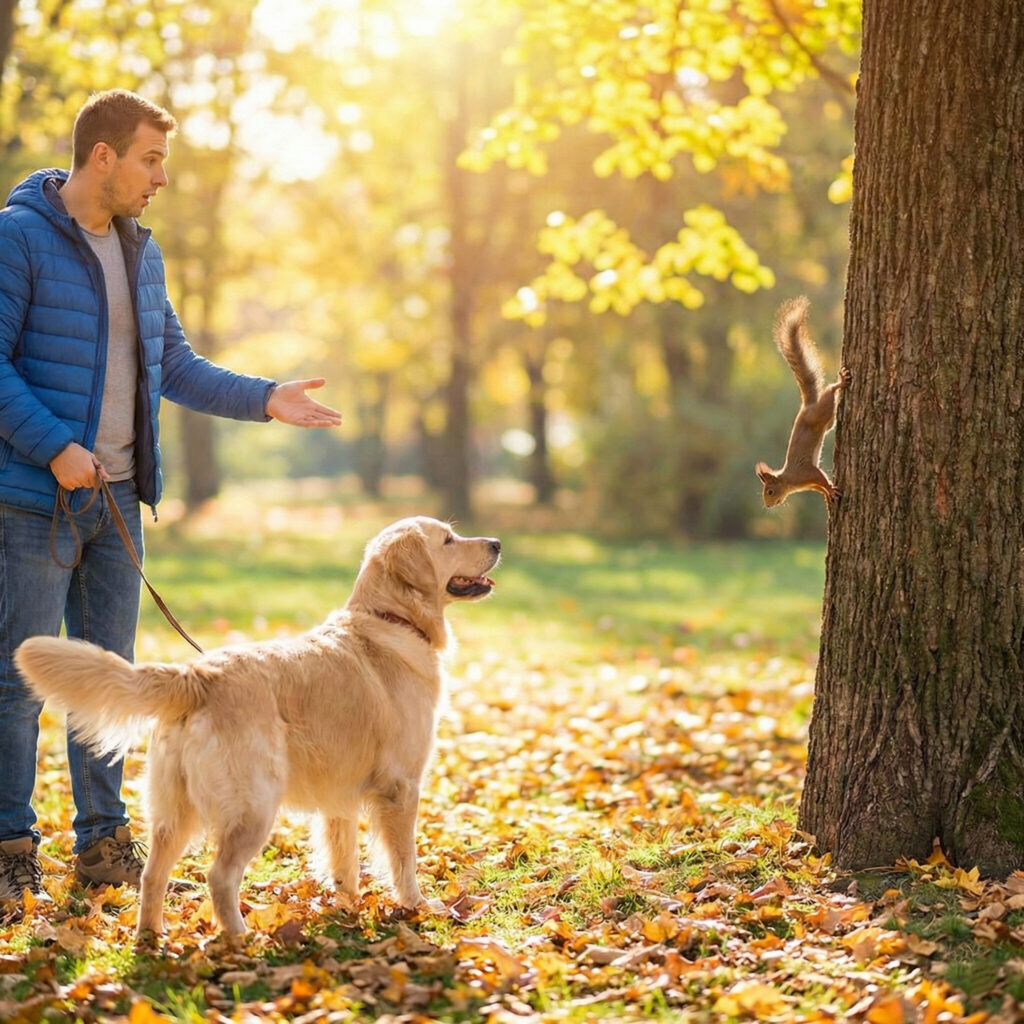
Dogs ignore commands outside primarily because they have not generalized the behavior to new environments or because the distractions (like smells, other animals, or noises) are more rewarding than the treat you are offering. Dogs are context-specific learners, meaning they may understand “sit” in your living room but fail to recognize the same command in a busy park. To fix this, you must “proof” the behavior by gradually increasing distractions and using higher-value rewards.
Summary Table
| Reason | Explanation | Quick Solution |
| Lack of Generalization | The dog thinks “sit” only applies indoors. | Practice in many different locations, starting with low-distraction areas. |
| Competing Motivators | The environment (squirrels, smells) is more interesting than you. | Use “high-value” treats (chicken, cheese) reserved only for walks. |
| Over-Arousal | The dog is too excited or anxious to focus. | create distance from the trigger until the dog is calm enough to eat. |
| Weak Reinforcement History | The dog learned that ignoring you has no consequence or is more fun. | prevent the dog from ignoring you by using a long leash (long line). |
| Unclear Communication | You are repeating commands or using different body language. | Say the command once. If they don’t listen, reset and help them succeed. |
Introduction: The “Deaf” Dog Syndrome
You have practiced for weeks in your kitchen. Your dog sits, stays, and comes when called perfectly on your rug. But the moment you step out the front door, it is like you don’t exist. You call their name, and their nose stays glued to the grass. You say “sit,” and they stare at a passing car.
This is not stubbornness. Your dog is not trying to make you mad. This is a common training hurdle involving how canine brains process information. When you move from a quiet home to the chaotic outdoors, the rules change for your dog. Understanding why this happens is the first step to fixing it.
Read Also: How Long Should a Dog Training Session Last?
Reason 1: Dogs Are Context-Specific Learners
The biggest reason dogs fail outside is that they do not generalize well. Humans are great at generalization. If you learn to read a book in a library, you can also read a book on a bus or at the beach. You understand that the skill of “reading” applies everywhere.
Dogs are different. They learn in pictures and specific contexts. When you teach your dog to “sit” in the kitchen, they learn: “When I am on the linoleum floor, near the fridge, and my owner is standing in front of me, putting my bottom on the ground gets me a treat.”
When you move to the sidewalk, the picture changes. The floor is now concrete. The smell is different. The wind is blowing. To your dog, this is a completely new scenario. They don’t automatically understand that “sit” applies here, too.
How to Fix It
- Change the scenery gradually: Don’t go straight from the kitchen to the dog park. Practice in the hallway, then the garage, then the driveway, and finally the sidewalk.
- Practice on different surfaces: Ask for commands on grass, concrete, gravel, and wood chips.
Reason 2: The Environment is More Rewarding Than You
Imagine you are at work earning your normal salary. Suddenly, someone offers you a million dollars to look out the window. You would probably stop working and look out the window.
This is what happens to your dog outside. Inside the house, your dry biscuit is the best thing available. Outside, the environment offers “million-dollar” rewards.
- Smells: Urine markings from other dogs, food wrappers, and wildlife trails.
- Sights: Squirrels, cats, blowing leaves, and other people.
- Sounds: Sirens, barking dogs, and car engines.
If you ask your dog to “come” for a dry piece of kibble, but ignoring you means they get to chase a squirrel, the math doesn’t work in your favor. The squirrel is the higher-value reward.
How to Fix It
- Upgrade your payment: When you go outside, leave the kibble at home. Bring real meat, string cheese, or hot dogs.
- Be more exciting: If you are boring, the dirt is more interesting. Use a happy, high-pitched voice and move backward to encourage engagement.
Reason 3: The Distraction Level is Above Their Threshold
Every dog has a “threshold” for learning. This is the level of distraction they can handle while still being able to think and listen.
- Under Threshold: The dog is calm, can eat treats, and can listen to commands.
- Over Threshold: The dog is panting heavily, lunging, whining, or completely fixated on a trigger.
If your dog is over their threshold, their brain effectively shuts down the learning center. They physically cannot hear you because their adrenaline is pumping too hard. Asking a dog to “sit” when they are lunging at a cat is like asking a human to do a math problem while skydiving.
How to Fix It
- Distance is your friend: If your dog ignores you, you are too close to the distraction. Move 20 feet away and try again.
- The Look Test: If your dog cannot look at you for one second, they are over the threshold. Move further away.
Reason 4: You Have “Poisoned” the Cue
“Poisoning the cue” is a trainer term for when a command loses its meaning or becomes negative. This happens frequently with recall (the “come” command).
If you go to the park and scream “COME! COME! COME!” ten times while your dog ignores you, you are teaching them that the word “come” is just background noise. They learn that they don’t actually have to obey.
Furthermore, if you only use the word “come” to end their fun (like leaving the park or getting a bath), they will learn to avoid that command.
How to Fix It
- Stop repeating yourself: Say the command once. If they don’t do it, help them (gently guide them with a leash) or wait until they are focused.
- Don’t call if you can’t enforce: Never call your dog if you are 100% sure they won’t come. It weakens the command. Use a long line (a 20-30 foot leash) so you can gently reel them in if they ignore you.
Read Also: Dog Training & Behavior Management
Reason 5: Fear and Anxiety
Sometimes ignoring a command isn’t about being distracted; it is about feeling unsafe. If a dog is nervous about garbage trucks, and one is driving by, they will not sit. Their survival instinct kicks in. They are too busy scanning for danger to perform a trick.
Signs of anxiety include:
- Lip licking
- Yawning when not tired
- Tail tucked between legs
- Ears pinned back
- Refusal to eat treats
How to Fix It
- Identify the trigger: Figure out what is scaring your dog.
- Desensitization: Let them observe the scary thing from a safe distance where they aren’t afraid, and feed them treats just for looking at it.
The Solution: A Step-by-Step Guide to Outdoor Focus
Now that you know why it happens, here is the protocol to fix it. This process is called Proofing.
Step 1: The Engagement Game
Before you ask for any commands (sit/stay), you need to capture their attention.
- Stand in a low-distraction outdoor area (like your driveway).
- Wait for your dog to look at you voluntarily. Do not say their name.
- The second they make eye contact, say “Yes!” (or click) and give a high-value treat.
- Repeat this 20 times. You are teaching them that checking in with you pays well.
Step 2: Name Recognition
- Say your dog’s name in a happy tone.
- When they turn their head to you, mark it with “Yes!” and reward.
- If they don’t turn, put the treat near their nose to lure their attention back to you, but don’t repeat the name.
Step 3: Add Distractions Gradually
Create a list of distractions from easiest to hardest. It might look like this:
- Empty driveway
- Sidewalk with no people
- Park bench with distant people
- Sidewalk with another dog across the street
- Busy dog park
Work on your commands at Level 1 until your dog is 90% successful. Only then move to Level 2. If they fail at Level 2, go back to Level 1.
Step 4: Use Premack’s Principle
This is a powerful psychology concept: “Eat your dinner (low probability behavior) to get dessert (high probability behavior).”
For dogs, “dessert” is the environment.
- Ask your dog to “Sit.”
- When they sit, your reward isn’t just a treat. You say, “Go sniff!” and let them sniff the tree they wanted to investigate.
- The reward for listening to you is getting access to the environment.
Read Also: When Is Panting Normal vs Dangerous?
Equipment That Helps
Using the right tools can prevent your dog from practicing the habit of ignoring you.
- The Long Line: A 15 to 30-foot leash. This gives the dog freedom to sniff and explore but keeps them attached to you. If you call them and they ignore you, you can prevent them from running off.
- The Treat Pouch: Fumbling with plastic bags takes too long. A pouch allows you to deliver a reward within 1-2 seconds, which is crucial for learning.
- Front-Clip Harness: If your dog is pulling and choking themselves, they are in a high state of arousal. A front-clip harness redirects their motion and helps keep them calmer.
Common Mistakes to Avoid
1. Training When the Dog is Tired or Full
If your dog just ate a huge meal, food rewards won’t work well. Train when they are slightly hungry. If they have been playing for an hour, they might be too mentally exhausted to focus.
2. Being Inconsistent
If you let your dog pull you to the park on Monday but correct them for pulling on Tuesday, they will be confused. Rules must be black and white.
3. Fading Treats Too Fast
Many owners stop giving treats as soon as the dog gets it right once. Outside is “hard mode.” You need to keep paying your dog for a long time. You can reduce treats only when the dog is perfect at the behavior in that specific environment.
Conclusion
A dog ignoring commands outside is not a broken dog. It is a normal dog acting on natural instincts. The outdoors is full of information, excitement, and biological triggers.
Your job is to become more interesting than the environment and to teach your dog that listening to you is the key to unlocking all the fun things the world has to offer. Be patient, increase your reward value, and practice consistently.