
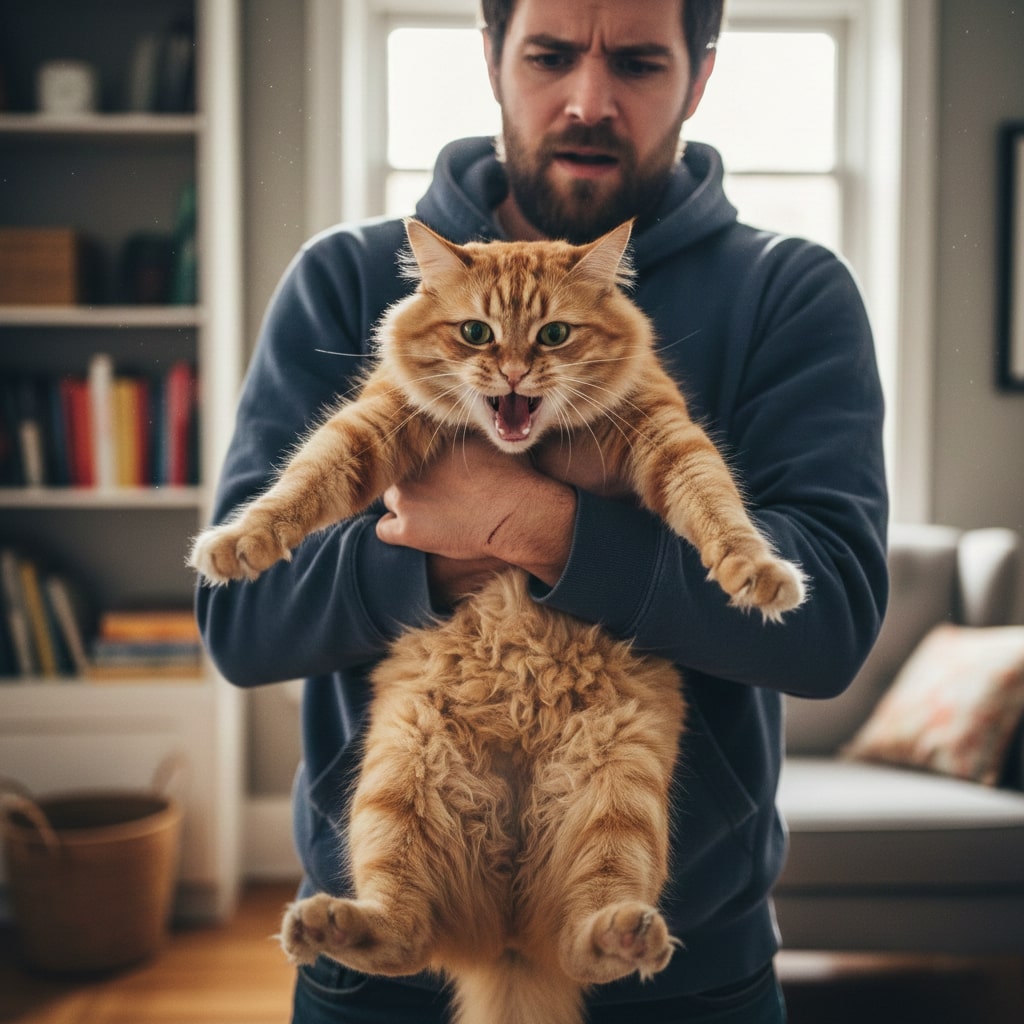
Cats are mysterious creatures. Sometimes they beg for attention, and other times they act like they don’t know you. One common behavior that confuses many cat owners is when a cat meows specifically when being picked up.
Is she happy? Is she hurting? Is she telling you to put her down?
The answer isn’t always simple because every cat is different. However, the reasons usually fall into a few clear categories: physical discomfort, fear, or simple communication.
Here is a breakdown of why your cat vocalizes when you lift her, and how to tell if it is a problem.
1. Physical Pain or Discomfort
The most serious reason a cat meows when touched or lifted is pain. If your cat usually doesn’t mind being held but suddenly starts crying out, this is a red flag.
- Arthritis: Older cats often suffer from stiff joints. Being lifted puts pressure on their spine and hips, which can hurt.
- Internal Issues: If you put pressure on her stomach and she meows, she might have a tummy ache, digestive issues, or an internal injury.
- Recent Injury: She might have a cut, a bruise, or a sore spot you can’t see under her fur.
What to do: If the meow sounds sharp, loud, or like a hiss, stop immediately. Check her gently for sensitive spots.
2. You Are Picking Her Up Incorrectly
Many people pick up cats the way they would pick up a human baby, by placing hands under the armpits and letting the legs dangle. Cats hate this.
When a cat’s heavy hind legs dangle without support, it puts a lot of strain on their spine and muscles. They meow to tell you, “Hey, this is uncomfortable!”
The Wrong Way to Lift:
- Grabbing by the scruff (the back of the neck).
- Lifting only by the front legs.
- Squeezing the stomach too tightly.
3. Fear or Anxiety
In the wild, the only time a cat is lifted off the ground is usually when a larger predator has caught them. Even though your cat trusts you, the sensation of leaving the ground can trigger a natural instinct to be afraid.
- Loss of Control: Cats love to be in control of their environment. Being 5 feet in the air takes away their ability to run or hide.
- Startle Reflex: If you pick her up while she is sleeping or eating, you might startle her. The meow is just a reaction to the surprise.
4. She Just Wants to Be Put Down
Sometimes, the meow is a polite (or not-so-polite) request. If your cat is independent, she might simply prefer keeping her four paws on the floor.
- Personality: Some breeds, like Ragdolls, love being held. Others, like Bengals or generic domestic shorthairs, often prefer to sit next to you, not on you.
- Bad Timing: She might have been on her way to the litter box, the food bowl, or a sunbeam. You interrupted her mission, and she is voicing her annoyance.
5. It’s Just a Greeting
Not all meows are negative. Some cats are naturally “talkative.”
If the meow is short, high-pitched, and accompanied by purring or rubbing her head against you, she is likely just acknowledging you. It’s her way of saying, “Hi human, I see you.”
How to Pick Up a Cat the Right Way
If you want to stop the complaining, you need to make sure your cat feels safe and supported.
- Announce yourself: Pet her gently first, so she knows you are there.
- Support the Chest: Place one hand under her chest, behind her front legs.
- Scoop the Back: Immediately place your other hand under her back legs and bottom.
- Hold Close: Pull her gently against your chest. This makes her feel secure and prevents her from wiggling.
Rule of Thumb: Imagine you are carrying a heavy box. You wouldn’t carry it by the top flaps; you would support it from the bottom. Do the same for your cat.
When to See a Vet
How do you know if the meowing requires professional help? Watch for these signs:
- Sudden Change: She used to love being held, but now she screams when you touch her.
- Aggression: The meow turns into a growl, hiss, or she tries to bite and scratch.
- Lethargy: She is hiding more than usual, not eating, or sleeping all day.
- Guarding: She protects a specific part of her body (like her stomach or leg) when you come near.
Summary
Most of the time, a cat meowing when picked up is simply communicating a preference or mild annoyance. She might be saying, “Support my back legs,” or “I’m busy right now.”
However, always listen to the tone of the meow. A soft chirp is usually fine; a loud yowl or growl means you should put her down and check for injuries. By respecting her boundaries and lifting her correctly, you can make being held a much nicer experience for both of you.