
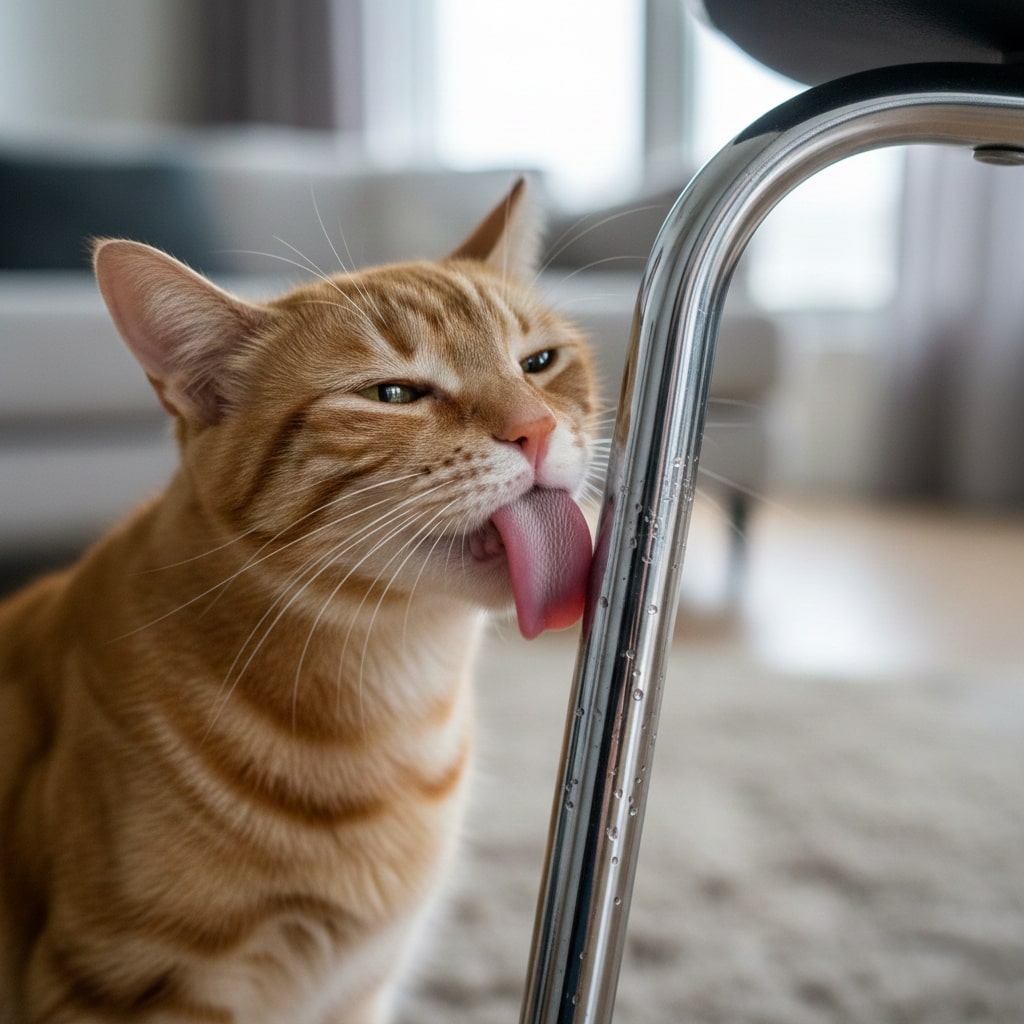
It can be quite a shock to look over and see your cat enthusiastically licking a radiator, a door handle, or a chair leg. While cats are known for their “quirks,” licking metal is a behavior that often leaves owners worried or confused.
Is it just a weird habit, or is something wrong? Here is a breakdown of the most common reasons why cats lick metal and what you should do about it.
1. Medical Reasons: The Body Seeking What It Needs
Often, when a cat licks a non-food item like metal, their body is trying to tell them something is missing.
- Anemia (Iron Deficiency): This is one of the most common medical reasons. If a cat is anemic, they have a low red blood cell count. In the wild, they might seek out minerals from the earth; in your home, they might lick metal objects because their instincts are searching for iron.
- Nutritional Deficiencies: If your cat’s food is lacking specific vitamins or minerals (like magnesium or certain salts), they may try to find them elsewhere.
- Kidney or Liver Issues: In some cases, metabolic changes caused by organ issues can change a cat’s sense of taste or create cravings for unusual textures and minerals.
2. The “Pica” Factor
Pica is a behavioral condition where a cat compulsively eats or licks things that aren’t food. This can include plastic, fabric, or metal. Pica usually stems from two main things:
Stress and Anxiety
Cats are creatures of habit. If there has been a big change—like a new pet, a move, or even a change in your work schedule—your cat might lick metal as a “self-soothing” mechanism, similar to how humans might bite their nails.
Boredom
If an indoor cat doesn’t have enough mental stimulation, they might start “investigating” household objects with their tongue just to pass the time. Metal is interesting because it feels and tastes very different from anything else in their environment.
3. Sensory Reasons: Temperature and Texture
Sometimes the answer is much simpler. Cats are very sensitive to their surroundings, and metal offers a unique sensory experience.
- It’s Cooling: On a hot day, metal stays much cooler than the air around it. A cat might lick a cold metal pipe or a bed frame simply to lower their body temperature.
- The Texture: A cat’s tongue is covered in tiny barbs called papillae. The feeling of those barbs dragging across a perfectly smooth, cold surface might be a sensation your cat simply finds “satisfying.”
4. Is Licking Metal Dangerous?
In most cases, a quick lick of a clean spoon or a door handle isn’t an emergency. However, there are real risks to watch out for:
- Heavy Metal Poisoning: If your cat licks or chews on older metal (like lead paint) or items containing zinc (like some coins or hardware), they could become very ill.
- Sharp Edges: Rusty metal or “burrs” on unfinished metal can cut a cat’s delicate tongue.
- Small Parts: If the metal object is small enough to be swallowed (like a screw or a paperclip), it can cause a life-threatening intestinal blockage.
What Should You Do?
If you notice this behavior becoming a frequent habit, follow these steps:
- Schedule a Vet Visit: Rule out anemia or nutritional gaps first. A simple blood test can tell you if your cat needs a change in diet or medication.
- Evaluate Their Diet: Ensure you are feeding high-quality, AAFCO-approved cat food that meets all their nutritional needs.
- Increase Playtime: Use interactive toys, food puzzles, or “cat TV” (a bird feeder outside a window) to keep their minds busy.
- Cat-Proof Your Home: Move small metal objects (coins, pins, jewelry) into drawers where your cat can’t reach them.
Pro Tip: If you think your cat is licking metal because they are hot, try providing a “pet cooling mat” or putting a couple of ice cubes in their water bowl instead.