
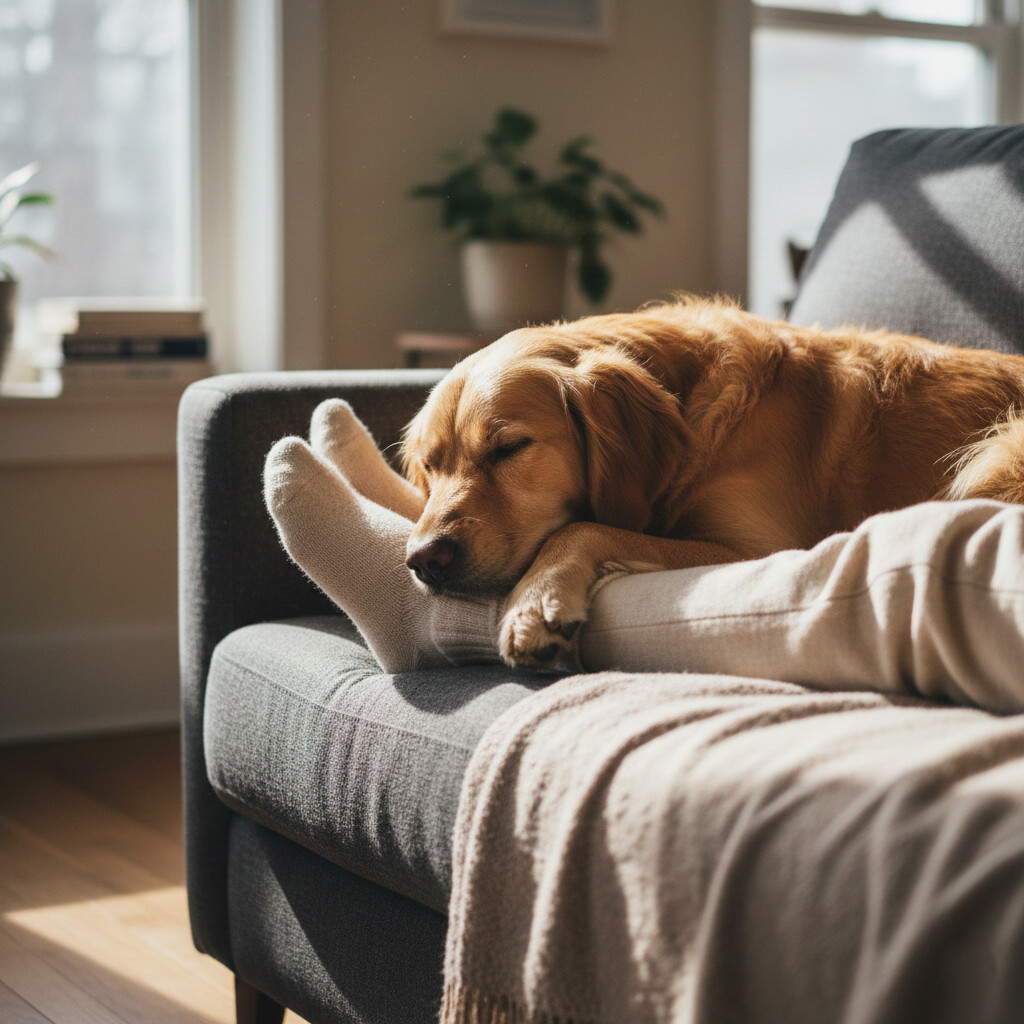
Dogs sleep at your feet primarily due to pack instincts, a desire for security, and emotional bonding. By touching you, they feel safe, can protect you from potential threats, and assert their connection to you as a trusted family member. It is also a way to monitor your movements and ensure they are not left behind.
Summary Table
| Reason | Primary Motivation | What It Means for You |
| Pack Mentality | Survival & Instinct | You are their leader and family; they stick with the group. |
| Protection | Defense | They are acting as a “sentry” to guard you while you rest. |
| Affection | Emotional Bonding | They love you and release oxytocin through physical touch. |
| Anxiety | Fear & Insecurity | They are afraid of separation and use you as a security blanket. |
| Temperature | Physical Comfort | You are a source of warmth (or they are seeking a cool floor). |
Why Do Dogs Sleep at Your Feet?
If you are a dog owner, you know the routine. You sit down on the couch or climb into bed, and within moments, your furry friend settles down right on top of your feet or presses their back against your legs. It is a heartwarming and sometimes foot-numbing behavior. But have you ever wondered why they do it?
Is it purely out of love? Are they trying to trip you? Or is there a deeper biological reason buried in their DNA?
The answer is a mix of evolution, affection, and psychology. Understanding why your dog sleeps at your feet can help you understand their emotional state and strengthen the bond you share.
Read Also: What Causes Sudden Fear in Dogs?
1. The Power of Pack Instincts
To understand your modern Labradoodle, you have to look back at their ancestor: the wolf. Dogs are pack animals by nature. In the wild, wolves sleep together in a “puppy pile” or close clusters. This isn’t just to be cute; it is a survival strategy.
Safety in Numbers
In the wild, a solitary wolf is vulnerable. Sleeping in a group offers 360-degree protection. When your dog curls up at your feet, they are replicating this ancient survival tactic.
They view you as a member of their pack (and often the leader). By sleeping touching you, they feel secure knowing that you are right there.
The Follower Mentality
There is an old theory regarding “alpha” dogs, but modern behavioral science suggests it is more about family dynamics than rigid military hierarchy.
However, dogs do look to their owners for guidance. Sleeping at your feet is a submissive and respectful position. They are essentially saying, “I trust you to lead, and I will follow where you go.”
2. The Guardian Role: Protecting the Pack
While your dog relies on you for safety, they also feel a duty to protect you. This is especially true for breeds known for guarding, like German Shepherds, Dobermans, or Rottweilers.
The Strategic Sentry Position
Think about where your feet are. They are usually facing the rest of the room or the door. By positioning themselves at your feet, your dog is acting as a sentry.
- Alertness: They can see what is coming toward you.
- Reaction Time: If a threat appears, they are in front of you, ready to intercept.
- Deterrence: Their presence alone signals that to get to you, one must get through them.
If your dog sleeps facing away from you while sitting at your feet, this is a strong sign of protective behavior. They are literally “watching your back” (or your front).
Read Also: Why Do Dogs Dig on Beds and Couches?
3. Emotional Bonding and Oxytocin
Not every action is about survival or war. A huge part of this behavior is simple, pure love. Dogs are emotional creatures capable of deep attachment.
The “Love Hormone”
When you pet your dog or cuddle with them, both of your brains release oxytocin. This is often called the “love hormone” or “cuddle chemical.” It creates feelings of trust, relaxation, and happiness.
- Physical Touch: Just like humans hold hands, dogs seek physical contact to maintain that chemical bond.
- Reassurance: Feeling your weight or warmth reassures them that they are loved and accepted.
If your dog leans on your legs while you are standing or rests their heavy head on your foot while you work, it is likely looking for an oxytocin hit.
4. Anxiety and Separation Issues
While affection is healthy, sometimes the need to be touching you stems from insecurity. This is common in rescue dogs or breeds prone to separation anxiety.
The “Velcro Dog” Phenomenon
Does your dog follow you into the bathroom? Do they panic when you close a door? If they sleep on your feet, it might be an attempt to prevent you from leaving.
- Motion Detection: If they are asleep on your feet, they will wake up the instant you move. This guarantees you cannot sneak away without them knowing.
- Security Blanket: Your presence reduces their cortisol (stress) levels. You are their emotional anchor in a scary world.
If this behavior is accompanied by whining, pacing, or destruction when you do leave, it is less about love and more about anxiety.
5. Temperature Regulation
Sometimes, the answer is practical. Dogs have a higher body temperature than humans (typically 101 to 102.5 degrees Fahrenheit), but they still seek comfort.
Sharing Body Heat
In the winter, your feet are likely under a blanket or wearing socks. Your dog may snuggle up to steal some of that warmth. This is mutual; they warm your cold toes, and you warm them.
Seeking Coolness
Conversely, if it is a hot summer day, your dog might lie across your bare feet because your skin is cooler than the ambient air, or they might just be sprawling out on the cool floor, and your feet happen to be the most convenient pillow.
6. Resource Guarding (The Dark Side)
While rare, sleeping at your feet can sometimes be a sign of resource guarding. In this context, you are the resource.
Spotting the Difference
How do you know if it is affection or possession?
- Healthy: The dog is relaxed. If a spouse or other pet approaches, the dog doesn’t mind.
- Unhealthy: The dog growls, stiffens, or snaps if someone else comes near you while they are at your feet.
This is a claiming behavior. The dog is saying, “This human is mine, back off.” If you notice this, it requires training to correct, as it can escalate into aggression.
7. It’s Just Comfortable!
Finally, we cannot ignore the layout of your furniture.
- Space: On a small couch or a twin bed, the foot of the bed might be the only place where there is room for them.
- Stillness: Your feet move less than your hands or torso while you sleep. If your dog wants a quiet rest without being jostled by your tossing and turning, the foot of the bed is the most stable real estate.
Read Also: Why Do Dogs Sleep on Their Backs?
Common Sleeping Positions and What They Mean
The specific way your dog sleeps at your feet can offer further clues to their mood.
The “Lean”
The Pose: The dog sits or stands and leans their entire weight against your shins.
The Meaning: This is a “dog hug.” It is a sign of affection and trust. They are relaxing their guard and relying on you for support.
The “Chinstrap”
The Pose: The dog lies flat but rests their chin heavily across your ankle or foot.
The Meaning: This is usually a monitoring tactic. They are resting, but the heavy pressure ensures they will feel it if you stand up. It is common in herding breeds that want to keep the flock (you) together.
The “Back-to-Back”
The Pose: The dog sits at your feet but faces outward, with their back pressing against your legs.
The Meaning: This is the ultimate defensive posture. They trust you enough to turn their back to you, and they are proactively guarding your space.
Is It Bad to Let Your Dog Sleep at Your Feet?
For most pet owners, this behavior is harmless and endearing. However, there are pros and cons to consider before encouraging it.
The Benefits
- Bonding: It strengthens the human-animal bond.
- Stress Relief: It lowers blood pressure for both the dog and the human.
- Warmth: It acts as a natural heater on cold nights.
The Drawbacks
- Sleep Quality: If you have a 70-pound Labrador sitting on your feet, you might not sleep well. You might wake up with cramps or pins and needles.
- Dirt and Allergens: Dogs track in pollen, dust, and dirt. If they are in your bed, those allergens are in your sheets.
- Tripping Hazard: If you wake up in the middle of the night to use the restroom, a black dog sleeping on a dark rug is a major tripping hazard.
How to Stop the Behavior (If You Want To)
If you love your dog but need your personal space, or if your feet are falling asleep,p you can train your dog to sleep elsewhere without hurting their feelings. This involves positive reinforcement.
Step 1: Create a Dedicated Space
Buy a high-quality, comfortable dog bed. It should be just as appealing as your feet. Place it very close to where you usually sit or sleep.
Step 2: The “Place” Command
Teach your dog the “place” or “bed” command.
- Lure them to their bed with a treat.
- Say “Bed.”
- When they lie down, reward them heavily with treats and praise.
Step 3: Redirect Gently
When your dog approaches your feet:
- Do not scold them.
- Gently guide them to their bed.
- Reward them when they settle there.
Step 4: Consistency is Key
If you let them sleep at your feet on weekends but kick them off on weekdays, they will be confused. You must be consistent. Over time, they will learn that the dog bed is their safe spot, and they can still be near you without being on you.
Frequently Asked Questions
Does sleeping at my feet mean my dog is dominant?
No. Dominance theory has been largely debunked. Sleeping at your feet is usually a sign of attachment or protection, not a desire to control you. In fact, it is often a submissive gesture.
Why does my dog sit on my feet but not my husband’s?
Dogs often bond most intensely with one person (the “primary caregiver”). If they choose your feet, you are likely their favorite person or the one they feel most protective of.
Should I worry if my dog suddenly stops sleeping at my feet?
Sudden changes in behavior can indicate illness or pain. If an older dog stops sleeping at your feet, they might have arthritis that makes climbing up or getting down difficult, or they may be overheating. Consult a vet if the behavior changes abruptly.
Conclusion
Ultimately, if your dog sleeps at your feet, take it as a compliment. It is one of the clearest signs of canine devotion. Whether they are guarding you from the mailman, seeking comfort from a thunderstorm, or just showing you love, they have chosen you as their safe place.
Unless it is causing you pain, sleep disruption, or displaying aggression, there is no need to change it. Enjoy the connection, the warmth, and the silent language of love that your dog speaks.