
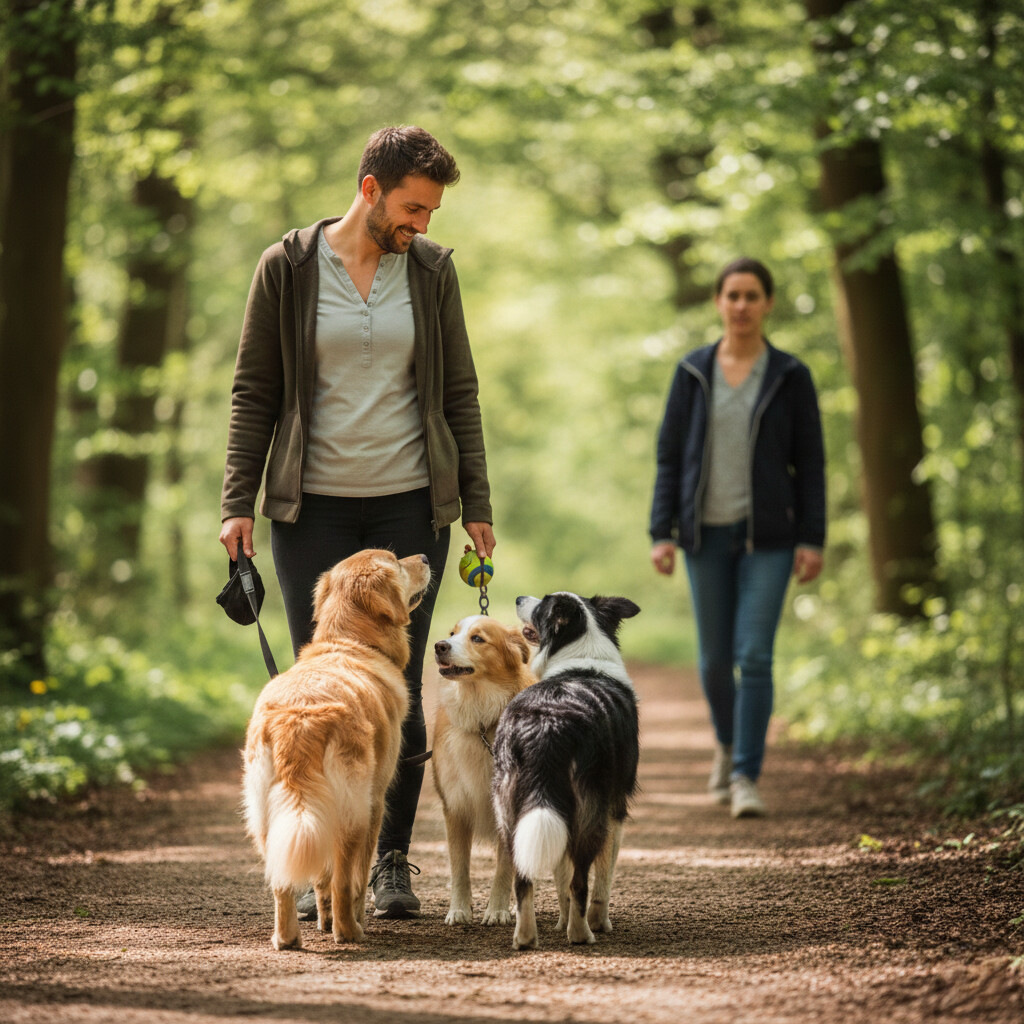
Dogs typically follow the person they associate with the most positive outcomes, such as food, safety, and affection. This behavior is driven by positive reinforcement, early socialization (imprinting), and the dog’s instinct to stay close to their perceived “safe base.” While breed genetics play a role, the person who provides the most consistent care and attention usually becomes the dog’s favorite.
Summary Table
| Key Factor | Description | Primary Driver |
| Positive Reinforcement | The dog learns that following you leads to treats, pets, or praise. | Learned Behavior |
| Imprinting | Bonding that occurs during the critical puppy development stage (birth to 6 months). | Early Development |
| Resource Control | The person who usually feeds, walks, or plays with the dog. | Survival Instinct |
| Breed Traits | “Velcro dogs” (like Shepherds or Vizslas) are genetically bred to work closely with humans. | Genetics |
| Separation Anxiety | Following due to fear of being left alone, rather than just affection. | Emotional Distress |
Why Do Dogs Follow Certain People More Than Others?
Have you ever tripped over your dog while walking to the kitchen? Does your furry friend wait outside the bathroom door while you shower? If you are the chosen favorite in your household, you know the feeling of having a constant shadow.
Many dog owners wonder why their pet picks one specific family member to follow everywhere, even if other people live in the house. It is not just a random chance.
Canine behavior is complex, but it usually boils down to a mix of bonding, psychology, and survival instincts.
Understanding why your dog follows you can help you strengthen your bond and recognize if their behavior is healthy affection or a sign of anxiety.
Read Also: Why Do Dogs Sniff Each Other So Much?
1. The Power of Early Bonding and Imprinting
The most common reason a dog chooses a specific person is timing. There is a critical period in a dog’s life, usually between birth and six months of age, where their brain is soaking up information about the world. This is often called the imprinting stage.
During this time, puppies form their strongest social attachments. If you were the primary person interacting with the dog during this window, you likely have a permanent spot as their “number one.”
This does not mean an older adopted dog cannot bond with you, but the bond formed during puppyhood is uniquely intense.
Key Elements of Imprinting:
- Safety: The puppy learns who keeps them safe from scary sounds or new environments.
- Consistency: The person who was there every day creates a predictable, comforting routine.
- Smell and Sound: Puppies memorize the scent and voice pitch of their primary caregiver.
If you adopted your dog later in life, do not worry. Imprinting is powerful, but adult dogs are highly adaptable. They can form new, deep attachments with whoever steps into that caregiver role.
2. You Are the Source of Resources
At their core, dogs are pragmatic animals. They need to survive, and in a domestic setting, survival depends on humans. In the world of animal behavior, this is often referred to as resource holding potential.
The person who controls the resources usually gets the most attention. If you are the one who fills the food bowl every morning at 7:00 AM, creates the exciting “walkies” routine, and hands out the high-value treats, your dog is going to stick to you like glue.
Resources That Drive Following Behavior:
- Food and Water: The provider of meals is the most important figure in the dog’s day.
- Access to Outdoors: The person who opens the door for potty breaks or walks.
- Play and Toys: The person who initiates games of fetch or tug-of-war.
If you want your dog to pay more attention to a spouse or roommate, the easiest fix is to have that person take over feeding duties for a few weeks. The focus will likely shift as the dog realizes the “resource guard” has changed.
3. The Science of Positive Reinforcement
Dogs are masters of association. They learn through immediate consequences. This is the foundation of operant conditioning. Every time your dog follows you into the kitchen and you casually toss them a piece of cheese, you have trained them to follow you.
Even if you aren’t giving them food, you might be giving them attention. If they follow you to the couch and you scratch behind their ears, that is a reward. If they follow you to the desk and you talk to them in a sweet voice, that is a reward.
Unintentional Training:
We often train our dogs to be shadows without realizing it.
- The Action: The dog walks behind you.
- The Reward: You look at them, talk to them, or touch them.
- The Result: The dog repeats the action to get the reward again.
If your dog ignores other family members, it might be because those people ignore the dog. Dogs go where the engagement is. If you interact with your dog 50 times a day and your partner only interacts with them 5 times, you are 10 times more interesting to follow.
Read Also: What It Means When a Dog Growls While Playing
4. Breed Genetics and “Velcro” Traits
Not all dogs are created equal when it comes to personal space. Centuries of selective breeding have hardwired certain personality traits into different dog breeds.
Some dogs were bred to work independently at a distance from humans, while others were bred to work side-by-side with a handler or sit on a royal lap.
Common “Velcro” Breeds:
These breeds are notorious for sticking close to their owners:
- Herding Dogs (Border Collies, Australian Shepherds): These dogs are bred to watch their handler for subtle hand signals and whistles. They follow you because they are waiting for a job to do.
- Working Dogs (Dobermans, Boxers): Often bred for protection or partnership, they feel a duty to stay near their “charge.”
- Toy Breeds (Chihuahuas, Pugs, Shih Tzus): These are companion animals. Their historical job was literally to sit with people and provide warmth and company.
Independent Breeds:
On the flip side, some breeds are naturally more aloof.
- Livestock Guardians (Great Pyrenees): Bred to sit in a field with sheep, independent of human instruction.
- Hounds (Bloodhounds, Beagles): Driven by their nose. If they catch a scent, they might care more about the smell than where you are going.
- Northern Breeds (Huskies, Shiba Inus): Known for being cat-like and independent.
If you have a German Shepherd, following you is in their DNA. If you have a Shiba Inu who follows you everywhere, it is a massive compliment to your bond because it goes against their natural grain.
5. The “Pack Mentality” and Leadership
There is a lot of outdated information about dogs being “pack animals” who follow an “alpha.” Modern animal science has debunked the strict alpha-wolf dominance theory for domestic dogs, but the concept of a family group remains true.
Dogs are social animals. In the wild, being alone means being vulnerable. Following a trusted leader or family member is a survival tactic.
Why They Choose You as the Leader:
It is not because you are the “toughest” or the most “dominant.” It is usually because you provide direction.
- You decide when the walk happens.
- You decide when the play starts and stops.
- You remain calm in stressful situations.
If a dog feels unsure about their environment, they will look for the person who seems the most confident and stable. If you are the one who navigates the world with confidence, your dog will naturally draft behind you like a cyclist drafting behind a teammate. You break the wind; you clear the path.
6. Companionship and Oxytocin
Sometimes, the answer is simply love. When dogs and humans gaze into each other’s eyes or cuddle, both species release oxytocin. This is often called the “love hormone” and is the same chemical released when a mother bonds with her infant.
For your dog, being near you feels physically good. It lowers their heart rate and reduces stress hormones like cortisol. Following you is a way to maintain that chemical “high” of comfort and safety. If you are the person they have the strongest oxytocin response to, they will physically crave your presence.
Read Also: Why Do Dogs Get Zoomies?
7. Separation Anxiety vs. Healthy Attachment
While it is sweet to have a shadow, there is a fine line between a dog who loves you and a dog who is terrified of being alone. It is important to distinguish between a “Velcro dog” and a dog suffering from separation anxiety.
Signs of Healthy Attachment:
- The dog follows you, but can settle down if you close a door.
- The dog is happy to see you, but doesn’t panic when you leave.
- The dog can sleep in a different room without whining.
Signs of Separation Anxiety:
- Panic: The dog scratches at doors or barks incessantly if you go to the bathroom without them.
- Destruction: Chewing furniture or digging at carpets when you leave the room.
- Physical Symptoms: Panting, drooling, or pacing when you prepare to leave (picking up keys, putting on shoes).
If your dog follows you out of anxiety, they aren’t following you because they enjoy your company; they are following you because they are in a state of panic. This requires behavior modification training, desensitization, and potentially the help of a professional trainer.
Identifying the “Safe Base” Effect
Psychologists use a term called the secure base effect to describe the relationship between children and parents. Interestingly, this applies perfectly to dogs and owners.
Think of a child at a playground. They run off to play, but every few minutes, they look back or run back to their parent to “recharge” their confidence before running off again.
If your dog follows you from room to room, you are their safe base. When you move to the kitchen, the “base” has moved, so they must move too. They cannot relax if their anchor has drifted away.
This is especially common in rescue dogs who may have experienced abandonment in the past. They are constantly checking to make sure their safety net is still there.
How to Manage a Clingy Dog
If you love your dog but need a little personal space, you can train them to be more independent without breaking their heart. You do not want to punish them for following you, as this can damage the bond. Instead, you want to reward independence.
Steps to Encourage Independence:
- The “Place” Command: Teach your dog to go to a specific mat or bed and stay there. Start with short durations (10 seconds) and work up to longer periods (30 minutes). Give them a high-value chew toy that they only get when they are in their “place.”
- Desensitization: Practice getting up and walking out of the room, then immediately returning without making a fuss. Do this 20 times in a row. The dog will eventually realize that you leaving isn’t a big deal because you always come back.
- Enrichment Games: Give the dog a puzzle toy or a treat-filled Kong in the living room while you go to the kitchen. This teaches them that good things can happen even when you are not right next to them.
- Share the Load: Have other family members feed, walk, and train the dog. This spreads the bond across multiple people, making the dog less reliant on just one person.
Conclusion
So, why does your dog follow you? It is a compliment of the highest order. You are their provider, their protector, and their best friend. Whether it is because of the treats you carry, the breed they are, or the deep bond you formed when they were a puppy, your dog sees you as the center of their universe.
While it can sometimes be overwhelming to have a furry audience in the bathroom, remember that their time with us is short. To them, you are their whole life. So, let them tag along.