
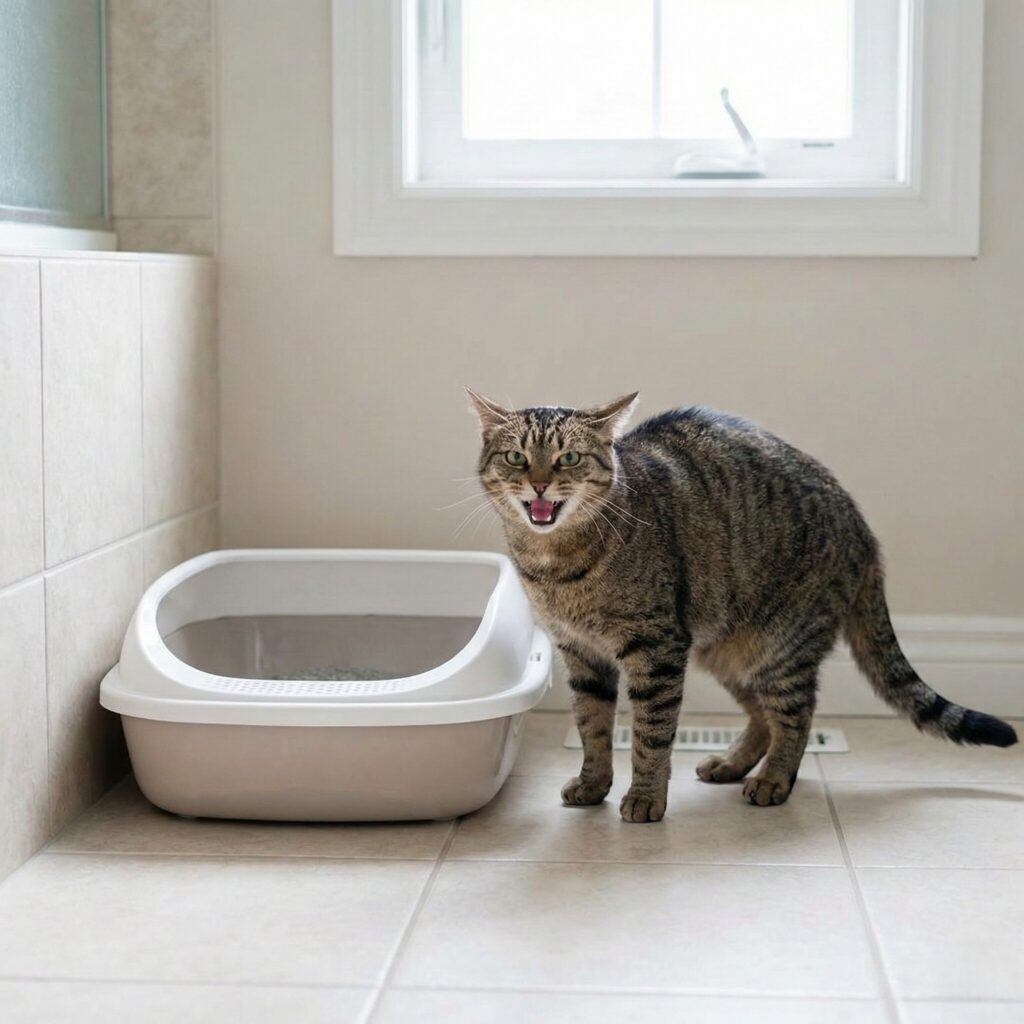
Cats vocalize before using the litter box primarily to communicate pain, stress, or dissatisfaction. The most common medical causes include urinary tract infections (UTIs), constipation, kidney stones, or arthritis, which cause the cat to cry out in anticipation of painful elimination. Behavioral reasons include anxiety, territorial marking, cognitive dysfunction in older cats, or simply announcing their presence. If the vocalization is new, frequent, or accompanies straining, immediate veterinary attention is required to rule out life-threatening blockages.
Summary Table: Common Reasons for Litter Box Vocalization
| Category | Potential Cause | Key Symptoms | Recommended Action |
| Medical (Urgent) | Urinary Tract Infection (UTI) | Frequent urination, blood in urine, licking genitals | Visit vet immediately for antibiotics. |
| Medical (Emergency) | Urethral Blockage | Straining without producing urine, hard belly, crying | Emergency Vet ASAP. This is fatal if untreated. |
| Medical | Constipation | Straining, dry/hard stool, lack of appetite | Vet visit for stool softeners or diet change. |
| Physical | Arthritis/Joint Pain | Difficulty entering box, stiffness, hesitation | Use a low-entry box; consult vet for pain management. |
| Behavioral | Stress/Anxiety | Hiding, over-grooming, changes in routine | Identify stressors; try pheromone diffusers. |
| Environmental | Dirty Litter Box | Scratching outside box, balancing on rim | Clean box daily; deep clean weekly. |
| Cognitive | Feline Dementia | Disorientation, howling at night, staring at walls | Consult vet for management strategies. |
Why Do Cats Vocalize Before Using the Litter Box?
Hearing your cat meow, yowl, or cry before they step into their litter box can be confusing and worrying. Cats are generally private animals when it comes to bathroom habits. In the wild, eliminating waste makes an animal vulnerable to predators. Therefore, most cats instinctively prefer to do their business quietly and quickly.
When a cat breaks this instinct to vocalize, they are trying to communicate something specific. It is rarely “just because.” The sound usually indicates a physical sensation, an emotional state, or a reaction to their environment. As a cat owner, you must act as a detective to determine if your cat is simply announcing their bathroom trip or if they are in serious pain.
Read Also: How Cats Communicate Boundaries
This guide details the medical, behavioral, and environmental reasons why cats vocalize before elimination and provides actionable steps to help your feline friend.
1. Medical Reasons for Vocalization
You should always assume a medical cause first. Cats are masters at hiding pain. By the time they are vocalizing about it, the pain may be significant. If your cat suddenly starts making noise before, during, or after using the box, a veterinary visit is the safest first step.
Urinary Tract Infections (UTIs)
A Urinary Tract Infection is one of the most common reasons a cat will cry out before urinating. The infection causes inflammation and a burning sensation.
When the cat feels the urge to go, they anticipate the pain that is about to happen. This anticipation causes them to vocalize.
Signs of a UTI:
- Frequent trips to the litter box with little output.
- Licking the genital area excessively.
- Urinating outside the litter box.
- Blood in the urine.
Feline Idiopathic Cystitis (FIC)
FIC is a complex condition often triggered by stress. It causes the bladder wall to become inflamed even without a bacterial infection. The symptoms mimic a UTI perfectly.
The pain is intense, causing the cat to growl or yowl before they attempt to urinate. This condition can flare up when a household routine changes, such as a move or a new pet.
Urethral Obstruction (Blockage)
This is a critical medical emergency. It occurs when crystals, stones, or mucus plugs block the urethra. It is most common in male cats. If a cat is blocked, they cannot urinate. Their bladder fills up and becomes hard, which is agonizingly painful.
Warning Signs of Blockage:
- Yowling or screaming before and during attempts to urinate.
- Straining hard but producing no urine or only a drop.
- Vomiting or lethargy.
- A firm, painful abdomen.
If you suspect a blockage, do not wait. Take your cat to an emergency vet immediately.
Constipation and Megacolon
Cats can suffer from constipation just like humans. If a cat is constipated, the act of pushing is painful and difficult. They may pace around the box and meow loudly as they try to work up the courage to push.
In severe cases, this can lead to megacolon, where the colon stretches and loses its ability to move stool. This condition requires medical intervention to manage.
Symptoms of Constipation:
- Dry, hard, or small stools.
- Straining for long periods.
- Vocalization that sounds like grunting or deep meowing.
- Loss of appetite.
Arthritis and Joint Pain
Older cats frequently suffer from osteoarthritis. If your cat is vocalizing before they even get into the box, look at the box itself. Is it high-sided? Does it require a jump?
For an arthritic cat, climbing into a standard litter box can be physically painful. They may stand in front of the box and cry because they need to go but know that entering the box will hurt their hips or knees.
Read Also: Why Does My Cat Meow While Pooping?
2. Behavioral and Psychological Reasons
Once your veterinarian has ruled out medical issues, you can look at behavioral causes. Cats are sensitive creatures. Their bathroom habits are deeply tied to their sense of security and territory.
Stress and Anxiety
An anxious cat is a vocal cat. Changes in the household can make a cat feel unsafe when they are in the vulnerable position of using the litter box.
If you have guests, loud construction noise nearby, or a new pet, your cat might vocalize to express their nervousness. They are essentially saying they feel unsafe and are checking for threats before they commit to using the box.
Territory Marking
In multi-cat households, the litter box is a prime location for territorial disputes. A cat might vocalize before entering to announce their presence to other cats. It serves as a warning: “I am going in here, stay away.” This is common if you do not have enough litter boxes for the number of cats you own. The general rule is one box per cat, plus one extra.
Seeking Attention
Some cats learn that vocalizing gets your attention. If you have previously run over to check on them when they meowed near the box, they may have learned that this is a good way to get you to look at them.
While less common than pain-related vocalization, some high-energy breeds like Siamese cats are simply chatty and narrated their every move, including bathroom trips.
Cognitive Dysfunction Syndrome (CDS)
As cats age, they can develop a condition similar to dementia or Alzheimer’s in humans. This is called Cognitive Dysfunction Syndrome. Senior cats with CDS often become disoriented and confused.
They may forget where the litter box is or feel confused about the urge to eliminate. This confusion often manifests as loud yowling or howling, particularly at night or right before they perform a routine task like using the litter box.
Read Also: Why Is My Cat Losing Hair Around His Eyes?
3. Litter Box Environment Issues
Cats are fastidious regarding cleanliness. If they are unhappy with the state of their toilet, they will let you know. Vocalizing before using the box can be a complaint about the facility you have provided.
The Box is Dirty
If the litter box has not been scooped recently, your cat may walk up to it, smell it, and meow in protest. They are debating whether to step into the dirty litter or hold it. Many cats refuse to step on wet or soiled clumps. If they eventually go in, they might stand on the very edge or balance on the rim to avoid touching the mess.
Dislike of Litter Texture
Cats have preferences for what they step on. Some cats hate the feel of clay pellets, while others dislike silica crystals or pine pellets. If you recently changed the type of litter, your cat’s vocalization might be a sign of displeasure. They are expressing hesitation because the surface feels wrong or smells strange to them.
Poor Location
The location of the litter box matters. If the box is next to a loud washing machine, a furnace, or in a high-traffic hallway, the cat may feel trapped. They may vocalize before entering to check if the “coast is clear.” A box placed in a dead-end corner can also cause anxiety because the cat feels they have no escape route if another pet approaches.
Read Also: Why Is My Cat Scratching the TV?
Analyzing the Sound: Meow vs. Yowl vs. Cry
Listening closely to the type of sound your cat makes can give you clues about the underlying cause.
The Standard Meow
A short, standard meow often indicates a mild complaint or a routine announcement. If your cat walks to the box, gives a short “meow,” and then uses it without straining, it might be behavioral or a minor environmental complaint like a dirty box.
The Yowl
A yowl is a long, drawn-out moan. This sound is often associated with distress. In unspayed female cats, this can be a sign of being in heat. However, if the cat is spayed or neutered, a yowl is a strong indicator of confusion (dementia) or territorial stress.
The Cry or Scream
High-pitched crying or screaming is the red flag for acute pain. This is the sound most commonly associated with urethral blockages or severe cystitis. If you hear this sound, check your cat immediately. If they are straining, this is a medical emergency.
Read Also: Why Does My Cat Sleep Face Down?
Action Plan: What You Should Do
If you notice your cat vocalizing before using the litter box, follow this step-by-step plan to resolve the issue.
Step 1: Observational Check
Watch your cat when they go to the box. Do not disturb them, but observe closely.
- Are they straining?
- Are they licking themselves immediately after?
- Is urine coming out in a stream or just drops?
- Is the stool hard?
- Is there blood?
Step 2: The Scoop Test
Go to the litter box immediately. Scoop it clean. Sometimes the solution is as simple as removing waste that was offending your cat. While cleaning, inspect the clumps. Small, coin-sized urine clumps can indicate a UTI or blockage, whereas large clumps generally indicate a healthy bladder output.
Step 3: Veterinary Visit
If the behavior continues for more than 24 hours, or if it is accompanied by any signs of pain, schedule a vet appointment. You will likely need to bring a urine sample. Your vet can perform a urinalysis to check for crystals, bacteria, and blood. They may also palpate the abdomen to check for constipation.
Step 4: Evaluate the Environment
If the vet gives your cat a clean bill of health, look at your home environment.
- Add more boxes: Ensure you have enough boxes for your cats.
- Change the location: Move a box to a quiet, low-traffic area.
- Switch litter: Try a scent-free, soft, clumping litter. Most cats prefer this over scented or pellet-style litters.
- Upgrade the box: If you have a senior cat, buy a box with a low entry point so they can walk in easily without jumping.
Step 5: Stress Management
For anxiety-related vocalization, consider using feline pheromone diffusers. These plug-in devices release synthetic pheromones that mimic the “happy cat” scent, helping to calm nervous pets. Ensure your cat has high places to perch and hiding spots where they can feel secure.
Read Also: How Long Can a Cat Go Without Pooping?
Prevention Tips for the Future
Preventing litter box issues is easier than fixing them. Maintaining a healthy bathroom routine for your cat will save you from future worry and vet bills.
1. Hydration is Key
Many urinary issues, including crystals and cystitis, are exacerbated by dehydration. Cats have a low thirst drive. Feed your cat wet food to increase their water intake. You can also use a cat water fountain, as running water encourages many cats to drink more.
2. Daily Maintenance
Scoop the litter box at least once a day. Twice a day is even better. Wash the entire box with mild soap and warm water once a month. Avoid strong chemical cleaners like bleach or ammonia, as these smells can repel cats.
3. Weight Management
Overweight cats are more prone to urinary issues and arthritis. Keeping your cat at a healthy weight reduces the strain on their joints and helps them maintain proper hygiene habits.
4. Senior Care
As your cat ages, anticipate their needs. Start joint supplements early if recommended by your vet. Switch to low-entry litter boxes before they start showing signs of struggle.
Conclusion
Vocalizing before using the litter box is a clear signal that your cat needs your help. It is a deviation from their natural instinct to be quiet and discreet. While it might just be a quirk or a complaint about a dirty box, it is frequently the first symptom of painful conditions like UTIs, blockages, or arthritis.
Never punish a cat for making noise or having accidents. They are not doing it to be difficult. They are communicating distress. By observing their behavior, consulting your veterinarian, and maintaining a clean and safe environment, you can ensure your cat remains healthy and comfortable. Always choose caution and consult a professional when your pet’s behavior changes abruptly.