
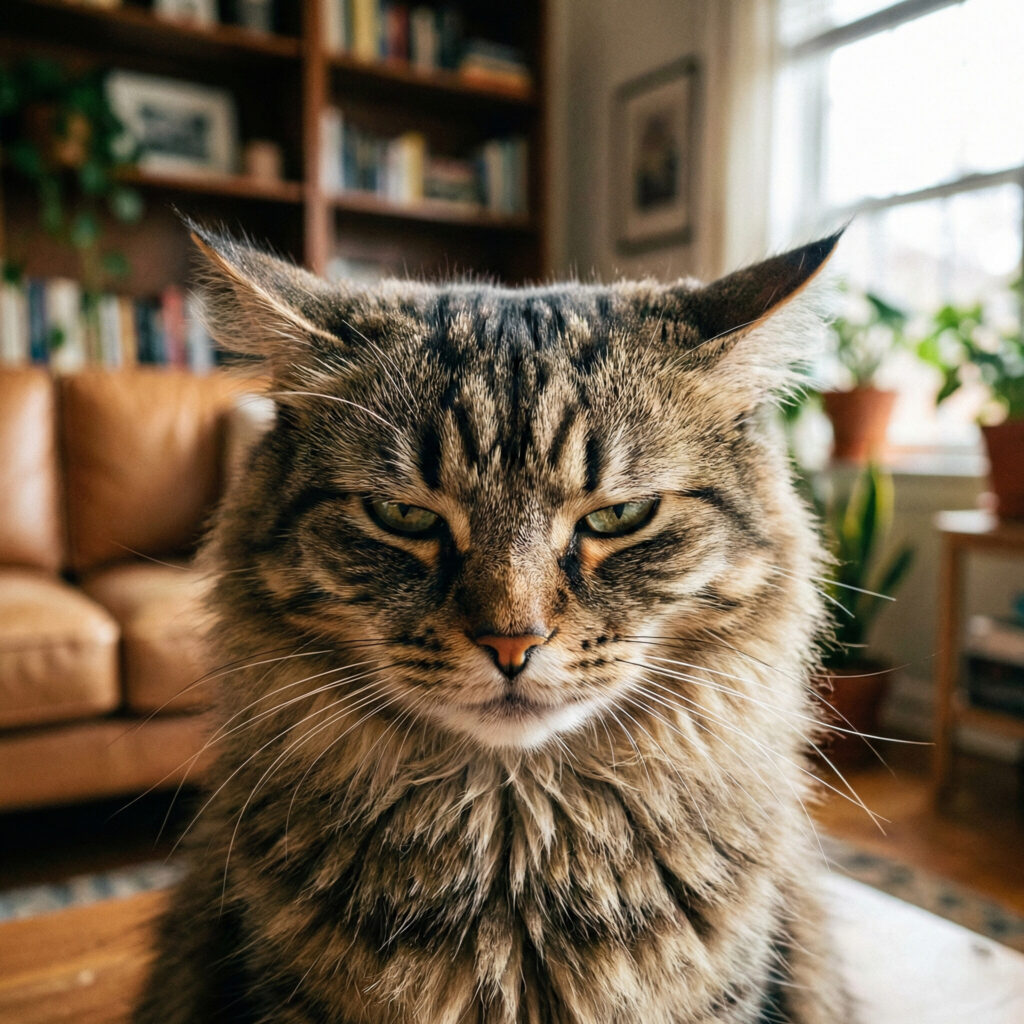
Cats bite during petting mainly due to overstimulation (petting aggression). This happens when repetitive stroking makes their skin sensitive or painful. Other causes include static electricity shocks, wanting to play, hidden pain (like arthritis), or simply wanting to communicate that they have had enough attention.
Summary Table
| Cause | Warning Signs | How to React |
| Overstimulation | Tail twitching, ears back, skin rippling | Stop petting immediately; give space. |
| Pain/Medical Issue | Hissing, growling, flinching when touched | Visit the vet to rule out arthritis or injury. |
| Play Aggression | Dilated pupils, stalking posture | Redirect to a toy; do not use hands for play. |
| Static Electricity | Sudden jump, confused look | Use a humidifier or pet-safe moisturizing wipes. |
| Communication | Soft nip without breaking skin | Stop petting; the cat is setting a boundary. |
Why Do Cats Suddenly Bite During Petting?
You are enjoying a quiet moment on the couch, stroking your cat’s soft fur. They seem to be purring and happy. Then, out of nowhere, chomp. They bite your hand and run away. This is one of the most confusing behaviors for cat owners. It can feel like a betrayal, but it is rarely done out of anger or meanness.
This behavior is often called “petting aggression” or “overstimulation.” Understanding why it happens is the key to stopping it. This guide will explain exactly why your cat turns from sweet to spicy in seconds and how you can pet them without getting bitten.
Read Also: Why Do Cats Roll on Their Backs but Hate Belly Rubs?
What Is Petting Aggression?
Petting aggression happens when a cat suddenly feels overwhelmed by physical touch. While humans often express affection through long hugs and repetitive stroking, cats have a limit.
The Sensitivity Threshold
Cats have very sensitive hair follicles. When you pet them in the same spot repeatedly, what starts as a pleasant massage can quickly turn into an irritating sensation. Think of it like someone tickling you. It might be funny for five seconds, but if they don’t stop, it becomes annoying or even painful.
When a cat bites during petting, they are not usually attacking you. They are essentially shouting, “Please stop!” because their polite signals were ignored.
Top Reasons Why Cats Bite While Being Petted
1. Overstimulation (The Most Common Cause)
This is the number one reason for sudden bites. The repetitive motion of your hand causes the nerve endings in the cat’s skin to become hypersensitive.
- The Reaction: The bite is usually quick. They grab your hand, maybe kick with their back legs, and then release.
- The Fix: Learn to recognize the “tipping point” before they bite.
2. Static Electricity
In dry climates or during winter, your cat’s fur can build up a static charge.
- The Reaction: You touch them, a spark zaps their nose or ear, and they bite reflexively because they think you pinched them.
- The Fix: Increase humidity in your home or touch a metal object to discharge static before petting your cat.
3. Pain or Injury
If your cat always loved being petted but has suddenly started biting, they might be in pain.
- Arthritis: older cats often have sore hips or spines. Stroking these areas hurts them.
- Dental Issues: If you touch near their face or jaw and they snap, they might have a toothache.
- Injuries: Abscesses from fights or soft tissue injuries can be hidden under fur.
4. Play Aggression
Sometimes, a cat isn’t annoyed; they are just bored. If you are moving your hand quickly like a prey animal, their hunting instinct kicks in.
- The Reaction: They grab your hand, bunny-kick it, and may not want to let go.
- The Fix: Never use your hands as toys. Use a wand toy instead.
5. “Love Bites”
Some cats use gentle nipping as a form of grooming or affection. These bites do not break the skin and are often accompanied by purring. However, it can be startling.
Read Also: Why Do Cats Headbutt People?
The Warning Signs: How to Predict the Bite
Cats almost always give warnings before they bite. As owners, we often miss them because they are subtle. If you see any of the following, stop petting immediately.
The Tail
- Twitching tip: The very end of the tail starts flipping back and forth.
- Thumping: The whole tail hits the floor or sofa rhythmically.
- Lashing: Violent side-to-side motion. This is a “Red Alert.”
The Ears
- Airplane Ears: Ears turn sideways or flatten against the head.
- Rotating: Ears turning back and forth rapidly, trying to listen to everything at once.
The Body and Skin
- Skin Rippling: You might see the skin on their back twitch or roll. This is a classic sign of overstimulation.
- Tension: The cat stops purring and their body goes stiff.
- Head Turn: They turn their head quickly to watch your hand.
How to Pet a Sensitive Cat Safely
You can still show your cat affection, but you may need to change your technique.
Follow the “Less is More” Rule
Keep petting sessions short. Instead of a five-minute session, try five sessions that last one minute each.
The Consent Test
Before you pet your cat, hold out your finger near their nose.
- If they lean in and rub against you, they want to be petted.
- If they look away or ignore you, leave them alone.
- During petting: Every few seconds, stop your hand. If the cat nudges you for more, continue. If they stay still or walk away, the session is over.
Stick to Safe Zones
Most cats enjoy being petted in specific areas where their scent glands are located.
- Safe Zones: Under the chin, the cheeks (behind the whiskers), and between the ears.
- Danger Zones: The belly, the base of the tail, and the paws.
Read Also: How Cats Choose Their Favorite Sleeping Spots
What to Do If Your Cat Bites You
If a bite happens, your reaction can determine if the behavior gets better or worse.
- Freeze: Do not yank your hand away. Pulling away triggers the cat’s instinct to bite down harder or chase.
- Go Limp: If you stop moving, you become boring prey. The cat will usually let go.
- Do Not Punish: Yelling or hitting will only make the cat fear you. They will associate your hands with pain, making them more likely to bite next time.
- Redirect: Once they let go, ignore them for a few minutes. If they seem energetic, throw a toy for them to chase.
When to See a Vet
If your cat’s behavior has changed suddenly (e.g., they used to love petting but now bite every time), you must see a vet.
- Senior Cats: Sudden aggression is a top symptom of arthritis.
- Hyperthyroidism: This condition can make cats agitated and hypersensitive to touch.
- Dental Disease: Pain in the mouth can cause “referred pain” or general irritability.
Frequently Asked Questions
Why does my cat lick me then bite me?
This is often a mix of affection and overstimulation. They start by grooming you (licking) to show love, but the sensation of being close or petted becomes too intense, triggering a bite.
Should I wear gloves to pet my aggressive cat?
No. This prevents you from feeling their muscle tension, so you won’t know when they are getting upset. It is better to pet them for shorter periods with bare hands so you can learn their limits.
Is my cat trying to dominate me?
No. Cats do not follow a “pack leader” hierarchy like dogs. They are not trying to be the boss; they are simply trying to control their own body and personal space.
Conclusion
A cat biting during petting is not acting out of malice. They are communicating boundaries. The bite is their way of saying, “I am overwhelmed, and I need space.” By watching for the subtle signs of tail twitching, ear turning, and skin rippling, you can stop petting before the bite happens. Respect their limits, focus on chin scratches, and you will build a trusting, bite-free relationship.