
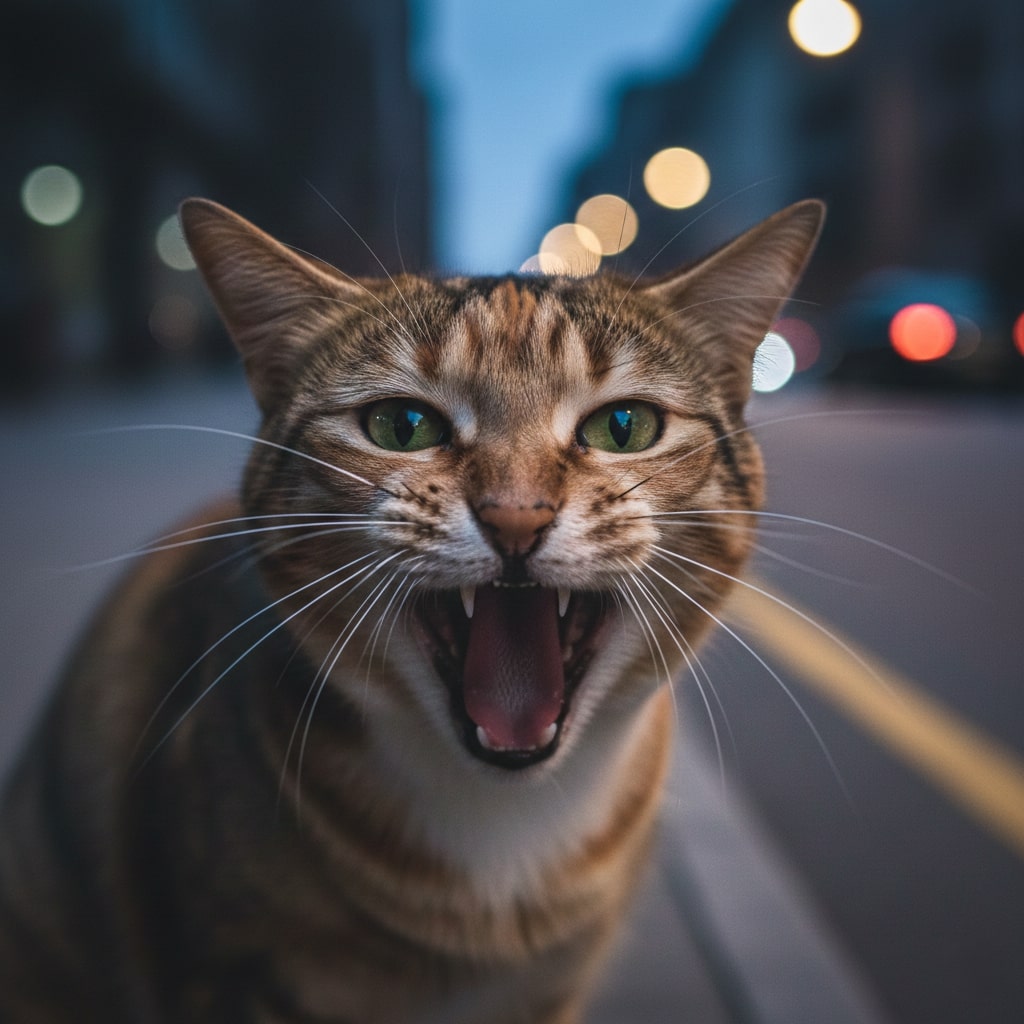
Cats are crepuscular, meaning they are biologically wired to be most active at dawn and dusk, not the middle of the night. However, excessive nighttime meowing (night vocalization) is often caused by boredom (pent-up energy), hunger, or learned attention-seeking behavior. In senior cats, it can indicate medical issues like Cognitive Dysfunction Syndrome (feline dementia), hyperthyroidism, or hypertension (high blood pressure).
Summary Table: Why Is My Cat Crying at Night?
| Possible Cause | Why It Happens | Quick Fix |
| Natural Instinct | Cats are crepuscular (active at dawn/dusk). | Schedule play sessions right before bed. |
| Boredom | Pent-up energy from sleeping all day. | Use puzzle feeders and rotate toys daily. |
| Hunger | Their small stomachs empty quickly. | Feed a small meal late at night or use an auto-feeder. |
| Thyroid Issues | Hyperthyroidism causes hyperactivity & hunger. | Visit the Vet: Requires blood work and medication. |
| Dementia (CDS) | Senior cats get disoriented in the dark. | Add nightlights and keep routines consistent. |
| Mating Call | Unfixed cats yowl to find mates (caterwauling). | Spay or neuter your cat immediately. |
Why Do Cats Meow More at Night?
If you are reading this at 3:00 AM while your cat sings the song of their people, you are not alone. Night vocalization is one of the most common complaints among cat owners.
While it feels like they are doing it to annoy you, your cat is usually communicating a specific need. To stop the noise, you first need to decode the message.
Read Also: Why Do Cats Hide When They’re Sick
1. The “Crepuscular” Misconception
Many people think cats are nocturnal (active at night). They are actually crepuscular.
- Nocturnal: Active at night (e.g., owls, bats).
- Diurnal: Active during the day (e.g., humans, dogs).
- Crepuscular: Active during twilight (dawn and dusk).
In the wild, this is when prey like mice and birds are most active. Your house cat still has this biological alarm clock. If they wake you up at 4:30 AM, they aren’t being “bad”; they are just starting their natural hunting shift.
2. The “Midnight Zoomies” (Boredom)
Indoor cats often sleep for 15 to 18 hours a day. If you are at work all day, your cat likely spent those 8 hours napping. When you turn off the lights to sleep, they are fully recharged and ready to party.
- The Sign: Your cat sprints down the hall, attacks shadows, or yowls while carrying a toy in their mouth.
- The Reality: They are bored and have too much unspent fuel in the tank.
3. Medical Red Flags (Especially in Seniors)
If your cat is older (10+ years) and has suddenly started howling at night, this is often a medical symptom, not a behavioral one.
Cognitive Dysfunction Syndrome (CDS)
This is essentially “feline dementia.” As cats age, their brain function declines.
- Symptoms: Disorientation, staring at walls, forgetting where the litter box is.
- Why they meow: When the house gets dark and quiet, they feel confused and scared. The meowing is a distress signal.
Hyperthyroidism
An overactive thyroid gland speeds up your cat’s metabolism to dangerous levels.
- Symptoms: Weight loss despite eating more, hyperactivity, unkempt coat.
- The Night Connection: Their body is stuck in “high gear,” making it physically impossible for them to settle down and sleep.
Hypertension (High Blood Pressure)
Often linked to kidney disease, high blood pressure can cause headaches and disorientation, leading to restless vocalization.
Note: If your senior cat wakes up howling, do not ignore it. Take them to a vet for a “senior blood panel” to rule out these manageable conditions.
Read Also: How Long Can a Cat Go Without Pooping?
4. The “Learned” Meow (Attention Seeking)
Cats are smart. If they meow at 3:00 AM and you:
- Get up to feed them.
- Yell “Be quiet!”
- Pick them up to cuddle.
You have just taught them: “Meowing = Human Interaction.” Even negative attention (yelling) counts as interaction to a bored cat. This creates a loop where the cat meows more because it works.
5. Hunger and Thirst
Cats have small stomachs roughly the size of a ping-pong ball. If you feed them dinner at 5:00 PM and don’t wake up until 7:00 AM, they go 14 hours without food. Their instinctual drive to hunt kicks in when their stomach is empty.
How to Stop Your Cat From Meowing at Night
You don’t have to suffer through sleepless nights forever. Use this checklist to reset your cat’s routine.
Step 1: The “Hunt, Eat, Sleep” Routine
In nature, the cycle is simple: a cat hunts (plays), eats their catch, and then grooms and sleeps. You can mimic this to force a full night’s sleep.
- 30 Minutes Before Bed: Engage in heavy interactive play. Use a wand toy (like a da Bird) to make them run, jump, and pant. Do not just leave a mouse toy on the floor; you must be the prey.
- Immediately After Play: Feed them their largest meal of the day (or a substantial snack).
- Result: The play exhausts them, and the food triggers the “rest and digest” nervous system response. They will groom themselves and pass out.
Step 2: Environmental Enrichment
If your cat is bored during the day, they will be awake at night.
- Bird TV: Place a perch by a window with a bird feeder outside.
- Food Puzzles: Stop feeding them from a bowl. Use puzzle feeders that force them to “work” for their kibble. This burns mental energy.
- Rotation: Put 50% of their toys in a closet and swap them every week so they always seem “new.”
Step 3: The “Extinction” Method (Hardest Step)
If you have ruled out medical issues and you know your cat is just seeking attention, you must completely ignore them.
- Do not yell.
- Do not feed them to shut them up.
- Do not look at them.
Warning: It will get worse before it gets better. This is called an “Extinction Burst.” The cat will meow louder because it used to work. You must outlast them. If you give in during the burst, you reset the clock and make the habit stronger.
Step 4: Senior Support
For older cats with suspected dementia or vision loss:
- Nightlights: Plug in LED nightlights in hallways and near the litter box to reduce disorientation.
- Ramps: If they are crying because they can’t jump on the bed due to arthritis, add pet stairs.
- Heating Pads: A self-warming bed can soothe arthritic joints and help them sleep deeper.
Read Also: Why Does My Cat Lick Metal?
When to See a Vet
You should schedule a vet visit if:
- The behavior starts suddenly (especially in cats over 7 years old).
- Your cat is losing weight.
- You notice changes in litter box habits (peeing outside the box).
- The meowing sounds different (e.g., a deep guttural yowl instead of a chirp).
Summary Checklist for Tonight
- Play: 15 minutes of hard play before bed.
- Feed: A high-protein snack right after playing.
- Ignore: Earplugs in; do not respond to the meows.
- Check: Ensure the litter box is clean before you sleep.
By aligning your cat’s schedule with their natural instincts and ruling out health issues, you can reclaim your sleep and help your cat feel more secure.