
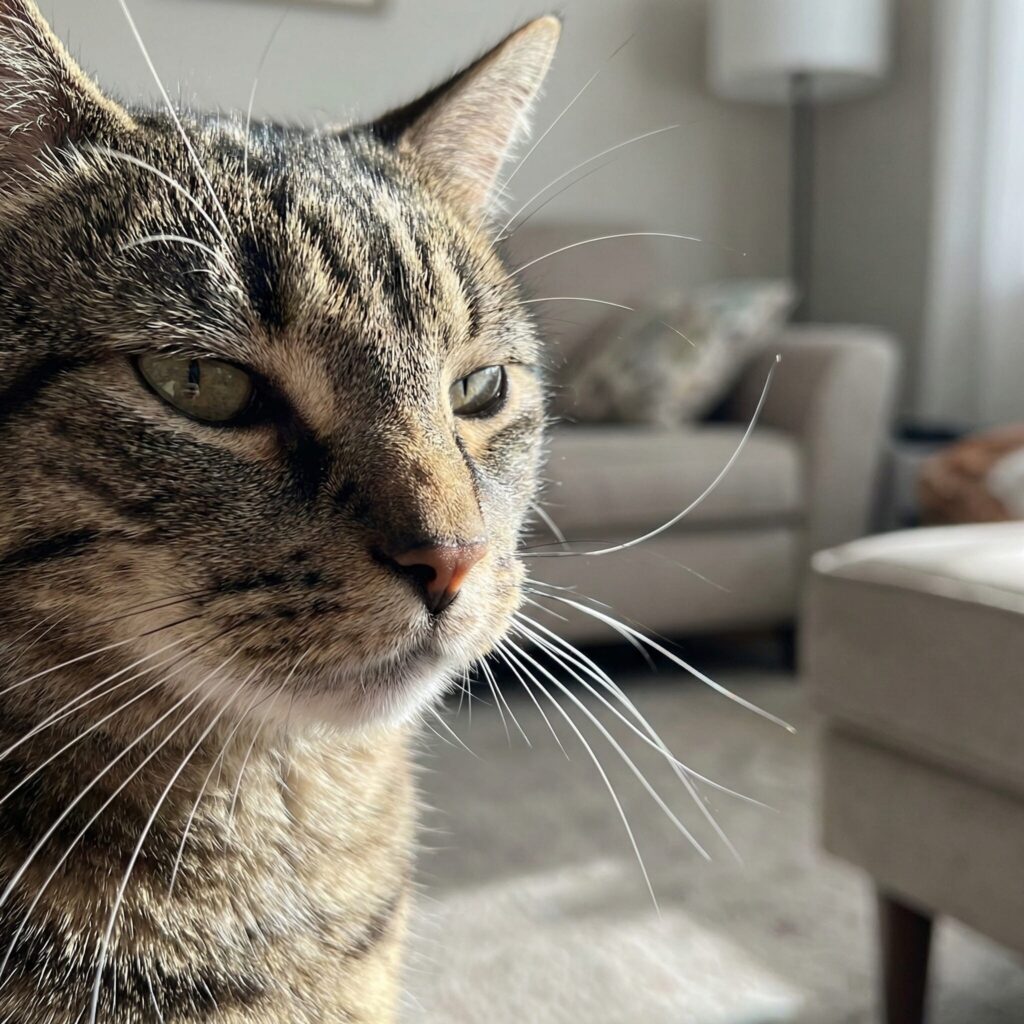
Cats naturally shed whiskers just like they shed fur. It is normal for a cat to lose one or two whiskers occasionally as part of their natural growth cycle. However, sudden or excessive whisker loss can be a sign of underlying issues. Common causes for abnormal loss include stress, allergies, fungal infections like ringworm, feline acne, parasitic mites, or physical damage from rough play. If your cat is losing whiskers in clumps or if the skin around the whiskers looks red or irritated, you should consult a veterinarian.
Summary Table: Why Do Cats Lose Whiskers
| Cause | Type | Symptoms | Action Needed |
| Natural Shedding | Normal | Occasional loss of 1 or 2 whiskers. No pain. | None. This is healthy. |
| Rough Play | Physical | Broken or bent whiskers. No skin irritation. | Monitor interactions with other pets. |
| Feline Acne | Infection | Blackheads on chin, redness, swelling. | Clean bowls, see a vet for topical treatment. |
| Ringworm | Fungal | Circular bald patches, brittle whiskers. | Vet visit required for antifungal meds. |
| Mange / Mites | Parasitic | Intense itching, crusty skin, hair loss. | Vet visit for antiparasitic medication. |
| Stress | Behavioral | Over-grooming, hiding, appetite change. | Identify stressors and enrich environment. |
| Allergies | Immune | Itchy skin, scratching face, digestive issues. | Vet visit to identify the allergen. |
Understanding Cat Whiskers
Before we dive into why they fall out, we must understand what whiskers actually are. They are not just stiff hairs. The scientific name for a whisker is a vibrissa.
Whiskers are specialized touch organs. They are thicker and rooted three times deeper in the skin than regular fur. The root of each whisker is surrounded by a follicle packed with nerves and blood vessels. This makes them incredibly sensitive. They are so sensitive that a cat can detect slight changes in air currents. This helps them navigate in the dark and sense approaching predators or prey.
You will find whiskers in several places on a cat:
- Mystacial whiskers: These are the long ones on the muzzle.
- Superciliary whiskers: Located above the eyes.
- Genal whiskers: Found on the cheeks.
- Carpal whiskers: Located on the back of the front legs.
Because these hairs are vital sensory tools, losing them can be disorienting for a cat. However, nature has a process for replacing them.
Read Also: How Cats Communicate Boundaries
Normal Shedding Cycles
The most common reason a cat loses a whisker is a simple nature. Just like humans lose eyelashes or hair from their head, cats shed their whiskers. This is a healthy and necessary process.
Whiskers are made of keratin, a structural protein. Over time, the whisker stops growing and eventually becomes dormant. A new whisker begins to form in the follicle underneath the old one. Eventually, the old whisker falls out to make room for the new, healthy one.
You might find a long, white whisker on your carpet or in the cat’s bed. This is usually nothing to worry about. You should only be concerned if you notice:
- Multiple whiskers falling out at once.
- The whiskers breaking off rather than shedding from the root.
- Bald patches on the muzzle.
- Signs of irritation or blood where the whisker used to be.
If the loss is gradual and the skin looks healthy, your cat is likely just going through a normal shed.
Physical Damage and Trauma
Cats are active animals. They hunt, play, and explore. Sometimes, whisker loss is strictly mechanical. This means the whisker was pulled out or broken due to physical force.
Rough Play and Fighting
If you have multiple cats, they likely wrestle and groom each other. During intense play sessions, whiskers can get bent, chewed, or snapped. This is very common in kittens or young cats who are still learning how to play gently.
Mother Cats and Kittens
There is a specific behavior seen in mother cats called “whisker trimming.” A mother cat may chew off the whiskers of her kittens. Experts believe this might be to keep the kittens close to the nest. By reducing their sensory input, the kittens are less likely to wander off and get into danger.
If you see a kitten with short or stubby whiskers, the mother is likely responsible. This is usually temporary, and the whiskers will grow back once the kittens are weaned.
Heat Damage
Cats love warm places. They often sit on stove tops, near fireplaces, or next to candles. Because whiskers are sensory organs, they usually warn the cat of heat. However, accidents happen.
A curious cat might get too close to a candle flame, causing the tips of the whiskers to singe or curl. Singed whiskers eventually break off or shed.
Read Also: Why Do Cats Prefer High Places?
Medical Causes for Whisker Loss
When whisker loss is excessive or accompanied by other symptoms, it is often due to a medical condition. The health of the whisker follicle is directly tied to the health of the cat’s skin and immune system.
Feline Acne
Feline acne is a common skin condition in cats. It usually appears on the chin and lips, right where the whiskers are rooted. It looks like “dirty chin” or small black specs. These are comedones, similar to blackheads in humans.
If the acne becomes severe, the hair follicles can become infected (folliculitis). This causes swelling and inflammation. The pressure and infection in the follicle can cause the whisker to fall out.
Causes of Feline Acne
- Using plastic food and water bowls (plastic harbors bacteria).
- Poor grooming habits.
- Overactive oil glands.
- Stress.
Treatment
Switching to stainless steel or ceramic bowls is the first step. A vet may prescribe medicated wipes or topical antibiotics to clear the infection.
Ringworm (Dermatophytosis)
Despite the name, ringworm is not a worm. It is a highly contagious fungal infection. It feeds on the keratin in the hair, nails, and skin. Since whiskers are made of keratin, ringworm attacks them aggressively.
Symptoms of Ringworm
- Circular, bald, red patches on the skin.
- Broken or brittle whiskers.
- Crusty or scaly skin.
- Dandruff.
If your cat has ringworm, the whiskers may snap off near the base. This infection can spread to humans and other pets, so immediate veterinary care is essential. Treatment usually involves antifungal medications and lime sulfur dips.
Mange and Mites
Parasitic mites can cause severe skin irritation. The Notoedres cati mite, specifically, causes feline scabies. These microscopic pests burrow into the skin, causing intense itching.
A cat with mites will scratch their face and ears relentlessly. This scratching causes physical trauma to the face, ripping out fur and whiskers. The damage to the follicle from the mites themselves also leads to hair loss.
Signs of Mites
- Thick, crusty skin on the ear edges.
- Intense scratching.
- Hair loss on the face and neck.
** bacterial Infections**
Any cut or scratch on the face can get infected. If bacteria enter the whisker follicle, it can develop into an abscess or a bacterial skin infection (pyoderma). The infection destroys the integrity of the follicle, causing the whisker to loosen and fall out.
Read Also: Why Do Cats Hide in Small, Dark Spaces?
Allergies and Immune System Issues
Just like humans, cats suffer from allergies. When a cat has an allergic reaction, their skin often becomes inflamed and itchy. This condition is known as allergic dermatitis.
Food Allergies
Cats can develop allergies to proteins in their food, such as chicken, beef, or fish. When a cat eats an allergen, their immune system attacks it, leading to systemic inflammation. This often manifests as itchy skin, particularly around the head and neck. The cat will scratch their face against furniture or use their paws to relieve the itch, pulling out whiskers in the process.
Environmental Allergies
Pollen, dust mites, and mold can also trigger allergic reactions. Atopic dermatitis is a chronic skin disease associated with environmental allergies. The constant inflammation weakens the hair follicles.
Alopecia Areata
This is a rare autoimmune disease where the immune system attacks the hair follicles. It results in sudden hair loss without much itching or inflammation. While rare in cats, it can affect the whiskers, causing them to fall out completely.
Hormonal Imbalances
Hormones regulate hair growth cycles. If a cat has a hormonal imbalance, it can disrupt how whiskers grow and shed.
Hypothyroidism and Hyperthyroidism
Thyroid issues are common in older cats. Hyperthyroidism (an overactive thyroid) speeds up the body’s metabolism. While it often causes a messy, unkempt coat, it can also lead to hair loss. Hypothyroidism (underactive thyroid) is rare in cats but leads to brittle hair and hair loss.
Whisker Fatigue and Stress
While stress itself does not make whiskers fall out directly like a virus would, it causes behaviors that lead to loss.
Over grooming
A stressed cat often over grooms as a self soothing mechanism. This is called psychogenic alopecia. They may lick or chew their own fur and whiskers until they create bald spots.
Whisker Fatigue
This is a condition caused by overstimulation. Because whiskers are so sensitive, constantly brushing against surfaces can overload the cat’s sensory system.
This happens most often with food bowls. If a bowl is too deep and narrow, the cat’s whiskers touch the sides every time they take a bite. This sends a barrage of signals to the brain, causing stress and “fatigue.”
While whisker fatigue does not cause the whiskers to fall out, it causes the cat to rub their face against things or paw at their food to get it out of the bowl. This mechanical friction can damage the whiskers over time.
Solution: Use wide, shallow plates or bowls for food and water to prevent the whiskers from touching the sides.
Read Also: Why Do Cats Suddenly Bite During Petting?
Metabolic Disorders and Nutrition
A cat’s coat and whiskers are a reflection of their internal health. A poor diet can lead to brittle whiskers that break easily.
Protein Deficiency
Cats are obligate carnivores. They require high levels of animal based protein. Keratin, the building block of whiskers, is a protein.
If a cat is not getting enough protein, or if the protein is low quality, their body will not be able to produce strong keratin. This results in weak, thin whiskers that snap or fall out.
Vitamin and Mineral Deficiency
Zinc, Vitamin A, and Vitamin E are crucial for skin and hair health. A deficiency in these can lead to crusty skin and hair loss. This is rarely seen in cats eating a balanced commercial diet but can occur in cats fed unbalanced homemade diets.
Chemotherapy and Drug Reactions
If your cat is undergoing cancer treatment, chemotherapy drugs can affect hair growth. While animals do not typically go completely bald like humans do during chemo, they can lose their whiskers.
The drugs target rapidly dividing cells, and hair follicles are among the fastest dividing cells in the body. Once the treatment stops, the whiskers usually grow back.
When to See a Veterinarian
You do not need to rush to the vet for a single shed whisker. However, you should schedule an appointment if you notice the following signs:
- Symmetry of Loss: Losing whiskers on only one side of the face often indicates a local infection or tooth abscess.
- Skin Changes: Redness, crusting, oozing, or bleeding around the muzzle.
- Behavioral Changes: Lethargy, hiding, lack of appetite, or aggression.
- Itching: Persistent scratching of the face or ears.
- Other Hair Loss: If the cat is losing patches of fur on other parts of the body.
Diagnosing the Problem
When you take your cat to the vet, they will perform a physical exam. They will look closely at the whisker pads and the skin.
Diagnostic tests may include:
- Skin Scraping: To look for mites under a microscope.
- Fungal Culture: To test for ringworm.
- Cytology: Examining cells from the skin to check for bacteria or yeast.
- Blood Work: To check for thyroid issues, diabetes, or other systemic diseases.
- Food Trials: To rule out food allergies.
Read Also: Why Do Cats Lick Plastic or Fabrics?
Preventing Whisker Loss
While you cannot stop natural shedding, you can prevent abnormal loss by maintaining your cat’s health.
- Reduce Stress: Provide a calm environment with plenty of hiding spots and vertical territory (cat trees).
- Proper Bowls: Switch to wide, shallow, stainless steel bowls to prevent whisker fatigue and feline acne.
- Regular Vet Checks: Annual exams help catch issues like dental disease and thyroid problems early.
- Parasite Control: Keep your cat on a regular flea and mite prevention schedule.
- Quality Diet: Feed a high protein, high quality diet to ensure strong keratin production.
Myths About Cat Whiskers
There is a lot of misinformation regarding cat whiskers. Let us clear up some common myths.
Myth: Pulling a whisker out hurts the cat.
Fact: Yes, this is true. Because the follicle is packed with nerves, pulling a whisker is extremely painful and can cause bleeding. Never pull a whisker out, even if it looks loose. Let it fall out on its own.
Myth: Cutting whiskers affects a cat’s balance.
Fact: This is partially true. Whiskers are part of the proprioception system, which helps the cat understand where its body is in space. While they do not control the inner ear balance mechanism, cutting them removes a vital sensory input.
A cat with cut whiskers may misjudge jumps, bump into walls, and feel insecure and frightened. You should never trim a cat’s whiskers for aesthetic reasons.
Myth: Whiskers turn gray with age.
Fact: Just like fur, whiskers can change color as a cat ages. It is common for black cats to develop white whiskers as they get older. This is a natural part of the aging process and is not a sign of illness.
Conclusion
Whiskers are an essential part of your cat’s anatomy. They act as their radar, helping them hunt, navigate, and communicate. Seeing a whisker on the floor now and then is perfectly normal. It means the body is regenerating and keeping the sensory system sharp.
However, if you notice baldness, irritation, or behavioral changes, it is time to investigate. By understanding the difference between natural shedding and medical issues, you can ensure your feline friend stays happy, healthy, and fully aware of their surroundings. Monitor their face during grooming sessions and keep an eye on their environment to protect these sensitive and vital tools.