
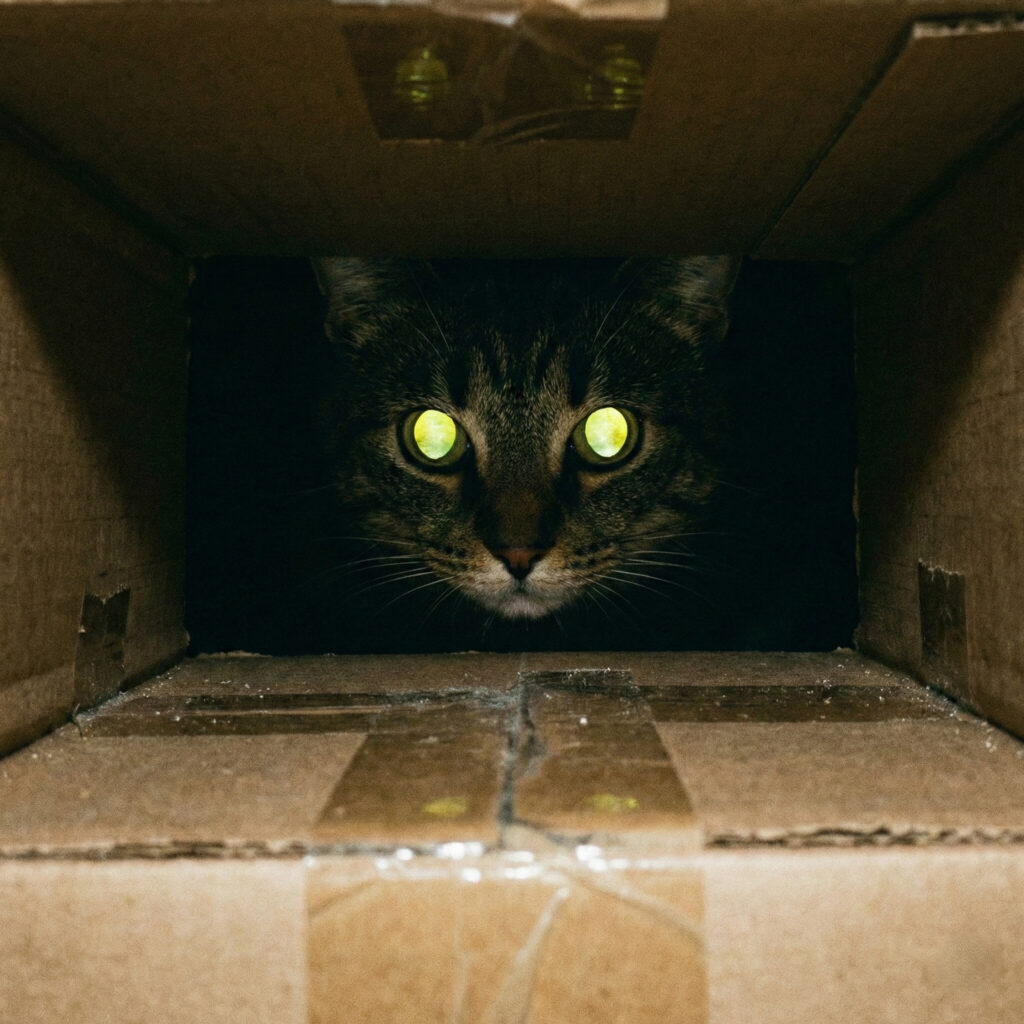
Cats hide in small, dark spaces primarily for safety, temperature regulation, and stress relief. In the wild, enclosed areas protect cats from larger predators and provide a secure vantage point for stalking prey. These spaces also help cats conserve body heat and decompress when they feel overwhelmed or anxious. While hiding is usually normal behavior, sudden or excessive hiding can indicate illness or pain.
Summary Table
| Feature | Details |
| Primary Instinct | Safety and predation (ambush tactics) |
| Physical Need | Warmth (cats have a higher body temperature than humans) |
| Emotional Need | Stress reduction and anxiety management |
| Health Warning | Sudden hiding may signal illness or injury |
| Best Solution | Provide designated safe spots like boxes, tunnels, or high perches |
Why Do Cats Hide in Small, Dark Spaces?
If you share your home with a cat, you’ve likely found them tucked away in a shoebox, under a bed, or even inside a grocery bag. While it might look uncomfortable to us, these tight squeezes are paradise for felines.
This behavior isn’t just a quirk; it is deeply rooted in their biology and survival instincts.
Understanding why your cat seeks out these spots can help you create a happier, more secure environment for them.
Read Also: Why Do Cats Suddenly Bite During Petting?
1. The Instinct for Safety and Security
The most significant reason cats love small spaces is the feeling of security. Even though your house cat doesn’t have to worry about wolves or eagles, their DNA still tells them they are small predators who are also prey to larger animals.
Protection from Predators
In an open room, a cat is exposed on all sides. This makes them feel vulnerable. A small box or a dark corner under the couch offers protection. When a cat is in a confined space, they only have to watch the entrance. Nothing can sneak up on them from behind or the sides.
The Ambush Advantage
Cats are ambush predators. They hunt by stalking and pouncing rather than chasing prey over long distances. Small, dark spaces are excellent camouflage. From inside a dark box, a cat can watch the world go by without being seen, waiting for the perfect moment to pounce on a toy or your ankles.
2. Temperature Regulation: The Quest for Warmth
Domestic cats originate from desert-dwelling ancestors. Their ideal environmental temperature is significantly higher than what humans prefer, usually between 86°F and 97°F (30°C – 36°C). Your air-conditioned home might feel great to you, but it can feel chilly to your cat.
Small spaces act like insulators. When a cat curls up into a tight ball inside a small box or a cubby, their body heat is trapped in that small area, creating a warm micro-climate.
Cardboard, in particular, is an excellent insulator, which is one reason why simple delivery boxes are often more popular than expensive pet beds.
3. Stress Reduction and Anxiety
Cats deal with conflict very differently from humans or dogs. While a dog might bark or seek comfort from its owner, a cat’s primary coping mechanism for stress is avoidance.
Conflict Avoidance
If there is a loud noise, a stranger in the house, or a conflict with another pet, a cat will retreat. Hiding allows them to disappear from the stressful situation until they feel calm enough to re-emerge.
A study by the University of Utrecht found that shelter cats who were provided with hiding boxes adapted to their new environment much faster and showed significantly lower stress levels than cats without boxes. The ability to hide gave them control over their environment.
Overstimulation
Cats have sensitive hearing and vision. A busy household with crying babies, loud TVs, or vacuum cleaners can easily overstimulate them. A dark, quiet closet or the space under a bed provides a sensory break where they can “reset.”
Read Also: Why Do Cats Flick Their Tails While Lying Down?
Why Do Cats Like Boxes Specifically?
Of all the hiding spots, cardboard boxes are the undisputed kings. Why?
- Texture: Cats often enjoy scratching cardboard, which helps mark their territory.
- Insulation: As mentioned, cardboard holds heat well.
- Defined Borders: A box has clear, physical boundaries. This helps the cat feel “hugged” or swaddled, which releases endorphins and lowers stress.
When Hiding Becomes a Warning Sign
While hiding is normal, it can sometimes indicate a problem. Cats are masters at masking pain. In the wild, a sick or injured animal is a target, so cats instinctively hide their weaknesses.
Signs You Should Visit the Vet
If your social, friendly cat suddenly starts spending all day under the bed, pay attention. Look for these accompanying signs:
- Refusal to eat or drink
- Lethargy or sleeping more than usual
- Changes in litter box habits
- Aggression when you try to move them
- Hiding in unusual places (like facing a wall or in a litter box)
If you notice these changes, the hiding is likely a symptom of illness, dental pain, or injury, and a vet visit is necessary.
How to Create Safe Hiding Spaces for Your Cat
You can encourage healthy hiding behavior by providing intentional “safe zones” in your home. This keeps your cat happy and prevents them from hiding in dangerous spots like dryers or reclining chairs.
1. The Cardboard Castle
Leave a few delivery boxes out. You can cut holes in them to create windows or combine them to make a tunnel. Rotate the boxes every few weeks to keep things interesting.
2. Vertical Hiding Spots
Cats love height. A high perch on a cat tree with a covered condo is the ultimate safe spot. It provides warmth, security, and a view of the entire room.
3. Tunnel Toys
Collapsible cat tunnels mimic the burrows of prey animals. They are excellent for play and offer a quick escape route during “zoomies.”
4. Cleared Shelf Space
Clear a spot on a bookshelf or inside a closet where your cat can retreat. Placing a soft blanket there will make it an irresistible cozy corner.
Read Also: Why Do Cats Hate Closed Doors?
Common Dangerous Hiding Spots to Watch
Because cats can fit their bodies through any space the size of their head, they often explore dangerous areas. Always check these spots before using appliances:
- Clothes Dryers: Always check before starting a load.
- Dishwashers: Keep the door closed when not loading.
- Recliners: Check underneath before lowering the footrest.
- Car Engines: In winter, bang on your car hood before starting the engine, as outdoor cats may hide there for warmth.
Frequently Asked Questions
Why does my cat sleep in the closet?
Closets are usually dark, quiet, and smell like you (their favorite person). This makes them a comforting and low-stress environment for deep sleep.
Should I pull my cat out of hiding?
No, unless there is an immediate danger (like a fire). Forcing a cat out of a hiding spot removes their sense of security and can increase their anxiety or lead to aggression. Lure them out with treats or toys instead.
Do all cats like small spaces?
Most do, but the preference varies. Some cats prefer “cave” style beds, while others prefer high, open perches. Observe your cat to see what they prefer.
Why does my cat hide when guests come over?
Strangers bring new smells, sounds, and movements. This disrupts your cat’s territory. Hiding is a safe way for them to observe the newcomers without risking a confrontation.
Is it okay if my cat hides all day?
If your cat sleeps in a hiding spot during the day but comes out to eat, play, and socialize at night, it is likely normal. If they never come out and seem lethargic, consult a vet.
Conclusion
Your cat’s obsession with small, dark spaces is a perfectly natural behavior driven by their need for safety, warmth, and stress relief. It’s their way of staying in control of their world. By understanding this need and providing safe, cozy alternatives like boxes and cat trees, you support their mental and physical well-being. Just remember to keep an eye out for sudden changes in behavior, as hiding can sometimes be a cry for help.