
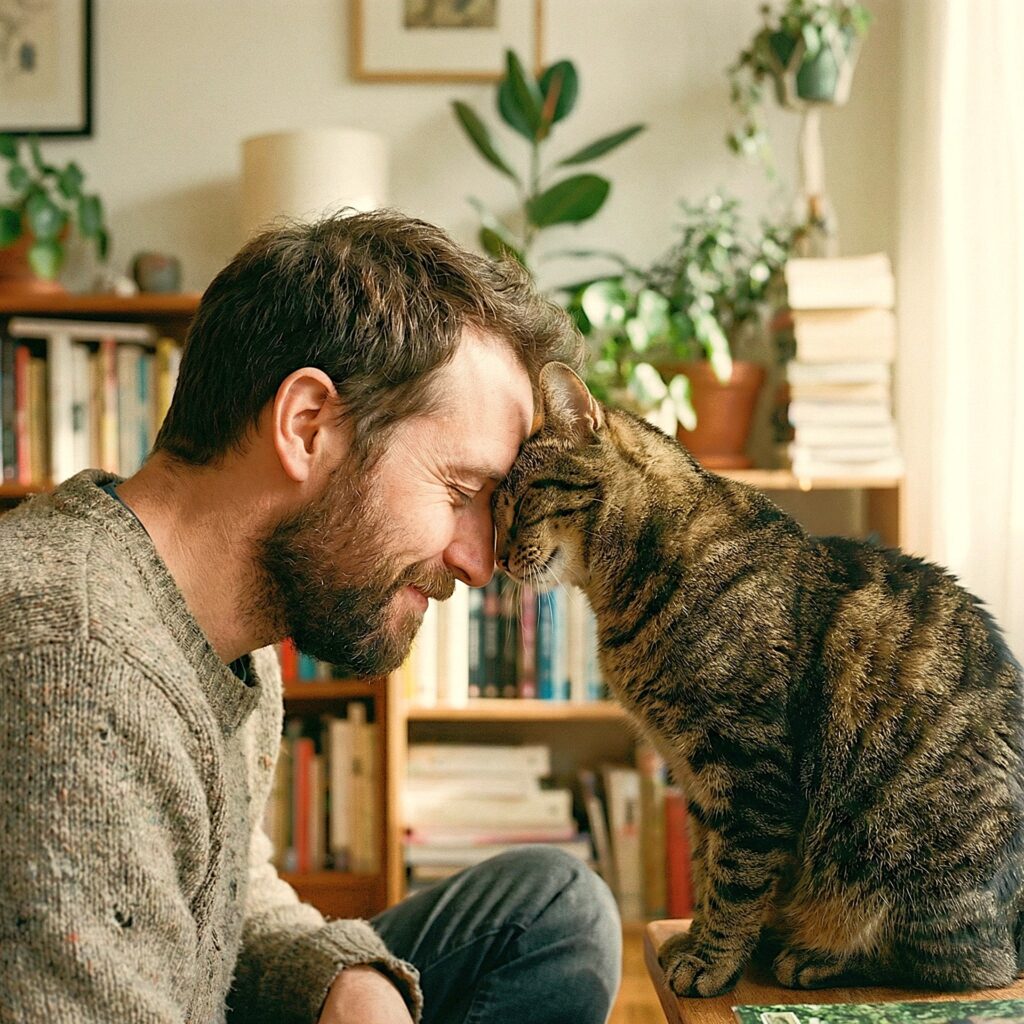
Cats headbutt people, a behavior scientifically known as bunting, primarily to mark them with scent glands located on their heads. This action deposits pheromones that mark you as safe, trusted, and part of their family group. It is a sign of affection, social bonding, and ownership, not aggression.
Summary Table: Reasons Behind the Headbutt
| Reason | Explanation | Meaning for Owner |
| Scent Marking | Depositing pheromones from facial glands. | “You belong to me/us.” |
| Affection | Physical closeness and touch. | “I love you and feel safe.” |
| Attention Seeking | Nudging to get a reaction. | “Pet me” or “Feed me.” |
| Social Bonding | Creating a “colony scent.” | “We are family.” |
| Safety Check | Reaffirming familiar scents. | “I am checking that you are still safe.” |
Why Do Cats Headbutt People? Guide to Cat Bunting
If you are a cat owner, you have likely experienced the “head boop.” You are sitting on the couch or lying in bed, and your cat walks up and firmly bumps their forehead against your face, hand, or leg. To us humans, a headbutt usually implies aggression or a fight. In the feline world, however, the meaning is completely different.
This behavior is one of the most confusing yet adorable parts of cat communication. By understanding why your cat does this, you can build a stronger bond and respond in a way that makes your pet feel secure.
Read Also: The Importance of Vertical Space for Cats
What is Cat Bunting?
The technical term for cat headbutting is bunting. Bunting refers to the action of a cat rubbing its head against objects, other cats, or humans. While it looks like a simple bump, there is a complex biological process happening during this interaction.
Cats rely heavily on their sense of smell to understand the world. They have scent glands located all over their bodies, but the glands on their faces are specifically used for social marking.
Where Are the Scent Glands Located?
- Temples: On the side of the forehead.
- Cheeks: Along the jawline.
- Chin: Underneath the mouth.
- Ears: At the base of the ears.
When a cat bunts you, they are activating these glands to leave a chemical signature on your skin or clothing.
Reason 1: They Are Claiming You (Marking Territory)
The primary reason cats headbutt is to mark territory. However, this is not the same as a male cat spraying urine to warn off rivals. Facial marking is a “happy” or “safe” territorial mark.
In the wild, cats use scent to create a map of their environment. When they rub their face on a couch corner, a doorframe, or your leg, they are leaving pheromones that signal, “This object is safe. This has been checked.”
When they do this to you, they are mixing their scent with yours. This creates a communal scent, often called a “group scent.” By covering you in their pheromones, they are claiming you as part of their territory and their social group. It is a massive compliment; it means you are essential to their sense of security.
Read Also: How Cats Show Affection
Reason 2: It Is a Sign of Trust
Cats are both predators and prey in the wild. This makes them naturally cautious animals. Placing their head, a vulnerable part of their body, close to your face or eyes requires a high level of trust.
You will rarely see a cat headbutt a stranger or an animal they fear. If your cat closes their eyes and leans their forehead into you, they are letting their guard down completely. They are confident that you will not hurt them.
Reason 3: Attention Seeking
Sometimes, the behavior is less about biology and more about immediate needs. Cats are smart. They learn quickly that when they bump your hand, you stop looking at your phone and start petting them.
If your cat headbutts you while you are working at a desk or walking toward the kitchen, it is likely a request for:
- Food: This often happens in the morning or near dinner time.
- Pets: They want a scratch behind the ears.
- Play: They are bored and want you to engage.
If the headbutt is followed by loud purring or weaving between your legs, it is almost certainly a request for attention.
Reason 4: Creating a Colony Scent
Domestic cats are social animals that can live in groups, often called colonies. In these colonies, cats groom each other and rub heads to mix their scents together. This creates a single, unified “family scent.”
This scent is vital for the colony. It helps them recognize who belongs to the group and who is an intruder. If you have been away at work all day, you smell like the outside world (traffic, office, other people).
When you come home and your cat immediately headbutts your legs, they are “refreshing” your scent. They are re-applying the colony smell to ensure you are recognized as a safe member of the family again.
Read Also: Why Cats Rub Against You
Reason 5: Self-Soothing
Anxious cats may headbutt more frequently than confident ones. The act of rubbing their face releases pheromones that have a calming effect on the cat itself.
Synthetic cat pheromones (like Feliway) mimic these specific facial pheromones to help calm stressed cats. When a cat bunts you, they are physically comforting themselves by surrounding themselves with a familiar, safe smell you.
The Difference Between Bunting and Head Pressing
It is critical for every cat owner to know the difference between normal headbutting (bunting) and a medical condition called head pressing. While bunting is healthy, head pressing is a medical emergency.
What is Head Pressing?
Head pressing is when a cat pushes their head against a wall, a corner, or the floor and holds it there for no apparent reason. They are not rubbing back and forth; they are pressing firmly and staying still.
This behavior indicates damage to the nervous system or the brain (prosencephalon disease).
Warning Signs of Head Pressing
If you see your cat doing this, look for other symptoms:
- Pacing in circles.
- Seizures or staring into space.
- Visual problems (bumping into furniture).
- Changes in behavior (aggression or confusion).
Summary Table: Differences Between Bunting and Head Pressing
| Feature | Bunting (Safe) | Head Pressing (Danger) |
| Movement | Rubbing, sliding, nudging. | Static, pushing hard, holding still. |
| Object | Humans, other pets, corners. | Walls, floors, flat surfaces. |
| Demeanor | Relaxed, purring, happy. | Confused, in pain, unresponsive. |
| Action Required | Pet the cat. | Go to the Vet immediately. |
Do All Cats Headbutt?
No, not all cats headbutt. If your cat doesn’t do it, it does not mean they don’t love you.
Cat personalities vary, just like humans. Some cats are very physical and love bunting, cuddling, and being held. Others prefer to show affection by:
- Sitting near you (but not touching).
- Slow blinking (the “cat kiss”).
- Following you from room to room.
- Bringing you “gifts” (toys or prey).
A rescue cat or a cat that was poorly socialized as a kitten might be head-shy and prefer not to have their face touched. Respect their boundaries and look for other ways they show love.
Read Also: How Do Cats Communicate With Humans?
How Should You Respond to a Headbutt?
If your cat headbutts you, the best response is to return the affection. Here is the best way to interact:
- Don’t Force It: Let the cat come to you. Never grab a cat’s head to force a nuzzle.
- Offer Your Hand: Hold out a relaxed hand or a finger. This gives them a target to bunt against.
- Scratch the Sweet Spots: Once they bunt, scratch them gently on the cheeks, under the chin, or between the ears. These are the areas where the scent glands are, so scratching there feels good and helps release the scent.
- Slow Blink: If they look at you after the bunt, slowly close and open your eyes. This reinforces the signal of trust.
Frequently Asked Questions
Why does my cat headbutt me hard?
Some cats are simply more enthusiastic than others. A hard headbutt usually means they are very excited to see you or are feeling very secure. It can also happen when they are overstimulated. If it hurts, gently guide them away, but understand it is done with love.
Why does my cat headbutt my face specifically?
Your face is the most accessible part of you when you are lying down, and it also carries the most unique scents (breath, skin oils). Cats also realize that your face is where you communicate from. By marking your face, they are claiming the most important part of you.
Why does my cat headbutt then bite?
This is often a sign of overstimulation. The cat starts with affection, but the repetitive petting becomes annoying or painful due to their sensitive skin. The bite is a signal to stop. Watch for a twitching tail or ears turning back—these are signs to stop petting before the bite happens.
Conclusion
Cat headbutting, or bunting, is one of the most positive behaviors a cat can display toward a human. It is a multi-purpose tool used for marking territory, bonding with family, and asking for attention.
When your cat walks up and bumps their forehead against you, take it as the compliment it is. You have been marked as safe, loved, and an official member of their colony.
Just remember to watch out for the difference between happy bunting and dangerous head pressing, and you will be able to speak your cat’s language perfectly.