
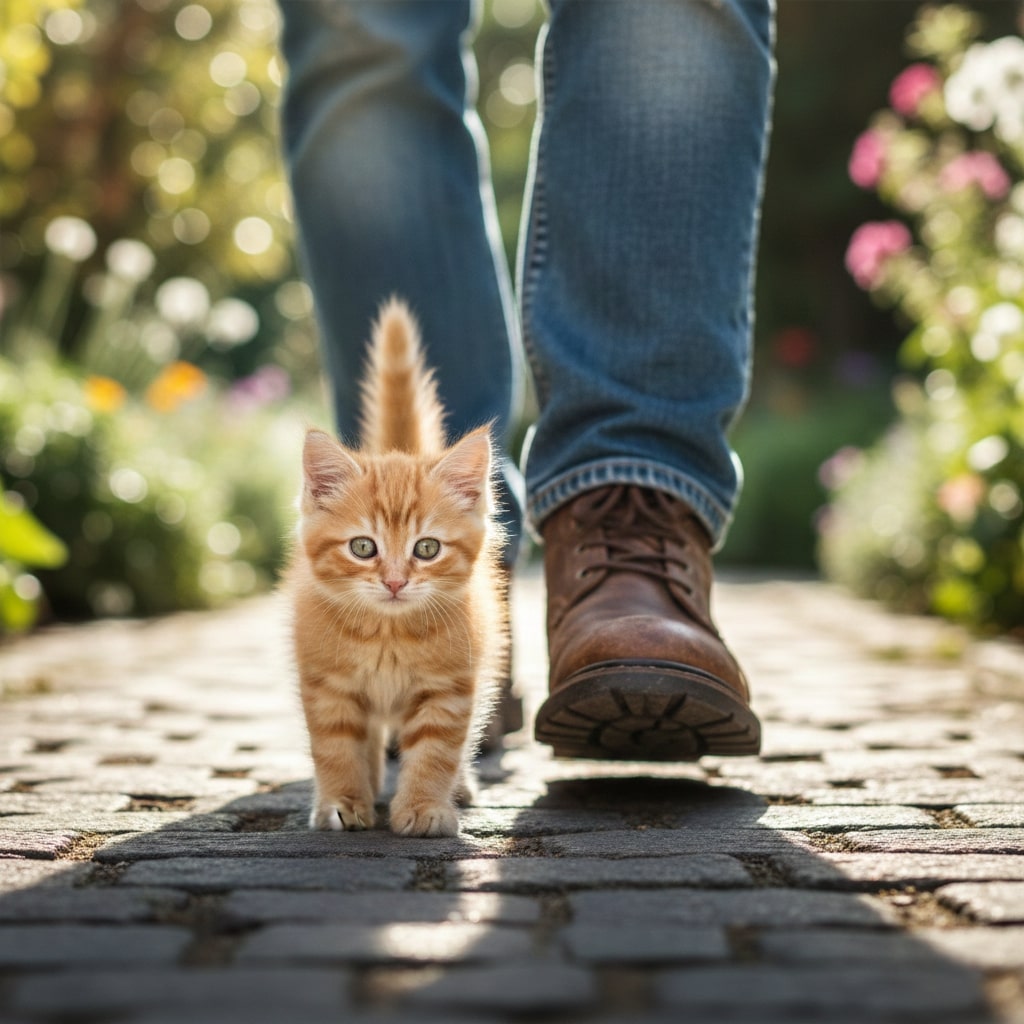
Cats follow you everywhere primarily because they share a deep social bond with you and view you as a source of security, resources, and companionship. This behavior, often called “shadowing,” can be a sign of affection, curiosity, hunger, or a desire for attention. In some cases, it mimics the behavior of a kitten following its mother, signaling that your cat feels safe and protected in your presence.
Summary Table: Why Your Cat Shadows You
| Reason | Key Indicators | What It Means |
| Affection & Love | Head-butting, purring, slow blinking | Your cat enjoys your company and wants to bond. |
| Curiosity | Watching you intently, sniffing items | They have a “fear of missing out” (FOMO) and want to know what you are doing. |
| Hunger/Resources | Meowing, leading you to the kitchen | They associate you with food and water. |
| Territorial Instinct | Rubbing against your legs | They are marking you as “theirs” and patrolling their territory (your home). |
| Insecurity/Anxiety | Excessive vocalization, hiding when you leave | They may suffer from separation anxiety or feel unsafe alone. |
| Boredom | Pacing, attacking ankles playfully | They need mental stimulation or playtime. |
10 Reasons Cats Follow You Everywhere?
If you are a cat owner, you are likely familiar with the “bathroom audience” phenomenon. You stand up to walk to the kitchen, and a silent shadow trots right behind you. You close a door, and a paw immediately shoots out from underneath it. While cats have a reputation for being aloof and independent, the reality is often quite different. Many cats are intensely social creatures who prefer to be exactly where their humans are.
This behavior is usually endearing, though sometimes a tripping hazard. But why exactly does it happen? Is it just for food, or is there a deeper emotional connection? To understand why your cat acts like your personal shadow, we have to look at feline psychology, biology, and the unique history of their domestication.
Read Also: Why Does My Cat Meow When I Pick Her Up?
1. The Bond of Affection
The most heartwarming reason your cat follows you is simply that they like you. Despite the stereotype that cats only use humans for food, studies in feline behavior show that cats form strong attachments to their owners.
They View You as a Safe Base
Just like a toddler looks to a parent for security, cats often view their owners as a “secure base.” When you move from room to room, your cat moves with you because your presence makes the environment feel safer. This is especially common in cats that were bottle-fed or adopted at a very young age, but it applies to almost all bonded felines.
Signs It Is Affection:
- Purring: If they follow you and purr when you stop to pet them, it is love.
- Slow Blinking: They look at you and slowly close their eyes.
- Physical Contact: They do not just follow; they lean against your leg when you stop.
2. Curiosity and “Feline FOMO”
Cats are naturally curious animals. In the wild, being aware of one’s surroundings is a survival mechanism. In your home, however, this instinct translates into a severe case of “Fear Of Missing Out” (FOMO).
You Are the Most Interesting Thing in the House
Think about your cat’s day. They sleep for 12 to 16 hours. The rest of the time, they are patrolling the same few rooms. When you stand up and start doing something, whether it is folding laundry, typing on a computer, or sweeping the floor, you are providing entertainment. You are the dynamic element in their otherwise static environment.
The Closed Door Mystery
This curiosity explains why cats hate closed doors. A closed door represents a blocked territory and a mystery. By following you into the bathroom or bedroom, they are ensuring they aren’t missing out on any excitement or changes in their territory.
Read Also: Can Cats Eat Raw Fish?
3. The “Mother” Figure Dynamic
There is a theory in animal behavior that domesticated cats remain in a state of permanent kittenhood. This is called neoteny. Because humans provide food, shelter, and care throughout a cat’s entire life, the cat retains juvenile behaviors that wild cats typically outgrow.
Kitten-Like Following
Kittens follow their mother everywhere to learn survival skills and stay safe from predators. When your adult cat trots after you, they may be engaging in this instinctual behavior. You are the provider and the protector. Following you is a hardwired survival tactic that persists because you continue to fulfill the “mother” role by feeding and caring for them.
4. Territorial Patrolling
Cats are territorial animals. They do not just live in your house; they “own” it. Part of owning territory is patrolling it regularly to check for intruders (like a stray bug) or changes (like a new box).
You Are Part of the Patrol
When you walk around the house, your cat may interpret this as you patrolling the territory. Since you are the dominant member of the “colony” (in their eyes), they join you to help secure the perimeter.
Scent Marking
Notice how your cat often rubs their head or body against the doorframe or your legs as you enter a room together? This is scent marking. They are depositing pheromones from scent glands on their face to mark the area and you as safe and belonging to them. Following you ensures they can refresh these scent marks regularly.
Read Also: Why Do Cats Huff and Puff?
5. Resource Guarding and Hunger
We cannot ignore the most practical reason: food. Cats are masters of association. They know that you are the one who opens the cans and shakes the treat bag.
Routine Recognition
Cats have excellent internal clocks. If you usually walk to the kitchen at 7:00 AM to feed them, and you stand up at 6:55 AM, they will follow you immediately, assuming it is breakfast time. Even if it is not feeding time, they may follow you in the hope that your destination involves a snack.
Signs It Is Hunger-Based:
- Leading: The cat tries to run ahead of you or “herd” you toward the food bowl.
- Vocalization: Short, demanding meows or chirps while following.
- Time Specific: The following intensifies around their usual breakfast or dinner times.
6. Boredom and the Need for Play
An under-stimulated cat is a clingy cat. Indoor cats, in particular, rely entirely on you for enrichment. If a cat follows you and creates mischief, swatting at your ankles, jumping on the counter you are using, or knocking things over, they are likely screaming for playtime.
Hunting Instincts
In the wild, cats hunt multiple times a day. Without hunting, that energy builds up. Following you becomes a game. You are the moving target. If they pounce on your feet as you walk, they are treating your movement as a hunting simulation.
How to Fix This:
- Scheduled Play: Use wand toys for 15 minutes a day to burn energy.
- Puzzle Feeders: Make them work for their food to simulate hunting.
- Vertical Space: Add cat trees or shelves so they can follow you from above, which feels like patrolling.
7. Separation Anxiety and Insecurity
While affection is healthy, some following behavior stems from anxiety. Separation anxiety is not just a dog problem; cats suffer from it too. If your cat follows you frantically and shows distress when you leave a room, they may be feeling insecure.
Signs of Anxiety:
- Distress Vocalization: Loud howling or crying when a door separates you.
- Destructive Behavior: Scratching doors or carpets when you aren’t accessible.
- Over-grooming: Licking themselves until they have bald spots.
This behavior often spikes after a big change, such as moving to a new house, the loss of another pet, or a change in your work schedule. In these cases, the cat follows you because you are their only anchor in a confusing world.
Read Also: Why Is My Male Cat Peeing On My Bed?
8. Breed-Specific Traits (Velcro Cats)
Genetics play a huge role in personality. Some cat breeds are famously dog-like and clingy. These breeds are often referred to as “Velcro cats” because they stick to your side.
Breeds Known for Following:
- Siamese: Highly vocal and social, they demand to be part of everything you do.
- Ragdoll: Known for going limp when held, they follow owners from room to room.
- Maine Coon: Gentle giants that are often fascinated by water and human activity.
- Sphynx: Because they lack fur, they often seek body heat, but they are also incredibly social.
- Burmese: Very people-oriented and retain kitten-like playfulness.
If you own one of these breeds, following you is likely just written into their DNA.
9. Illness or Pain
In rare cases, a sudden increase in clinginess can indicate a medical issue. Cats are experts at hiding pain, but some will seek out their owners for comfort when they feel unwell.
Red Flags to Watch For:
- Sudden Change: An aloof cat suddenly becomes a shadow.
- Lethargy: They follow you but then collapse or sleep more than usual.
- Changes in Habits: litter box issues, refusal to eat, or aggression.
If your cat’s following behavior appears suddenly and is accompanied by other physical symptoms, a trip to the veterinarian is necessary to rule out illness.
10. Attention Seeking Behavior
Cats learn quickly. If following you results in you looking at them, talking to them, or petting them, they will repeat the behavior. This is positive reinforcement. Even if you scold them, to a bored cat, negative attention is still attention.
Breaking the Cycle
If the following is becoming bothersome (for example, if they trip you while cooking), you have to ignore the behavior and reward them only when they are settling down in a specific spot, like a cat bed or a designated chair.
Is It Good or Bad?
For the most part, having a feline shadow is a huge compliment. It indicates a strong, healthy bond between pet and owner. It means your cat feels confident, loved, and interested in your life.
However, it becomes a problem if the cat cannot function without you. If your cat cannot sleep, eat, or relax unless you are in the room, that signals an unhealthy dependency that may need to be addressed with behavior modification or professional help.
How to Manage a Clingy Cat
If you love your cat but need a little personal space (especially in the bathroom), here are a few strategies:
1. Create “No-Cat” Zones Gently
Do not just slam the door. If you need to work alone, give the cat a distraction before you close the door. A treat puzzle or a cardboard box with catnip can keep them occupied.
2. Establish a Routine
Cats thrive on predictability. If they know that 7:00 PM is cuddle time and 8:00 AM is playtime, they may feel less need to follow you constantly to ensure they get their needs met.
3. Enrich Their Environment
Make your house more interesting than you.
- Window Perches: Place bird feeders outside so your cat has “Cat TV” to watch.
- Automatic Toys: Battery-operated lasers or flutter toys can distract them.
- Scent Enrichment: Leave a paper bag (handles removed) or a box out for them to explore.
Conclusion
So, why do cats follow you everywhere? The answer is a mix of biology, psychology, and love. You are their parent, their best friend, their provider, and their entertainment. While it might be driven by hunger or curiosity in the moment, the underlying reason is that your cat feels a deep connection to you.
Far from the solitary stereotypes, domestic cats are social companions that look to their humans for guidance and security. The next time you trip over your cat in the hallway or find them staring at you while you brush your teeth, take it as a sign of affection. To them, you are the most important thing in their world—and they just want to be where you are.