
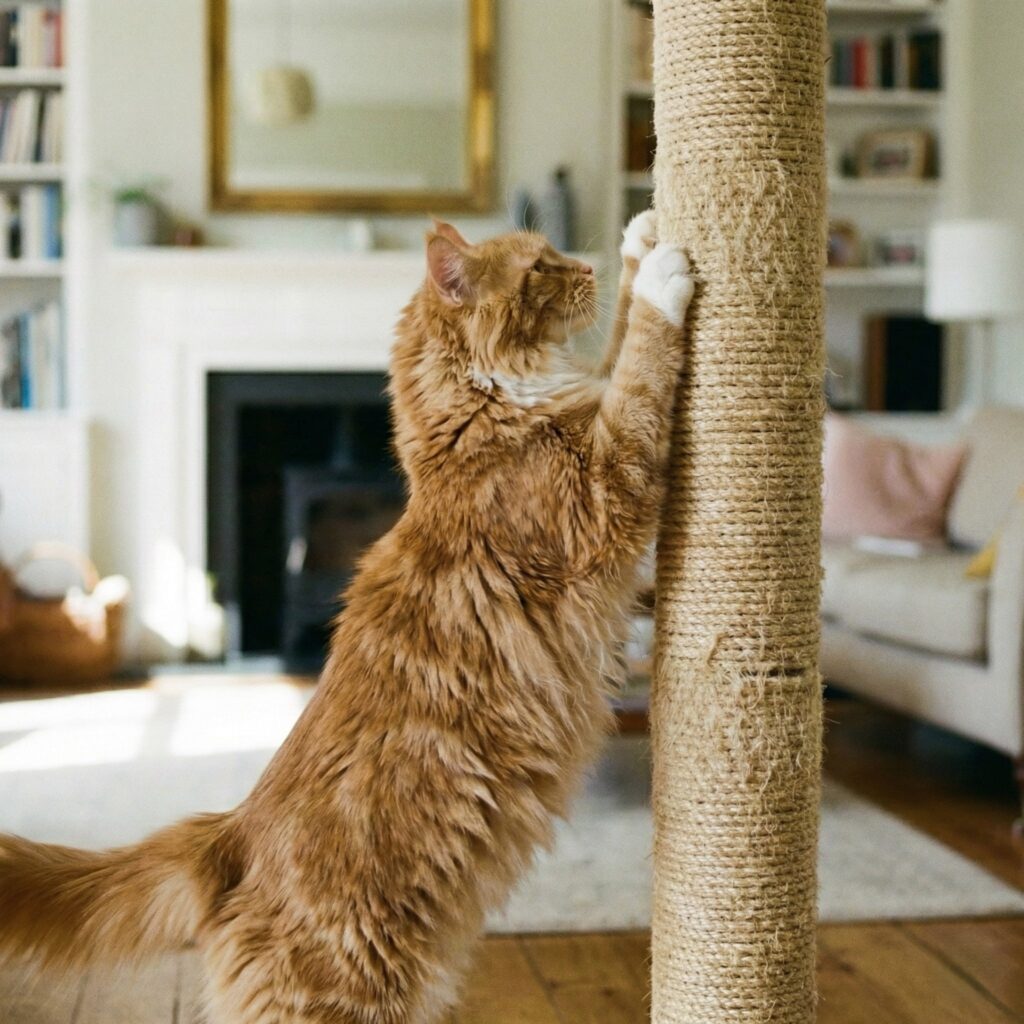
Cats scratch furniture to groom their claws, mark their territory with scent, stretch their muscles, and relieve stress. To stop it, you must provide appropriate alternatives like sturdy sisal posts, place them near the furniture being scratched, use deterrents like double-sided tape on the sofa, and reward your cat for using the correct scratching post.
Summary Table: Why Cats Scratch Furniture and Other Household Items
| Feature | Details |
| Primary Causes | Claw maintenance, territory marking, stretching, stress relief. |
| Best Materials | Sisal rope, corrugated cardboard, natural wood. |
| Worst Materials | Carpet (confusing), flimsy posts that wobble. |
| Placement | Near sleeping areas, high-traffic spots, or right next to the “victim” furniture. |
| Deterrents | Double-sided sticky tape, aluminum foil, citrus scents. |
| Maintenance | Trim nails every 2-3 weeks to reduce damage potential. |
Why Cats Scratch Furniture and How to Stop It
If you are reading this, you are likely looking at a shredded sofa arm or a frayed carpet corner and wondering why your cat is destroying your home. It is a common frustration for cat owners, but it is important to know that your cat is not doing this to be mean or spiteful. Scratching is a deeply ingrained, natural instinct that is essential for a cat’s physical and mental health.
This guide will break down exactly why cats scratch and provide a step-by-step plan to save your furniture without compromising your cat’s happiness.
Read Also: How to Tell If Your Cat Is in Pain
Understanding the “Why”: It’s Biology, Not Bad Behavior
Before you can fix the problem, you need to understand the motivation. Cats do not view your expensive leather recliner as furniture; they view it as a communication tool and a gym.
1. Claw Maintenance
A cat’s claw grows in layers, similar to an onion. As the claw grows, the outer layer (the sheath) loses its blood supply and dies. Scratching helps hook this dead outer layer and pull it off to reveal the sharp, healthy new claw underneath. This is known as “husking.” Without scratching, their nails can become overgrown and painful.
2. Scent Marking and Communication
Cats are territorial animals. They have scent glands located in their paw pads. When they scratch an object, they leave behind pheromones, chemical signals that other cats can smell but humans cannot. This is a way of claiming ownership. The physical scratch marks also serve as a visual signal to other animals that “a cat lives here.”
3. Stretching and Exercise
Have you noticed your cat often scratches immediately after waking up? Scratching allows them to extend their entire body, stretching the muscles in their back and legs. It is essentially cat yoga. This is why the height of a scratching post is so important; if they cannot reach up fully, they will find a sofa back that allows them to do so.
4. Stress and Excitement
Scratching is an emotional release. If a cat is anxious, perhaps due to a new pet or a change in routine, they may scratch to self-soothe. Conversely, they may scratch vigorously when they are excited to see you come home or before mealtime.
Read Also: 10 Best Ways to Remove Pet Hair from Your Car
The Solution: The “Yes” and “No” Method
Stopping destructive scratching requires a two-part approach. You cannot simply tell a cat “no.” You must tell them “no” to the sofa, while simultaneously saying “yes” to something else.
Step 1: Choosing the Right Scratching Post
Most cat owners buy the wrong type of scratching post, which is why their cats ignore it. If a post is not better than your sofa, your cat will not use it.
Texture Matters
- Sisal Rope: This is generally the gold standard. It is tough, shreds in a satisfying way, and allows the cat to really dig their claws in.
- Corrugated Cardboard: Many cats love the texture and sound of cardboard. These are usually cheaper and come in horizontal blocks.
- Natural Wood: Tree stumps or logs with bark are the most natural option if you have the space.
- Avoid Carpet: Do not buy scratching posts covered in carpet. It teaches your cat that scratching rug-like material is acceptable. Your cat will not understand the difference between the carpet on the post and the expensive rug in the hallway.
Stability is Crucial
If a cat scratches a post and it wobbles or tips over, they may never use it again. Your sofa is heavy and stable; the post must be too. Look for posts with wide, heavy bases. If you have a large cat (like a Maine Coon), you need a heavy-duty post that will not budge.
Size and Orientation
- Vertical Posts: These should be tall enough for your cat to stand on their hind legs and fully extend their body. A 30-inch post is a good minimum height for an adult cat.
- Horizontal Pads: Some cats prefer to scratch the ground rather than a wall. If your cat targets carpets, they likely prefer horizontal scratchers. Try a cardboard scratcher that lies flat on the floor.
Step 2: Strategic Placement
You cannot hide the scratching post in a back corner or the basement. Cats scratch to mark territory, so they want their mark to be in high-traffic areas where you spend your time.
Location Strategies:
- The “Copycat” Technique: Place the new scratching post immediately next to the furniture the cat is currently scratching. If they are ruining the left arm of the sofa, put the post right in front of the left arm.
- Social Areas: Put posts in the living room or wherever the family gathers.
- Sleeping Zones: Since cats scratch to stretch upon waking, placing a post near their favorite sleeping spot is highly effective.
Read Also: Why Does My Cat Lick Metal?
Step 3: Making the Furniture Unappealing
Now that you have provided a “Yes” option (the post), you must make the “No” option (the furniture) unpleasant.
Texture Deterrents
Cats have sensitive paws and hate sticky or slick surfaces.
- Double-Sided Tape: Apply sticky tape specifically designed for training cats (often called “Sticky Paws”) to the corners of your sofa. When the cat touches it, the sticky sensation will repel them.
- Aluminum Foil: Wrap the area in foil. The sound and texture are displeasing to most cats.
- Plastic sheeting: Smooth plastic covers prevent the claws from sinking in, removing the satisfaction of the scratch.
Scent Deterrents
Cats dislike citrus and menthol smells.
- Citrus Sprays: Use a lemon or orange-scented spray on the furniture (test a small area first to ensure it doesn’t stain).
- Commercial Deterrents: Pet stores sell bitter apple or herbal sprays designed to keep pets away.
Step 4: Positive Reinforcement
Punishment does not work well with cats. Yelling or spraying water often just makes them afraid of you, not the furniture. Instead, focus on praise.
- Treats and Catnip: Rub high-quality catnip into the sisal rope of the new post to attract them. When you see them use the post, immediately offer a treat or verbal praise.
- Play Therapy: Use a wand toy to lure the cat toward the post. Drag the toy up the post so the cat has to grab the post to catch the toy. This gets their paws in contact with the right surface.
Step 5: Routine Maintenance
Sometimes the damage happens simply because the claws are too sharp.
Trimming Nails
Trimming your cat’s nails every 2 to 3 weeks creates a blunt edge. This significantly reduces the damage they can inflict on furniture if they do scratch.
- Wait until the cat is sleepy.
- Gently press the paw pad to extend the nail.
- Snip only the white tip. Avoid the pink part (the quick), which contains blood vessels and nerves.
- If you are unsure, ask a vet or groomer to show you how.
Nail Caps
If training is failing, you can try soft plastic nail caps. These are glued onto the cat’s claws and last for 4-6 weeks. They prevent the claw from doing damage but still allow the cat to extend and retract their claws naturally.
Read Also: How to Know If a Cat is Hungry?
Common Mistakes to Avoid
1. Declawing
Never declaw your cat to protect furniture. Declawing (onychectomy) is not just a nail trim; it is the surgical amputation of the last bone in the cat’s toe.
It is the equivalent of cutting off a human finger at the top knuckle. It can lead to chronic pain, arthritis, refusal to use the litter box, and increased aggression (biting). Many countries have banned this practice due to its cruelty.
2. Throwing Away Shredded Posts
When a scratching post looks tattered and ugly, humans want to throw it away. Cats, however, love a shredded post. The damage proves it is “their” territory, and the broken fibers make it easier to grip. If you must replace it, leave the old one next to the new one for a week until they transfer their scent and habit to the new post.
3. Forcing the Paws
Do not grab your cat’s paws and physically force them to scratch the post. This can be frightening and may make them avoid the post entirely. Use toys or catnip to encourage them to touch it on their own.
Troubleshooting: Why Is My Cat Still Scratching?
If you have tried everything and your cat is still scratching the sofa, check these factors:
- Is the post tall enough? If they are crouching to use it, it is too short.
- Is the material right? Try switching from rope to cardboard, or wood to carpet (only on the post).
- Is there inter-cat conflict? In multi-cat households, scratching can be a sign of tension. One cat may be guarding the scratching post, forcing the other to use the sofa. Ensure you have multiple scratching posts in different rooms.
- Is the location right? If the post is in the corner, move it. It needs to be front and center until the habit is broken.
Conclusion
Saving your furniture does not mean suppressing your cat’s nature. It means redirecting it. By understanding that scratching is a healthy, biological necessity, you can stop taking the behavior personally and start managing the environment effectively.
Remember the formula: Provide a sturdy sisal post + Place it near the problem area + Make the furniture sticky or unappealing + Reward the good behavior.
With patience and consistency, your cat will transition to the post, and your furniture can remain safe.