
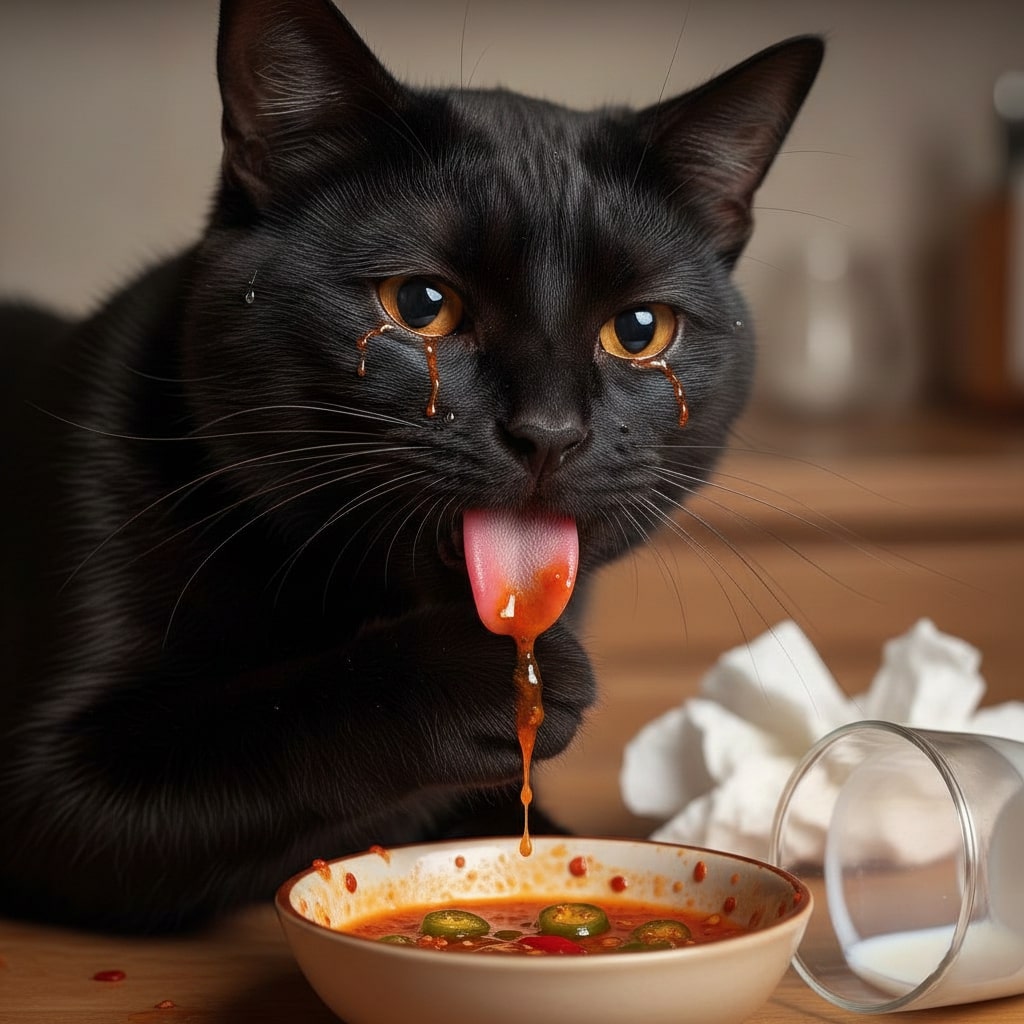
If you have ever accidentally dropped a piece of spicy pepperoni or spilled curry sauce, you might have noticed your cat sniff it and immediately recoil. Or, even worse, they might eat it and suffer later.
There is a common misconception that cats “lack” the ability to taste spicy food. The truth is more complex and more painful for our feline friends.
Cats vs. Humans
| Feature | Humans | Cats |
| Taste Bud Count | ~9,000 | ~470 |
| Primary Taste Craving | Sweet & Salty | Umami (Savory/Meaty) |
| Spiciness Receptor | TRPV1 (Detects heat & spice) | TRPV1 (Present & Functional) |
| Reaction to Capaicin | Flavor + Heat | Pain & Irritation |
| Missing Receptor | None | Sweetness (Tas1r2 gene is broken) |
1. The Myth: Do Cats Lack Spicy Receptors?
The short answer is no, they do not lack them. In fact, that is exactly why spicy food is a problem.
Many people confuse “spiciness” with “sweetness.” It is scientifically proven that cats lack the receptor for sweetness (they cannot taste sugar). However, spiciness is not actually a taste like sweet, sour, bitter, or salty.
Spiciness is a chemical reaction.
- The chemical in chili peppers that makes them hot is called Capsaicin.
- Capsaicin activates a specific receptor called TRPV1.
- This receptor is designed to detect dangerously hot temperatures. When you eat a chili, your brain literally thinks your mouth is on fire.
Cats have this exact same receptor. Because they have it, they do feel the heat. They don’t experience it as a “zesty flavor” like humans do; they experience it purely as physical pain and thermal distress.
Read Also: Can Cats Eat Pepperoni?
2. Why Cats Perceive Spice Differently
While humans have evolved to turn this “pain” signal into a pleasurable culinary experience (a “kick”), cats have no evolutionary framework for this.
The “Flavor” Gap
Because cats have far fewer taste buds than humans (470 vs. 9,000), they rely heavily on smell.
- Humans: We taste the complexity of the chili pepper (fruity, earthy) along with the burn.
- Cats: They likely do not taste the complex flavors of the pepper. They only feel the burning sensation caused by the capsaicin.
To a cat, spicy food isn’t “hot and tasty.” It is just painful.
3. The Evolutionary Reason: Obligate Carnivores
Why didn’t cats evolve to handle or enjoy spices? The answer lies in their ancestry.
- Strict Meat Eaters: Cats are “obligate carnivores.” This means their digestive systems and taste buds evolved strictly for meat.
- No Plant Detection Needed: Spices come from plants (peppers, roots, seeds). Since cats in the wild never needed to eat plants, they never developed the ability to process plant-based toxins or defensive chemicals like capsaicin.
- Food Safety: In the wild, a “burning” sensation usually signals toxicity or a physical threat (like a hot surface). A cat’s instinct when feeling the burn of a jalapeño is to assume they are being harmed, not fed.
4. The Dangers of Spicy Food for Cats
Since cats have receptors to feel the pain but not the stomach to digest the chemicals, spicy food can be dangerous.
Immediate Reactions
- Runny Nose & Watery Eyes: Just like humans, the capsaicin irritates their mucus membranes.
- Excessive Drooling: A sign of oral distress or nausea.
- Pawing at the Mouth: They may try to physically remove the “burning” source.
Internal Risks
- Gastrointestinal Upset: Vomiting and diarrhea are common as the cat’s body tries to purge the irritant.
- Hidden Toxins: Spicy foods often contain garlic and onion powder, which are highly toxic to cats and can cause anemia (damage to red blood cells).
Conclusion
Cats do not technically “lack” the receptor for spicy foods—they possess the specific receptor (TRPV1) that makes spicy food hurt!
Because they are evolved to eat fresh prey, not seasoned plants, their bodies treat capsaicin as a painful irritant rather than a tasty flavor profile. The only taste receptor they are truly “missing” is the one for sugar.