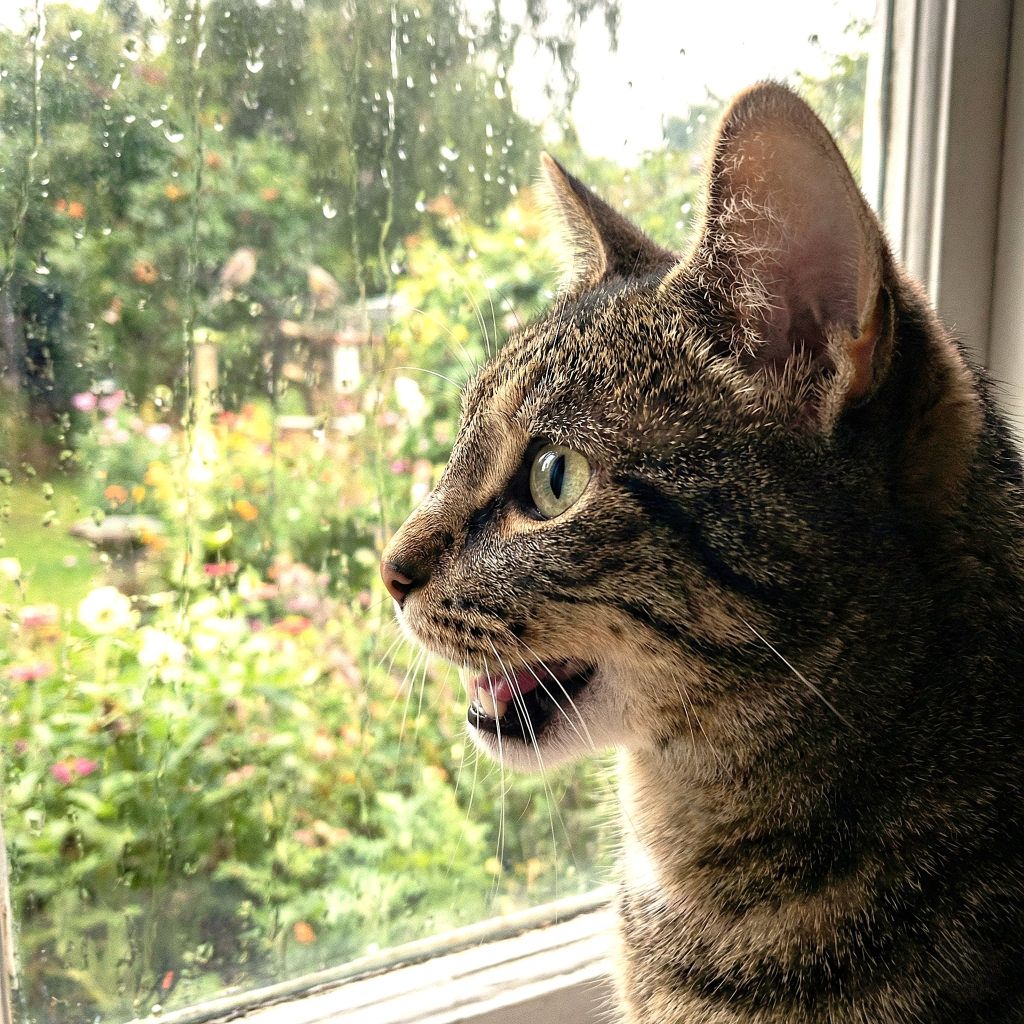
Cats chirp or chatter at birds primarily due to an instinctive predatory response. This distinct rapid jaw movement and sound mimics the “neck bite” wild cats use to subdue prey quickly. It also serves as an expression of intense excitement or frustration when a barrier, such as a window, prevents them from physically reaching the bird.
Summary Table: The Reasons Behind the Cat Chatter
| Theory | Explanation | Key Trigger |
| The Kill Bite | Mimicking the jaw movement used to sever prey’s spinal cord. | Visual sight of prey. |
| Frustration | Emotional reaction to being unable to reach the target. | Windows or screens. |
| Excitement | A surge of adrenaline and dopamine seeing potential prey. | Birds, squirrels, bugs. |
| Mimicry | Attempting to sound like prey to lure them closer. | Prey vocalizations. |
Why Cats Chirp or Chatter at Birds
If you share your home with a cat, you have likely witnessed a strange transformation when they spot a bird outside the window. Their pupils dilate, their tail starts to twitch, and they emit a strange sound. It isn’t a meow, a hiss, or a purr. It is a rapid, rhythmic clicking sound known as chattering, chirping, or twittering.
This behavior is fascinating because it seems almost involuntary. Even the most docile house cat will suddenly look like a wild predator when a pigeon lands on the windowsill. While scientists have not settled on a single definitive reason, there are several strong theories backed by animal behaviorists that explain why our feline friends make these peculiar noises.
Read Also: How Cats Use Scent to Communicate
1. The “Kill Bite” Reflex
The most widely accepted theory among evolutionary biologists is that chattering is a rehearsal for the kill. Cats are natural-born hunters. Even if your cat has never stepped foot outside or hunted a mouse in their life, they possess deep-rooted instincts passed down from their wild ancestors.
When a cat hunts in the wild, they rely on a specialized bite to take down prey efficiently. They bite the back of the neck, maneuvering their teeth between the neck vertebrae to sever the spinal cord. This is the safest and fastest way for a small predator to disable prey that might otherwise fight back.
Practicing the Motion
The chattering sound you hear is often caused by the rapid movement of the jaw. When a cat sees a bird, their brain sends signals to their jaw muscles to prepare for this bite.
- Muscle Memory: The jaw moves up and down quickly, mimicking the biting action.
- Anticipation: The cat is essentially “revving the engine” before the attack.
- Involuntary Action: This reaction is so strong that the cat may not even realize they are doing it.
In this context, the sound is just a byproduct of the jaw snapping together. It is not a communication tool, but a physical manifestation of a hunting sequence.
Read Also: Can Cats Eat Ice Cream?
2. Frustration and The Barrier Effect
While the kill bite theory explains the physical movement, it doesn’t fully account for the emotional state of the cat. Many behaviorists believe that chattering is also a vocal expression of frustration.
In the wild, a cat would stalk prey silently. Making a noise like chirping would alert the bird and cause it to fly away. A silent approach is crucial for a successful ambush. So, why do house cats make noise?
The Window Problem
The key difference is the barrier. When a cat stalks a bird in the yard, they are silent. When they watch a bird through a window, they chatter.
- Visual Access: The cat can see the prey clearly.
- Physical Block: The glass prevents the cat from completing the hunt.
- Emotional Conflict: The drive to hunt fights against the inability to act.
This conflict creates a surge of frustration. The chattering becomes a way to vent this pent-up energy. It is similar to a human sighing loudly or groaning when things don’t go their way. The cat wants the bird, the instinct to attack is triggered, but they physically cannot execute the final step.
3. The Surge of Adrenaline
Beyond frustration, there is pure excitement. Seeing prey triggers a massive chemical release in a cat’s brain.
- Dopamine: The anticipation of the reward (catching the prey) releases dopamine.
- Adrenaline: The body prepares for a burst of speed and strength.
- Cortisol: Stress hormones rise due to the intensity of the focus.
This chemical cocktail can be overwhelming. The chattering can be an overflow of this physiological arousal. The cat is vibrating with energy and needs a way to release it. You might notice other signs of high arousal accompanying the chatter, such as:
- Tail twitching: Specifically the very tip of the tail moving rapidly.
- Butt wiggling: Adjusting their hind legs to pounce.
- Pupil dilation: Eyes becoming large and black to take in more light and movement.
Read Also: Why Do Cats Stare at Walls?
4. The Mimicry Theory
A less common but compelling theory suggests that cats might be trying to mimic their prey. While this is rare in domestic cats, researchers have observed wild cats in the Amazon mimicking the calls of monkeys to lure them closer.
Deception Strategy
The idea is that by making a sound similar to a bird or a rodent (a high-pitched chirp or squeak), the cat might trick the prey into thinking there is no danger.
- Luring: Trying to get the bird to come closer to the window.
- Camouflage: Masking their presence as a predator.
While a house cat chattering at a crow probably won’t fool the bird, this could be an evolutionary remnant of a hunting strategy used by their ancestors.
Is This Behavior Harmful?
Many cat owners worry that their cat is in pain or distress when they hear the strange clicking sound of chattering teeth.
The Short Answer: No.
Chattering is a normal, natural behavior. It does not indicate pain, and it does not mean your cat’s teeth are damaging each other. However, it does indicate high stress or stimulation levels.
When to Intervene
While the behavior itself isn’t harmful, the frustration behind it can lead to displaced aggression.
- Redirected Aggression: If a cat is highly worked up by a bird they can’t reach, and you touch them, they might lash out and bite you. They aren’t angry at you; they are just in “kill mode.”
- Obsession: If your cat spends all day at the window shaking and chattering, they might be chronically stressed.
Read Also: Why Do Cats Bring You “Gifts”?
How to Manage the Instinct
You cannot stop a cat from chattering—it is hardwired into their DNA. However, you can help them manage the energy that comes with it. If your cat seems overly frustrated by the birds outside, use that energy for play.
The “Hunt, Catch, Kill, Eat” Cycle
To satisfy your cat, you need to help them complete the predatory sequence that the window interrupted.
- Identify the Trigger: Notice when your cat is chattering at a bird.
- Engage: Grab a wand toy, a laser pointer, or a feather toy.
- Simulate the Hunt: Move the toy like prey (erratic movements, hiding behind furniture).
- Let Them Win: Allow the cat to catch the toy. This satisfies the “kill bite” urge.
- Feed: Give them a treat or their dinner immediately after play.
This completes the cycle and allows the cat to relax, reducing the frustration caused by the window barrier.
Frequently Asked Questions
Why do cats chatter at me when I sneeze?
Some cats chatter when their owners sneeze, cough, or make sudden noises. This is likely a startled response or an acknowledgment of the sound, rather than a predatory instinct.
Do big cats like lions chatter?
Generally, no. Lions and tigers roar and growl. Chattering is mostly observed in smaller wild cats and domestic cats who hunt small, fast-moving prey like birds and rodents.
Why does my cat chatter at a laser pointer?
Just like with a bird behind glass, a laser pointer is prey that cannot be caught. The cat can chase it but never physically grab it (the “tactile kill”). This causes the same frustration and excitement loop, leading to chattering.
Is it okay to let my cat watch “Cat TV” videos of birds?
Yes, these videos are great enrichment. However, just like with real windows, ensure you play with your cat afterward so they don’t get frustrated by the inability to catch the digital birds.
Conclusion
The next time you hear your cat clicking and squeaking at the window, you are witnessing nature in action. Whether it is the frustration of a blocked path, the overwhelming excitement of the hunt, or the muscle memory of the “kill bite,” your cat is showing you that inside their fluffy exterior, the heart of a predator still beats.
This behavior is a healthy sign of a sharp mind and strong instincts. By understanding it, you can appreciate your cat’s wild side and even use that energy to bond with them through interactive play.