
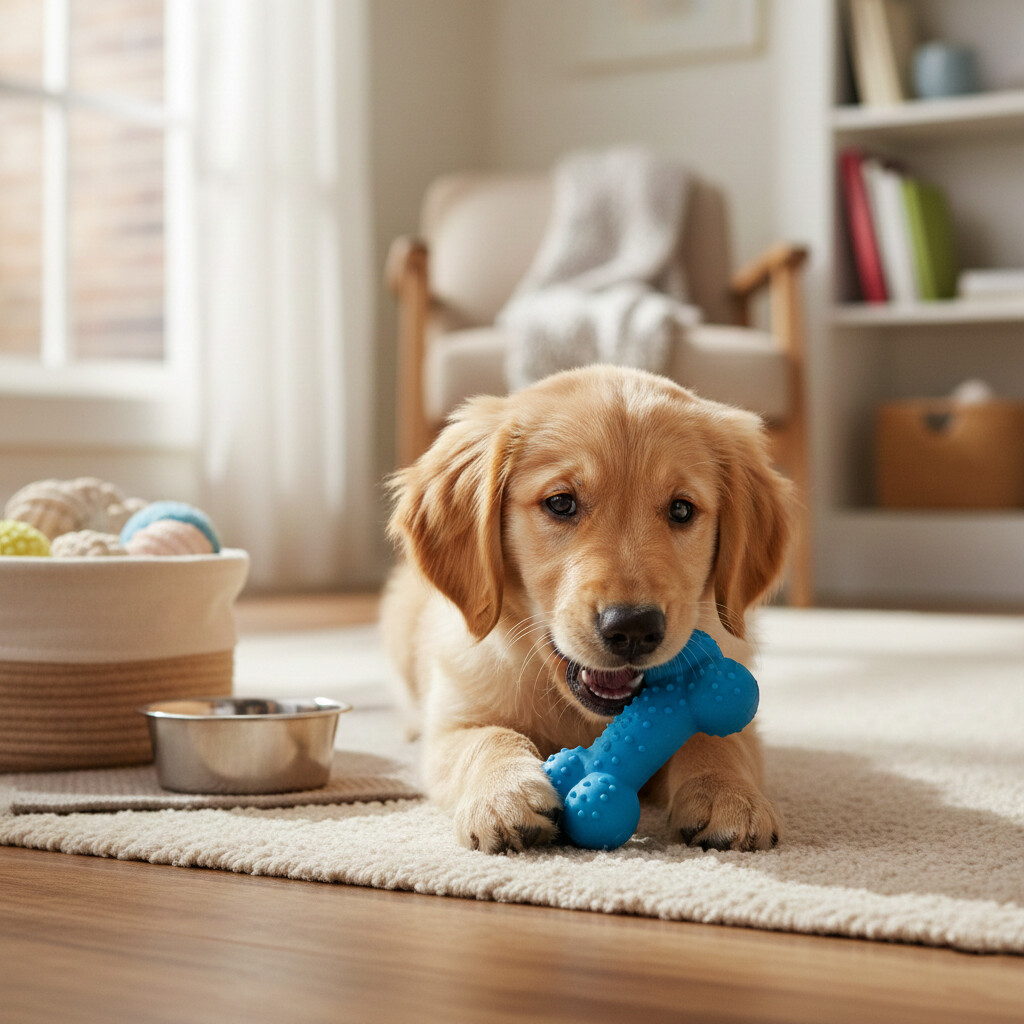
Most puppies finish teething by six to seven months of age. By this time, all 28 baby teeth should have fallen out and been replaced by 42 permanent adult teeth. The most intense teething pain typically occurs between 12 and 16 weeks, when the adult teeth begin pushing through the gums.
Summary Table: Puppy Teething Timeline
| Age of Puppy | Teething Stage | What Is Happening? |
| 0 to 2 Weeks | Toothless | Puppies are born without teeth; they only nurse. |
| 3 to 4 Weeks | Eruption Begins | Baby incisors and canines (fangs) start poking through. |
| 6 to 8 Weeks | Full Baby Set | All 28 “deciduous” (baby) teeth are present. |
| 12 to 16 Weeks | Losing Teeth | Baby teeth start falling out; adult incisors emerge. |
| 4 to 6 Months | Peak Teething | Adult premolars and canines erupt; chewing urge is highest. |
| 6 to 7 Months | Teething Ends | All 42 adult teeth should be in place. |
When Do Puppies Stop Teething? The “Land Shark” Phase
If you have recently welcomed a new puppy into your home, you might feel less like a pet owner and more like a chew toy. You are not alone.
The teething phase is often affectionately and painfully called the “Land Shark” phase. Your sweet puppy suddenly seems determined to nip your fingers, gnaw on your furniture, and shred your shoes.
While this behavior can be frustrating, it is a completely normal biological process. Just like human babies, puppies experience significant discomfort when their adult teeth push through their gums.
Chewing helps relieve that pressure. Understanding the timeline of this process is the first step to saving your sanity and your belongings.
This guide will walk you through exactly when puppies stop teething, the week-by-week stages, and how you can manage the pain (and the biting) effectively.
Read Also: How Do Puppies Learn Bite Inhibition?
The Detailed Puppy Teething Timeline
Dog owners often ask, “How long does this last?” The process is relatively fast compared to humans, but it feels like a lifetime when you are the one being chewed on. Here is exactly what is happening inside your puppy’s mouth at every stage.
Birth to 2 Weeks: The Toothless Stage
When puppies are born, they are completely toothless. They do not need teeth yet because their only source of nutrition is their mother’s milk. Their gums are smooth, and they spend their time sleeping and nursing.
Weeks 3 to 4: The First Eruption
Around the three-week mark, the first milk teeth begin to break through the gum line. The first teeth to appear are usually the incisors (the small front teeth), followed quickly by the canines (the sharp fangs).
You might notice the mother dog starting to discourage nursing during this time because those tiny teeth are razor-sharp.
Weeks 6 to 8: The Full Set of Baby Teeth
By the time a puppy is ready to leave the breeder and come home to you (usually around 8 weeks), they have a full mouth of 28 deciduous teeth. These teeth are incredibly sharp, often described as needles.
They are sharp for a reason: in the wild, this would help a puppy tear into solid food quickly before they have the jaw strength of an adult.
Weeks 12 to 16: The Big Switch
This is where the real trouble and the real teething begins. Around 3 to 4 months of age, the roots of the baby teeth start to reabsorb into the body. This causes the baby teeth to loosen and fall out.
You might find tiny teeth on your carpet, near their water bowl, or stuck in a chew toy.
Often, you won’t find them at all because the puppy simply swallows them while eating (which is perfectly safe). The adult incisors are usually the first permanent teeth to take their place.
Months 4 to 6: The Heavy Teething Stage
This is the most intense period. During this window, the baby canines and premolars fall out, and the much larger adult versions push their way through. This causes significant gum soreness.
Your puppy will likely be obsessed with chewing during this time to massage their aching gums. Their mouth is undergoing a massive construction project, making room for big, strong adult teeth.
Months 6 to 7: The Final Stage
By the time your dog reaches the seven-month mark, the process is usually complete. The molars (the large teeth at the very back) are the last to come in.
A healthy adult dog should have 42 permanent teeth that is 10 more than adult humans have! If your puppy is past seven months and still retains baby teeth, you may need to consult a veterinarian.
Signs Your Puppy is Teething
Aside from finding a rice-sized tooth on your floor, how do you know if your puppy is currently in pain? Dogs cannot tell us their gums hurt, but their behavior speaks volumes.
Physical Symptoms
- Red, swollen gums: If you lift your puppy’s lip, the gums might look angry and red rather than a healthy bubblegum pink.
- Bleeding: You might spot small smears of blood on their favorite soft toy or rope. A small amount is normal as teeth break through; excessive bleeding is not.
- Drooling: Puppies drool more when they are teething because their salivary glands are more active.
- Missing teeth: You may notice gaps in their smile where a baby tooth has fallen out and the adult tooth hasn’t fully emerged yet.
- Droopy ears: In some breeds with upright ears (like German Shepherds), the ears may droop or look “wonky” during teething. This is due to the body diverting calcium to tooth production, though they usually perk back up once teething ends.
Behavioral Symptoms
- Increased chewing: They will chew anything—table legs, baseboards, remote controls, and your hands.
- Whining or irritability: Your usually happy puppy might be cranky, restless, or have trouble settling down for a nap.
- Eating slowly: If their mouth is very sore, they might eat their kibble more cautiously or even spit it out.
- Regression in training: A puppy that was previously learning “sit” or “stay” might suddenly seem unable to focus due to the distraction of pain.
Read Also: How to Stop Excessive Barking?
How to Soothe a Teething Puppy
Managing your puppy’s pain is the best way to save your furniture. If you provide them with appropriate relief, they will be less likely to seek out your shoes.
The Cold Therapy Method
Cold is nature’s anesthetic. It numbs the gums and reduces inflammation.
- Frozen Carrots: Take a whole, large carrot and freeze it. It is cheap, healthy, edible, and provides a nice crunch that soothes the gums. Safety Note: Monitor them so they don’t choke on the last small chunk.
- Frozen Washcloth: Wet a clean washcloth, twist it into a rope shape, and freeze it rock-hard. Let your puppy chew on it. The texture of the fabric cleans their teeth while the cold numbs the pain. Always supervise this to ensure they don’t swallow the fabric.
- Ice Cubes: Many puppies love chasing and crunching on simple ice cubes. You can also freeze low-sodium beef broth in ice cube trays for a tasty treat.
The Right Chew Toys
Not all toys are safe for teething puppies. You want toys that are durable but soft enough not to fracture their fragile new teeth.
- Rubber Chews (e.g., Kong): Soft rubber toys that can be stuffed with peanut butter or yogurt and frozen are the gold standard. They provide mental stimulation and physical relief.
- Teething Rings: Look for toys with nubs or ridges. These textures massage the gums as the puppy chews.
- Edible Chews: Bully sticks or yak cheese chews can be good options, but avoid very hard bones or antlers, which can crack puppy teeth.
Management and Prevention
- Rotate Toys: Puppies get bored. Keep a few toys hidden and swap them out every few days to keep them exciting.
- Puppy Proofing: If you don’t want it chewed, pick it up. Use bitter spray on furniture legs, but remember that physical barriers (like baby gates) are more effective than sprays.
Training: Stopping the Nipping
Teething often leads to “play biting,” where the puppy mouths your hands. This is the critical time to teach Bite Inhibition.
When a puppy bites you, they aren’t trying to be mean; they are exploring and trying to relieve pain. However, you must teach them that human skin is fragile.
- The “Ouch” Method: When their teeth touch your skin, make a high-pitched “Ouch!” sound and go limp. This mimics how littermates communicate that play got too rough.
- Redirect: Immediately after the “Ouch,” hand them an appropriate chew toy. Praise them lavishly when they chew the toy instead of you.
- The Time-Out: If the biting continues, calmly remove yourself from the room for 30 seconds. This teaches the puppy that biting equals the end of fun.
Common Teething Problems
Most puppies sail through teething with just a bit of drool, but sometimes medical issues arise.
Retained Deciduous Teeth
This is the most common issue. It happens when the root of the baby tooth doesn’t reabsorb properly, so the baby tooth stays in place while the adult tooth tries to squeeze in beside it. This looks like two rows of teeth (often called “shark teeth”).
- Where to look: This is most common in the canine teeth (fangs).
- Why it’s bad: It traps food and debris between the two teeth, leading to early periodontal disease. It can also cause the adult tooth to grow at a painful angle (malocclusion).
- What to do: If you see two teeth occupying the same spot, consult your vet. They may need to remove the baby tooth surgically, often done at the same time as spaying or neutering.
Base Narrow Canines
In some breeds, the lower canine teeth grow inward and poke into the roof of the mouth. This is very painful and requires immediate veterinary dental intervention.
Malocclusion (Bad Bite)
If the upper and lower jaws don’t grow at the same rate, the teeth may not align properly (overbite or underbite). While sometimes genetic, retained baby teeth can make this worse.
Read Also: How Dogs Communicate With Other Dogs?
Dental Care
You shouldn’t wait until teething is over to think about dental hygiene. In fact, the teething phase is the best time to get your puppy used to having their mouth handled.
The “Finger” Introduction
Don’t worry about scrubbing the teeth yet. Just dip your finger in something tasty (like dog-safe peanut butter or excessive dog toothpaste) and gently rub their gums and teeth. Do this daily.
Brushing
Once the adult teeth are in (around 6 months), introduce a soft-bristled toothbrush.
- Use Dog Toothpaste: Never use human toothpaste. It contains fluoride and xylitol, which are toxic to dogs. Dog toothpaste comes in flavors like poultry and beef.
- Focus on the Outside: Most tartar builds up on the outside surfaces of the teeth (the side touching the cheek). You don’t need to fight to brush the inside surfaces as much.
Conclusion
The teething phase is intense, but it is temporary. By the time your puppy is seven months old, the days of finding blood on your carpet and teeth marks on your sneakers will be behind you.
Until then, your job is to be patient. Stock your freezer with carrots and washcloths, keep your valuable shoes in the closet, and focus on positive redirection.
Every time you swap your hand for a toy, you are helping your puppy grow into a well-behaved dog with a healthy set of adult teeth.