
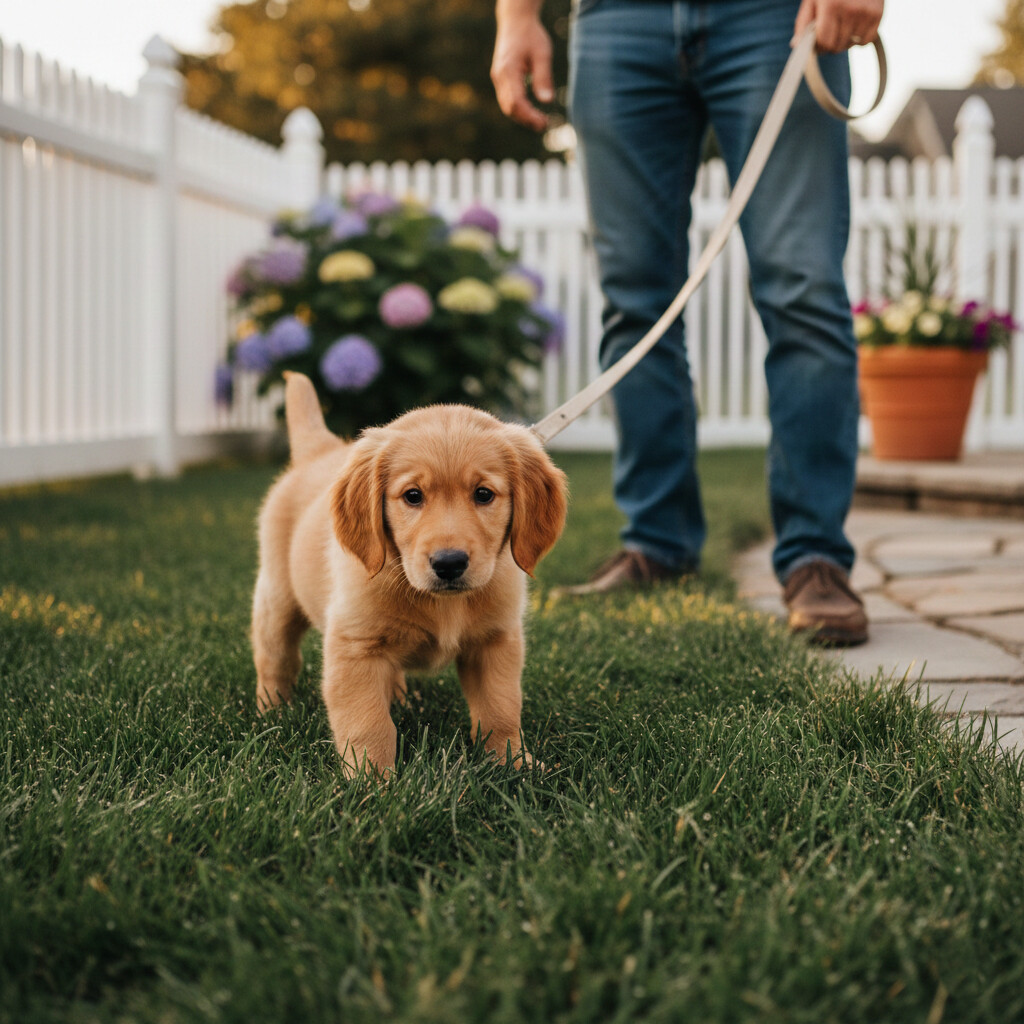
Puppies can safely explore private, enclosed backyards as early as 8 weeks old, provided no unvaccinated dogs have visited recently. However, for public areas like parks, sidewalks, and pet stores, you must wait until they are fully vaccinated, typically around 16 weeks of age. This is usually two weeks after their final round of booster shots. Always consult your veterinarian for the specific disease risks in your local area.
Summary Table
| Age Range | Safe Areas | Unsafe Areas | Primary Goal |
| 8–10 Weeks | Private home, enclosed backyard | Sidewalks, parks, pet stores | Potty training, bonding |
| 10–14 Weeks | Car rides, carrying them in public | Dog parks, unknown dogs | Socialization (no paws on ground) |
| 16+ Weeks | Everywhere (after vet clearance) | None (if fully vaxxed) | Leash walking, active play |
When Can Puppies Start Going Outside?
Bringing a new puppy home is exciting, but it comes with a lot of questions. The biggest one is usually about freedom. You want to show your new furry friend the world, go for walks, and start potty training immediately. But you also hear scary warnings about diseases.
So, where is the middle ground?
The short answer is that it depends on where “outside” is. There is a big difference between your fenced backyard and a public dog park.
This guide will walk you through the timeline of puppy safety, vaccinations, and how to socialize your dog without putting their health at risk.
Read Also: How Much Sleep Do Puppies Need?
The Golden Rule: 16 Weeks
For full freedom, meaning walks on public sidewalks, trips to the pet store, and playdates at the dog park, the magic number is usually 16 weeks.
This is not an arbitrary number. It is based on the typical vaccination schedule. Puppies receive a series of “booster” shots to build up their immune system. Until that series is complete, they are vulnerable to serious and potentially fatal illnesses.
However, keeping a puppy locked inside a crate for four months is not practical or healthy. You need to balance physical safety with mental development.
Vaccination Schedule
To know when you can go out, you need to understand what is happening inside your puppy’s body. When puppies are born, they get antibodies from their mother’s milk. These antibodies protect them for the first few weeks of life, but they fade over time.
Vaccines take over where the mother’s antibodies leave off. Here is a typical schedule:
- 6 – 8 Weeks: First round of DHPP (Distemper, Hepatitis, Parvovirus, Parainfluenza).
- 10 – 12 Weeks: Second round of DHPP.
- 14 – 16 Weeks: Third round of DHPP and Rabies.
Important Note: Your puppy is not considered “fully vaccinated” until about two weeks after the final shot. The body needs that time to build up full immunity.
The “Backyard Exception”
You do not have to wait until 16 weeks to go into your own backyard. In fact, you shouldn’t wait!
If you have a private, fenced yard that is not accessible to stray dogs or wildlife, it is generally considered safe for an 8-week-old puppy. This is crucial for potty training.
Safety Checklist for Your Backyard:
- Ensure no strange dogs have been in the yard recently.
- Check for gaps in the fence where a puppy could squeeze through.
- Remove toxic plants or dangerous debris.
- Avoid areas with standing water (which can carry bacteria like Leptospirosis).
If you live in an apartment and do not have a private yard, the situation is different. You may need to use puppy pads on a balcony or a designated “indoor potty spot” until they are fully vaccinated.
The Socialization Dilemma
Here is the problem: The window for socialization closes before the window for vaccination opens fully.
The “critical socialization period” for dogs is generally between 3 and 14 weeks. During this time, a puppy needs to experience new sights, sounds, smells, and people. If they don’t, they may grow up to be fearful or aggressive.
If you keep your puppy inside a white room until 16 weeks to avoid disease, you might protect them from Parvo, but you put them at risk for behavioral issues later in life.
How to solve this: You must socialize them safely. You can take them out into the world, but their paws should not touch public ground.
Safe Ways to Socialize Before Full Vaccination
You can and should take your puppy out of the house before 16 weeks. You just have to be smart about it. Think of the ground as “lava.”
1. The “Carry” Method
Walk around your neighborhood carrying your puppy in your arms. Let them see cars, bicycles, children, and other dogs from a distance. They get the mental stimulation without the risk of touching contaminated soil.
2. Use a Stroller or Sling
If your puppy is getting heavy, use a dog stroller or a wearable sling. This is a great way to take them to busy areas like outdoor coffee shops or parks while keeping them completely safe.
3. Car Rides
Take your puppy on short car rides. This gets them used to the motion of the vehicle (preventing carsickness later) and lets them see the world through the window.
4. Blanket Training
Bring a large, clean blanket to a park. Sit on the blanket with your puppy. Do not let them step off the blanket. They can watch the world go by from their safe island.
The Dangers: Why We Wait
Why are vets so strict about the 16-week rule for public walking? The main culprit is Parvovirus, often called “Parvo.”
What is Parvo?
Parvo is a highly contagious virus. It causes severe vomiting, bloody diarrhea, and lethargy. It can be fatal, especially for puppies.
Where does it live?
Parvo is terrifying because it is incredibly hardy. It can live in the soil for a year or more. Even if you don’t see another dog, a sick dog could have walked on that grass six months ago, and the virus could still be there.
Other risks include:
- Distemper: An airborne virus that attacks the respiratory and nervous systems.
- Leptospirosis: A bacteria found in urine and standing water.
- Parasites: Roundworms and hookworms are commonly found in public dirt.
Read Also: How Long Does It Take to Train a Dog?
Safe vs. Unsafe Zones
To make it easy, here is a breakdown of where you can go based on risk levels.
Green Light (Safe)
- Your Home: The safest place.
- Private Backyard: Safe if enclosed and wildlife-free.
- Friends’ Homes: Safe if their dogs are fully vaccinated and healthy.
Yellow Light (Proceed with Caution)
- Pavement: Concrete is generally safer than dirt or grass because it doesn’t hold viruses as well, but it is still risky in high-traffic areas.
- Hardware Stores: Some stores allow dogs and have concrete floors, but ensure your puppy doesn’t lick the floor.
Red Light (Avoid Until 16 Weeks)
- Dog Parks: The highest risk zone. Never take a puppy here.
- Pet Stores: Do not let your puppy walk on the floor at a pet store. Many sick dogs visit these stores.
- Public Grass: Any patch of grass near a sidewalk is a potential toilet for other dogs. Avoid it.
Puppy Classes: A Special Case
You might wonder, “Can I take my puppy to a training class?”
Yes! The American Veterinary Society of Animal Behavior (AVSAB) recommends puppy classes before vaccinations are fully complete.
Why? Because reputable training centers require proof of age-appropriate vaccinations for all puppies. They also sanitize their floors with heavy-duty cleaners that kill viruses. This creates a “herd immunity” bubble where puppies can socialize safely. Always check the facility’s cleaning protocols before signing up.
Potty Training Without a Yard
If you live in an apartment, the “no outside” rule is tricky. You can’t just open a door to a private yard.
Option 1: Indoor Grass Patches
Use a fresh grass patch subscription service. These are boxes of real grass you keep on your balcony or in your bathroom. It teaches the puppy to sniff grass to pee, which makes the transition to outside easier later.
Option 2: The “Low Traffic” Spot
If you must go outside, find a concrete spot that is not frequented by other dogs. Carry your puppy to the spot, set them down to do their business, and carry them immediately back inside. Wipe their paws with puppy-safe wipes when you get in.
Read Also: How Dogs Communicate With Other Dogs?
Signs Your Puppy Might Be Sick
Even if you are careful, puppies have weak immune systems. If you have been outside and notice these symptoms, call your vet immediately:
- Loss of appetite
- Extreme tiredness (lethargy)
- Vomiting
- Diarrhea (especially if it smells metallic or contains blood)
- Coughing or a runny nose
Frequently Asked Questions
Can my puppy play with my neighbor’s dog?
Only if you are 100% sure the neighbor’s dog is fully vaccinated and healthy. If the other dog goes to dog parks frequently, it might be safer to wait.
What if I have foxes or raccoons in my yard?
Wildlife can carry diseases like Distemper and Rabies. If you have frequent wildlife visitors, supervise your puppy closely in the backyard and check for droppings before letting them out.
Can I walk my puppy on the sidewalk if I watch them?
It is risky. You can’t see the virus. A sick dog could have walked there hours ago. It is better to carry them.
When can my puppy go to the groomer?
Most groomers require full vaccinations (including Rabies), so you will typically have to wait until 16 weeks. You can do “grooming training” at home by brushing them and handling their paws.
Conclusion
Raising a puppy is a balancing act. You want them to be safe from disease, but you also want them to be confident and happy in the world.
You do not need to choose one or the other. By using the “16-week rule” for public walking, but using carriers, car rides, and backyard play for early socialization, you get the best of both worlds.
Respect the virus, but don’t let fear keep you from showing your puppy how wonderful the world can be. Just keep those paws off the ground until the vet gives you the thumbs up!