
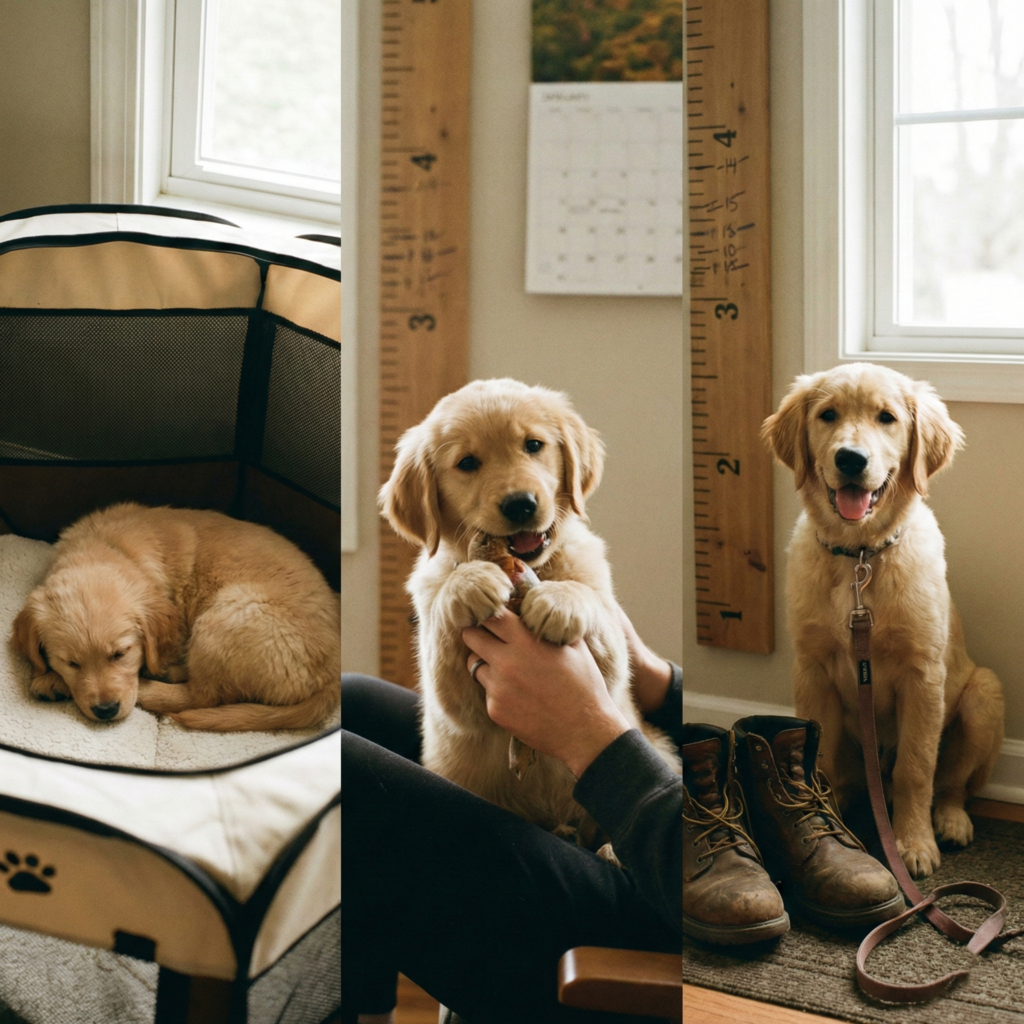
During a puppy’s first 90 days, expect a transition often described by the “3-3-3 Rule.” In the first 3 days, the puppy is overwhelmed and decompressing. During the first 3 weeks, they settle into a routine and bond with you. By 3 months, they feel at home, build confidence, and may begin testing boundaries.
Summary Table
| Timeline | Key Phase | Primary Focus | Vet & Health Needs |
| Days 1-3 | Decompression | Safety, comfort, and immediate potty spots. | Check for fleas/worms; schedule first exam. |
| Weeks 1-3 | Routine Building | Crate training, name recognition, and sleep schedule. | First round of vaccinations (DHPP). |
| Weeks 4-8 | Socialization | Meeting new textures, sounds, and people safely. | Second round of vaccinations; heartworm prevention. |
| Month 3 | Boundary Testing | Bite inhibition, impulse control, and “Sit/Stay.” | Final puppy shots; discussion on spay/neuter. |
What to Expect During a Puppy’s First 90 Days?
Bringing a new puppy home is life-changing. While social media is full of cute photos, the reality of the first three months involves sleepless nights, sharp teeth, and cleaning up accidents. This period is critical because your dog is learning how to be a member of your family.
Many dog trainers and behaviorists use a timeline similar to the “3-3-3 Rule” to explain how a dog adjusts to a new environment. This guide breaks down the first 90 days into three distinct phases: The First 3 Days, The First 3 Weeks, and The First 3 Months.
Read Also: Puppy Care & Development
Phase 1: The First 3 Days (The Decompression Phase)
The first 72 hours are the most intense. Your puppy has just been removed from their mother and littermates. They are likely confused, frightened, and overstimulated. Do not expect perfect behavior during this time. Your only goal is to make them feel safe.
1. Overwhelming Emotions
Your puppy may seem shy or withdrawn. Some puppies hide under furniture, while others may pace anxiously. This is normal. They are experiencing sensory overload from new smells, sights, and sounds.
- What to do: Keep your home quiet. Limit guests. Do not introduce them to the whole neighborhood yet.
- What to avoid: Do not correct them harshly. They don’t know the rules yet.
2. Disrupted Sleep
Puppies sleep a lot, up to 18 to 20 hours a day, but they rarely sleep through the night immediately. They are used to sleeping in a pile with their littermates for warmth and comfort. Sleeping alone in a crate is a massive shock.
- Expect crying: Whining and howling at night are standard in the first few days.
- Comfort items: Use a “Snuggle Puppy” (a plush toy with a heartbeat) or a warm blanket to mimic their littermates.
3. Potty Accidents
Your puppy has zero bladder control right now. If they are 8 weeks old, they can physically hold their bladder for only about two hours. In a new environment, anxiety can make them go even more frequently.
- Immediate Action: Take them to the designated potty spot immediately upon waking up, after eating, and after playing.
- Positive Reinforcement: When they go outside, praise them heavily. If they have an accident inside, just clean it up. Scolding them for accidents in the first three days is confusing and damages your bond.
4. Appetite Fluctuations
Don’t panic if your puppy doesn’t eat a full meal on the first day. Stress often suppresses appetite.
- Tip: Mix a little warm water or low-sodium chicken broth into their kibble to make it smell more appealing.
Phase 2: The First 3 Weeks (The Routine Phase)
After the initial shock wears off, your puppy will start to show their true personality. This is the “sponge” phase, where they soak up information about their daily life. This is the time to establish the house rules.
1. The “Velcro” Stage
Your puppy will likely start following you everywhere. This is a natural survival instinct; they look to you as their parent figure. While sweet, you need to gently teach independence to prevent Separation Anxiety later.
- Practice separation: Leave them in their playpen or crate for 5 to 10 minutes while you are in another room. They need to learn that you always come back.
2. Crate Training and Housebreaking
By week three, your puppy should begin to understand the concept of the crate and the potty spot.
- Crate Training: The crate should be their safe haven, not a punishment zone. Feed them meals in the crate so they associate it with good things.
- Potty Signals: Watch for signs like sniffing the ground, circling, or whining. These are your cues to rush them outside.
3. Nipping and Biting (The Piranha Phase)
Puppies explore the world with their mouths. During these weeks, you will feel their razor-sharp needle teeth. They are not being aggressive; they are playing.
- Bite Inhibition: When they bite too hard, make a high-pitched “Ouch!” sound and stop moving. This teaches them that biting stops the fun.
- Redirection: Always have a toy handy. If they bite your hand, offer the toy instead.
4. First Vet Visits and Vaccinations
During this window, you will likely visit the vet for the first or second round of vaccinations.
- The Shots: Expect the DHPP vaccine (Distemper, Hepatitis, Parvovirus, Parainfluenza).
- Parasites: De-worming is common, as most puppies are born with some intestinal worms.
Read Also: Why Dogs Listen Better to Calm Voices
Phase 3: Months 2 to 3 (The Confidence Phase)
By the time your puppy has been with you for 90 days, they know they are home. They know the routine, they know their name, and they trust you. However, comfort can lead to boundary testing. This is often when puppies start getting into trouble because they are brave enough to explore away from you.
1. Socialization Window Closing
The critical socialization window for dogs closes around 14 to 16 weeks. The first 90 days are your golden opportunity to expose them to the world.
- Socialization Checklist:
- Surfaces: Grass, gravel, tile, carpet, wet pavement.
- Sounds: Vacuums, thunder, doorbells, traffic.
- People: Men with beards, people wearing hats, children, and seniors.
- Handling: Touching their paws, ears, tail, and mouth (prep for grooming and vet visits).
- Important Note: Socialization does not mean letting your dog run up to every dog they see. It means teaching them to be calm and neutral while observing the world.
2. Teething Intensifies
Around the 3-month mark, your puppy may start losing their baby teeth. Their gums will be sore, and the urge to chew will be stronger than ever.
- Furniture Protection: Spray bitter apple spray on table legs or baseboards if your puppy starts gnawing on them.
- Frozen Treats: Freeze a wet washcloth (supervised) or a carrot for them to chew on to soothe their gums.
3. Testing Boundaries
Just like a human child, a puppy will test what they can get away with. They might refuse to “Sit” even though they know how, or they might jump on the couch after being told “Off.”
- Consistency is Key: Do not bend the rules. If they are not allowed on the couch today, they cannot be allowed on the couch tomorrow just because they look cute.
4. Leash Manners
By 90 days, your puppy should be getting used to wearing a collar and leash. Walking on a leash is a skill that must be taught; it is not natural for dogs.
- The Goal: You aren’t looking for a perfect “heel” yet. You just want them to walk without pulling frantically or refusing to move (pancaking).
Read Also: How to Correct Dog Unwanted Behaviors Without Punishment?
Essential Topics for the First 90 Days
To ensure you are fully prepared, here are specific details on the most critical aspects of raising a puppy during this time.
Nutrition and Feeding
Your puppy grows rapidly in the first three months. They need high-quality food formulated specifically for “Growth” or “All Life Stages.”
- Frequency: Puppies under 3 months usually need to eat 3 to 4 times a day to keep their blood sugar stable.
- Transitioning Food: If you change their food brand, do it gradually over 7 days to avoid diarrhea.
Sleep Schedule
A tired puppy is a naughty puppy. If your puppy is biting excessively or running around frantically (the “Zoomies”), they are likely overtired.
- Enforced Naps: Puppies are terrible at self-regulating. You must put them in their crate or pen for a nap. A common schedule is “1 hour awake, 2 hours asleep.”
Health Watchlist
Keep an eye out for these warning signs during the first 90 days:
- Vomiting or Diarrhea: Especially if it contains blood. This could be Parvo, which is a medical emergency.
- Lethargy: If your puppy won’t play or eat, call the vet.
- Coughing: A dry, honking cough could be Kennel Cough.
Common Mistakes to Avoid
- Too Much Freedom Too Soon: Giving a puppy free roam of the house usually leads to destroyed shoes and hidden pee stains. Keep them tethered to you or in a “puppy-proofed” zone.
- Using the Crate for Punishment: Never throw a puppy in the crate when you are angry. They will learn to hate it.
- Inconsistent Training: If Mom says “Down” but Dad lets the puppy jump up, the puppy will never learn. Everyone in the household must use the same command words.
Conclusion
The first 90 days with a puppy are a rollercoaster of highs and lows. You will have moments of frustration where you wonder, “What have I done?” followed by moments of pure joy when they snuggle into your lap.
Remember that development is not linear. You might have a great week, followed by a regression where they forget their potty training. This is normal. Stick to your routine, keep your patience high, and take plenty of pictures, they won’t stay this small for long.