
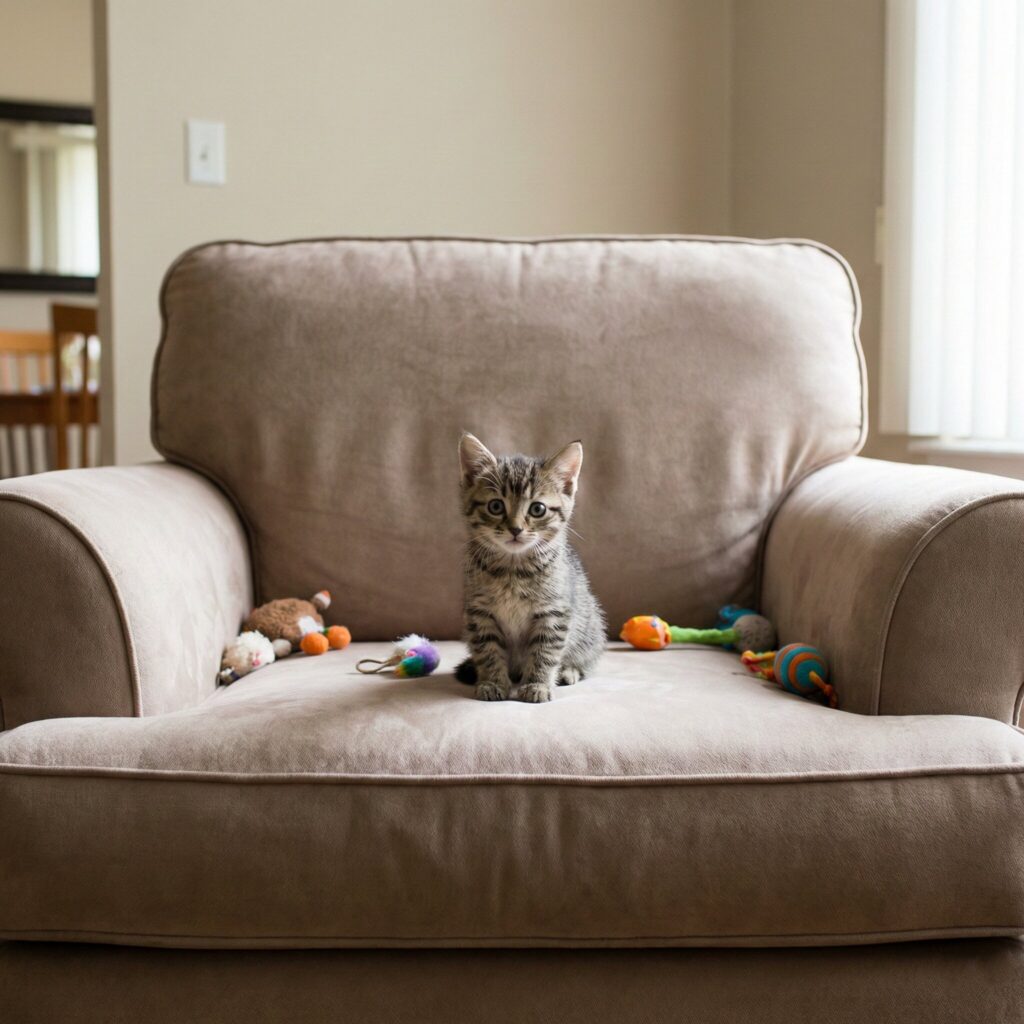
Single Kitten Syndrome (also informally known as “Tarzan Syndrome”) occurs when a kitten is raised alone without the company of other kittens or cats. Because they miss out on critical social interaction with their peers, these kittens often fail to learn bite inhibition and appropriate boundaries. This can lead to behavioral issues in adulthood, including excessive biting, scratching, aggression, and extreme clinginess or separation anxiety.
Summary Table
| Feature | Details |
| Primary Cause | Lack of socialization with other kittens during early development (8–16 weeks). |
| Key Symptoms | Hard biting, scratching, “attacking” ankles, poor impulse control, separation anxiety. |
| Biological Reason | Failure to learn “bite inhibition” (understanding when a bite hurts). |
| Best Prevention | Adopting kittens in pairs (littermates or similar age). |
| Best Cure | Introducing a second kitten to the household. |
| Alternative Fixes | High-intensity play, strict routine, positive reinforcement, ignoring bad behavior. |
What Is Single Kitten Syndrome?
Bringing home a new kitten is an exciting moment. They are tiny, fuzzy, and incredibly playful. Many new owners decide to adopt just one kitten, thinking it will be easier to manage or cheaper than adopting two. However, months later, they often find themselves with a cat that plays too roughly, bites hard, and seems to have endless, destructive energy. This phenomenon is often the result of Single Kitten Syndrome.
While cats are often thought of as solitary animals, kittens are socially dependent on one another for proper emotional and behavioral development. When a kitten grows up alone, they miss the crucial lessons that only another kitten can teach.
This guide covers everything you need to know about Single Kitten Syndrome, from why it happens to how you can fix it.
Read Also: How to Make Your Home Senior-Cat Friendly
The Developmental Window: How Kittens Learn
To understand Single Kitten Syndrome, you have to understand how kittens grow up. Between the ages of roughly 8 to 16 weeks, kittens go through a critical socialization period. This is the time when their brains are absorbing information about the world, including how to interact with others.
In a litter, kittens spend hours every day wrestling, pouncing, biting, and chasing each other. To a human, this looks like pure fun. To a kitten, this is school. During these play sessions, they are learning how to be a cat.
Bite Inhibition
This is the most important lesson a kitten learns. When Kitten A bites Kitten B too hard, Kitten B will squeal and stop playing. This sends a clear signal to Kitten A: “You hurt me, and now the fun is over.”
Over time, Kitten A learns to control the force of their jaw. They learn that gentle nips keep the game going, but hard bites end the game. A solo kitten never gets this feedback. They bite human fingers or ankles, and humans often react by yelling or moving their hands quickly, which the kitten mistakes for part of the game. They never learn that their teeth cause pain.
Signs and Symptoms of Single Kitten Syndrome
How do you know if your cat is suffering from this syndrome? The signs usually appear as the kitten transitions into the “teenager” phase (around 5 to 12 months old). While every cat is different, “singletons” often display a specific set of behavioral issues.
1. “play Aggression” and Hard Biting
This is the hallmark symptom. The cat will ambush your ankles as you walk down the hall or grab your hand with teeth and claws while you are petting them. It isn’t done out of malice; they are trying to play. However, because they lack bite inhibition, they bite with full force.
2. The “Velcro” Cat (Clinginess)
Single kittens often become obsessively attached to their owners. Since the human is their only source of social interaction and entertainment, they may follow you from room to room constantly. While this can be cute, it can become overwhelming when the cat refuses to let you work or sleep alone.
3. Destruction of Property
Boredom is a major factor in Single Kitten Syndrome. A single kitten has no outlet for their high energy. If they don’t have a wrestling partner, they might turn their attention to your curtains, sofa, or toilet paper rolls. They are creating their own fun, usually at the expense of your furniture.
4. Separation Anxiety
Because they rely entirely on you for security and companionship, single kittens often panic when left alone. This can manifest as:
- Excessive vocalization (crying or yowling) when you leave.
- Urinating outside the litter box (often on your bed or clothes).
- Destructive chewing near doors or windows.
5. Inability to Communicate with Other Cats
If you introduce a single kitten to another cat later in life, the singleton may not know how to act. They might be overly aggressive or completely terrified because they never learned the subtle body language signals, like ear positions or tail flicks, that cats use to say “back off” or “let’s play.”
Read Also: Common Mobility Issues in Older Cats
Why Humans Cannot Replace Another Kitten
A common misconception is that a loving human owner can take the place of a feline companion. You might be home all day, play with your kitten for hours, and give them endless cuddles. However, you cannot speak “cat.”
The Energy Mismatch
Kittens have bursts of energy that are fast, acrobatic, and intense. They need to run, climb, and wrestle until they are exhausted. A human using a wand toy is great, but it does not replicate the full-body contact and wrestling that kittens need to burn off that specific type of energy.
The Pain Threshold
Humans have thin skin compared to cats. We cannot tolerate the way kittens play with each other. We cannot bite the kitten back to teach them limits (and you definitely should not try!). Without a peer to correct them in their own language, the message simply doesn’t get through.
Prevention: The “Two Kitten” Rule
The absolute best way to prevent Single Kitten Syndrome is to adopt kittens in pairs. Many shelters and rescue organizations now have policies requiring kittens under a certain age (usually 6 months) to be adopted with a littermate or into a home that already has a young, active cat.
This isn’t a sales tactic to “get rid” of more cats. It is a decision based on animal behavior science to ensure the kitten stays in their forever home. Single kittens are returned to shelters at a much higher rate due to behavioral issues than paired kittens are.
Benefits of Adopting Two:
- They entertain each other: They will wake up at 3 AM to play with each other, letting you sleep.
- Better behavior: They learn bite inhibition naturally.
- Less destruction: They take their energy out on each other rather than your couch.
- Emotional health: They have a constant companion, reducing anxiety.
How to Manage Single Kitten Syndrome (If You Already Have One)
If you have already adopted a single kitten and are seeing these signs, do not panic. You haven’t ruined your cat, and these behaviors can be improved. However, it requires significant effort and consistency on your part.
1. Get a Second Kitten
This is the most effective solution. If your current kitten is still young (under a year old), introducing a playmate of similar age and energy level can work wonders. The new kitten will essentially take over the job of teaching boundaries. It may look rough at first, but they will quickly establish a pecking order and teach each other the rules.
2. “Interactive” Play Therapy
If getting a second cat is absolutely not an option, you must become the surrogate playmate. But simply dangling a string isn’t enough. You need high-intensity interactive play.
- Schedule: Aim for at least three to four 15-minute sessions of hard play every day.
- Technique: Use wand toys to mimic prey (birds or mice). Make the kitten run, jump, and pant.
- The Cycle: Follow the “Hunt, Catch, Kill, Eat, Sleep” cycle. Play hard, let them catch the toy, then feed them a meal or treat immediately after. This mimics nature and helps them settle down for a nap.
3. Never Play with Hands or Feet
This is a critical rule. Never use your fingers as toys. If you wiggle your fingers under the blanket or let the kitten gnaw on your hand, you are teaching them that human skin is a toy. Always put a toy between you and the cat. If the kitten attacks your hand, go limp (don’t jerk away, as that triggers the prey drive) and immediately distract them with a legal toy.
4. The “Time-Out” Method
When the kitten bites too hard or attacks you:
- Stop immediately: Do not yell or hit the cat. Negative attention is still attention.
- Disengage: Stand up and walk away. Go into another room and close the door for 1-2 minutes.
- Repeat: If you do this consistently, the kitten learns: “When I use teeth, my favorite person disappears.”
5. Enrichment
A bored brain is a destructive brain. Since the kitten is alone, their environment must be stimulating.
- Cat Trees: Place tall cat trees near windows so they can watch “Cat TV” (birds and squirrels).
- Puzzle Feeders: Make them work for their food. Use food puzzles or lick mats to burn mental energy.
- Solo Toys: Leave out toys that are safe for solo play, like ball tracks or crinkle tunnels. Rotate them weekly so they don’t get bored with the same old toys.
Read Also: Signs of Cognitive Decline in Cats
Common Myths About Single Kittens
There is a lot of bad advice circulating about cat ownership. Let’s debunk a few myths that contribute to Single Kitten Syndrome.
Myth: “Cats are solitary animals.”
- Reality: While adult cats can be solitary hunters, they are social animals. In the wild, female cats often live in colonies and raise kittens together. Kittens are biologically programmed to be social.
Myth: “Two kittens are double the work.”
- Reality: In almost every case, two kittens are less work than one. One kitten requires 100% of your attention for play and discipline. Two kittens focus on each other. You have twice the food and litter to scoop, but half the behavioral headache.
Myth: “My older cat will teach the kitten.”
- Reality: An elderly cat (10+ years) usually does not want to be pounced on by a hyperactive kitten. This often leads to stress for the senior cat and aggression from the kitten. It is better to pair a kitten with another young cat.
When to Seek Professional Help
Sometimes, what looks like Single Kitten Syndrome might be more deep-seated aggression or a neurological issue. You should consult a veterinarian or a certified cat behaviorist if:
- The biting breaks the skin regularly and seems aggressive rather than playful (hissing, growling, ears pinned back).
- The cat is injuring themselves.
- The separation anxiety is causing severe physical illness (vomiting, over-grooming until bald).
Conclusion
Single Kitten Syndrome is a real behavioral challenge, but it stems from a place of biological need, not malice. Your kitten isn’t “bad”; they are just lonely and uneducated in the ways of being a cat.
The ideal scenario is always to adopt in pairs. It sets the kittens up for a lifetime of better social skills and happiness. However, if you are raising a singleton, understanding their developmental needs is key. By providing structured play, consistent boundaries, and plenty of environmental enrichment, you can help your solo kitten grow into a well-adjusted, loving companion.
Raising a kitten is a journey. Whether you have one or two, patience and understanding of their natural instincts will always be your best tools for success.